
The History of Transatlantic Communication Cables
The story of transatlantic communication cables is one of audacious ambition, repeated failure, and one of the greatest engineering achievements in human history.
Jun 2, 2026
SHARE
Before 1866, sending a message across the Atlantic Ocean meant putting it on a ship and waiting weeks, or sometimes months, for a reply. The world was vast, slow, and largely disconnected. Then a small group of engineers, entrepreneurs, and sailors changed everything. The story of transatlantic communication cables is one of audacious ambition, repeated failure, and one of the greatest engineering achievements in human history.
What Was the Transatlantic Telegraph Cable?
At its most basic, the transatlantic telegraph cable was exactly what it sounds like: a cable, laid along the floor of the Atlantic Ocean, connecting North America to Europe. But the simplicity of that description doesn't do justice to how extraordinary the thing actually was.
The cable was a marvel of mid-19th-century engineering. At its core were copper wires (copper being the best conductor of electrical signals available at the time) wrapped in layers of insulating material called gutta-percha, a natural rubber-like substance harvested from trees in Southeast Asia. That insulated core was then armored with strands of iron wire to protect it from the crushing pressure of the deep ocean, the drag of the laying process, and the general hostility of the sea floor.
The finished cable was:
Roughly the diameter of a garden hose, surprisingly compact for something carrying messages across an ocean
Thousands of miles long, stretching from Valentia Island in Ireland to Heart's Content, Newfoundland
Enormously heavy, requiring the largest ships in the world to carry and deploy it
Electrically fragile, small manufacturing defects or voltage miscalculations could render the entire thing useless
The principle behind it was the same as any telegraph: an electrical signal is sent down the wire at one end, and decoded at the other. On land, this was already well-established technology. Underwater, across thousands of miles of open ocean and uncharted sea floor, it had never been done at anything close to this scale. The engineering challenges were immense, the margin for error was almost nonexistent, and the stakes, which were financial, political, and historical, were enormous.
Why It Mattered: Speed, Trade, and a Smaller World
The successful laying of the first working transatlantic telegraph cable in 1866 didn't just speed up communication, but fundamentally rewired how the world did business.
Before the cable, merchants on opposite sides of the Atlantic were essentially operating blind. By the time news of a market crash, a change in cotton prices, or a shift in political power reached the other continent, weeks had passed. Decisions were made on stale information. Opportunities were missed. Fortunes were lost.
The cable changed the math entirely:
Message delivery time dropped from weeks by ship to minutes by wire
Financial markets on both sides of the Atlantic could react to the same information in near real-time
Trade negotiations that once required months of back-and-forth correspondence could now be settled in days
Political communication between governments became faster and more responsive, reducing the risk of misunderstandings escalating into conflict
The first official message sent over the 1858 cable captured the moment perfectly: "Europe and America are united by telegraphic communication. Glory to God in the highest, on earth peace, goodwill to men."
The world had gotten dramatically smaller—and business, diplomacy, and culture would never be the same.
The Early Attempts: 1857–1865
The road to a working transatlantic cable was paved with broken cables, brutal storms, exhausted crews, and sheer stubbornness. The project took nearly a decade of failed attempts before it finally succeeded.
1857: The First Try
The first attempt used two ships called the British HMS Agamemnon and the American USS Niagara, each of which carried half of the cable. They set out from Ireland together, laying the cable as they went. The cable snapped after a few days, and the mission was abandoned.
1858: So Close
The second attempt changed the strategy. Instead of starting from shore, the two ships met in the middle of the Atlantic, spliced the cable together, and headed toward their respective coastlines simultaneously. They battled a ferocious storm that nearly sank the Agamemnon. The cable broke. They tried again. It broke again. By the fourth attempt, the crews were exhausted, running low on fuel, and nearly out of spare cable. With just enough resources for one last run, the ships made the splice—and this time it held.
The Niagara reached Newfoundland. The Agamemnon reached Valentia, Ireland. On August 16, 1858, the first official message crossed the Atlantic by wire.
But the victory was short-lived. The cable had been damaged during manufacturing and further weakened by the brutal laying process. When engineer Wildman Whitehouse pushed dangerously high voltages through it in an attempt to boost the signal, the cable failed completely. It stopped working on October 20, 1858, just weeks after its triumphant debut.
1865: Again, Almost
By 1865, technology had improved and a new ship took on the job alone—the massive SS Great Eastern, which was the largest vessel in the world at the time. It successfully laid cable from Ireland toward Newfoundland, but the cable broke and sank into the ocean before the job was complete. The attempt was abandoned, but the lost cable's location was carefully recorded.
1866: The Cable That Held
The Great Eastern set out again in 1866 and, this time, everything came together.
The improved cable, better manufacturing standards, and hard-won experience from years of failed attempts made the difference. The ship successfully laid a new cable from Valentia, Ireland, to Heart's Content, Newfoundland. The inaugural message was transmitted in August from Queen Victoria to U.S. President Andrew Johnson.
Then the crew did something remarkable: they went back out into the Atlantic, found the broken 1865 cable on the ocean floor, hauled it up, repaired it, and completed it. By the end of 1866, there were two working transatlantic telegraph cables connecting Europe and North America.
The age of global real-time communication had begun.
The People Who Made It Happen
Behind every great engineering achievement are the people who refused to quit. A few key figures drove the transatlantic cable project from dream to reality:
Cyrus West Field
The American entrepreneur who championed the entire project from the beginning. Field provided the vision, the financing, and the relentless advocacy that kept the project alive through years of failure. When the 1858 cable failed, it was Field who rallied investors and governments for another attempt. Without his persistence, the project likely would have died after the first broken cable.
Samuel Canning
The chief engineer behind the successful 1866 cable. Canning oversaw the technical execution of the project and applied the hard lessons learned from previous failures—better cable construction, careful handling during the laying process, and rigorous testing before deployment.
Charles Tilston Bright
The engineer who supervised the 1858 cable laying. Bright was only 26 years old when he oversaw the first successful connection between the two continents. He was knighted for the achievement—the youngest person to receive that honor at the time.
Samuel Morse
The inventor of Morse code was among the early visionaries who recognized the potential of a transatlantic telegraph connection. His coding system became the language of the cable, enabling messages to be transmitted efficiently across thousands of miles of wire.
Frederic Gisborne
A Canadian engineer whose early work on submarine cables in the 1840s and 50s helped establish the technical foundation that made the transatlantic project possible. It was Gisborne's work that first caught Cyrus Field's attention and sparked the larger vision.
From Telegraph to Fiber Optic: The Modern Legacy
The transatlantic telegraph cable succeeded in connecting two continents and, in doing so, established the blueprint for every global communications network that followed.
The telegraph's limitations became clear quickly. By the late 19th century, the telephone had become the dominant mode of long-distance communication, and new cables were built to carry voice signals across the Atlantic. In the mid-20th century, the first transatlantic telephone cable, called TAT-1, went live in 1956, handling telephone calls between North America and Europe.
Then came the revolution that changed everything again: fiber optics.
Introduced in the 1980s, fiber-optic cables replaced copper wire with bundles of ultra-thin glass fibers that transmit data as pulses of light. The leap in capacity was staggering:
Speed: data travels at nearly the speed of light
Bandwidth: a single modern fiber-optic cable can carry millions of simultaneous phone calls or enormous amounts of internet data
Reliability: modern cables are engineered to last 25 years on the ocean floor
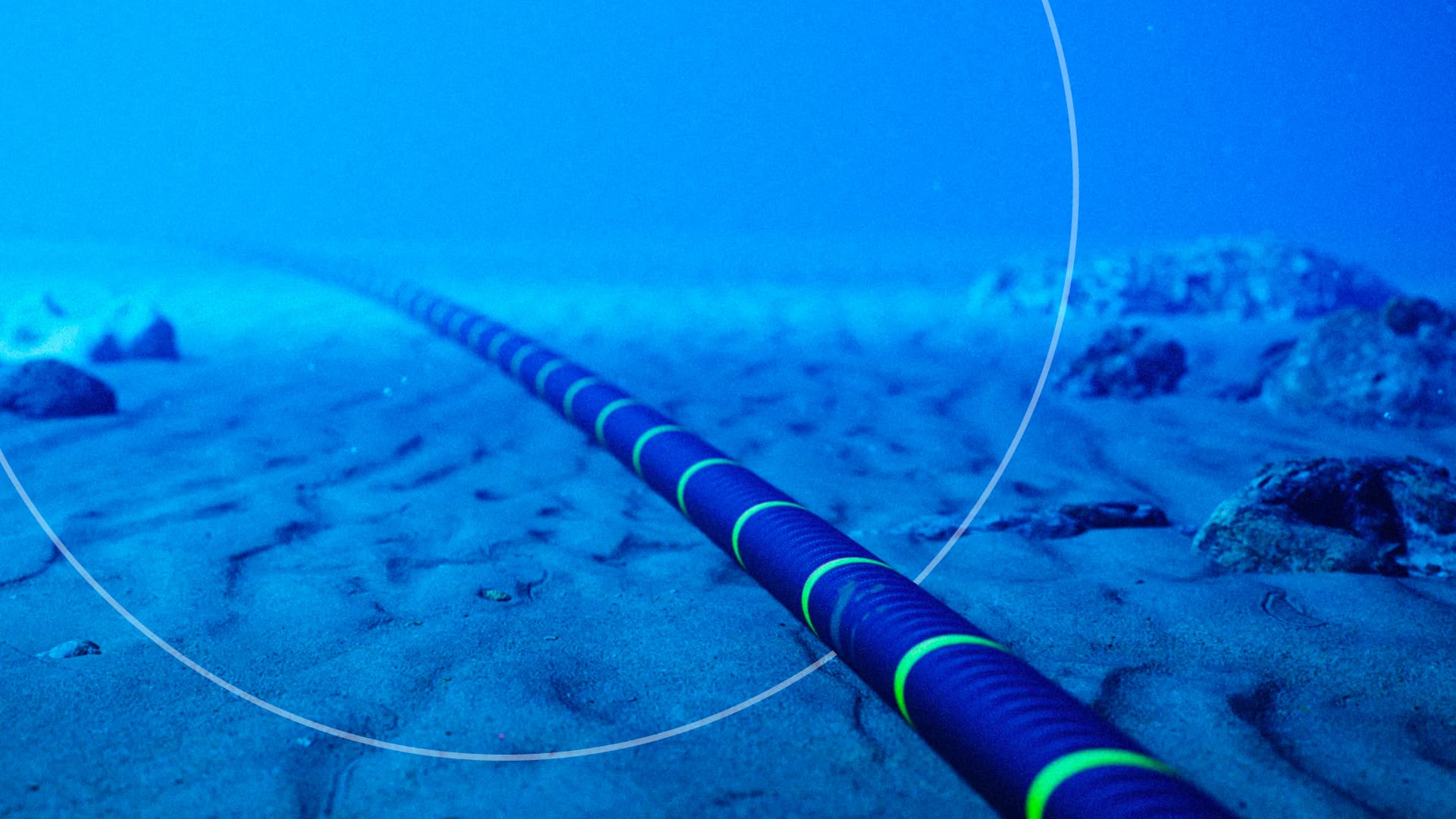
As of the early 2020s, over 20 major fiber-optic cable systems stretch across the Atlantic, forming the physical backbone of the modern internet. Every email, video call, financial transaction, and website visit between North America and Europe travels through cables that trace their lineage directly back to the Great Eastern's 1866 voyage.
The technology is unrecognizable, but the principle of connecting continents through cables laid on the ocean floor is exactly the same.
From One Cable to an Interconnected World
The story of transatlantic communication cables is ultimately a story about human persistence. It took nearly a decade of failed attempts, thousands of miles of broken wire, and the stubbornness of a handful of visionaries to connect two continents. When it finally worked in 1866, the world changed overnight.
What began as a copper wire on the floor of the Atlantic Ocean became the template for the global digital infrastructure that powers modern life. The fiber-optic cables crisscrossing the ocean floor today carry billions of conversations, transactions, and data transfers every single day — all because a few engineers and entrepreneurs refused to accept that the Atlantic was too vast to bridge.
The cable that connected Queen Victoria to President Andrew Johnson in 1866 was, in its own way, the first message on the first internet. Everything that followed was just a faster version of the same idea.
Featured Articles
Want to learn more about how Lightyear can help you?
Let us show you the product and discuss specifics on how it might be helpful.
Stay up to date on our product, straight to your inbox every month.