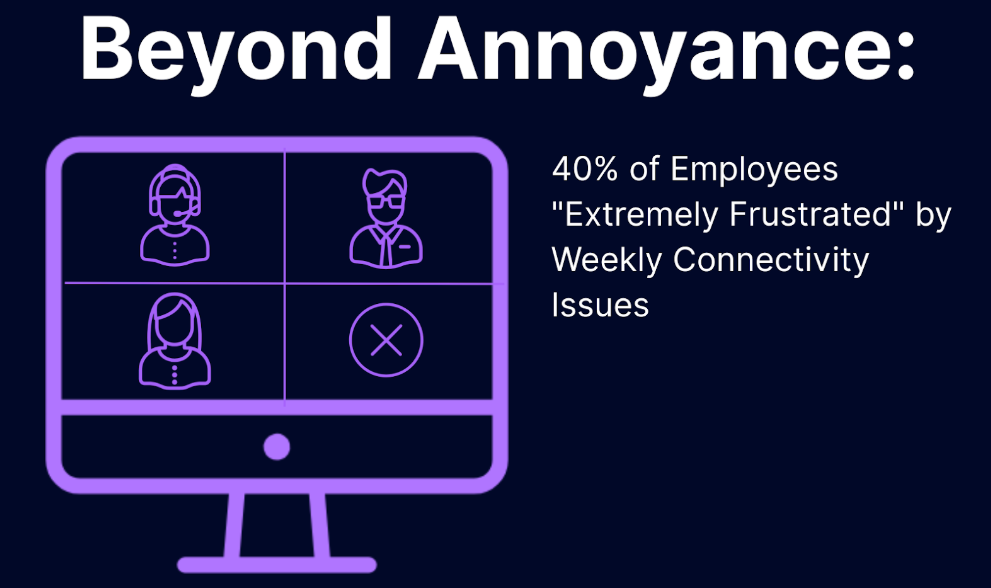
Beyond Annoyance: 40% of Employees "Extremely Frustrated" by Weekly Connectivity Issues, New Survey Finds
A new survey reveals that 73% of employees face audio or video issues in meetings each week, with 40% reporting extreme frustration and lost productivity.
Nov 3, 2025
SHARE
Automate the telecom lifecycle
Get better quotes, launch sites faster, keep inventory accurate, and control spend.
Freezing screens, lagging audio, and calls cutting short. It’s the risk faced by today’s hybrid and remote businesses, whose daily productivity hinges on seamless digital collaboration. But how often do these tools we rely on actually work?
In a new survey we conducted with 1000 Americans, we discovered that technical failures are not an occasional problem, but a chronic one.
Our study revealed that a massive 73% of employees experienced an audio or video issue in a meeting within the last week alone. This persistent friction is creating significant frustration, costing valuable time, and leaving a clear majority of employees calling for a solution.
Key Findings:
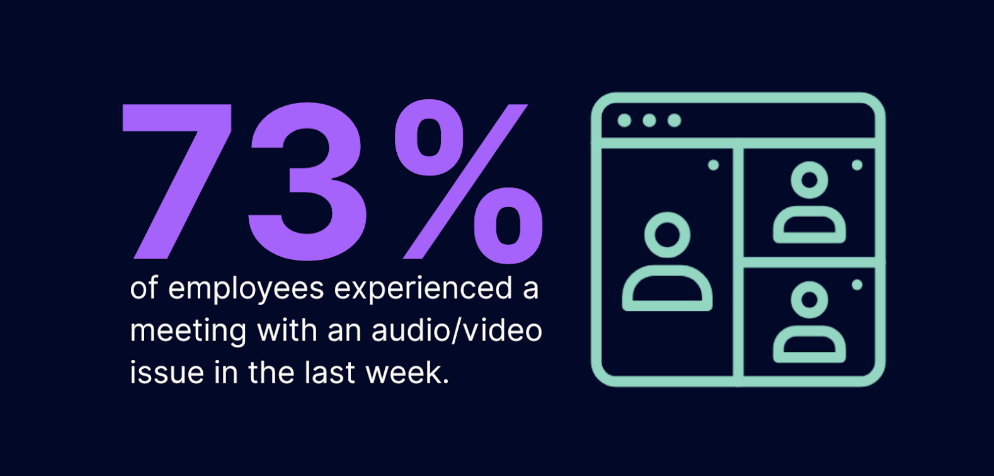
73% of employees experienced a meeting with an audio/video issue in the last week.
40% of employees find connectivity problems to be “very” or “extremely” frustrating.
On average, 59% say three or more minutes are lost before a disrupted meeting resumes.
46% of millennials find connectivity problems to be “very” or “extremely” frustrating. 35% of Gen Zers feel the same.
65% of employees think their company's investment in improved meeting connectivity is very/extremely valuable.
85% are more likely to choose a client or vendor whose office offers reliable, disruption-free meeting rooms.
“You’re on Mute!”: 73% of Employees Battle Glitches in Online Meetings Every Week
It’s the most familiar interruption of the modern workday: the frozen screen, the robotic echo, or the colleague gesturing wildly while stuck on mute. These technical frustrations, it turns out, aren't just an occasional annoyance; they are the weekly norm.
In a new survey we conducted of 1,000 American employees, a staggering 73% reported experiencing at least one audio or video issue during a meeting within the last seven days alone. The data suggests that for the vast majority of the workforce, the tools meant to connect us are consistently failing.
Interestingly enough, 64% say the primary connection during disrupted meetings is corporate wifi, not personal devices, suggesting that office infrastructure might be the weak point. Companies that invest in more reliable video conferencing systems could boost their employees’ resolve.
More Than an Annoyance: 40% Are 'Extremely Frustrated' by Connectivity Issues
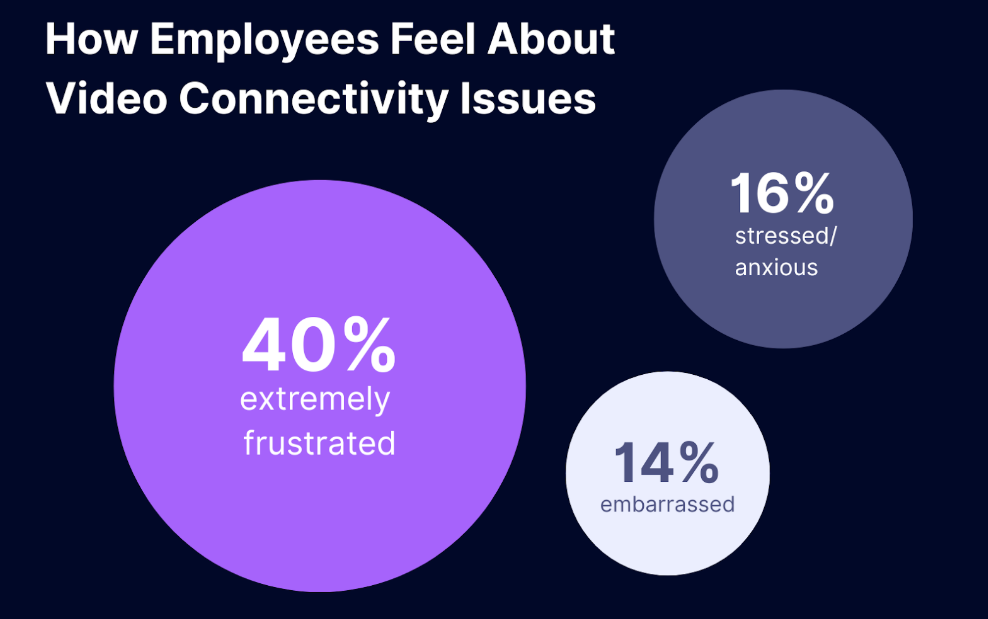
These persistent disruptions are not just minor operational hiccups; they are a significant source of employee burnout. As our study dug deeper, we found that this daily technological friction is taking a serious emotional toll. A full 40% of employees we surveyed reported finding connectivity problems "very to extremely frustrating."
This level of frustration suggests that for a huge portion of the workforce, the tools meant to enable productivity are instead becoming a primary source of stress, undermining morale and engagement long after the meeting has ended.
16% of employees reported feeling stressed or anxious, worried about appearing unprofessional, while nearly 14% said they feel embarrassed, mainly when the disruption occurs with clients. This demonstrates that even minor technical issues can lead to significant social or professional stress, particularly in hybrid or client-facing contexts.
The Productivity Tax: 59% Report Losing 3+ Minutes Per Disruption
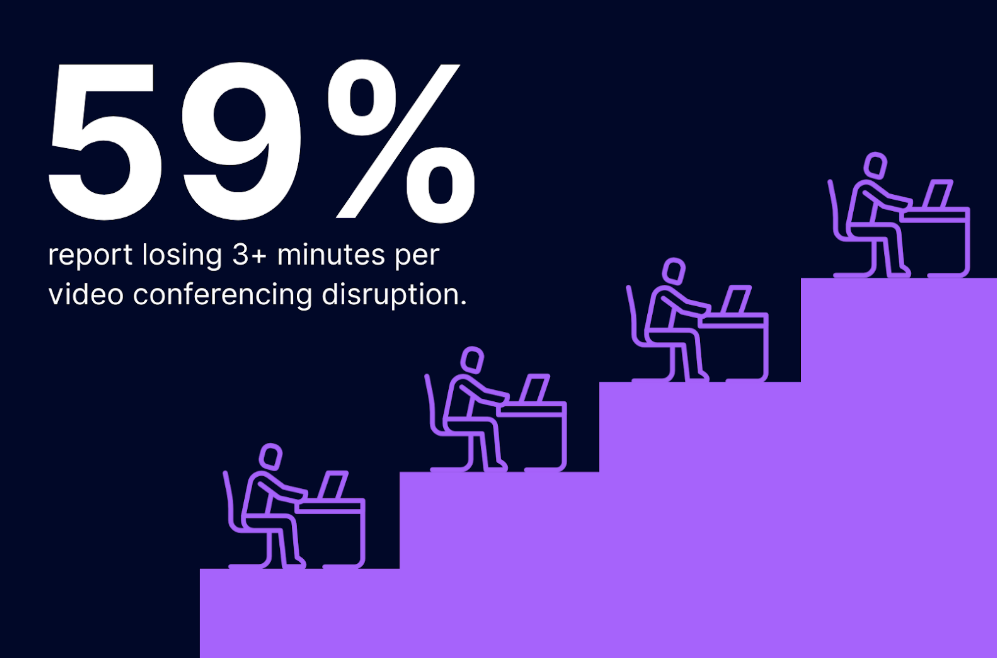
That frustration is directly tied to a tangible and costly loss of time. Our survey quantified just how long these interruptions last, and it's far from a minor pause. We found that, on average, 59% of employees say they lose three or more minutes trying to get a disrupted meeting back on track.
If the average employee loses 3 minutes per meeting, and the typical worker attends eight meetings per week, that’s over 20 minutes of lost time weekly per employee, or nearly 17 hours a year. Across a 500-person company, that’s the equivalent of 10,000+ hours lost annually.
This "glitch tax" effectively shaves off 10% of a standard 30-minute meeting every time it occurs. When combined with the high weekly frequency of these issues, the data reveals a significant and cumulative drain on momentum, focus, and overall business productivity.
Continuously optimize your network
The Patience Gap: Millennials (46%) More Frustrated by Glitches Than Gen Z (35%), Our Study Reveals
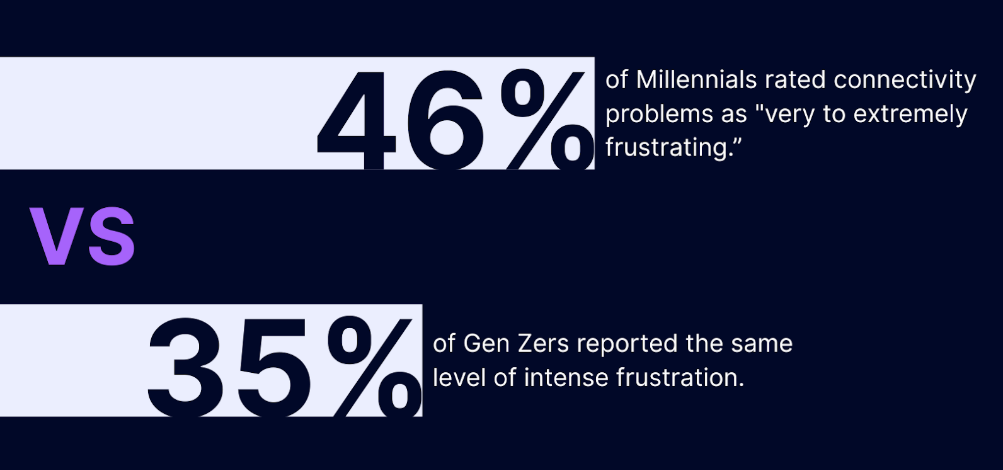
While this "glitch tax" is a universal drain, the emotional burden isn't distributed evenly. Our study uncovered a significant generational divide in how employees tolerate these workflow failures. We found that Millennials, who bridged the analog and digital work eras, show the least patience.
In our survey, 46% of Millennials rated connectivity problems as "very to extremely frustrating," which is significantly higher than the 40% average.
Conversely, their younger, digitally-native colleagues appear more resilient; only 35% of Gen Zers reported the same level of intense frustration.
This gap suggests that while Gen Z may be more accustomed to navigating imperfect tech, Millennials have a higher expectation of efficiency that is being aggressively undermined.
A Clear Mandate: 65% of Employees Call Investment in Connectivity "Extremely Valuable"
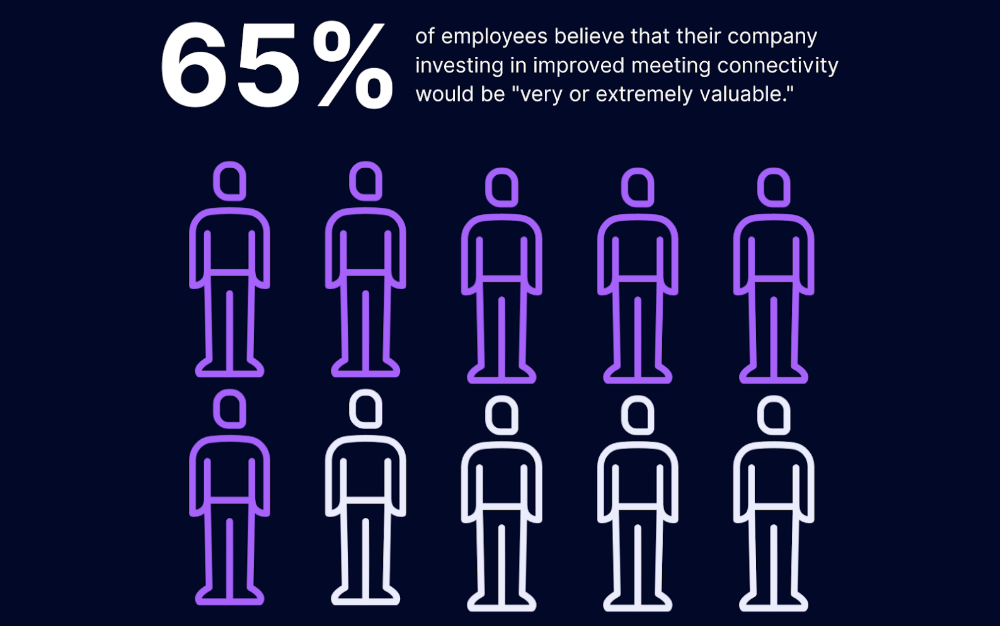
Regardless of these generational divides, our study found that the desire for a concrete solution is widespread and unambiguous. Employees aren't just complaining; they are pointing directly to the answer. A substantial majority (65%) of all employees we surveyed believe that their company investing in improved meeting connectivity would be "very or extremely valuable."
This figure is a clear mandate for employers. It shows that workers directly connect these technological improvements to their ability to perform, and view a stable internet connection not as a background perk but as a critical, high-value tool essential to their success.
But what does that investment actually look like? For most organizations, it means moving beyond basic broadband to dedicated internet access (DIA), which is a higher-performance connection that guarantees uptime and consistent speed. It can also mean building redundancy and diverse connections, so that if one network fails, another automatically takes over.
While these solutions cost more upfront, the return on investment is clear. When you factor in the lost time, missed opportunities, and employee frustration, the expense of stronger, more reliable connectivity pays for itself many times over.
85% Say Meeting Reliability Influences Who They Do Business With
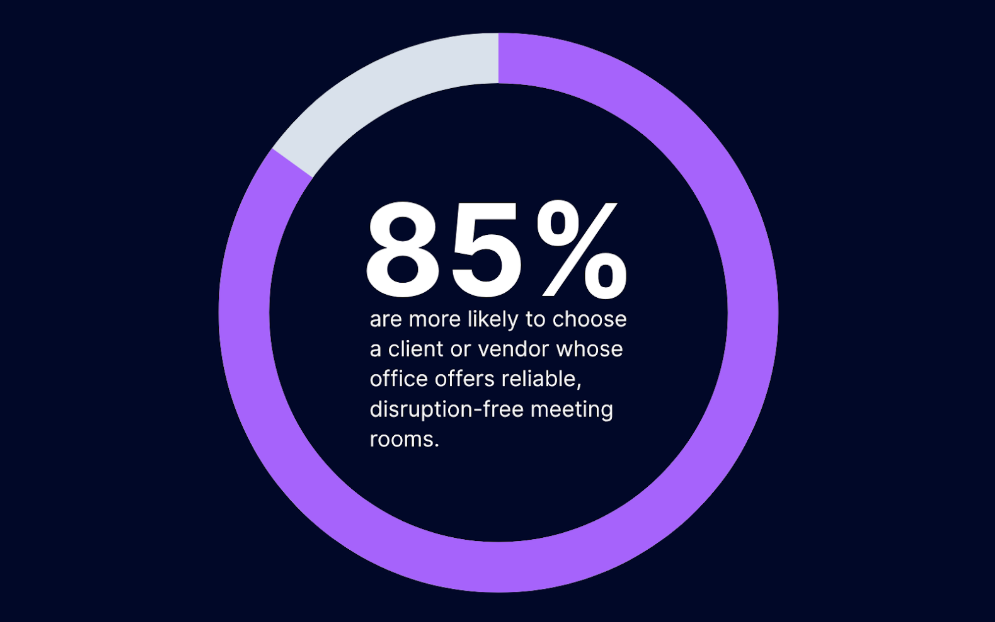
For many professionals, meeting reliability isn’t just a convenience; it’s a reflection of competence and trust. Our survey found that 85% of respondents are more likely to choose a client or vendor whose office offers reliable, disruption-free meeting rooms.
Nearly half (46.5%) said they’d be slightly more likely to choose such a partner, while almost four in ten (39.3%) said they’d be much more likely. Only 14% reported that reliability made no difference in their decision.
This finding highlights the significant impact of technical stability on professional impressions. A single glitchy call can influence whether a partnership feels dependable or disorganized, and for many, that distinction determines who earns their business.
Summary
The data from our study paints a vivid picture of a workforce caught in digital friction, a world of frozen screens, lost time, and mounting frustration. Yet, buried within that frustration is a clear and hopeful path forward. The 65% of employees calling for better connectivity aren't just pointing out a problem; they are highlighting one of the most direct and valuable solutions available.
By listening, and by investing in the seamless connections employees crave, companies have a rare opportunity to give back time, eliminate a major source of daily stress, and unlock the full, collaborative potential of their teams. Our study suggests the future of work isn't about enduring faulty tools, but about making them invisible, allowing great ideas, strong connections, and human talent to finally take center stage.
Methodology
The findings presented in this article are based on an original online survey planned and conducted by our team. The survey was fielded in October 2025, among a nationally representative sample of 1,000 American adults (aged 18 and over) who are currently employed on a full-time or part-time basis.
To ensure the results accurately reflect the demographic composition of the U.S. workforce, respondent quotas were established for age, gender, and geographic region. The final data was weighted where necessary to align with the latest U.S. Census data.
Fair Use
Users are welcome to utilize the insights and findings from this study for noncommercial purposes, such as academic research, educational presentations, and personal reference. When referencing or citing this article, please ensure proper attribution to maintain the integrity of the research. Direct linking to this article is permissible, and access to the original source of information is encouraged.
For commercial use or publication purposes, including but not limited to media outlets, websites, and promotional materials, please contact the authors for permission and licensing details. We appreciate your respect for intellectual property rights and adherence to ethical citation practices. Thank you for your interest in our research.
Featured Articles
Want to learn more about how Lightyear can help you?
Let us show you the product and discuss specifics on how it might be helpful.
Stay up to date on our product, straight to your inbox every month.