Comparing 10G vs 100G Ethernet for Enterprises
Is 10G or 100G Ethernet right for your enterprise? This guide compares speed, cost, and infrastructure needs to help you choose confidently.

Choosing the right network infrastructure is a critical decision for any enterprise, directly impacting performance, scalability, and budget. Two common standards at the forefront of this decision are 10 Gigabit Ethernet (10G) and 100 Gigabit Ethernet (100G).
While both offer significant speed improvements over older technologies, they serve different needs and come with distinct cost and implementation considerations. This article breaks down the key differences between 10G and 100G Ethernet to help you determine which is the right fit for your organization's current and future demands.
What is 10 Gigabit Ethernet?
10 Gigabit Ethernet, also known as 10GbE, is a telecommunications technology that transmits data frames at a rate of 10 billion bits per second. First standardized in 2002, it offered a tenfold performance increase over the previous 1 Gigabit Ethernet standard, quickly becoming a popular choice for networks requiring higher bandwidth.
It provides a significant speed boost for demanding applications and has been widely adopted in various business environments. It operates over both copper and fiber optic cabling, offering flexibility for different infrastructure needs and distances.
Common applications for 10GbE include:
- Data Center Connectivity: It is frequently used to connect servers and network storage devices, handling high internal traffic loads with ease.
- Enterprise Backbones: For many small to medium-sized businesses, 10GbE acts as a powerful network backbone, linking switches and routers across a campus or office building.
- High-Performance Computing: Workstations that run bandwidth-intensive tasks like video editing, large data analysis, and scientific modeling benefit from the high-speed connection.
- Storage Area Networks (SANs): It provides fast and reliable access to centralized storage systems, making it a solid choice for iSCSI or Fibre Channel over Ethernet (FCoE) deployments.
What is 100 Gigabit Ethernet?
100 Gigabit Ethernet (100GbE) is a standard that transmits data at a rate of 100 billion bits per second, a tenfold increase over 10GbE. Standardized in 2010, it was developed to address the explosive growth of data traffic driven by cloud computing, video streaming, and large-scale data center operations. This technology primarily operates over fiber optic cables, which are necessary to support its high speeds over longer distances.
100GbE is the go-to solution for networks where massive throughput and low latency are critical. It serves as the backbone for some of the world's most demanding digital infrastructures.
Key applications for 100GbE include:
- Hyper-Scale Data Centers: It provides the core connectivity needed to link thousands of servers and manage enormous east-west traffic flows within massive data centers.
- Service Provider Backbones: Telecommunications and internet service providers use 100GbE to build high-capacity core networks that aggregate traffic from metro and regional networks.
- Cloud Services: It is fundamental for cloud providers to deliver high-performance computing, storage, and application services to a global customer base.
- Data Center Interconnects (DCI): 100GbE is used to create high-speed links between geographically separate data centers for disaster recovery and load balancing.
Key Differences Between 10 Gigabit and 100 Gigabit Ethernet
Beyond the tenfold speed gap, the practical differences between 10GbE and 100GbE come down to performance capabilities, infrastructure demands, and hardware specifics. Understanding these distinctions is key to choosing the right technology for your network's core functions.
1. Performance and Throughput
The most direct difference is raw data rate—100 Gbps versus 10 Gbps. This massive increase in throughput means 100GbE can handle ten times the traffic volume, making it ideal for aggregating data from numerous high-speed links.
Furthermore, 100GbE typically provides lower latency. Because data packets are placed on the wire much faster, they spend less time in transmission queues, which is critical for latency-sensitive applications like financial trading or real-time analytics.
2. Cabling and Infrastructure
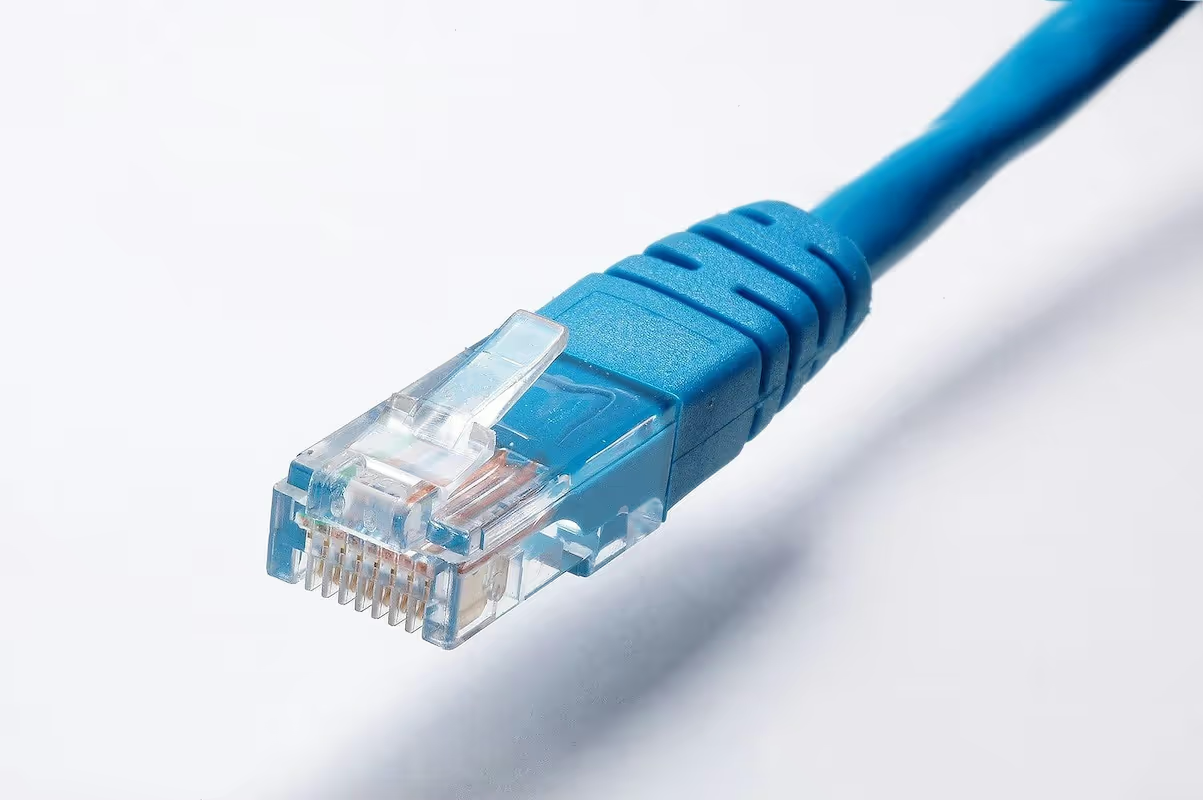
10GbE offers notable flexibility, supporting both copper cabling (like Cat6a for short distances) and fiber optics. This allows it to be deployed in a wider range of existing infrastructures.
In contrast, 100GbE operates almost exclusively over fiber optic cables due to its high-frequency signaling requirements. It often requires parallel optics, using multi-fiber connectors like MPO/MTP to transmit data across multiple strands simultaneously, a departure from the duplex fiber approach common with 10GbE.
3. Power and Port Density
A direct consequence of higher performance is increased power consumption. A 100GbE port and its associated optics draw considerably more power than a 10GbE port, leading to higher operational energy costs.
This also creates more heat, demanding more robust cooling systems within network racks. While switch technology is constantly improving, the thermal output of 100GbE can impact port density, influencing how many high-speed connections can be consolidated into a single piece of hardware.
Benefits of 10 Gigabit Ethernet for Enterprises
For many organizations, 10GbE hits the sweet spot between performance and practicality, offering substantial upgrades without the complexities of higher-speed tiers.
Cost-Effectiveness. The hardware for 10GbE, from switches to network interface cards, is significantly more affordable and widely available than its 100G counterpart. This makes it an accessible upgrade for businesses looking to move beyond 1 Gigabit speeds without a major capital investment.
Sufficient Bandwidth. For most enterprise workloads, 10GbE provides more than enough capacity. It comfortably handles demanding office applications, high-quality video conferencing, and fast access to internal data, preventing network bottlenecks without the expense of over-provisioning.
Proven Reliability. As a mature technology, 10GbE is a stable and well-understood standard. This translates to broad compatibility with existing equipment and a wide pool of IT talent familiar with its deployment and management, ensuring a smoother implementation.
Advantages of 100 Gigabit Ethernet in Large Networks
For large-scale operations, 100GbE provides critical advantages that go beyond raw speed. Its massive capacity is essential for future-proofing the network core against exponential data growth driven by AI, big data analytics, and widespread cloud adoption.
This standard excels at traffic aggregation, allowing you to consolidate numerous 10G or 40G links into a single, more manageable backbone. This not only simplifies the network topology but also improves efficiency and reduces potential points of failure.
Ultimately, 100GbE ensures that the network can support the most demanding applications and high-density server environments without becoming a performance bottleneck, protecting long-term infrastructure investments.
Cost Considerations for Upgrading Ethernet Infrastructure
When planning an upgrade, the budget is often the deciding factor. The total cost goes beyond just the price of the switches and involves several key components that differ significantly between 10G and 100G.
- Hardware and Transceivers: While 10G hardware like SFP+ transceivers is widely available and affordable, 100G components, particularly QSFP28 optics, carry a much higher price tag per port. This price difference is a primary driver of the overall project cost.
- Cabling Infrastructure: A major expense can come from cabling. If your facility relies on copper, a move to 100GbE will require a new installation of high-grade fiber optic cables. Even existing fiber may need to be upgraded to support the multi-strand connections (MPO) common for 100G.
- Installation and Expertise: Deploying a 100G network can be more complex, potentially requiring specialized technicians for installation, testing, and validation. This can increase labor costs compared to a more straightforward 10G rollout.
- Total Cost of Ownership (TCO): Beyond the initial purchase, remember to factor in long-term operational costs. As mentioned earlier, 100GbE's higher power draw and cooling needs contribute to a greater TCO, which should be part of any budget calculation.
Making the Right Choice for Your Network Needs
The right choice between 10G and 100G Ethernet depends entirely on your organization's specific requirements, budget, and growth trajectory. There is no single answer that fits every situation.
For most enterprises, 10GbE offers a powerful and cost-effective solution. It provides ample bandwidth for daily operations, server connectivity, and office backbones without requiring a complete infrastructure overhaul.
Conversely, 100GbE is the clear path forward for large-scale data centers, cloud providers, and service provider networks. Its value lies in aggregating high-volume traffic and preparing the core network for future data demands.
To decide, assess your current traffic patterns and project your needs over the next three to five years. This analysis will clarify whether the practical benefits of 10GbE are sufficient or if the strategic investment in 100GbE is necessary for your long-term goals.
Need Help Managing Your Network? Lightyear Can Help
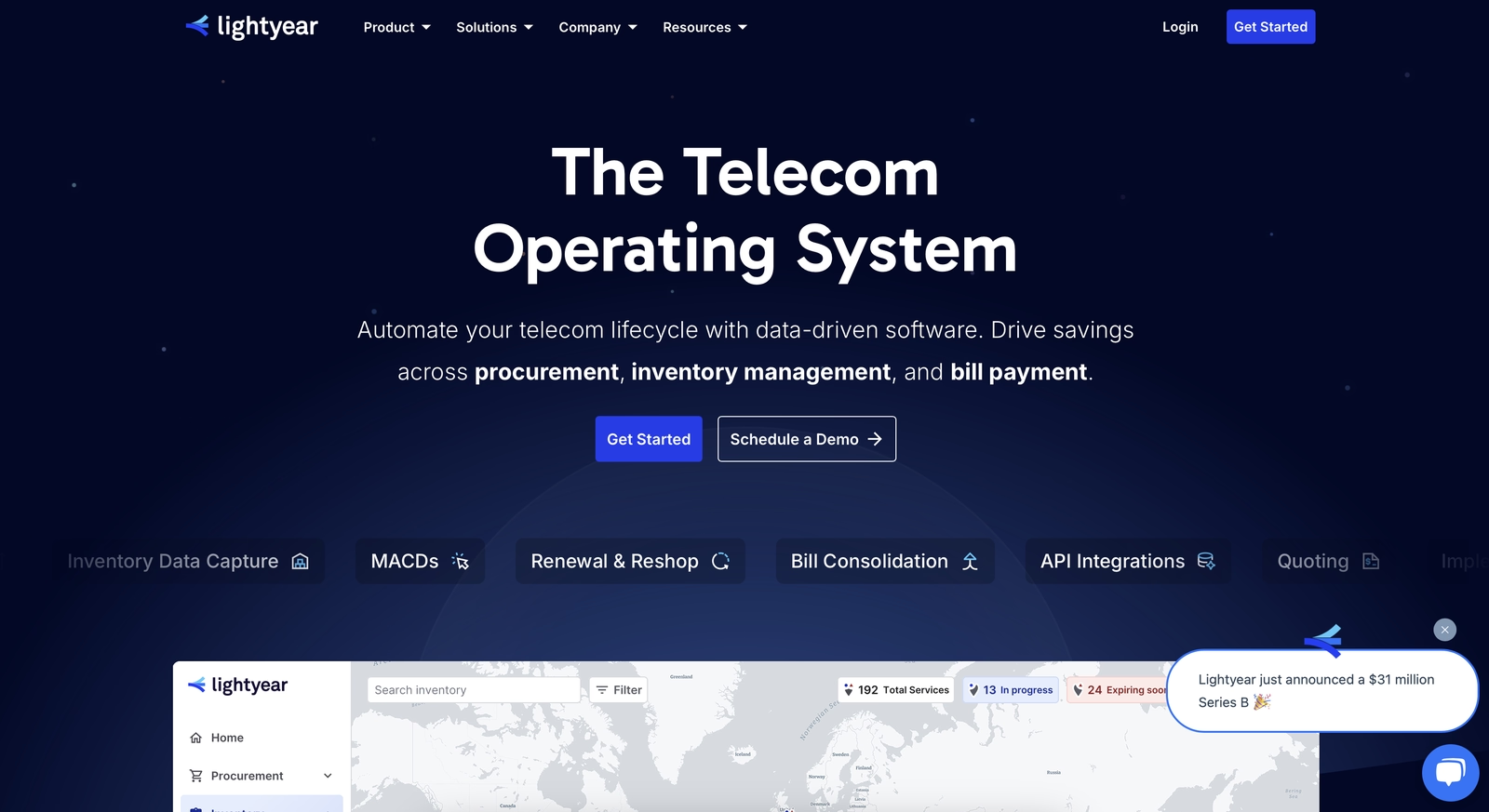
Whether you're upgrading to 10G or 100G, Lightyear simplifies the next step: procuring and managing your network services.
By automating network procurement, inventory, and bill consolidation, we help enterprises achieve over 70% time savings and 20% cost savings.
Schedule a demo or get started with our questionnaire today.
Frequently Asked Questions about 10 Gigabit Ethernet vs 100 Gigabit Ethernet
Can I mix 10G and 100G equipment in my network?
Yes, absolutely. It's common to use 100G for the network core to aggregate traffic from multiple 10G links connecting to servers or access switches. This is a standard practice for network upgrades and allows for phased, budget-friendly expansion.
What happened to 40G Ethernet? Is it still relevant?
While 40G was a stepping stone, the industry has largely favored 100G for new deployments. 100G generally offers a better cost-per-bit and a clearer upgrade path, making 40G a less common choice for building out new network backbones today.
Can a single 100G port connect to multiple 10G devices?
Yes, this is possible using breakout cables. A 100G QSFP28 port can often be split into four separate 25G or 10G links, offering great flexibility for connecting to multiple lower-speed servers or switches from a single high-capacity port.
Let us show you the product and discuss specifics on how it might be helpful.
Schedule a Demo





Revolutionize Your Telecom Experience
Learn how you can get one step closer to optimal business efficiency for all your telecom services.