5G Router vs Broadband: Enterprise Network Comparison
5G router or broadband for your business? Learn the key differences in speed, reliability, and cost to make the right choice for your enterprise network.

Choosing the right internet connection for your business locations is a critical decision for IT and network managers. The two most common options today are wireless 5G routers and traditional wired broadband.
Though both deliver internet access, they function very differently and are suited for distinct business cases. This guide provides a direct comparison of 5G and broadband to help you decide which is the right choice for your enterprise network strategy.
What is a 5G Router?
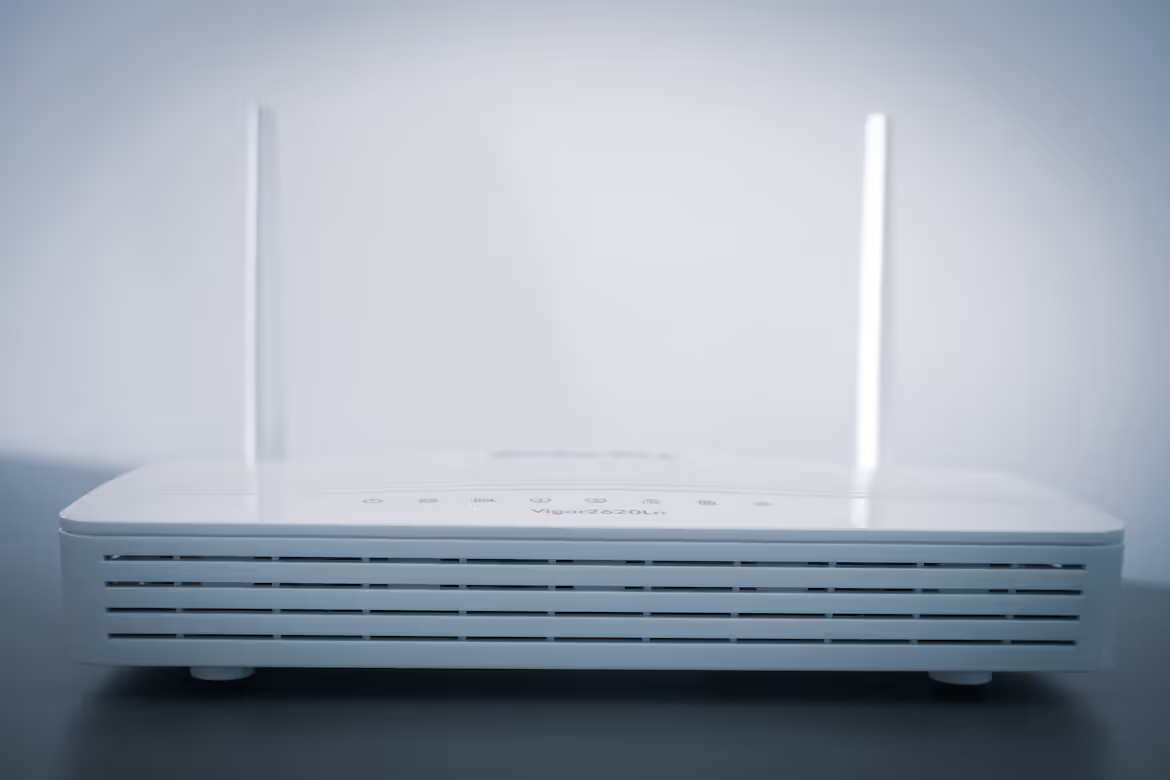
A 5G router is a device that connects to a 5G cellular network to provide internet access for your business. It functions much like a mobile hotspot but is designed to handle more demanding business needs. Instead of using a physical cable, it receives a wireless signal from a mobile carrier via a SIM card and converts it into a Wi-Fi or Ethernet connection for your local devices.
- Wireless Connection: It operates entirely over the air, using the same 5G networks as modern smartphones. This removes the dependency on physical infrastructure like fiber or cable lines.
- SIM Card Operation: The router requires a SIM card and a corresponding data plan from a mobile carrier to get online.
- Deployment Flexibility: Since they don't need physical wiring to the building, 5G routers are excellent for providing primary internet in areas with poor wired options, as a failover connection, or for temporary sites like pop-up stores or construction trailers.
What is Broadband?
Broadband refers to high-speed internet access delivered through a physical, wired connection to your business premises. Unlike wireless options, it relies on established ground infrastructure to transmit data. Common types of broadband include fiber optic, cable, and DSL, each using different physical media to connect you to the internet.
- Wired Connection: It requires a physical line, such as a fiber optic or coaxial cable, to be run directly to your building from the provider’s network.
- Infrastructure Dependent: Availability is entirely based on whether a provider has built out their network infrastructure in your specific geographic area.
- Dedicated Bandwidth: Business broadband plans often provide a dedicated line, ensuring that your connection speed is consistent and not shared with other nearby users.
Comparing 5G Routers and Broadband: Speed, Reliability, and Coverage
When evaluating these two options, performance often comes down to three key factors: speed, reliability, and coverage. Here’s how they compare.
Speed
5G can deliver impressive speeds, sometimes rivaling those of fiber optic broadband. However, its performance is variable and depends on factors like your proximity to a cell tower, network congestion, and even physical obstructions.
Wired broadband, especially fiber, provides highly consistent and predictable speeds. Business plans often come with dedicated bandwidth and symmetrical speeds, meaning your upload and download capabilities are equally fast—a crucial factor for cloud applications and large file transfers.
Reliability
The reliability of a 5G connection is linked to its signal strength. While generally stable, it can be impacted by adverse weather or building materials. Its key advantage is its immunity to physical line cuts, which makes it a strong candidate for a business continuity or failover solution.
Broadband connections are known for their stability. The primary risk is physical damage to the underlying infrastructure. A severed cable from nearby construction, for example, can cause a total outage that requires a technician to repair.
Coverage
5G coverage is determined by mobile carrier networks. While it is expanding rapidly, it is not yet universal, and the highest-speed variants are often concentrated in dense urban centers. It can, however, provide service in areas underserved by traditional broadband.
Broadband availability is binary: it’s either available at your address or it isn’t. Its reach is strictly limited by where providers have invested in laying physical fiber or cable lines, which can exclude many rural or newly developed commercial properties.
Cost Considerations: 5G Router vs Broadband
When it comes to budgeting, the cost structures for 5G and broadband are quite different. It's not just about the monthly bill; you need to consider hardware, data usage, and contract terms to get a full picture of the total cost of ownership.
5G Router Costs
- Upfront Hardware Costs: The primary initial expense is purchasing the 5G router itself. Business-grade devices with advanced features represent a larger upfront capital investment.
- Variable Monthly Bills: Plans are based on data usage, similar to a mobile phone plan. If your business exceeds its monthly data allowance, you could face expensive overage fees or significantly reduced speeds, making costs less predictable.
- No Installation Costs: A key financial benefit is the absence of construction or cabling costs, which can be substantial for wired connections, especially in remote or difficult-to-wire locations.
Broadband Costs
- Predictable Subscription Fees: Broadband plans typically offer a flat monthly rate for a set speed with unlimited data. This makes it easier to forecast and manage your telecom budget accurately.
- Initial Installation Charges: Expect a one-time fee for a technician to install the physical line and set up the connection at your site. This cost can vary depending on the complexity of the installation.
- Contract-Based Pricing: The most competitive rates are usually tied to multi-year contracts. While this provides cost stability, it can also limit your ability to switch providers or services without penalty.
Installation and Setup: Ease of Use
The setup process for each option highlights their fundamental differences: one is built for speed and flexibility, the other for permanent, planned infrastructure.
- 5G Router Setup: Installation is a simple, self-service process. You just insert an activated SIM card and power on the device, getting you online in minutes. This plug-and-play approach requires no technician and is perfect for rapid deployment at new, temporary, or hard-to-wire locations.
- Broadband Setup: This requires a scheduled appointment with a professional technician to run a physical cable to your building and configure the service. The lead time can range from days to weeks, depending on provider availability and whether any construction is needed to bring the line to your suite.
Security Features: 5G Router vs Broadband
Both 5G and broadband can be secured effectively, but they present different security considerations for your IT team.
5G Router Security
5G connections benefit from the security built into cellular networks. All data is encrypted as it travels between the router and the cell tower, providing strong protection against wireless eavesdropping.
The primary security responsibility for your team is managing the router itself—ensuring firmware is updated, default passwords are changed, and proper access controls are in place for connected devices.
Broadband Security
With a wired broadband connection, security is almost entirely in your hands. The physical line is inherently secure from over-the-air sniffing, but you are responsible for protecting your network perimeter.
This means implementing and managing your own robust firewalls and security appliances. Since business broadband often uses a static IP address, it can be a more visible target for network-based attacks like DDoS, requiring active defense measures.
Making the Right Choice for Your Enterprise
Ultimately, the decision between a 5G router and wired broadband comes down to your specific operational needs and location requirements. Neither is universally better; they simply serve different purposes within an enterprise network.
- Choose a 5G router for speed and flexibility. It is ideal for temporary sites, rapid deployment at new locations, or as a reliable failover connection to back up your primary wired internet.
- Choose broadband for stability and performance. It is the standard for primary connectivity in established offices where consistent speed and high reliability are critical for daily operations.
- Consider a hybrid approach for maximum uptime. Many businesses use a primary broadband connection for its stability and a 5G router for automatic failover, creating a resilient network that stays online even if one connection fails.
Need Help Managing Your Network? Lightyear Can Help
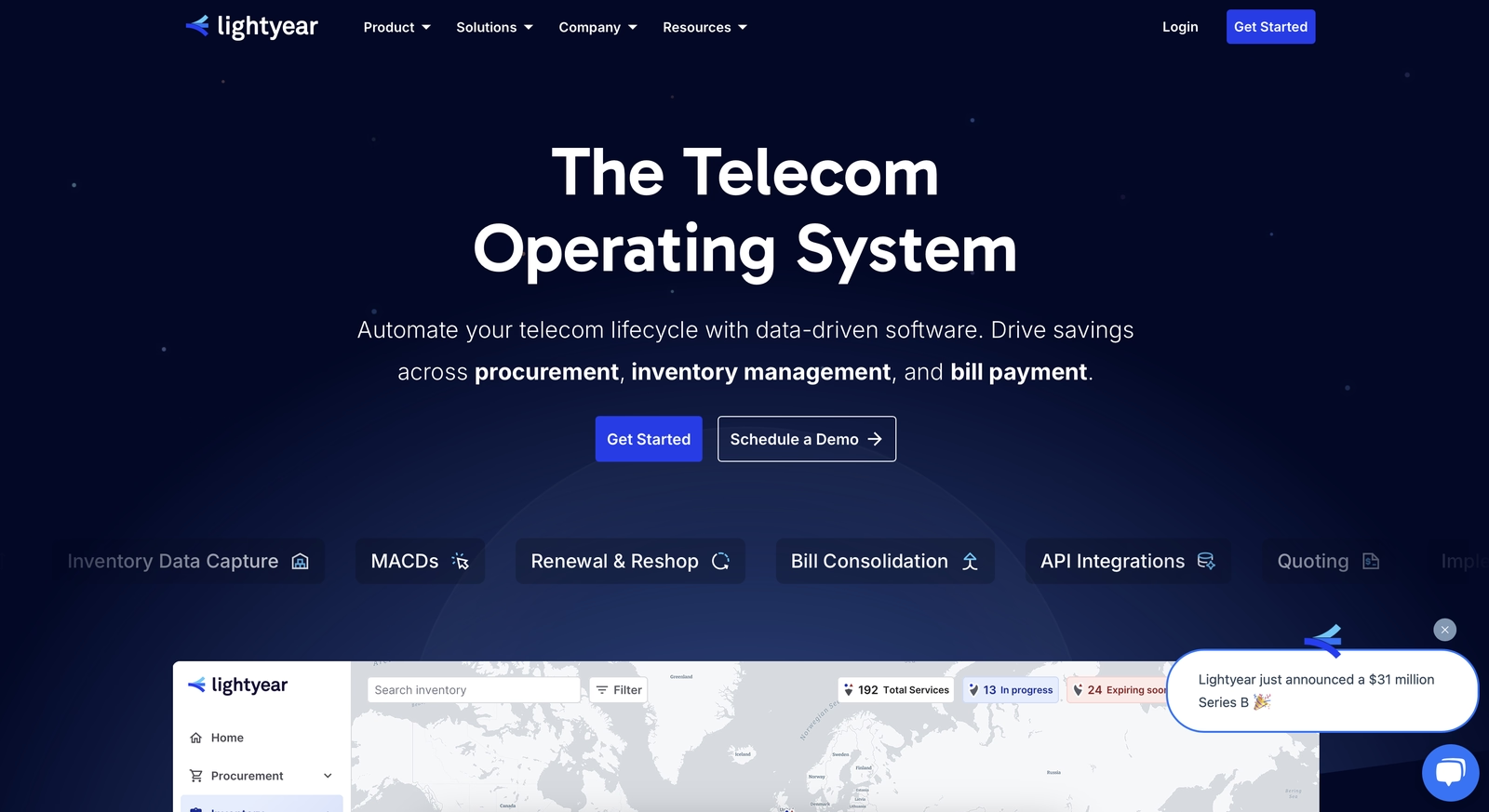
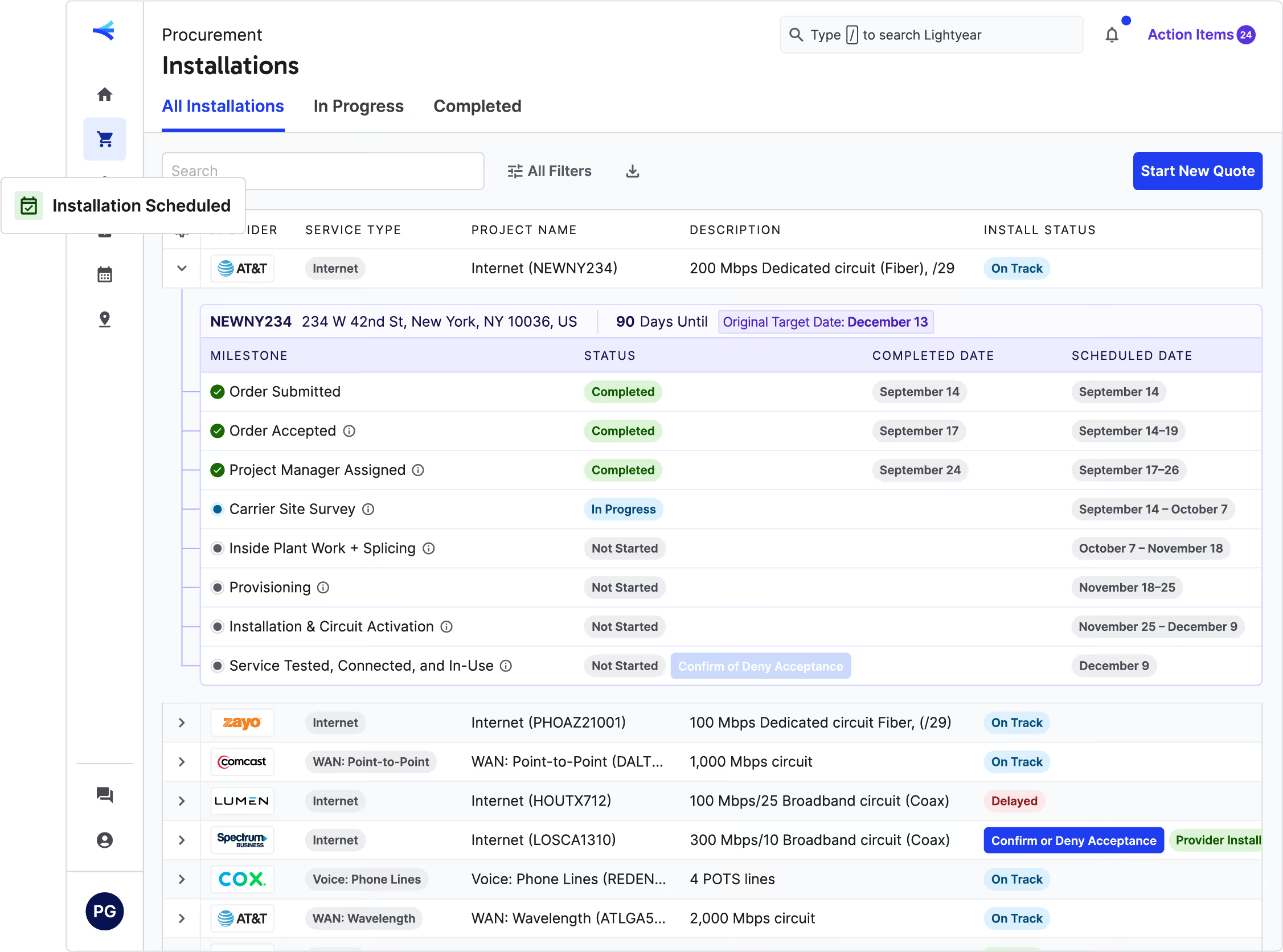
Whether you choose 5G, broadband, or a hybrid approach, Lightyear simplifies the entire process. Our platform automates network service procurement, inventory management, and bill consolidation, taking the pain out of managing your infrastructure.
The hundreds of enterprises who trust Lightyear achieve over 70% time savings and 20% cost savings on their network services. Schedule a demo or get started with our questionnaire today.
Frequently Asked Questions about 5G Router vs Broadband
Can a 5G router fully replace my primary business broadband?
For some businesses with moderate data needs and strong 5G coverage, it can be a viable primary option. However, for most enterprises, wired broadband offers greater stability and truly unlimited data, making 5G better suited for failover, temporary sites, or secondary connections.
Is latency a bigger concern with 5G compared to fiber broadband?
Yes, typically. While 5G latency is very low for a wireless technology, fiber optic broadband generally offers lower and more consistent latency. This is important for applications like VoIP or real-time data processing where minimal delay is critical for performance.
What happens to my connection if the power goes out?
A 5G router can stay online if connected to a battery backup (UPS), as cell towers have their own power. Similarly, your broadband modem and router require a UPS. However, a wired connection can also be affected by power outages at the provider's local facilities.
How does network congestion affect each service?
5G performance can slow down during peak hours if many users are connected to the same cell tower. Business broadband, particularly dedicated fiber, gives you a private line to the provider's network, so your connection speed isn't impacted by your neighbors' online activity.
Let us show you the product and discuss specifics on how it might be helpful.
Schedule a Demo





Revolutionize Your Telecom Experience
Learn how you can get one step closer to optimal business efficiency for all your telecom services.