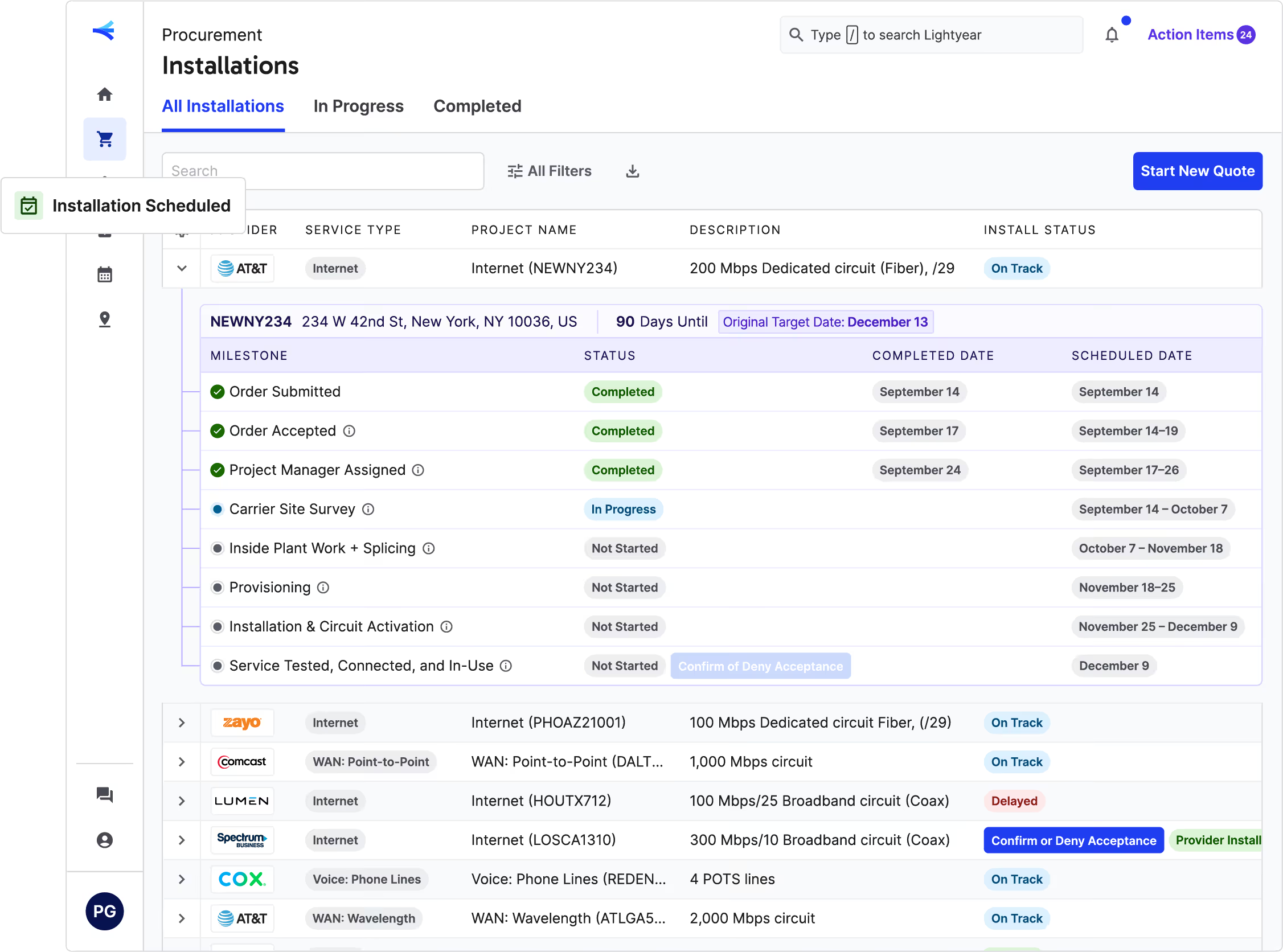
Active Ethernet vs GPON: Enterprise Network Solutions
Deciding between Active Ethernet and GPON? This guide compares dedicated vs. shared bandwidth to help you find the best fit for your business network.


When choosing a fiber optic internet solution for your business, two terms you'll frequently encounter are Active Ethernet and Gigabit Passive Optical Network, or GPON. Both technologies deliver high-speed connectivity, but they do so in fundamentally different ways, which can impact performance, cost, and scalability for your enterprise network.
Understanding the architectural differences between a dedicated Active Ethernet circuit and a shared GPON infrastructure is important for making an informed procurement decision. This article will break down how each works, their key advantages and disadvantages, and which use cases are best suited for each solution.
What is Active Ethernet?
Active Ethernet is a type of fiber optic internet that provides a dedicated, point-to-point connection from the service provider directly to a customer's premises. This means your business gets its own private fiber optic line, ensuring that your bandwidth isn't shared with any other users.
Here are its core characteristics:
- Dedicated Connection: Each customer receives a private, uncontended fiber strand. This direct link from the provider's central office to your building results in consistent performance.
- Symmetrical Speeds: It delivers identical upload and download speeds. This is a significant advantage for businesses that frequently upload large files, use cloud applications, or host video conferences.
- Powered Equipment: The "active" in its name refers to the powered switching equipment at both the provider and customer ends that manages and directs data traffic, similar to a standard Ethernet network.
- Scalability: Bandwidth can often be increased easily, sometimes with a simple software configuration change from the provider, without needing new hardware.
What is GPON?
GPON, or Gigabit Passive Optical Network, uses a point-to-multipoint architecture. Instead of providing a dedicated line, a single fiber optic strand from the provider is split to serve multiple customers in a given area. This shared model has its own distinct characteristics.
The "passive" in its name refers to the use of unpowered optical splitters to distribute the signal, which simplifies the network infrastructure.
- Shared Infrastructure: A single fiber from the provider’s central office can be split to serve up to 64 end-users. This means the total available bandwidth is shared among all customers on that split.
- Passive Components: The network relies on unpowered splitters to direct traffic, which lowers the provider's operational and equipment costs.
- Asymmetrical Speeds: GPON services typically offer much faster download speeds than upload speeds. This is suitable for general internet use but can be a limitation for businesses with heavy upload requirements.
- Cost-Effective: Because providers can serve many customers from a single fiber run, GPON is often a more budget-friendly option for businesses that don't require a dedicated connection.
Active Ethernet vs GPON: Key Differences
While both deliver fiber internet, the way they are built and how they manage data creates some fundamental distinctions for your business to consider.
Network Topology
Active Ethernet is built on a point-to-point topology. This provides a direct, private fiber connection between the service provider and your business, creating a dedicated and uncluttered data path.
GPON uses a point-to-multipoint topology. Here, a single fiber from the provider is split to serve multiple locations, meaning your business shares the final network leg with other nearby subscribers.
Bandwidth Structure
The bandwidth in an Active Ethernet circuit is dedicated and symmetrical. If you purchase a 1 Gbps plan, you have exclusive access to 1 Gbps for both uploads and downloads, unaffected by others.
In a GPON network, the total bandwidth is shared among all users on a specific fiber split. This capacity is also typically asymmetrical, with significantly more bandwidth allocated for downloads than for uploads.
Field Equipment
An Active Ethernet network requires powered switches at various points, including at or near the customer premises, to manage and direct traffic. This makes it an "active" network from end to end.
GPON is defined by its use of unpowered optical splitters in the field to distribute the signal. This "passive" design simplifies the infrastructure between the provider's central office and the group of end-users.
Cost Considerations for Active Ethernet and GPON
When it comes to budget, the differences between these two technologies are quite clear. The dedicated nature of Active Ethernet typically comes at a premium, while the shared model of GPON allows for more competitive pricing. Here’s a breakdown of what to expect:
- Active Ethernet Costs: Expect higher monthly recurring charges and potentially higher installation fees. You are paying for a private, dedicated circuit, which includes exclusive bandwidth and the active switching hardware needed to manage it.
- GPON Costs: Monthly fees are substantially lower because the core infrastructure and bandwidth are shared among multiple users. This cost-sharing model makes it a highly economical option for many businesses.
- Hardware and Operational Expenses: The provider's cost to maintain an Active Ethernet network is higher due to the powered equipment required throughout the network. GPON's use of unpowered splitters reduces these operational costs for the provider, and these savings are typically reflected in the customer's bill.
Performance and Scalability in Active Ethernet and GPON
Beyond the price tag, how these connections perform under pressure and grow with your business are critical factors. The architectural differences directly influence speed consistency and your ability to scale services.
- Performance Consistency: Active Ethernet provides predictable, stable performance at all times because your connection is not shared. With GPON, performance can fluctuate, as your bandwidth is distributed among other users. During peak usage times in your area, you may experience slower speeds.
- Handling Demanding Workloads: Because Active Ethernet offers symmetrical speeds, it easily handles heavy upload activity like large file transfers, cloud backups, and high-definition video calls. GPON's asymmetrical speeds, with a lower upload capacity, can be a limiting factor for businesses with these requirements.
- Scalability: Upgrading your bandwidth on an Active Ethernet circuit is typically a simple process that can often be done remotely by the provider. Scaling a GPON connection can be more complex; if your business's needs exceed the capacity of your shared fiber, it may require a more involved change from the provider.
Security Features in Active Ethernet and GPON
When it comes to network security, the fundamental architecture of Active Ethernet and GPON creates different considerations. The primary difference lies in how data is isolated and protected from other users.
- Active Ethernet: Security is a direct result of its dedicated architecture. Because your business has a private, point-to-point fiber line, your data is physically isolated from other subscribers' traffic. This model inherently prevents eavesdropping or interference from other customers on the provider's network.
- GPON: Security is achieved through mandatory encryption. Since GPON is a shared network, it uses the Advanced Encryption Standard (AES) to protect data in transit. This ensures that even though your traffic travels alongside others on the same fiber, it remains private and inaccessible to other subscribers.
Making the Right Choice for Your Enterprise
Ultimately, the decision between Active Ethernet and GPON comes down to your specific business requirements, budget, and performance expectations.
If your operations depend on guaranteed bandwidth and symmetrical speeds for tasks like large data transfers, video conferencing, or cloud applications, Active Ethernet is the more suitable choice. Its dedicated nature provides the reliability and consistent performance that essential business functions demand.
On the other hand, if your primary concern is cost and your internet usage is more typical—focused on downloads with less demanding upload needs—GPON offers a highly practical and economical solution. It is well-suited for businesses where occasional speed variations during peak times are not a major issue.
By evaluating your company's daily workload and future growth plans against these key differences, you can confidently select the fiber technology that aligns with both your operational needs and financial goals.
Need Help Managing Your Network? Lightyear Can Help
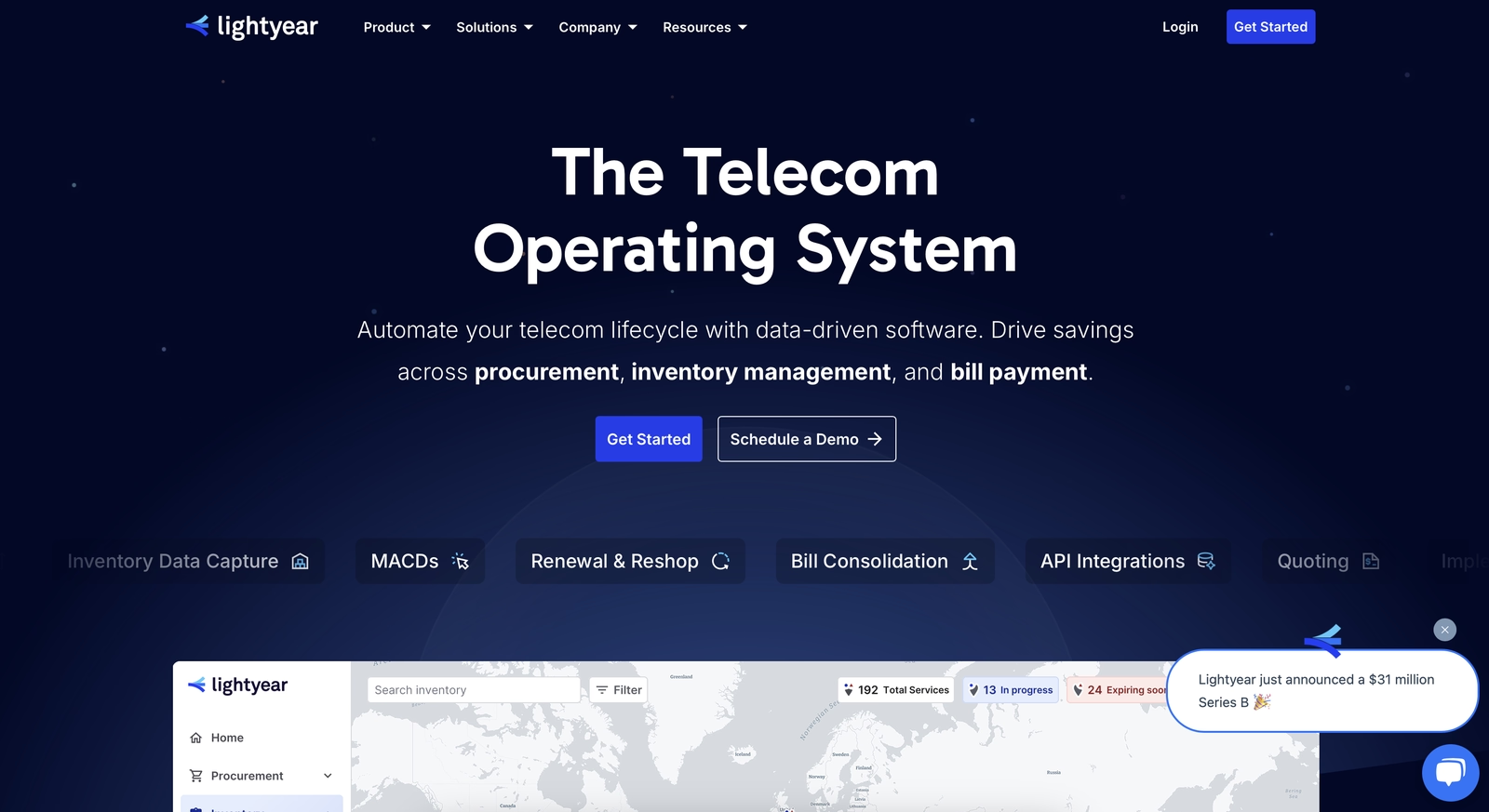
Whether you decide on Active Ethernet or GPON, Lightyear helps you procure and manage the service. Our software automates the telecom lifecycle, from sourcing competitive quotes for either connection type to tracking your network inventory.
By automating network service procurement, inventory management, and bill consolidation, Lightyear takes the pain out of telecom infrastructure management. Enterprises using Lightyear achieve over 70% in time savings and 20% in cost savings on their network services.
Schedule a demo or get started with our questionnaire today.
Frequently Asked Questions about Active Ethernet vs GPON
Which technology has lower latency?
Active Ethernet typically provides lower and more consistent latency due to its dedicated, point-to-point connection. Since GPON is a shared network, latency can be slightly higher and may vary more, especially during periods of high neighborhood usage.
Is one technology more reliable than the other?
Both are highly reliable, but Active Ethernet often comes with more robust Service Level Agreements (SLAs) for uptime and repairs. Its simpler, dedicated architecture has fewer potential points of failure compared to the shared components in a GPON network.
How does installation time compare?
GPON installation is often faster if the provider's fiber infrastructure is already present in your area. Active Ethernet can require a longer lead time, as it involves provisioning a dedicated fiber line directly to your building, which can be a more involved process.
Can GPON support business applications like VoIP?
Yes, GPON can support VoIP and video conferencing. However, for businesses with heavy usage, Active Ethernet's symmetrical speeds offer superior performance and reliability for these real-time applications, preventing issues like call jitter or poor video quality during peak hours.
Let us show you the product and discuss specifics on how it might be helpful.
Schedule a Demo





Revolutionize Your Telecom Experience
Learn how you can get one step closer to optimal business efficiency for all your telecom services.