Asynchronous Transfer Mode vs Ethernet Explained
Asynchronous Transfer Mode vs. Ethernet explained. Understand the key differences in speed, cost, and application for your enterprise network.


Asynchronous Transfer Mode (ATM) and Ethernet are two foundational technologies for data transmission in computer networks. While both move data from one point to another, they were designed for different purposes and have distinct operational characteristics.
Understanding the differences between them is essential for any IT or telecom professional responsible for network architecture and procurement. This article provides a clear comparison to help you determine which technology is appropriate for your needs.
What is Asynchronous Transfer Mode (ATM)?
Asynchronous Transfer Mode (ATM) is a networking standard designed for high-speed telecommunications that can handle voice, video, and data traffic all at once. It was developed in the 1980s to be a single, unified network protocol for a wide range of services.
The core principle of ATM is its use of small, fixed-size packets called "cells." Each cell is 53 bytes long—48 bytes for the payload (your data) and 5 bytes for the header (routing information). This uniform size makes traffic predictable and easy to manage, which is especially important for real-time applications like voice calls that are sensitive to delays.
- Fixed-Size Cells: By breaking all data into uniform cells, ATM provides consistent and predictable transmission times.
- Connection-Oriented: A dedicated virtual circuit is set up between the source and destination before data transfer begins, guaranteeing a certain quality of service (QoS).
- Versatile Traffic Handling: It was built to support different types of traffic on the same network, from data files to live video streams.
What is Ethernet?
Ethernet is the most common technology used for local area networks (LANs) today. Originally developed in the 1970s, it has become the de facto standard for connecting devices within a home, office, or data center.
Unlike ATM's fixed-size cells, Ethernet uses variable-sized data packets called "frames." This flexibility makes it highly efficient for transferring large files, which is typical for LAN traffic. It operates on a connectionless basis, meaning data is sent without establishing a dedicated path first, simplifying network setup and management.
- Variable-Sized Frames: Ethernet frames can vary in size, which is ideal for handling bulk data transfers common in LAN environments.
- Connectionless Protocol: It sends data packets individually without a pre-established circuit, offering simplicity and flexibility.
- Scalability and Cost: Ethernet is known for its low implementation cost and its ability to scale from speeds of 10 Mbps to over 400 Gbps, adapting to growing network demands.
Key Differences Between ATM and Ethernet
While both technologies move data, their underlying methods create significant differences in performance, reliability, and application. The main distinctions come down to how they handle data and guarantee service.
Quality of Service (QoS)
ATM was designed with strong Quality of Service (QoS) capabilities from the start. Because it establishes a dedicated virtual path, it can guarantee bandwidth for real-time applications like voice calls, preventing jitter and delay.
Ethernet, on the other hand, traditionally uses a "best-effort" delivery model. Data packets compete for bandwidth, and there are no inherent guarantees. Modern Ethernet can implement QoS through tagging and prioritization, but it is not as deeply integrated as it is in ATM.
Data Overhead and Efficiency
The structure of data packets directly impacts network efficiency. ATM's small, fixed-size cells have a high overhead, as each 48-byte payload requires a 5-byte header. This can be inefficient for large file transfers.
Ethernet’s variable frame sizes are more efficient for the bulk data traffic common on LANs. The overhead is proportionally much smaller for large packets, allowing more of the bandwidth to be used for actual data.
Network Scope and Application
The two technologies were also built for different environments. ATM was developed as a unified solution for wide area networks (WANs), intended to carry voice, video, and data over long distances on carrier networks.
Ethernet was created specifically for local area networks (LANs). Its simplicity, low cost, and scalability have made it the dominant choice for connecting devices within a single building or campus.
Advantages of Using ATM
While Ethernet has become dominant in LANs, ATM offers distinct benefits, particularly for service providers and large-scale networks that require predictable performance. Its design prioritizes reliability and consistency over the "best-effort" approach common in other technologies.
- Guaranteed Bandwidth: Because ATM establishes a dedicated virtual path for data, it can reserve bandwidth for specific applications. This is crucial for real-time services like voice and video that cannot tolerate interruptions.
- Predictable Performance: The fixed-size cell structure results in very low and consistent latency. This predictability is a major advantage for delay-sensitive traffic, providing a smooth user experience.
- Integrated Voice, Video, and Data: ATM was built to carry different types of traffic on a single network. This capability allowed carriers to consolidate their services onto one unified infrastructure, simplifying management.
Advantages of Using Ethernet
Ethernet's dominance in local area networking stems from several practical advantages that make it the default choice for most businesses. Its widespread adoption has created an ecosystem that is both affordable and easy to manage, especially for internal corporate networks.
- Cost-Effectiveness: Due to its ubiquity, Ethernet hardware—such as switches, cables, and network interface cards—is mass-produced and widely available. This competition drives down costs for deployment, upgrades, and maintenance.
- Simplicity and Ease of Management: Ethernet networks are relatively simple to install and troubleshoot. Their connectionless nature means less complex configuration is needed to add or move devices, making day-to-day network administration more straightforward.
- Interoperability and Familiarity: As a global standard, Ethernet ensures broad compatibility. Nearly all network-capable devices support it, eliminating integration headaches. This also means there is a large talent pool of IT professionals familiar with the technology.
Choosing the Right Technology for Your Network
Deciding between ATM and Ethernet comes down to your specific network requirements, particularly the type of traffic you handle and the performance guarantees you need.
Consider ATM for Specific WAN Applications
ATM remains relevant for service providers or large enterprises that need to support legacy systems requiring strict quality of service.
If your network must carry real-time voice and video over a wide area with guaranteed performance, ATM's connection-oriented structure provides that reliability. It is generally found in carrier backbones rather than in a typical enterprise environment.
Opt for Ethernet for Most Business Networks
For nearly all modern local area networks (LANs), Ethernet is the standard choice. Its low cost and simplicity make it ideal for connecting computers, servers, and other devices within an office.
Ethernet's scalability also means it can grow with your business, from a small office setup to a large corporate campus. Furthermore, technologies like Metro Ethernet have extended its capabilities into the WAN space, making it a versatile option for connecting multiple sites affordably.
Final Thoughts on ATM vs Ethernet
The choice between ATM and Ethernet is largely a settled matter for most enterprise networks today. While both technologies were pivotal in the development of modern networking, their applications have diverged significantly over time.
ATM was built for an era when guaranteeing quality of service for voice and video over wide area networks was a primary challenge. Its fixed-cell structure provided the predictable performance needed for these real-time applications on carrier backbones.
However, Ethernet's flexibility, low cost, and continuous evolution have made it the standard for nearly every business use case. For IT leaders making procurement decisions, Ethernet offers a scalable, affordable, and widely supported solution for both local and wide area networking needs, making it the practical choice for future growth.
Need Help Managing Your Network? Lightyear Can Help
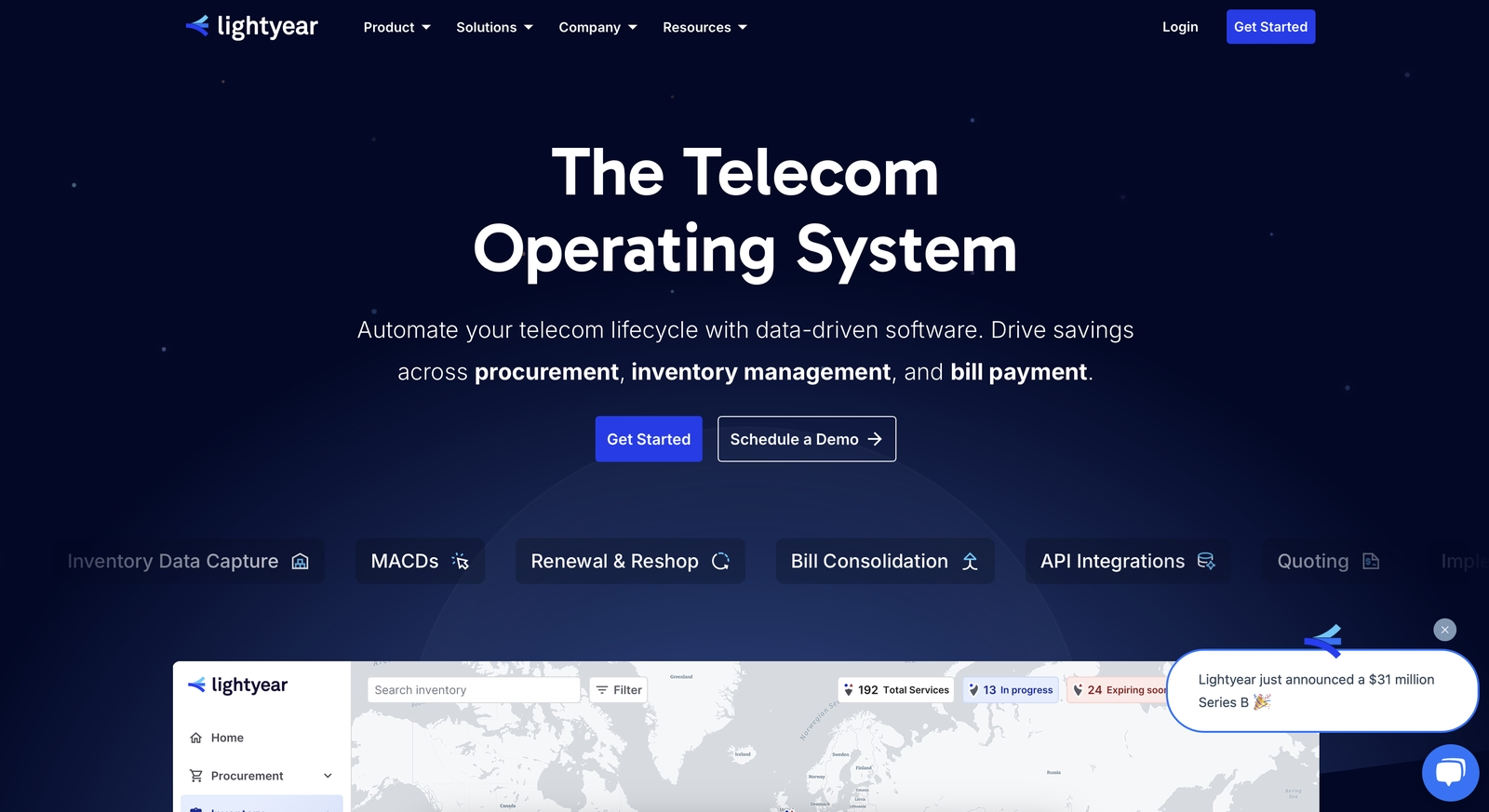
Whether you're procuring new Ethernet services or managing legacy circuits, Lightyear takes the pain out of telecom infrastructure management. By automating network service procurement, inventory management, and bill consolidation, the hundreds of enterprises who trust Lightyear achieve 70%+ time savings and 20%+ cost savings on their network services.
Schedule a demo or get started with our questionare today.
Frequently Asked Questions about Asynchronous Transfer Mode vs Ethernet
Is ATM technology completely obsolete?
Not entirely, but its use has become very specialized. You'll still find it in some telecommunication carrier backbones and supporting specific legacy systems. For new enterprise networks, however, Ethernet is the universal standard due to its cost-effectiveness and scalability.
Can modern Ethernet provide the same quality of service as ATM?
Modern Ethernet can achieve high QoS using protocols like MPLS and VLAN tagging to prioritize traffic. While ATM’s architecture has built-in guarantees, properly configured Ethernet networks can reliably support real-time voice and video for most business needs.
Is one protocol more secure than the other?
Neither protocol has inherent security advantages. Security is implemented at higher network layers through firewalls, encryption, and access controls. The security of your network depends on your overall architecture and security policies, not the choice between ATM or Ethernet.
Let us show you the product and discuss specifics on how it might be helpful.
Schedule a Demo





Revolutionize Your Telecom Experience
Learn how you can get one step closer to optimal business efficiency for all your telecom services.