Branch Router vs EdgeRouter: Differences Explained
Confused by Branch vs. Edge Routers? Learn the key differences in location, function, and use cases to choose the right one for your network.

When building or managing a company's wide area network (WAN), the terms "branch router" and "edge router" are frequently used. While they sound similar and both manage network traffic, they are designed for different purposes and locations within your network architecture.
The distinction is important for designing a network that is efficient, secure, and cost-effective. This article will clarify the specific functions of each router, helping you make more informed decisions for your IT infrastructure.
What is a Branch Router?
A branch router is a networking device specifically designed to connect a smaller, remote office—like a regional sales office or retail store—to the main corporate network. It acts as the primary gateway for that location, allowing employees to securely access centralized company resources, applications, and the internet. Its focus is on providing reliable connectivity for a smaller group of users at the "branch" of the organization.
Key functions of a branch router typically include:
- Local Network Services: It provides essential local area network (LAN) connectivity, connecting employee computers, printers, and other devices within the branch office through both wired Ethernet and Wi-Fi.
- WAN Connectivity: Its primary role is to establish a stable and secure wide area network (WAN) connection back to the company headquarters or data center, often using technologies like SD-WAN or a VPN.
- Integrated Functions: To simplify deployment, many branch routers are multi-function devices that bundle basic firewall security, traffic prioritization (QoS), and sometimes even voice-over-IP (VoIP) capabilities.
- Centralized Management: Since enterprises can have hundreds of branch locations, these routers are built for remote deployment and management, allowing a central IT team to oversee the entire network.
What is an EdgeRouter?
An edge router, sometimes called a core router, is a high-capacity device that sits at the boundary, or "edge," of an enterprise network. Its primary job is to connect the entire internal network to external networks, such as the internet or a partner network. Think of it as the main interchange for all data entering or leaving your organization.
Because it handles traffic from the entire company, an edge router is built for performance and reliability. Its core responsibilities include:
- High-Volume Traffic Management: It is engineered to process large amounts of data from many sources and direct it efficiently between the internal network and the internet.
- Advanced Routing: It uses sophisticated routing protocols, most notably Border Gateway Protocol (BGP), to determine the best paths for data across the internet by communicating with other networks.
- Service Aggregation: It aggregates traffic from all internal segments, including data centers and branch offices connected via their own routers, before routing it externally.
- Perimeter Security: It serves as a crucial point for enforcing security policies, working in tandem with firewalls to filter traffic at the network's perimeter before it can reach internal systems.
Key Differences Between Branch Routers and EdgeRouters
While their names suggest similar roles, the key differences lie in where they sit in the network and the specific jobs they perform.
1. Network Position and Scope
Branch Router: This device operates at the edge of a remote office, connecting that single location to the main corporate WAN. Its scope is limited to serving the users and devices within that specific branch.
Edge Router: This router sits at the perimeter of the entire enterprise network. Its scope is global, managing all traffic flowing between the company's internal network and external networks like the internet.
2. Primary Traffic Flow
Branch Router: Its main job is to handle traffic from the branch office to the central data center or headquarters. It also manages local traffic between devices within the office.
Edge Router: It exclusively manages traffic entering and exiting the organization's network boundary. It is the primary on-ramp and off-ramp to the internet for the whole company.
3. Routing Protocols
Branch Router: These typically rely on simpler interior gateway protocols (IGPs) or static routes to connect back to the corporate network. In modern setups, they are often managed via an SD-WAN overlay, which simplifies routing.
Edge Router: This router's defining feature is its use of the Border Gateway Protocol (BGP). BGP is essential for exchanging routing information with other networks on the internet, a function a branch router never performs.
4. Physical Interfaces
Branch Router: These are often integrated devices featuring multiple LAN ports, Wi-Fi capabilities, and various WAN connection options (like Ethernet or LTE) to support a small office.
Edge Router: This is a specialized device built with a lower port density but much higher speeds. It features high-speed interfaces (e.g., 10GbE, 100GbE) designed for fiber connections to internet service providers.
Performance and Scalability
The performance and scalability needs for these two router types are fundamentally different, reflecting their distinct roles in the network. Their designs are optimized for very different traffic loads and growth patterns.
- Branch Router: Performance is tailored to the needs of a specific remote office, supporting a limited number of users and devices. Its throughput is designed for standard business activities, and its processing power is sufficient for local services and a secure WAN link. Scalability is achieved horizontally; as the company grows, it simply adds more branch routers at new locations.
- Edge Router: This device is built for maximum performance, capable of handling the aggregated traffic from the entire organization. It has powerful processors to manage complex BGP routing and forward massive amounts of data with minimal delay. Scalability is vertical—as the company's total bandwidth demand increases, the edge router is upgraded to a more powerful model with faster interfaces to accommodate the growth.
Security Features
Security is another area where these routers have distinct responsibilities, tailored to their position in the network. While both are vital for protection, their approaches and capabilities are fundamentally different.
- Branch Router: Security is typically integrated and focused on protecting the local office. These devices often come with built-in Unified Threat Management (UTM) features, which can include a stateful firewall, VPN termination, and basic content filtering. The goal is to provide a sufficient, all-in-one security solution for a remote site without requiring multiple dedicated appliances.
- Edge Router: Security is specialized and built for high-performance perimeter defense. An edge router rarely handles deep packet inspection itself. Instead, it works alongside dedicated security appliances like next-generation firewalls (NGFWs) and DDoS mitigation systems. Its primary security role is to enforce access control lists (ACLs) and direct traffic to these specialized devices for thorough inspection.
- Scope of Protection: A branch router's security functions are self-contained, protecting that single location. In contrast, an edge router is a critical component of the entire organization's security posture, acting as the first line of defense for all incoming and outgoing traffic from every part of the company.
Cost and Value for Enterprises
When it comes to budget, the financial profiles of branch and edge routers are worlds apart, reflecting their different roles and the scale at which they operate.
Branch routers are significantly less expensive per unit. They are designed for mass deployment across potentially hundreds of locations, so they are built for a lower price point. Their hardware is sized to support a single office, not the traffic of an entire enterprise.
In contrast, an edge router is a major capital expenditure. These devices contain powerful processors and high-speed, expensive interfaces needed to manage the aggregated traffic of the whole company. The cost often includes licensing for advanced routing protocols like BGP, which is not a feature of branch routers.
Ultimately, the value of each is tied to its function. A branch router offers value through its cost-effective, all-in-one connectivity for a remote site. An edge router’s value comes from its performance and reliability, serving as a stable foundation for the entire organization's external connectivity.
Making the Right Choice for Your Network
Choosing between a branch and an edge router isn't a matter of which is better, but which is correct for the task at hand. The decision is dictated entirely by where the device will sit in your network architecture and the job it needs to perform.
If you are connecting a remote office, retail store, or any other satellite location to your main corporate network, a branch router is the appropriate choice. It is designed specifically for this purpose.
Conversely, if you need to manage the flow of all traffic between your entire organization and the internet, you require an edge router. It is the only device built with the performance and routing protocols, like BGP, to handle this role.
Ultimately, using each router for its intended function is fundamental to building a network that is secure, reliable, and cost-effective. Making the right selection ensures each part of your infrastructure performs its job without being over- or under-provisioned.
Need Help Managing Your Network? Lightyear Can Help
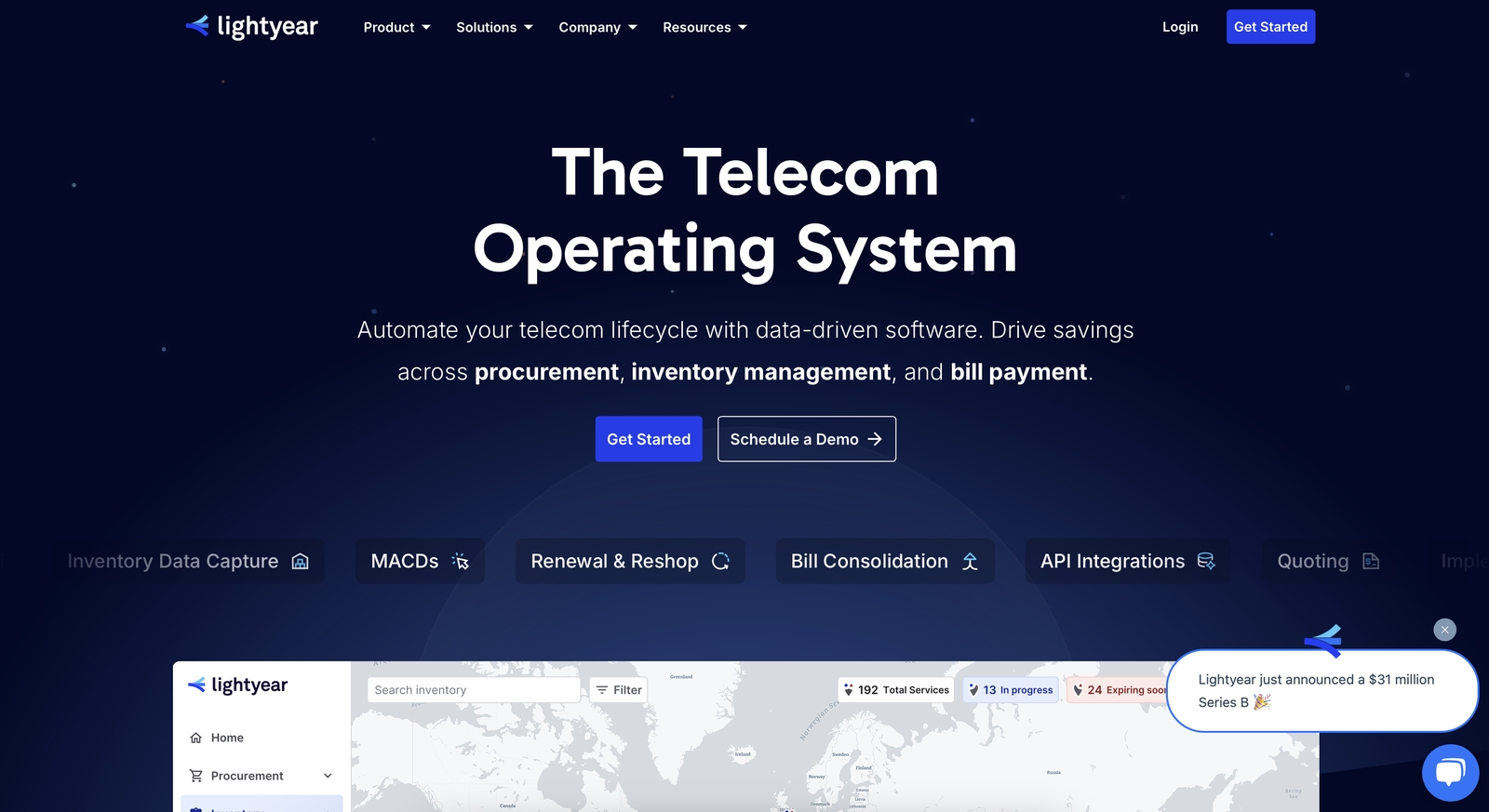
Making the right hardware choices is a key step, but managing the underlying network services is an ongoing challenge. Lightyear simplifies this by automating procurement, inventory, and billing for your entire telecom infrastructure.
Enterprises that use Lightyear report saving over 70% of their time and reducing costs by up to 20%, freeing up resources to focus on strategic network design.
Schedule a demo or get started with our questionnaire today.
Frequently Asked Questions about Branch Router vs EdgeRouter
Can I use an edge router in a branch office?
While you technically could, it would be inefficient and costly. Edge routers are designed for high-volume internet traffic and lack the integrated LAN and Wi-Fi features common in branch routers. It's a case of using the wrong tool for the job.
How does SD-WAN affect the choice between these routers?
SD-WAN is primarily a feature of branch networking. It adds intelligence to branch routers but doesn't change the need for a separate edge router. The edge router's job of handling BGP and connecting the entire enterprise to the internet remains distinct.
Does a small business with one office need a branch router?
No. A single-office business doesn't have "branches" to connect. It would use a business-grade router or firewall, which acts as its edge device, to connect its local network directly to the internet. Branch routers are specifically for multi-site organizations.
Is a "core router" the same as an "edge router"?
The terms are often used interchangeably, but can be different. An edge router specifically connects your network to an external one, like the internet. A core router typically connects different segments within a very large internal network, though it may also perform edge functions.
Let us show you the product and discuss specifics on how it might be helpful.
Schedule a Demo





Revolutionize Your Telecom Experience
Learn how you can get one step closer to optimal business efficiency for all your telecom services.