Business vs Home Routers: Key Differences Explained
What's the real difference between a business and home router? We explain the key distinctions in security, performance, and network management.

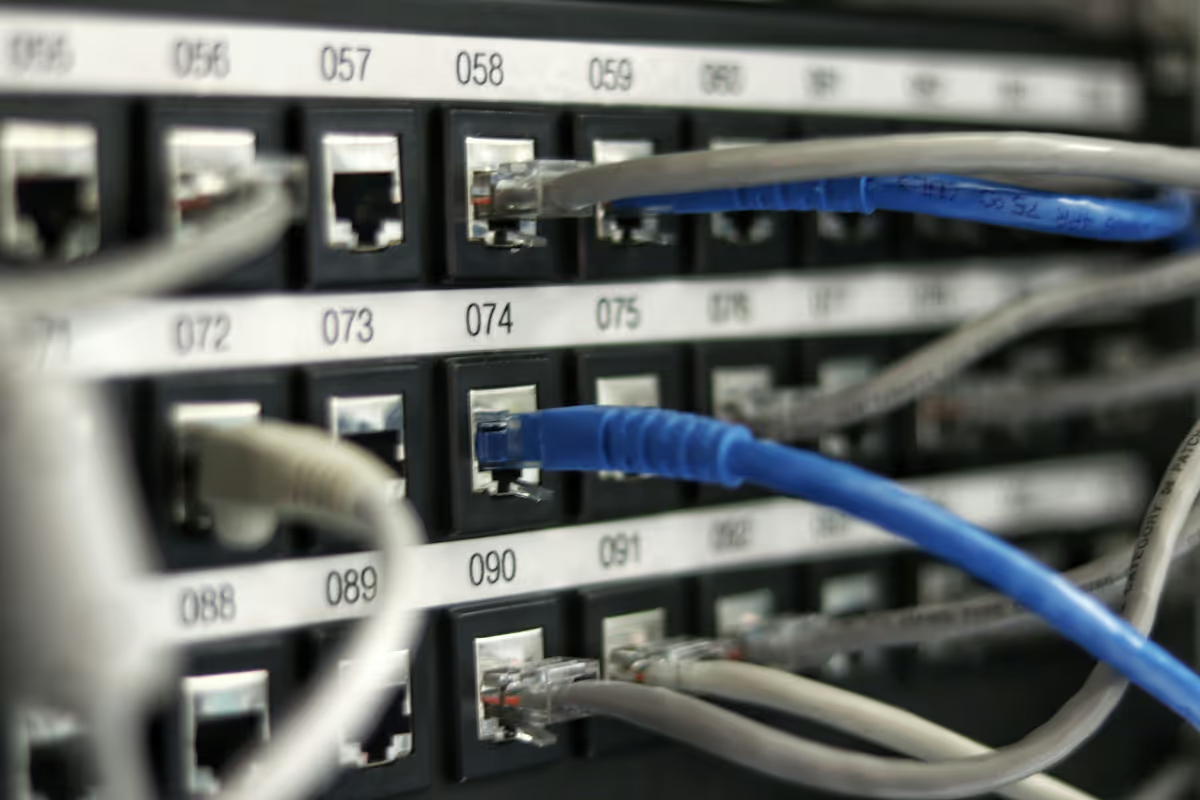
At a basic level, all routers perform the same core function: connecting your devices to the internet. This can make it seem like a standard home router might be a sufficient, cost-effective choice for a small office.
However, business and home routers are engineered for fundamentally different environments and demands. Business-grade routers are built to handle higher traffic volumes, provide advanced security features, and support the reliability required for commercial operations.
Understanding these distinctions is critical for any IT or operations leader building a dependable network. This guide will explain the key differences to help you make an informed decision for your company.
What is a Business Router?
A business router is a networking device specifically designed to meet the demands of a commercial setting. Think of it as the central traffic controller for an office network, built to manage a higher volume of users and more complex data flow than a typical home setup. Its core purpose is to provide a stable, secure, and manageable internet connection for business operations.
Key features that define a business router include:
- High-Volume Connectivity: It is engineered to support dozens or even hundreds of simultaneous connections from computers, servers, printers, and other networked devices without a drop in performance.
- Advanced Security: Business routers come equipped with robust security protocols, including sophisticated firewalls and Virtual Private Network (VPN) capabilities, to protect sensitive company data from external threats.
- Network Management: They offer features like VLAN (Virtual Local Area Network) support to segment network traffic—for instance, keeping guest Wi-Fi separate from the internal corporate network.
- Quality of Service (QoS): This feature allows IT administrators to prioritize network traffic, ensuring that critical applications like VoIP calls or video conferences receive the necessary bandwidth for smooth operation.
- Enhanced Durability: Built with higher-quality components, these routers are designed for continuous, reliable operation to minimize downtime and support business continuity.
What is a Home Router?
A home router is a networking device designed for simplicity and everyday use in a residential setting. Its primary goal is to provide reliable internet access for a handful of personal devices with minimal setup, prioritizing user-friendliness over advanced network management.
Unlike their business-focused counterparts, home routers are built for a less demanding environment. Key characteristics include:
- Ease of Use: They are built for the average consumer, often featuring straightforward web interfaces or mobile apps for quick setup and management.
- Standard Connectivity: A home router is optimized to support a typical household's worth of devices—like smartphones, laptops, and smart TVs—for activities such as streaming, browsing, and gaming.
- Essential Security: They come with standard security features, including password protection (WPA2/WPA3) and a basic firewall to block common unsolicited traffic.
- Affordability: Built with less complex hardware and software, home routers are significantly more budget-friendly than business-grade models.
Key Differences Between Business Routers and Home Routers
While both devices connect you to the internet, their design philosophies lead to significant differences in features and functionality that impact daily operations.
1. Network Management and Segmentation
A key distinction lies in network control. Business routers provide advanced management features like Virtual LANs (VLANs), which allow you to segment your network. This is crucial for separating guest Wi-Fi traffic from your secure internal network or isolating specific departments.
Home routers, in contrast, offer a simplified management interface. They are designed for ease of use, focusing on basic settings like Wi-Fi passwords and parental controls rather than complex network segmentation.
2. VPN Capabilities
Business routers typically come with built-in VPN server functionality. This enables employees to establish a secure, encrypted connection to the office network from remote locations, which is essential for accessing internal files and systems safely.
Most home routers lack this feature. While some may allow a device to connect to an external VPN service (as a client), they generally cannot act as a central VPN server for your entire team.
3. Hardware and Physical Ports
The physical construction also differs. Business routers are built with more durable, higher-grade components designed for constant operation. They often have more LAN ports and may include options like SFP ports for fiber optic connections.
Home routers use consumer-grade components and typically offer a standard four-port LAN configuration, which is sufficient for a typical household but can be limiting for a growing office.
Security Features in Business vs Home Routers
When it comes to protecting your network, the security tools in business and home routers are worlds apart. While both offer a basic line of defense, business routers provide a multi-layered security posture designed for commercial environments where data protection is paramount.
- Firewall Intelligence: Business routers typically feature advanced, stateful firewalls with intrusion detection and prevention systems (IDS/IPS). These actively monitor traffic for suspicious patterns and block threats automatically. Home routers use simpler firewalls that primarily block unsolicited incoming connections without this deeper analysis.
- Unified Threat Management (UTM): Many business-grade devices integrate comprehensive security services like anti-malware scanning, web content filtering, and application control. These features, often subscription-based, provide a consolidated security solution rarely found on home routers.
- Granular Access Control: Business routers allow administrators to create detailed Access Control Lists (ACLs), specifying exactly which users or devices can access certain parts of the network. This helps enforce strict security policies. Home routers typically offer only basic controls, like blocking specific websites.
- Security Logging and Auditing: A critical feature for compliance and incident response, business routers generate detailed security logs. This provides a clear record of network activity, a capability that is very limited or non-existent in home models.
Performance and Scalability: Business vs Home Routers
Beyond security, the performance and scalability of a router determine its ability to support your business not just today, but as it grows. This is where the internal hardware and design architecture create a significant gap between business and home models.
- Processing Power and Memory: Business routers are equipped with more powerful processors and significantly more RAM. This allows them to handle a high number of concurrent connections and complex routing tasks without performance degradation. A home router, designed for fewer devices, can quickly become a bottleneck in a busy office environment.
- Sustained Throughput: While a home router might advertise high speeds, this performance often drops under the continuous, heavy load of an office network. Business routers are engineered to deliver consistent, high-speed throughput to many users simultaneously, ensuring stable connectivity for all operations.
- Growth and Expansion: Business routers are built for scalability. They are designed to integrate with other network hardware like switches and access points, allowing your network to expand as your company adds more employees and devices. Home routers are typically standalone units with limited capacity for expansion.
Cost Considerations: Business vs Home Routers
While performance and security are critical, the decision often comes down to budget. The price difference between business and home routers is significant, but it reflects more than just the initial purchase. It’s about the total cost of ownership and long-term value.
- Initial Purchase Price: There's no getting around it—business routers cost more upfront. A home router can range from under $100 to a few hundred dollars, while a business-grade model typically starts at several hundred and can run into the thousands, reflecting its superior hardware and software.
- Subscription and Licensing Fees: Many advanced features on business routers, such as Unified Threat Management (UTM) or detailed analytics, operate on a subscription model. These recurring costs must be factored into your budget, whereas home routers rarely have them.
- The Cost of Downtime: This is the hidden variable. A cheap home router that fails can cost a business far more in lost productivity and revenue than the initial savings. The higher price of a business router is an investment in reliability and business continuity.
- Support and Warranty: Business routers often come with multi-year warranties and access to dedicated technical support. This built-in service has value, as it reduces the troubleshooting burden on your IT team.
Choosing the Right Router for Your Needs
Making the right choice comes down to your specific operational requirements and growth plans.
For a very small office with just a few users and non-sensitive data, a high-end home router might seem adequate. However, this approach often introduces security risks and performance bottlenecks as your team expands.
If your operations rely on consistent uptime, handle sensitive information, or require secure remote access via VPN, a business router is the necessary choice. Its advanced security, network management, and capacity for more users are designed for a commercial environment.
Ultimately, the higher initial cost of a business router is an investment in reliability, security, and scalability, protecting your company's productivity and data.
Need Help Managing Your Network? Lightyear Can Help
Choosing the right router is just one piece of the puzzle. Lightyear helps manage your entire telecom stack by automating network service procurement, inventory, and bill consolidation.
The hundreds of enterprises who trust Lightyear achieve 70%+ time savings and 20%+ cost savings on their network services.
Schedule a demo or get started with our questionnaire today.
Frequently Asked Questions about Business Router vs Home Router
Do I need a business router for a home office?
If your work involves sensitive data, requires a stable VPN connection, or you run many devices, a business router is a wise choice. For basic tasks like email and browsing, a high-quality home router is usually sufficient.
Will a business router make my internet faster?
It won't increase the speed from your internet plan. However, its powerful hardware prevents slowdowns when many devices are active, helping you consistently receive the full speed you pay for. It ensures stable performance under heavy network traffic.
Is setting up a business router much more difficult?
Yes, they typically require more technical expertise. Business routers offer complex configuration options for security and network management, whereas home routers are designed for quick, user-friendly setup with simpler interfaces and mobile apps.
Can I use a business router at home?
Absolutely. While it may be more than needed for a typical family, it provides superior security, reliability, and traffic management. It's a great option for tech enthusiasts or anyone wanting enterprise-grade performance on their home network.
Let us show you the product and discuss specifics on how it might be helpful.
Schedule a Demo





Revolutionize Your Telecom Experience
Learn how you can get one step closer to optimal business efficiency for all your telecom services.
