Carrier Ethernet vs Ethernet: Differences Explained
Confused by Carrier Ethernet vs. Ethernet? Learn the key differences for your business network, from LAN connections to carrier-grade WAN services.


When you hear the term “Ethernet,” you likely think of the technology connecting devices within your local office network, or LAN. But when your business needs to connect multiple locations across a city or even the country, you'll encounter a different term: Carrier Ethernet.
While they share a name and some foundational technology, they are built for very different purposes and scales. Understanding this distinction is key for making informed decisions about your wide area network (WAN) infrastructure.
This guide explains the fundamental differences between the two, helping you determine which is the right fit for your organization's connectivity needs.
What is Ethernet?
At its core, Ethernet is the most widely used technology for building a local area network (LAN). Think of it as the nervous system of your office, connecting all your essential devices within a single physical location so they can communicate with each other.
- Scope: It's designed for geographically small areas, such as a single office, a floor in a building, or a corporate campus.
- Function: Its primary job is to connect devices like computers, printers, and servers to each other and to a shared internet connection.
- Technology: It operates based on the IEEE 802.3 family of standards and typically runs over physical twisted-pair copper or fiber optic cables.
- Management: The network is privately owned and managed by the organization's internal IT team.
What is Carrier Ethernet?
Carrier Ethernet takes the familiar technology of standard Ethernet and applies it on a much larger scale, turning it into a service for connecting multiple business locations. Think of it as Ethernet for the wide area network (WAN), sold by a telecommunications provider.
- Scope: It’s a WAN service used to connect business sites across a city, region, or even the country.
- Function: Its purpose is to link separate LANs together, creating a single, unified network for your organization. This allows different offices to share resources securely and efficiently.
- Technology: The service is delivered by a telecommunications provider (the “carrier”) over their network, which is typically fiber-optic. It follows standards set by the MEF (Metro Ethernet Forum) to guarantee performance.
- Management: The carrier manages the network infrastructure. This service is backed by a Service Level Agreement (SLA), which defines performance guarantees like uptime and speed.
Key Differences Between Ethernet and Carrier Ethernet
While both use similar underlying technology, the way they are delivered and managed creates several important distinctions for your business.
1. Ownership and Management
With a standard Ethernet LAN, your company owns, builds, and manages the entire network. You are responsible for all the hardware, maintenance, and troubleshooting.
Carrier Ethernet, on the other hand, is a managed service. The telecom provider owns and operates the network infrastructure, delivering connectivity to your locations for a fee.
2. Performance Guarantees
A key advantage of Carrier Ethernet is the Service Level Agreement (SLA). This contract guarantees specific performance metrics like uptime, bandwidth, and latency, providing a level of reliability for business operations.
Standard Ethernet has no such formal guarantees; its performance depends entirely on the quality of your equipment and internal management.
3. Cost Model
Building a LAN involves capital expenditures (CapEx) for purchasing switches, routers, and cabling. Carrier Ethernet is an operational expenditure (OpEx), with predictable monthly recurring charges for the service, which can simplify budgeting.
4. Scalability and Reach
Standard Ethernet is limited to connecting devices within a single site. Carrier Ethernet is designed for multi-site businesses, allowing you to easily connect new offices across a wide geographic area onto a single, unified network.
Benefits of Using Ethernet
For connecting devices within a single location, standard Ethernet remains the go-to choice for good reason. Its primary advantages lie in its simplicity and cost-effectiveness for local area networking.
- Low Cost: Ethernet components like switches and cables are widely available and inexpensive. This makes setting up a high-speed local network highly affordable, especially compared to WAN technologies.
- High Performance: It delivers fast and reliable data transfer speeds, easily supporting demanding office tasks like large file sharing, video conferencing, and access to local servers.
- Complete Control: Because you own the network, your IT team has full authority over its security, configuration, and traffic prioritization. This allows you to tailor the network to your specific operational requirements.
- Ease of Management: The technology is mature and well-understood, making it straightforward for internal IT staff to install, manage, and troubleshoot without relying on an external provider.
Advantages of Carrier Ethernet for Enterprises
- Enhanced Security:Since traffic runs over a private, dedicated network instead of the public internet, Carrier Ethernet provides a more secure connection between your sites. This is crucial for protecting sensitive corporate data.
- Flexible Bandwidth:Many services allow you to adjust your bandwidth on demand. This flexibility lets you scale network capacity to meet changing business needs without lengthy provisioning delays.
- Simplified WAN Architecture:It extends a familiar and standardized technology (Ethernet) across the wide area network. This simplifies management and reduces the need for specialized expertise in more complex protocols like MPLS.
- Reliable Application Performance:The service guarantees low latency and jitter, which is essential for real-time applications. This ensures that services like VoIP, video conferencing, and cloud access perform consistently and without interruption.
Choosing the Right Solution for Your Business
The right choice depends entirely on your organization's structure, scale, and operational priorities. Here’s a straightforward breakdown to help you decide.
1. When to Choose Standard Ethernet
Standard Ethernet is the default choice for your local area network (LAN). It is the ideal solution for connecting devices within a single physical location, like one office or building.
If your operations are confined to one site and you have an internal IT team capable of managing the network infrastructure, standard Ethernet provides the performance and control you need at a very low cost.
2. When to Choose Carrier Ethernet
Carrier Ethernet is built for businesses that operate across multiple locations. If you need to create a unified, secure network connecting separate offices, this is the service for you.
It becomes the necessary choice when you require guaranteed performance for critical applications like VoIP or cloud services, backed by an SLA. It is also preferable if you want a predictable operational expense and a fully managed service from a telecom provider.
Final Thoughts on Ethernet and Carrier Ethernet
Think of Ethernet and Carrier Ethernet not as competing technologies, but as two sides of the same coin, each designed for a different scale. Standard Ethernet is the foundation of your local network, giving you control and speed within one location.
Carrier Ethernet extends that same familiar technology across a wide area, transforming it into a managed service. It connects your separate LANs together, creating a single, secure network for your multi-site business without the complexity of managing the infrastructure yourself.
Need Help Managing Your Network? Lightyear Can Help
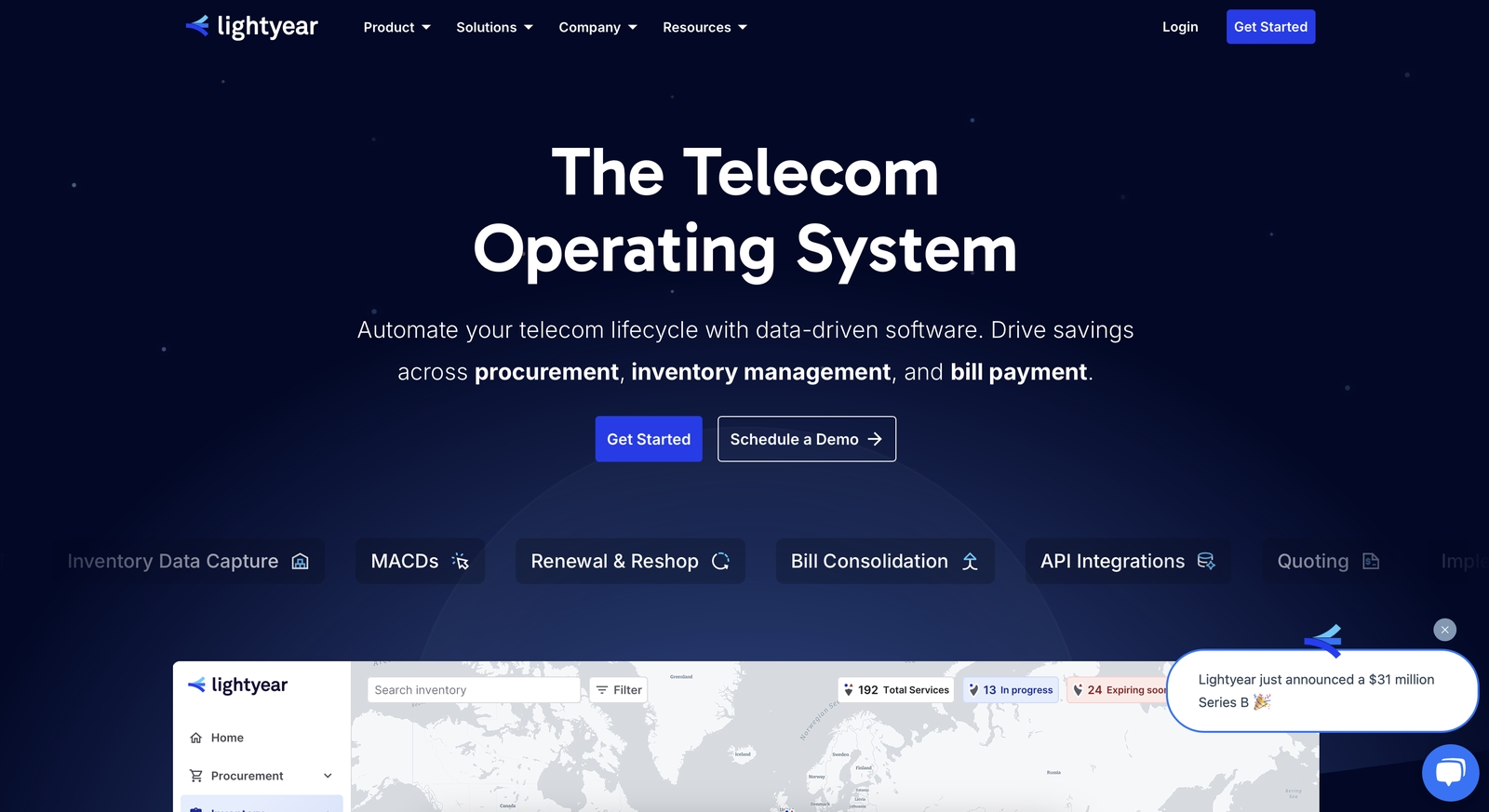
Choosing the right service is just the first step; managing it is the next challenge. Lightyear simplifies the entire telecom lifecycle, from procuring services like Carrier Ethernet to managing inventory and consolidating bills, helping enterprises save over 70% in time and 20% in costs.
Schedule a demo or get started with our questionnaire today.
Frequently Asked Questions about Carrier Ethernet vs Ethernet
Is Carrier Ethernet the same as Metro Ethernet?
Not exactly. Metro Ethernet is a type of Carrier Ethernet that connects sites within a single metropolitan area. Carrier Ethernet is the broader term for any Ethernet service from a provider, which can also cover regional, national, or even international networks.
How does Carrier Ethernet compare to MPLS?
Carrier Ethernet is often simpler and more cost-effective, extending familiar LAN technology to the WAN. MPLS is a more versatile protocol that can handle various traffic types and offers advanced traffic engineering, but it is typically more complex and expensive to implement.
Can I use my existing Ethernet hardware with a Carrier Ethernet service?
Yes. The provider delivers the service to a handoff point at your location. From there, you connect your standard Ethernet switches and routers to integrate the service directly into your existing local area network infrastructure without needing special equipment.
Let us show you the product and discuss specifics on how it might be helpful.
Schedule a Demo





Revolutionize Your Telecom Experience
Learn how you can get one step closer to optimal business efficiency for all your telecom services.