Configuration Management vs Infrastructure as Code Explained
Configuration Management vs. Infrastructure as Code: Learn the key differences and see which approach is right for managing your IT environment.


Managing complex IT environments requires precise tools and methodologies. Two key concepts that often come up are Configuration Management (CM) and Infrastructure as Code (IaC).
While they both aim to automate and control IT systems, they address different aspects of the process. Understanding their distinct roles is crucial for making informed decisions about your technology stack.
What is Configuration Management?
At its core, Configuration Management (CM) is the process of systematically handling changes to a system to maintain its integrity over time. It acts as a detailed blueprint and set of rules for your IT infrastructure, ensuring that all components—from servers and software to network devices—are kept in a specific, desired state.
The practice focuses on maintaining systems, often through a set of key activities:
- Establishing Consistency: Ensuring that every system and application is configured identically according to a defined baseline. This prevents configuration drift, where systems become different over time.
- Automating Tasks: Using software to automate the setup and maintenance of system configurations, which reduces manual effort and the potential for human error.
- Tracking Changes: Keeping a detailed record of all configuration changes. This provides a clear audit trail of who changed what, when, and why.
- Enforcing Policies: Applying and enforcing security and compliance policies across the entire infrastructure to maintain a secure and stable environment.
Essentially, CM helps you answer the question, "What is the current state of my system, and does it match what it's supposed to be?"
What is Infrastructure as Code?
Infrastructure as Code (IaC) is the practice of managing and provisioning IT infrastructure through machine-readable definition files, rather than through physical hardware configuration or interactive tools. It treats infrastructure setup just like software development, using code to build environments from scratch.
This approach is built on a few core ideas:
- Defining Infrastructure as Files: All infrastructure specifications—such as virtual machines, networks, and load balancers—are written as code in configuration files. This makes the setup process transparent and repeatable.
- Version Control: These files are stored in a version control system (like Git), creating a detailed history of every change. This allows teams to track modifications, collaborate on infrastructure design, and roll back to previous versions if needed.
- Automated Provisioning: Once defined, the code can be executed to automatically build, modify, and deploy infrastructure. This removes manual configuration and ensures that environments are created consistently every time.
- Declarative Syntax: Most IaC tools use a declarative approach, meaning you define the desired final state of your infrastructure, and the tool handles the steps to get there.
With IaC, the central question becomes, "What code do I need to write to build my desired environment?"
Key Differences Between Configuration Management and Infrastructure as Code
While both practices involve automation, their primary goals and methods differ significantly. The main distinctions come down to their core function, scope, and approach to infrastructure changes.
1. Provisioning vs. State Management
Infrastructure as Code is primarily used for provisioning. Its main function is to build, deploy, and tear down infrastructure components like servers and networks from scratch.
Configuration Management, in contrast, is focused on state management. It takes over after the infrastructure is provisioned, ensuring that systems are correctly configured and maintained in a desired state over their lifecycle.
2. Scope of Operation
IaC typically operates at a broader, foundational level. It defines the entire environment, including virtual machines, storage, and networking rules.
CM works at a more granular level, managing the software and settings within those provisioned systems. This includes tasks like installing applications, managing user permissions, and updating files on a server.
3. Mutable vs. Immutable Infrastructure
A key philosophical difference lies in how they handle changes. CM tools often work with mutable infrastructure, where existing servers are updated or patched in place.
IaC promotes an immutable approach. Instead of changing a running server, you deploy a completely new one with the updated configuration from code and then decommission the old one. This method prevents configuration drift and leads to more predictable deployments.
Benefits of Configuration Management
Adopting a solid Configuration Management strategy brings several practical advantages to IT operations.
- Increased Operational Efficiency: Automating repetitive configuration tasks frees up IT teams from manual work and significantly lowers the risk of human error.
- Enhanced System Reliability: By maintaining a consistent state across all systems, CM prevents configuration drift. This leads to more stable and predictable environments with less unexpected downtime.
- Stronger Security Posture: CM allows you to enforce security policies automatically across your entire infrastructure, helping you meet compliance standards and quickly patch vulnerabilities.
- Faster Incident Response: With a detailed log of all changes, teams can rapidly diagnose issues by pinpointing the exact modification that caused a problem, reducing mean time to resolution (MTTR).
- Reduced Costs: The combination of less downtime, fewer manual errors, and more efficient IT staff translates directly into lower operational expenses.
Benefits of Infrastructure as Code
Adopting an Infrastructure as Code approach offers its own set of powerful advantages, particularly for teams focused on rapid development and deployment.
- Faster Deployment Speed: By defining infrastructure in code, you can automate the entire provisioning process. This allows teams to build and deploy complete environments—from development to production—in minutes instead of weeks.
- Full Traceability and Auditing: Storing infrastructure code in a version control system creates a clear, auditable history of every change. This makes it easy to track modifications, collaborate on infrastructure design, and roll back to a previous state if something goes wrong.
- Reduced Risk and Greater Consistency: IaC eliminates manual configuration, which is a common source of errors. Every environment built from the same code is identical, ensuring consistency and reducing the risk of deployment failures.
- Lower Costs: Automating the creation and teardown of infrastructure not only saves on labor but also allows for better resource management. You can easily spin down development or testing environments when they are not needed, cutting cloud spending.
Challenges and Considerations
While both approaches offer significant benefits, implementing them comes with its own set of hurdles and requires careful planning.
Challenges of Configuration Management
The primary challenge with CM is managing complexity as your environment grows. Maintaining a "golden" configuration baseline across hundreds or thousands of assets demands constant discipline to prevent configuration drift.
Additionally, the tools themselves, such as Ansible, Puppet, or Chef, have a learning curve. Your team will need dedicated time and training to become proficient, adding to the initial overhead.
Challenges of Infrastructure as Code
Adopting IaC requires a significant cultural and technical shift. It asks your operations team to think and work like software developers, which involves learning coding practices, version control systems, and testing methodologies for infrastructure.
Another practical consideration is managing the state file, which is the tool's record of your provisioned resources. Protecting this file from corruption and managing concurrent access in a team environment is critical to avoid serious deployment issues.
Making the Right Choice for Your Enterprise
The decision isn't about choosing one tool over the other. In fact, Configuration Management and Infrastructure as Code work best when used together, as they address different stages of the IT lifecycle.
IaC is primarily for provisioning—building your core infrastructure like servers and networks from code. CM takes over from there, managing the software, settings, and updates on those provisioned systems.
For most enterprises, a combined approach is the most effective. Using IaC provides a repeatable foundation, while CM helps maintain the consistency and security of systems running on that foundation.
By integrating both practices, your organization can achieve a high degree of automation and control across your entire technology stack, from initial deployment to ongoing maintenance.
Need Help Managing Your Network? Lightyear Can Help
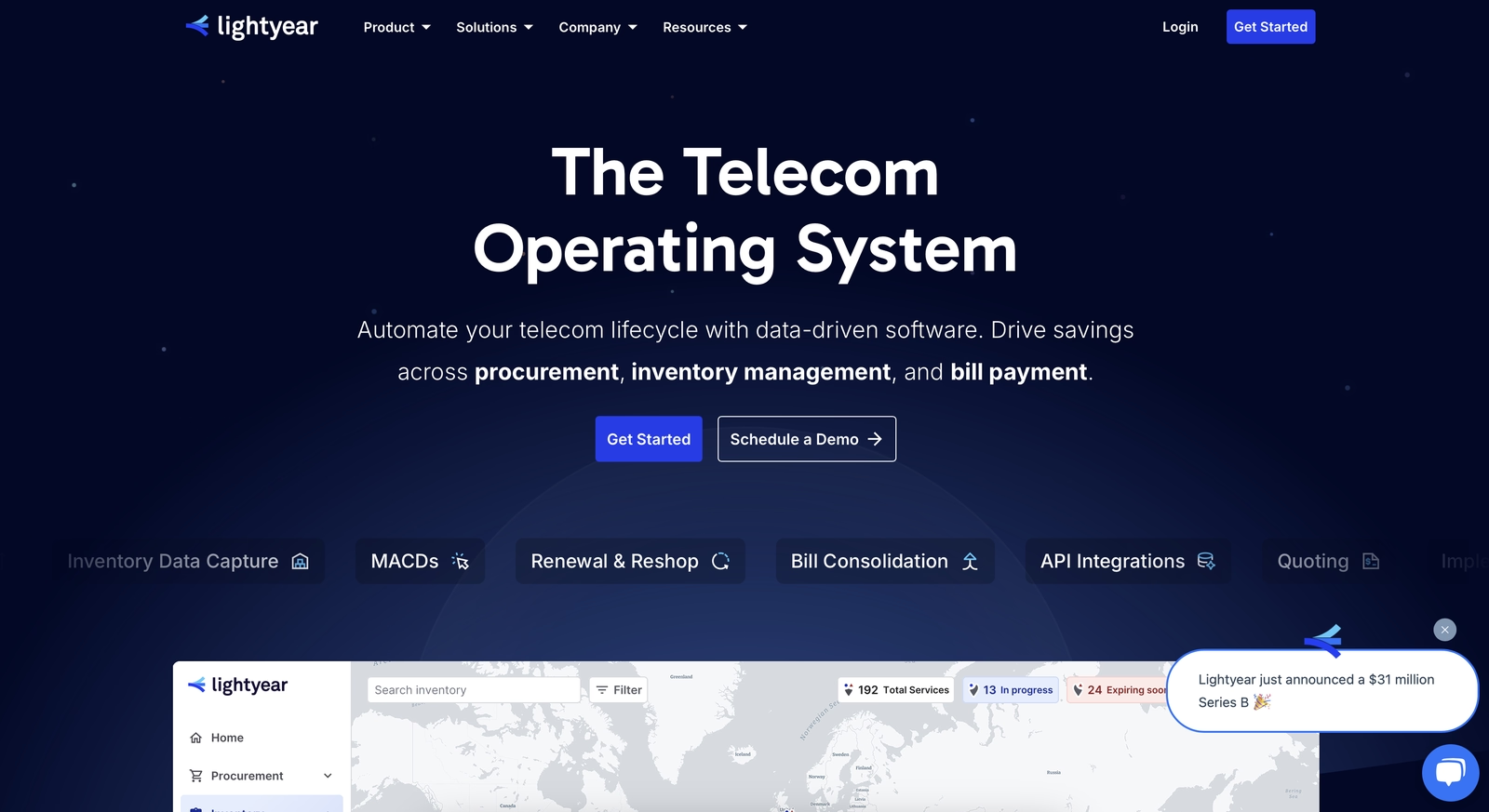
Just as IaC and Configuration Management bring automation and control to your IT stack, Lightyear applies the same principles to your telecom infrastructure. By automating network service procurement, inventory management, and bill consolidation, we take the pain out of managing your connectivity.
Hundreds of enterprises trust Lightyear to achieve over 70% in time savings and more than 20% in cost savings on their network services.
Schedule a demo or get started with our questionnaire today.
Frequently Asked Questions about Configuration Management vs Infrastructure as Code
Can IaC tools replace Configuration Management?
Not entirely. While there's some overlap, IaC is best for provisioning infrastructure, while CM excels at managing the software and state of that infrastructure post-deployment. Using both together provides the most comprehensive automation and control over your environment.
Which should we adopt first, IaC or CM?
It often depends on your immediate needs. If your main challenge is slow and inconsistent environment setup, start with IaC. If you struggle with maintaining existing systems and preventing configuration drift, begin with Configuration Management. Many teams start with CM and evolve toward IaC.
Do we need both for a small environment?
Even in smaller setups, using both can be beneficial. You might start with a CM tool for consistency and then introduce IaC as you grow to automate provisioning. The key is to match the tool to the problem you're trying to solve, regardless of scale.
Let us show you the product and discuss specifics on how it might be helpful.
Schedule a Demo





Revolutionize Your Telecom Experience
Learn how you can get one step closer to optimal business efficiency for all your telecom services.