Data Rate vs Latency: Impact on Networks
Learn the difference between data rate (speed) and latency (delay). Understand how each impacts your network performance to make smarter IT decisions.

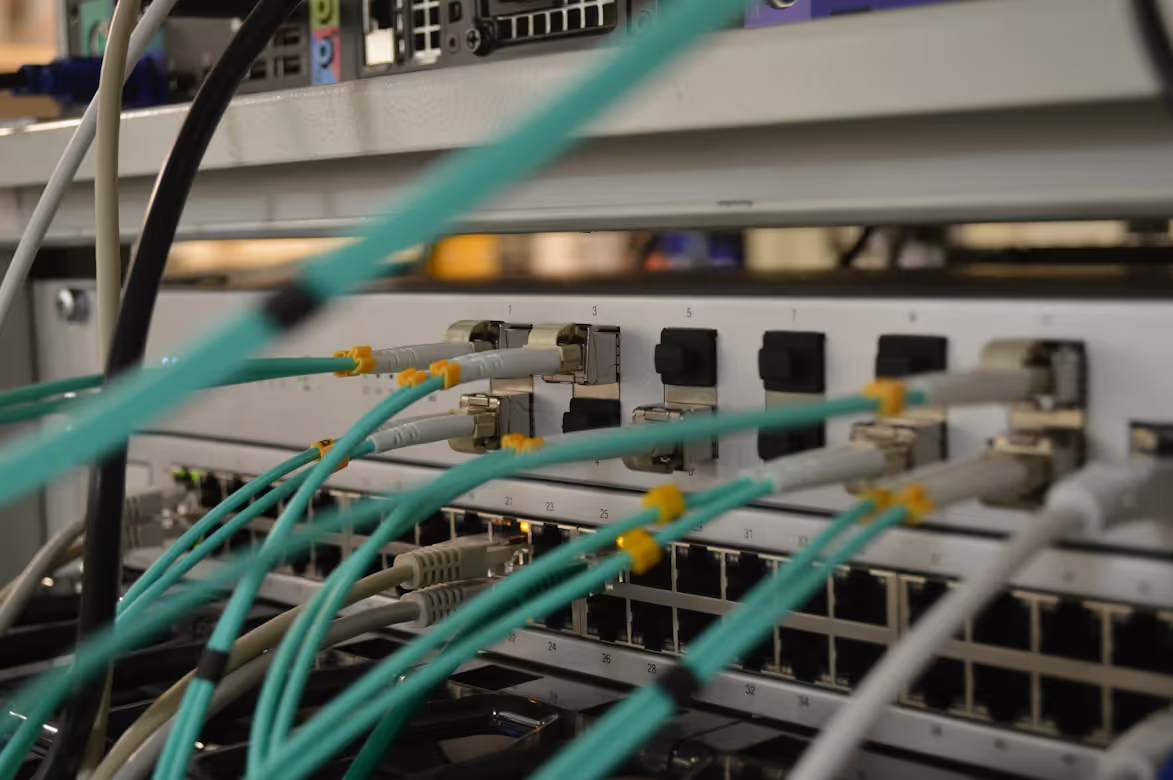
When evaluating network services, two terms you'll frequently encounter are data rate and latency. While they both measure network performance, they describe very different aspects of how data moves from one point to another.
Understanding the distinction is critical for making informed procurement decisions. The right balance between the two can directly impact everything from employee productivity to the performance of your business applications.
What is Data Rate?
Simply put, data rate is the speed at which data travels across a network in a given amount of time. It's measured in bits per second (bps), though you'll more commonly see it as megabits per second (Mbps) or gigabits per second (Gbps). Think of it as the total volume of information that can move from point A to point B.
- It defines capacity: A higher data rate means the connection has more capacity, which is often referred to as bandwidth. This allows more data to be sent or received at the same time.
- Download vs. Upload: Data rates apply to both downloading (receiving data) and uploading (sending data). These speeds can be symmetrical (identical) or asymmetrical (different), which is an important factor in procurement.
- It supports heavy use: Activities like streaming high-definition video, transferring large files, or supporting many concurrent users all demand a high data rate.
What is Latency?
On the other hand, latency refers to the delay a data packet experiences as it travels from the sender to the receiver. It’s not about how much data can be sent, but how quickly a single piece of data can make the trip. This delay is measured in milliseconds (ms).
- It measures delay: Latency is the time it takes for a signal to travel to its destination and back, which is known as round-trip time (RTT).
- Low latency is critical for real-time tasks: Applications like video conferencing, online gaming, and VoIP calls depend on low latency to avoid lag and ensure smooth communication.
- Distance is a major factor: The physical distance between the source and destination significantly impacts latency, as data takes time to travel over fiber optic cables or through the air.
Data Rate vs Latency: Key Differences
While both are performance metrics, they measure fundamentally different things. Here’s a breakdown of how they contrast.
1. Measurement and Units
Data rate measures the volume of data transferred over time, expressed in bits per second (bps), megabits per second (Mbps), or gigabits per second (Gbps).
Latency, however, measures time—specifically, the delay a data packet experiences. It is expressed in milliseconds (ms).
2. Core Function
Think of data rate as the total capacity or "width" of your network connection. A higher data rate means more data can be processed simultaneously, supporting more users or larger file transfers.
Latency is about responsiveness. It represents the time it takes for a single packet of data to complete its round trip, regardless of the connection's total capacity.
3. Primary Impact
A high data rate is essential for activities that involve large amounts of data, like downloading large files or streaming video to many users.
Low latency is crucial for applications where immediate feedback is required, such as VoIP calls, video conferencing, and financial trading platforms, where even small delays can be disruptive.
How Data Rate Affects Network Performance
A connection's data rate directly determines its capacity, which has a tangible impact on day-to-day business operations. When your data rate is sufficient, network performance feels seamless; when it's not, bottlenecks quickly appear and frustrate users.
- Supports Concurrent Users: A higher data rate allows multiple employees and devices to perform bandwidth-intensive tasks simultaneously without degrading the network experience for everyone. This is essential for growing teams and busy offices.
- Improves File Transfer Efficiency: For businesses that regularly move large files—such as design mockups, data backups, or software distributions—a high data rate significantly reduces wait times and keeps projects moving forward.
- Enables High-Quality Media: Streaming video for training, marketing, or all-hands meetings requires a robust data rate. Insufficient capacity leads to buffering, pixelation, and a poor viewing experience.
- Affects Cloud Application Performance: Many modern business tools are cloud-based. A low data rate can cause these applications to load slowly or become unresponsive, directly hindering employee productivity.
How Latency Impacts User Experience
While a low data rate creates obvious bottlenecks, high latency creates a more subtle but equally frustrating problem: a feeling of unresponsiveness. Even with massive bandwidth, significant delays can make a network feel slow and unusable. This directly impacts how users perceive application performance and their overall productivity.
- Degrades Real-Time Communication: In VoIP and video conferencing, high latency causes noticeable lag. This leads to participants talking over one another and conversations feeling disjointed and unnatural, which can disrupt the flow of important meetings.
- Creates Application Sluggishness: For interactive cloud applications like CRMs or ERPs, latency is the time between a click and a response. High latency makes software feel sluggish, as every action is followed by a delay. Over a full workday, these small delays add up to significant lost time.
- Introduces Jitter: Inconsistent latency, or jitter, is also a major issue. When data packets arrive at irregular intervals, it results in choppy audio, frozen video frames, and a generally unreliable connection quality for real-time services.
- Causes Transactional Timeouts: In systems that depend on quick request-response cycles, such as financial trading or database queries, high latency can cause processes to time out. This can lead to failed transactions, errors, and operational interruptions.
Choosing Between Data Rate and Latency for Your Business
The ideal network solution isn't about choosing one metric over the other, but about identifying which is more critical for your specific business operations. Here’s how to determine your priorities.
Prioritizing a High Data Rate
Focus on data rate if your core activities involve moving large volumes of information. This is key for offices with many concurrent users or teams that regularly handle large files for video editing, design, or data analysis.
Similarly, if you run frequent cloud backups or host media, sufficient bandwidth is needed to prevent slowdowns that can disrupt workflows.
Prioritizing Low Latency
Low latency should be your priority if your business relies heavily on real-time communication. This includes VoIP phone systems and video conferencing, where even small delays can make conversations feel unnatural.
It is also essential for interactive cloud platforms like CRMs or ERPs, where a responsive user experience depends on quick server feedback.
Striking a Balance for Mixed Use
Most businesses require a thoughtful mix of both. Your team might be on a latency-sensitive video call while a data-intensive file syncs in the background.
The best approach is to audit your primary applications. Understanding your daily operational needs will help you select a service that provides the right balance of capacity and responsiveness.
Final Thoughts on Data Rate and Latency
Ultimately, understanding the difference between data rate and latency is fundamental to making smart network procurement decisions. One isn't inherently better than the other; they simply serve different purposes.
Data rate provides the capacity for high-volume tasks, while low latency ensures your real-time applications are responsive and feel immediate.
The key takeaway is to evaluate your own operational needs. By auditing which applications your teams rely on daily—from video conferencing to large file transfers—you can identify where your priorities should lie and make an informed choice.
Striking the right balance prevents both frustrating bottlenecks and sluggish performance, resulting in a network that actively supports your company's productivity and growth.
Need Help Managing Your Network? Lightyear Can Help
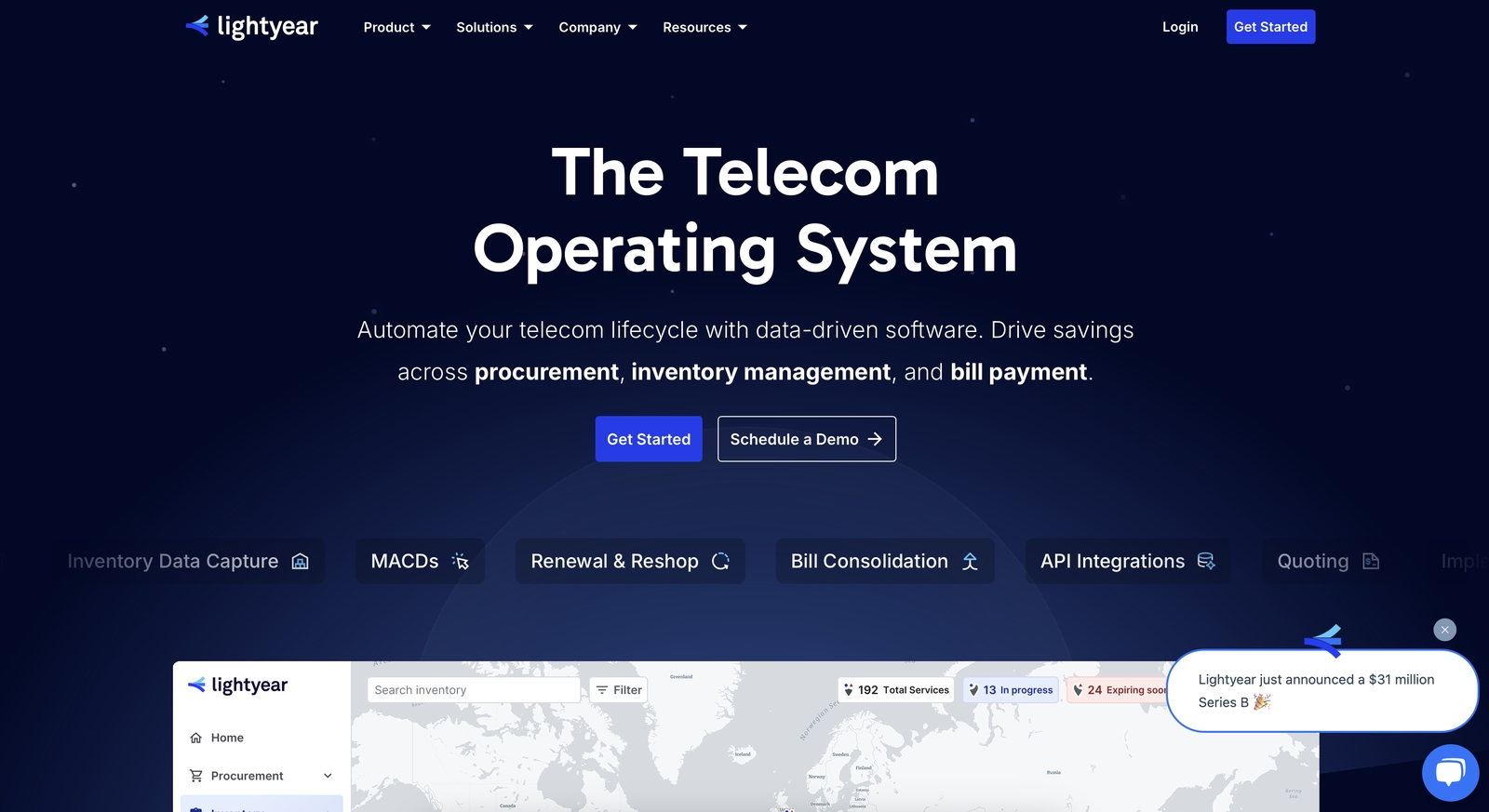
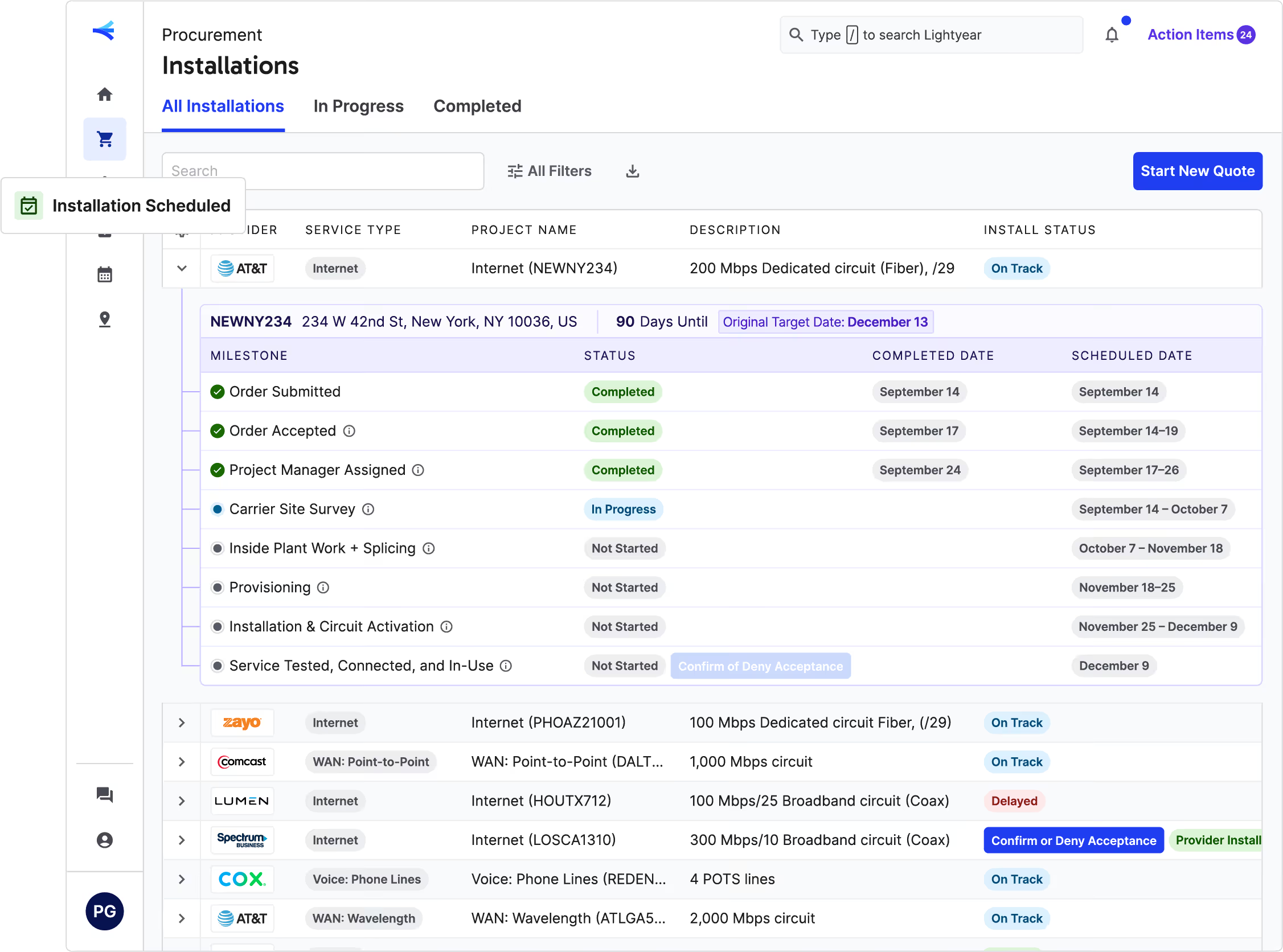
Finding the right balance of data rate and latency is easier with the right tools. Lightyear automates network service procurement, helping you find the best-fit services from over 1,200 global carriers without the usual hassle.
By automating procurement, inventory management, and bill consolidation, Lightyear takes the pain out of telecom infrastructure management, helping enterprises achieve 70%+ time savings and 20%+ cost savings.
Schedule a demo or get started with our questionare today.
Frequently Asked Questions about Data Rate vs Latency
Can I have a high data rate but still experience lag?
Absolutely. A high data rate means your connection has a lot of capacity, but high latency can still cause delays. This is common when data has to travel long physical distances, creating a noticeable lag in real-time applications despite having plenty of bandwidth.
Which is more expensive: high bandwidth or low latency?
Generally, achieving ultra-low latency is more expensive and complex than simply increasing bandwidth. Low latency often requires specialized routing and premium fiber paths, which adds to the cost. High bandwidth, while not cheap, has become more of a commodity in many markets.
How does network congestion affect both metrics?
Network congestion negatively impacts both. It can reduce your effective data rate as packets compete for limited capacity. It also increases latency because your data has to wait in queues before being transmitted, adding delays to its journey from sender to receiver.
Let us show you the product and discuss specifics on how it might be helpful.
Schedule a Demo




Revolutionize Your Telecom Experience
Learn how you can get one step closer to optimal business efficiency for all your telecom services.