Deep Packet Inspection vs NetFlow: Network Analysis Explained
Learn the difference between Deep Packet Inspection and NetFlow for network analysis, and when to use each for security and performance monitoring.


For any IT team, maintaining a clear view of network traffic is fundamental to security and performance. Two of the most common technologies for network analysis are Deep Packet Inspection (DPI) and NetFlow.
Although both methods analyze network data, they operate differently and provide distinct types of information. Understanding these differences is key to choosing the right approach for your organization's specific network monitoring and security needs.
What is Deep Packet Inspection?
Deep Packet Inspection (DPI) is an advanced method for analyzing network traffic. It works by examining the data payload of a packet as it moves through the network, not just its header information like source and destination.
This detailed inspection allows network administrators to understand exactly what kind of traffic is on their network. It can identify the specific application or service that generated the data, such as a video call versus a file download. This level of detail provides granular visibility and control over network activity.
DPI is commonly used to:
- Identify and categorize traffic by application, even if it uses non-standard ports.
- Detect and block malicious code, spam, and other security threats by looking for specific signatures within the data.
- Enforce security and usage policies by filtering or blocking access to certain applications or websites.
- Prioritize critical business traffic to manage bandwidth and ensure a high quality of service (QoS) for important applications.
What is NetFlow?
NetFlow is a network protocol, originally developed by Cisco, for collecting and analyzing IP traffic information. It works by summarizing traffic data into "flows," which are records of conversations between two endpoints on the network.
Instead of inspecting the content of each packet, NetFlow captures metadata about the flow, such as the source and destination IP addresses, ports, and the protocol being used. This process creates a high-level, statistical overview of network activity, making it highly efficient for understanding traffic patterns and volume without capturing the data itself.
Common applications for NetFlow include:
- Monitoring network traffic to see who and what is consuming bandwidth across the network.
- Analyzing traffic patterns over time to assist with capacity planning and network optimization.
- Detecting security anomalies, like DDoS attacks or unusual data transfers, by identifying deviations from normal traffic behavior.
- Providing data for network billing and accounting based on resource usage.
Deep Packet Inspection vs NetFlow: Key Differences
While both technologies help you understand network traffic, their approaches and the information they provide are quite different. The core distinction lies in what they inspect and the level of detail they offer.
Data Granularity and Depth
Deep Packet Inspection looks at the actual content, or payload, of data packets. Think of it as opening a letter to read its contents. This allows it to identify the specific application and context of the traffic, such as distinguishing a Netflix stream from a Zoom call.
NetFlow, on the other hand, only examines packet headers—the equivalent of looking at the envelope's address. It records metadata like source and destination IPs, ports, and protocols to create a statistical summary of traffic flows, without inspecting the data inside.
Resource Consumption
Because DPI analyzes the content of every packet, it requires significant processing power and memory. This can introduce latency and become a performance bottleneck on busy networks if not managed properly.
NetFlow is far more lightweight. Since it only collects and exports summary data about traffic conversations, its impact on network device performance is minimal, making it easy to deploy across an entire infrastructure.
Primary Application
The detailed analysis from DPI makes it ideal for security and content-aware policy enforcement. It's used to find and block malware, prevent data leaks, and manage application usage with precision.
NetFlow's high-level view is best suited for network performance monitoring, capacity planning, and traffic accounting. It excels at identifying bandwidth hogs and understanding broad traffic patterns over time.
Benefits of Using Deep Packet Inspection
The primary advantage of DPI lies in its granular visibility, which translates into powerful security and traffic management capabilities. By inspecting the content of data packets, it offers a level of control that header-based analysis cannot match.
This deep analysis allows for more robust security. DPI can identify and block specific threats like malware or viruses hidden within legitimate-looking traffic. It is also highly effective for data loss prevention (DLP) by recognizing and stopping unauthorized transfers of sensitive information.
Beyond security, DPI enables precise application-level control. You can enforce policies that prioritize business-critical applications, like VoIP and video conferencing, ensuring they always have the bandwidth they need. At the same time, you can limit or block non-essential applications to optimize network performance and employee productivity.
Advantages of Implementing NetFlow
The main benefit of implementing NetFlow is its exceptional efficiency and scalability. Since it only collects summary metadata rather than entire packets, it has a minimal impact on the performance of network devices.
This lightweight nature means you can enable it across your entire infrastructure—from core routers to access switches—for comprehensive visibility. This provides a complete picture of traffic flows without requiring costly, specialized hardware for analysis.
Additionally, the compact size of flow data makes it practical for long-term storage. This allows IT teams to perform historical trend analysis, which is crucial for accurate capacity planning and for conducting forensic investigations into past security or performance issues.
Challenges and Considerations for Both Technologies
While both technologies are powerful, they each come with their own set of challenges and limitations that are important to consider before implementation.
Deep Packet Inspection
- Encrypted Traffic: A major hurdle for DPI is its inability to inspect encrypted traffic, such as HTTPS or VPNs. Analyzing this data requires complex decryption methods, which add cost, processing overhead, and potential privacy risks.
- Privacy Concerns: Because it reads the actual content of data packets, DPI can create significant privacy issues. Monitoring employee or customer data requires clear internal policies and an understanding of legal compliance.
- Maintenance Overhead: To be effective, DPI systems rely on signature databases that must be updated constantly to recognize new applications and threats. This creates an ongoing maintenance workload for IT teams.
NetFlow
- Limited Security Context: NetFlow can identify anomalies like unusual traffic volume, but it cannot see the content of the packets. This means it can easily miss payload-based threats like malware or specific types of data exfiltration.
- Application Misidentification: Traditional NetFlow often identifies applications by port number. This method is becoming less reliable as many services use standard web ports or dynamic ports, leading to inaccurate reporting.
- Sampling Inaccuracies: On high-speed networks, routers may be configured to sample only a fraction of packets for flow analysis to reduce performance load. This can result in an incomplete picture of network activity and cause short-lived events to be missed entirely.
Making the Right Choice for Your Enterprise
The decision between Deep Packet Inspection and NetFlow isn't about which technology is superior, but which one aligns with your specific goals. Your choice depends entirely on what you need to accomplish.
If your primary concern is security and granular control, DPI is the clear choice. It allows you to inspect packet contents to block threats and manage application usage with precision.
On the other hand, if you need broad visibility into traffic patterns for performance monitoring and capacity planning, NetFlow is more suitable. Its lightweight nature provides a high-level overview of your entire network without impacting performance.
In many cases, these technologies are not mutually exclusive. A common strategy is to use both: deploying DPI at critical points for security and using NetFlow across the network for operational insight. This combined approach offers both detailed protection and comprehensive visibility.
Ultimately, evaluate your organization's priorities. For content-aware security, choose DPI. For network-wide traffic analysis and planning, choose NetFlow.
Need Help Managing Your Network? Lightyear Can Help
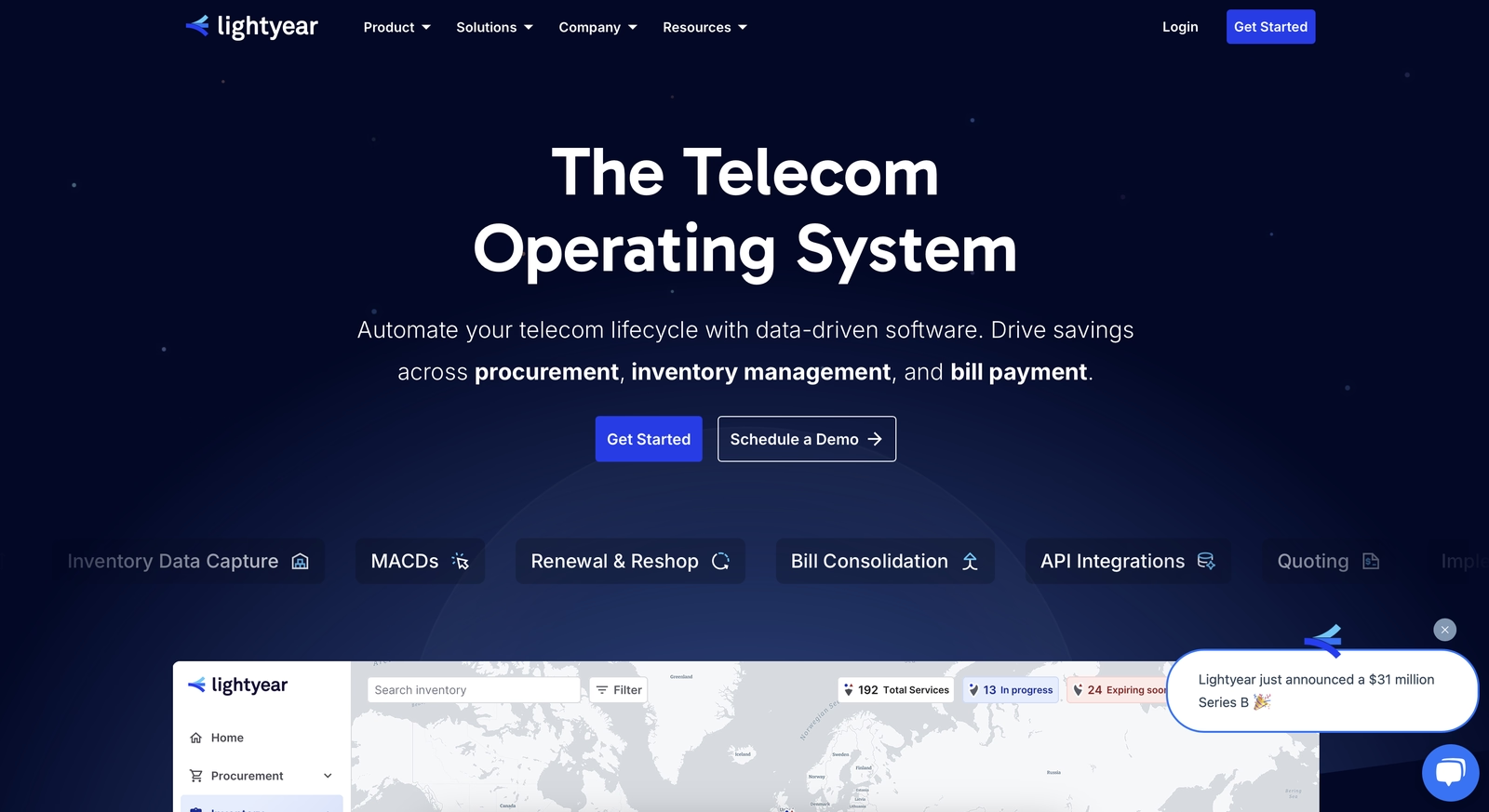
While tools like DPI and NetFlow help you analyze network traffic, Lightyear's platform helps you manage the underlying telecom services themselves. We automate network service procurement, inventory management, and bill consolidation to take the pain out of infrastructure management.
The hundreds of enterprises that trust Lightyear achieve over 70% in time savings and 20% in cost savings on their network services.
Schedule a demo or get started with our questionnaire today.
Frequently Asked Questions about Deep Packet Inspection vs NetFlow
Can you use DPI and NetFlow at the same time?
Yes, many organizations use a hybrid approach. They deploy DPI at critical network points for security, while using NetFlow across the broader network for performance monitoring and capacity planning. This provides both detailed protection and wide visibility.
Which technology is more expensive to implement?
DPI is typically more expensive because it requires powerful hardware to handle the processing load of inspecting every packet. NetFlow is a feature built into most modern network devices, making its implementation far more cost-effective.
How do modern applications affect NetFlow's accuracy?
Traditional NetFlow identifies apps by port, which is less reliable today. However, newer versions like Flexible NetFlow and IPFIX can analyze more data points, improving application identification even when standard ports are not used.
Is one better for cloud environments?
Both have a place. Cloud providers offer native flow logs similar to NetFlow for traffic analysis. DPI can be implemented through virtual appliances or cloud-native security services for more granular threat detection within cloud workloads.
Let us show you the product and discuss specifics on how it might be helpful.
Schedule a Demo





Revolutionize Your Telecom Experience
Learn how you can get one step closer to optimal business efficiency for all your telecom services.
