Dense vs Coarse Wavelength Division Multiplexing Explained
DWDM vs. CWDM explained. Learn the key differences in capacity, distance, and cost to choose the right wavelength division multiplexing for your network.

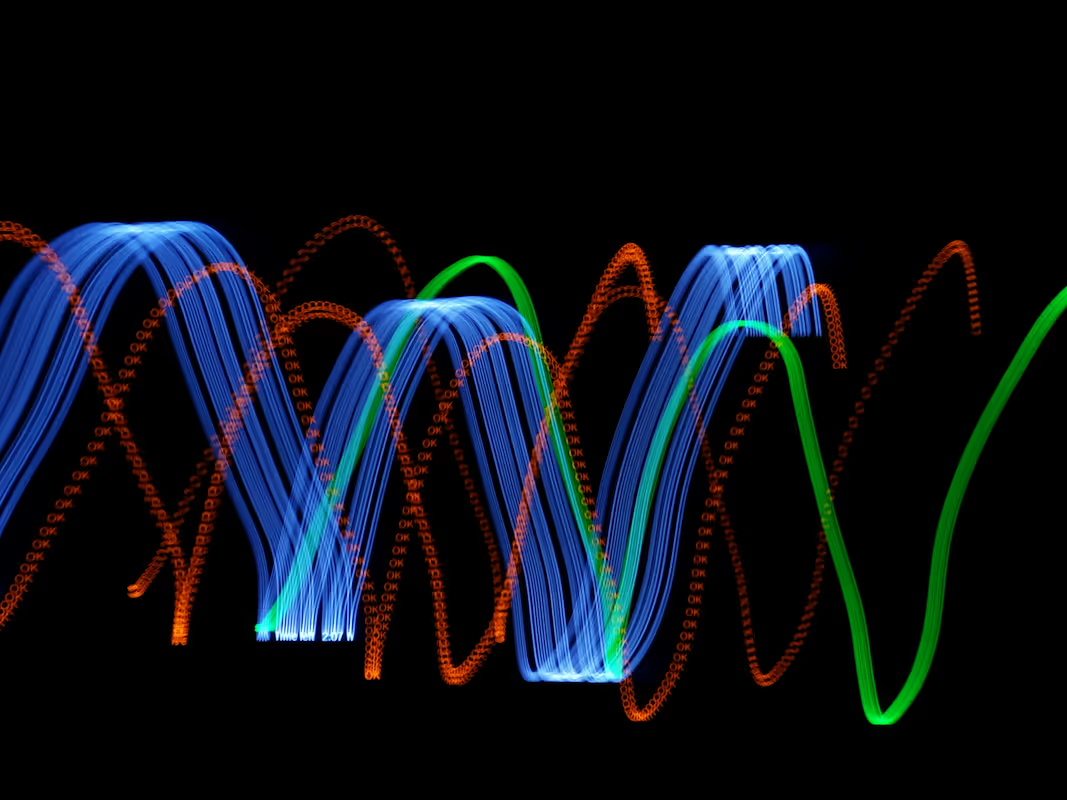
Wavelength Division Multiplexing (WDM) is a method for increasing the capacity of fiber optic networks. It works by transmitting multiple data signals simultaneously over a single fiber, with each signal carried on a different wavelength of light.
The two primary types of WDM are Coarse Wavelength Division Multiplexing (CWDM) and Dense Wavelength Division Multiplexing (DWDM). Choosing between them depends on your specific network requirements, and this guide will explain the key differences to help you decide.
What is Dense Wavelength Division Multiplexing (DWDM)?
Dense Wavelength Division Multiplexing (DWDM) is an optical technology that dramatically increases the capacity of a single fiber optic cable. It works by packing a high number of individual data streams onto the fiber, with each stream assigned its own unique wavelength of light.
The "dense" in its name refers to how closely these light wavelengths are spaced. Here are its core characteristics:
- High Channel Capacity: DWDM systems can carry a large number of channels—typically 40, 88, or even more—over a single fiber, making it highly efficient for data-heavy applications.
- Narrow Wavelength Spacing: The channels are packed very tightly, with a standard spacing of 0.8 nanometers (nm) or less. This precision is what allows so many channels to coexist without interfering with one another.
- Long-Haul Transmission: It is the technology of choice for long-distance networks. DWDM systems often incorporate optical amplifiers to boost the signal, enabling data transmission over hundreds or thousands of kilometers.
What is Coarse Wavelength Division Multiplexing (CWDM)?
Coarse Wavelength Division Multiplexing (CWDM) is an optical technology that also increases fiber capacity but is designed for different applications than DWDM. The "coarse" in its name refers to the wider spacing between its light wavelengths, which results in a simpler and more cost-effective system.
Here are its primary characteristics:
- Lower Channel Capacity: CWDM supports fewer channels, typically up to 18 over a single fiber. This makes it a practical choice for networks that don't require the massive scalability of DWDM.
- Wide Wavelength Spacing: Channels are spaced 20 nm apart. This wider gap means the system components, like transceivers, don't need to be cooled, which lowers both equipment cost and power consumption.
- Shorter-Range Transmission: It is typically used for shorter distances, generally up to 70 kilometers. Since CWDM systems are unamplified, they are well-suited for metro-area networks and enterprise campus connections.
Key Differences Between DWDM and CWDM
While both technologies multiply fiber capacity, their designs lead to fundamental differences in performance, cost, and application. Here’s a direct comparison of the most important factors for any network planner.
Channel Capacity and Scalability
The most significant distinction is the number of channels each can support. DWDM is built for maximum density, accommodating 40, 88, or even more channels on a single fiber.
This makes it ideal for networks requiring massive scalability. In contrast, CWDM offers a more modest capacity of up to 18 channels, suiting applications with lower bandwidth demands.
Cost and System Complexity
CWDM is the more economical option. Its wide 20 nm channel spacing allows for the use of uncooled lasers and simpler components, which reduces both initial equipment costs and ongoing power consumption.
DWDM’s narrow spacing requires temperature-controlled lasers and optical amplifiers to maintain signal integrity over long distances. This precision engineering results in higher system complexity and cost.
Transmission Distance
The presence of optical amplifiers in DWDM systems is key to its long-haul capabilities, enabling data transmission over thousands of kilometers. This makes it the standard for national and international backbones.
CWDM systems are passive and do not use amplifiers, limiting their effective range to about 70 kilometers. This makes them a perfect fit for shorter-distance links, such as within a metropolitan area or across a corporate campus.
Advantages of Using DWDM
DWDM offers several key benefits for organizations with high-capacity and long-distance network needs. It is particularly suited for building robust, scalable network backbones.
- Exceptional Capacity: It multiplies the bandwidth of a single fiber, allowing you to support enormous data traffic without the cost and disruption of installing new cables.
- Long-Term Scalability: With the ability to add dozens of channels, DWDM provides a clear and simple upgrade path as your data requirements grow over time.
- Data Protocol Flexibility: Each channel operates independently, so you can transmit different types of traffic—like Ethernet, SONET, and Fibre Channel—simultaneously over the same fiber.
Advantages of Using CWDM
For networks where massive scale isn't the primary goal, CWDM provides practical benefits centered on efficiency and cost. It's a popular choice for extending network capacity over shorter distances without the complexity of a long-haul system.
- Lower Overall Cost: The main benefit of CWDM is its cost-effectiveness. Because the system uses uncooled lasers and simpler components, the initial hardware investment is significantly lower.
- Reduced Power Consumption: Without the need for temperature-controlled lasers or optical amplifiers, CWDM systems use less power. This translates to lower ongoing operational costs.
- Simpler Implementation: The technology's straightforward design makes it easier to deploy and manage. This is particularly useful for enterprise campus connections and metro-area networks where IT resources may be limited.
Choosing the Right Technology for Your Network
Making the right choice comes down to evaluating three core aspects of your network requirements. Answering these questions will point you toward the technology that best fits your operational needs and budget.
1. Assess Your Bandwidth Needs
Your current and future data demands are the first consideration. If you operate a large-scale network, such as a data center interconnect or a service provider backbone, DWDM is the logical choice.
Its ability to support 40 or more channels provides the high capacity needed for these environments. For enterprise and metro-area networks with more moderate traffic, CWDM’s 18 channels often provide plenty of room without over-provisioning.
2. Evaluate Your Network Distance
Next, consider the physical distance your data must travel. DWDM is built for long-haul transmission, capable of carrying signals across hundreds or even thousands of kilometers with the help of amplifiers.
If your connections are shorter, such as linking offices within a city or buildings on a campus (typically under 70 km), CWDM is a more practical and efficient solution.
3. Consider Your Budget and Resources
Finally, your budget plays a critical role. CWDM systems have a lower initial cost because they use simpler, uncooled components that also consume less power.
DWDM requires a higher upfront investment for its temperature-controlled lasers and optical amplifiers. This expense is justified when its massive scalability and long-distance performance are non-negotiable requirements for your business.
Final Thoughts on DWDM vs CWDM
Ultimately, the choice between DWDM and CWDM isn't about which technology is superior, but which one aligns with your specific network goals. It’s a practical decision based on balancing capacity, distance, and budget.
- Choose DWDM if your top priorities are maximum channel capacity and long-haul transmission. It's the standard for large-scale backbones and data center interconnects where future growth is a key factor.
- Choose CWDM when cost-effectiveness and simplicity are more important. It's an excellent solution for shorter-distance networks, like metro-area connections or campus environments, with moderate bandwidth needs.
Need Help Managing Your Network? Lightyear Can Help
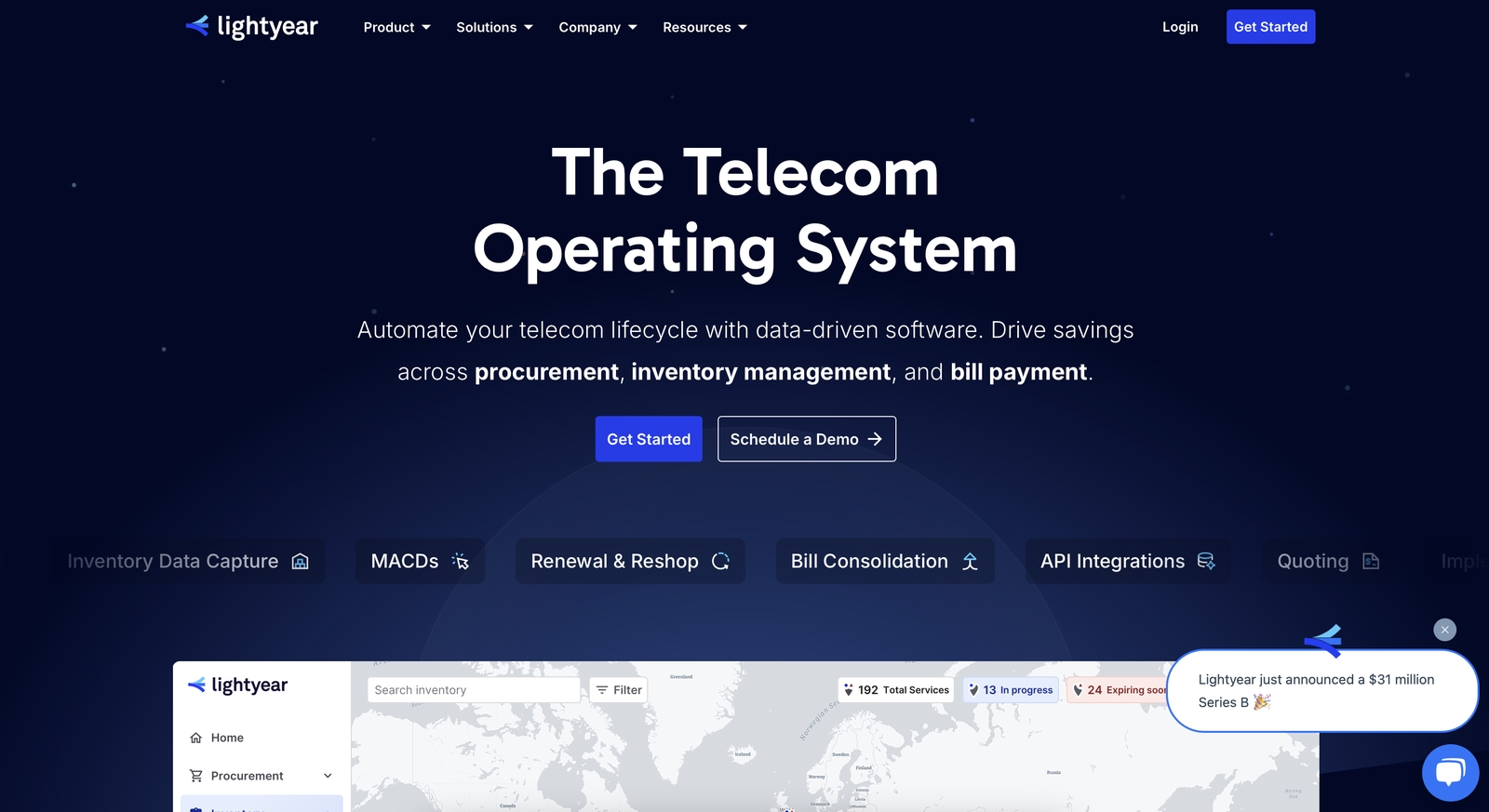
Deciding between DWDM and CWDM is just the first step; sourcing and managing the service is the next. By automating network service procurement and inventory management, Lightyear takes the difficulty out of telecom infrastructure management.
The hundreds of enterprises who trust Lightyear achieve over 70% time savings and 20% cost savings on their network services.
Schedule a demo or get started with our questionnaire today.
Frequently Asked Questions about Dense Wavelength Division Multiplexing vs Coarse Wavelength Division Multiplexing
Can I upgrade from CWDM to DWDM?
Yes, upgrading is a common path. It involves replacing CWDM multiplexers and transceivers with DWDM-compatible hardware. This allows you to increase network capacity significantly on your existing fiber infrastructure as your data requirements grow over time.
Can CWDM and DWDM coexist on the same fiber?
Yes, a hybrid approach is possible. Specific CWDM channels can be used to carry multiple DWDM channels, effectively layering the two technologies. This allows for flexible network designs that can accommodate different types of traffic and capacity needs on a single fiber.
Do DWDM and CWDM add latency to my network?
Any optical system adds a minuscule amount of latency, but it is typically measured in microseconds and is insignificant for almost all applications. The primary contributor to latency will always be the physical distance the light travels over the fiber optic cable.
Let us show you the product and discuss specifics on how it might be helpful.
Schedule a Demo





Revolutionize Your Telecom Experience
Learn how you can get one step closer to optimal business efficiency for all your telecom services.