Direct Internet Access vs MPLS: A Comparison
Choosing between Direct Internet Access and MPLS? Learn the key differences in cost, performance, and security to make the right network decision.


Choosing the right network connectivity is a critical decision for any enterprise IT team. Two of the most common options for business-grade connectivity are Direct Internet Access (DIA) and Multiprotocol Label Switching (MPLS).
While both provide dedicated internet connections, they function very differently and offer distinct advantages in performance, security, and cost. This article will compare DIA and MPLS to help you determine which solution is the right fit for your company's needs.
What is Direct Internet Access (DIA)?
Direct Internet Access (DIA) provides a private, dedicated connection from your business premises to the internet. Think of it as your own personal lane on the information highway, completely separate from the public traffic of residential or shared business broadband.
This exclusivity means your connection isn't affected by other users' activity. Key characteristics of a DIA circuit include:
- Dedicated Bandwidth: The connection is 100% yours, so you get the full speed you pay for without sharing it with neighbors.
- Symmetrical Speeds: Upload and download speeds are identical, which is critical for tasks like video conferencing, cloud backups, and hosting services.
- Service Level Agreement (SLA): DIA connections are backed by a carrier SLA, which guarantees specific levels of uptime, latency, and packet delivery.
What is MPLS (Multiprotocol Label Switching)?
Multiprotocol Label Switching is a networking technology that routes traffic across a private wide area network (WAN). Instead of connecting your business to the public internet like DIA, MPLS creates a dedicated, private network to link your various office locations, data centers, and cloud environments together.
It operates by assigning short labels to data packets, which helps direct traffic efficiently and securely across the network. Key features of an MPLS network include:
- Private Connectivity: Traffic is isolated from the public internet, providing a secure way to transmit sensitive company data between sites.
- Quality of Service (QoS): MPLS allows for traffic prioritization, ensuring that critical applications like VoIP or video conferencing get the bandwidth they need to perform reliably.
- High Performance: As a carrier-managed service, MPLS offers predictable performance with strong SLAs that guarantee uptime and low latency.
Direct Internet Access vs MPLS: Key Differences
While both offer dedicated connectivity, their core functions and network architecture create several important distinctions that IT leaders should understand.
1. Primary Use Case
The most fundamental difference lies in what each service connects. Direct Internet Access is designed to connect a single business location to the public internet.
In contrast, MPLS is built to connect multiple sites to each other, creating a private Wide Area Network (WAN) that bypasses the public internet entirely.
2. Network and Security
DIA provides a secure, dedicated link to the internet, but once your data is on the web, it travels over public infrastructure. This means you are responsible for securing that traffic with firewalls and other tools.
MPLS traffic is inherently secure because it remains on a private, carrier-managed network, isolated from the public internet. This makes it a preferred choice for transmitting sensitive internal data between locations.
3. Performance and Reliability
Both services come with strong Service Level Agreements (SLAs). However, MPLS offers a key advantage with Quality of Service (QoS).
QoS allows you to prioritize specific types of traffic, like voice or video, over others. This ensures your most important applications always have the resources they need, providing more predictable performance than a standard DIA connection.
4. Cost Structure
Generally, DIA is the more cost-effective option. It provides high-speed internet access at a lower price per megabit compared to MPLS.
MPLS is a premium, managed service. The higher cost reflects the private infrastructure, advanced performance management features like QoS, and the security of a closed network.
Benefits of Direct Internet Access for Enterprises
For enterprises that rely heavily on public cloud applications and need a straightforward, high-performance internet connection, DIA presents some clear benefits.
- Cost-Effectiveness: DIA generally offers a lower cost per megabit compared to MPLS. This allows businesses to get more bandwidth for their budget, which is essential for supporting cloud applications and a growing number of users at a single site.
- Simplicity and Control: A DIA circuit is relatively simple to procure and manage. It provides a direct on-ramp to the internet, giving your IT team full control over your network security architecture using your own firewalls and security tools.
- Direct Cloud Access: Since most Software-as-a-Service (SaaS) platforms and public cloud environments are accessed over the internet, DIA provides the most direct and efficient path. This avoids the need to backhaul cloud-bound traffic over a private WAN.
- High Availability of Bandwidth: DIA services are widely available from a variety of carriers and often come in very high bandwidth capacities, from 1 Gbps to 100 Gbps. This makes it easy to scale your connection as your business needs grow.
Advantages of MPLS for Business Networks
- Enhanced Security: For businesses with multiple locations, MPLS creates a private, closed network that keeps internal traffic completely separate from the public internet. This inherent security is vital for organizations handling sensitive financial or healthcare data, helping them meet strict compliance requirements.
- Guaranteed Performance: The technology’s built-in Quality of Service (QoS) allows you to prioritize critical applications. This ensures that real-time services like VoIP and video conferencing always have the necessary bandwidth for a smooth, consistent user experience—a level of reliability a standard internet connection can't promise.
- Simplified WAN Management: Because MPLS is a carrier-managed service, it reduces the operational burden on your IT staff. The provider handles network monitoring and management, freeing up your team from the complexities of maintaining a wide area network across multiple sites.
- Scalable Site-to-Site Connectivity: MPLS provides a scalable framework for adding new locations to your network. As your business grows, new offices can be integrated into the private WAN with consistent security policies and performance, ensuring seamless connectivity across the entire organization.
Choosing Between DIA and MPLS: Factors to Consider
To find the right fit, your decision should come down to a few key operational questions about your business.
1. Your Application Profile
Start by looking at the applications your business depends on. If your operations are heavily centered on public cloud services and SaaS platforms, a high-bandwidth DIA connection provides the most direct route.
However, if you rely on real-time internal applications like VoIP or video conferencing between offices, the Quality of Service (QoS) from an MPLS network is designed to provide the required stability.
2. Geographic Footprint and Growth Plans
Next, consider how your company is structured geographically. A business with one or two locations may find DIA to be a simple and sufficient solution for internet access.
For enterprises with many distributed sites, MPLS provides a structured and secure way to connect them all under one private network. Think about your future growth as well; MPLS can make it simpler to integrate new offices into your existing WAN.
3. IT Team Resources and Expertise
Finally, evaluate your internal IT capacity. A DIA connection puts the responsibility for network security squarely on your team, requiring you to manage firewalls and other security measures.
MPLS, as a carrier-managed service, offloads much of the network oversight to the provider. This can free up your IT staff to focus on other projects instead of WAN maintenance.
Making the Right Choice for Your Enterprise Network
Ultimately, the decision between Direct Internet Access and MPLS isn't about which is better, but which is right for your specific operational needs. The choice hinges on what you need to connect and how you need to connect it.
DIA is the straightforward solution for high-speed, direct-to-internet connectivity at one or more sites. In contrast, MPLS excels at creating a secure, private network to link multiple locations with guaranteed performance for internal applications.
Many modern enterprises find that a hybrid approach works best. They use DIA for cost-effective public cloud and internet access, while relying on MPLS for secure inter-office data transfer and real-time application stability.
By evaluating your application profile, security policies, and geographic footprint, you can build a network that supports your business today and scales for tomorrow. The key is to match the technology to the task.
Need Help Managing Your Network? Lightyear Can Help
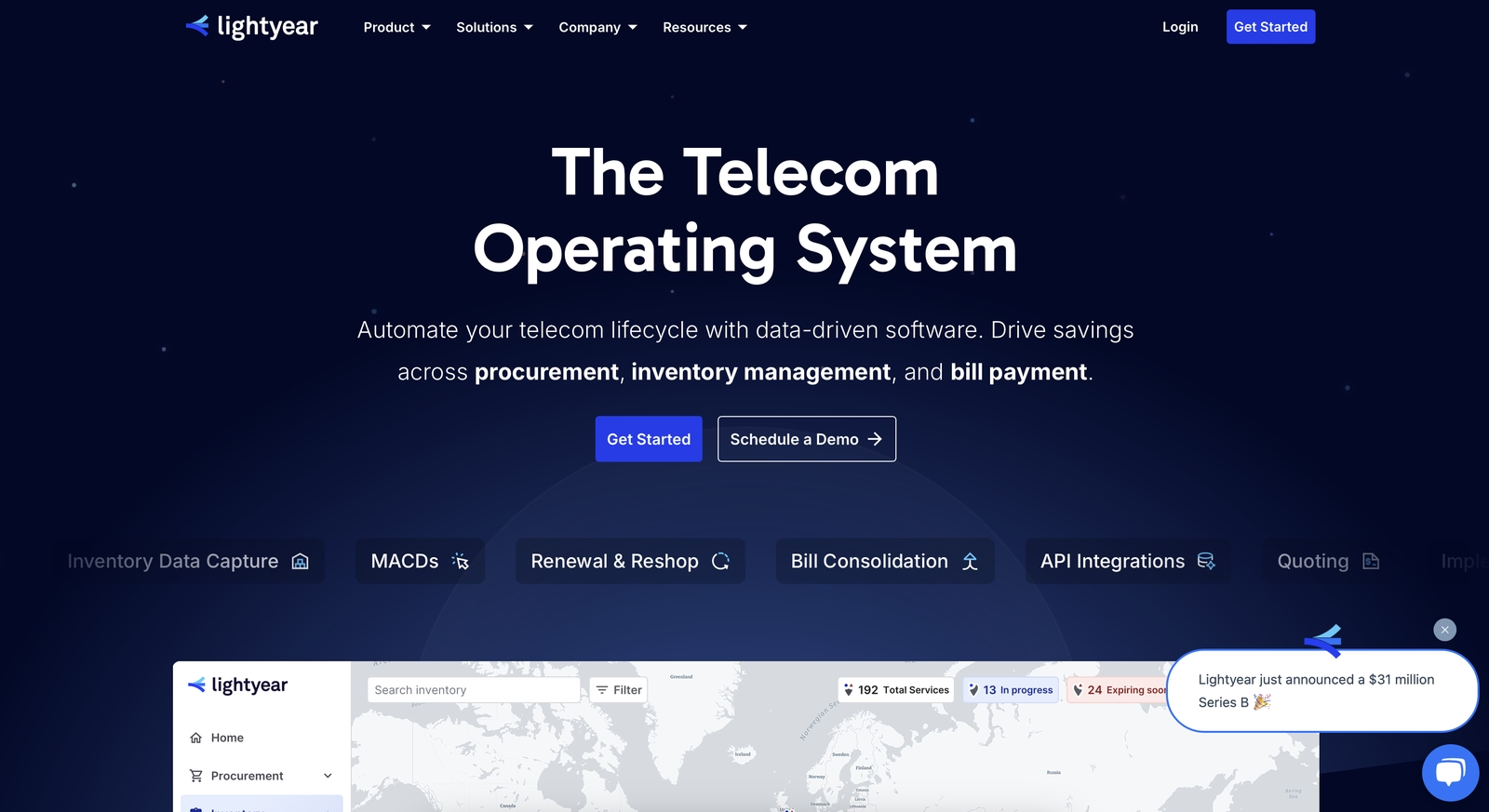
Whether you decide on DIA, MPLS, or a hybrid network, Lightyear simplifies the entire process from procurement to payment.
By automating network service procurement, inventory management, and bill consolidation, our platform helps the hundreds of enterprises who trust us achieve over 70% in time savings and 20% in cost savings.
Schedule a demo or get started with our questionnaire today.
Frequently Asked Questions about Direct Internet Access vs MPLS
Can I use both DIA and MPLS in my network?
Absolutely. Many businesses use a hybrid network, leveraging DIA for general internet and cloud access at each site, while using MPLS to securely link sites for sensitive internal traffic and applications that need stable performance.
Is MPLS becoming outdated with technologies like SD-WAN?
Not necessarily. While SD-WAN offers flexibility by working over any connection, many companies still run it over an MPLS underlay for its reliability. MPLS remains a strong choice for performance-sensitive applications, often complementing an SD-WAN strategy.
Which is better for supporting a remote workforce?
DIA is typically the foundation for remote work, as employees connect from home over the public internet. Secure access solutions like a VPN or SASE are then layered on top of these connections to securely access company resources.
Let us show you the product and discuss specifics on how it might be helpful.
Schedule a Demo





Revolutionize Your Telecom Experience
Learn how you can get one step closer to optimal business efficiency for all your telecom services.