Dual-Band vs Tri-Band Routers: Enterprise Guide
Dual-band vs. tri-band routers: which is right for your business? Learn the key differences in performance, bands, and cost for enterprise networks.

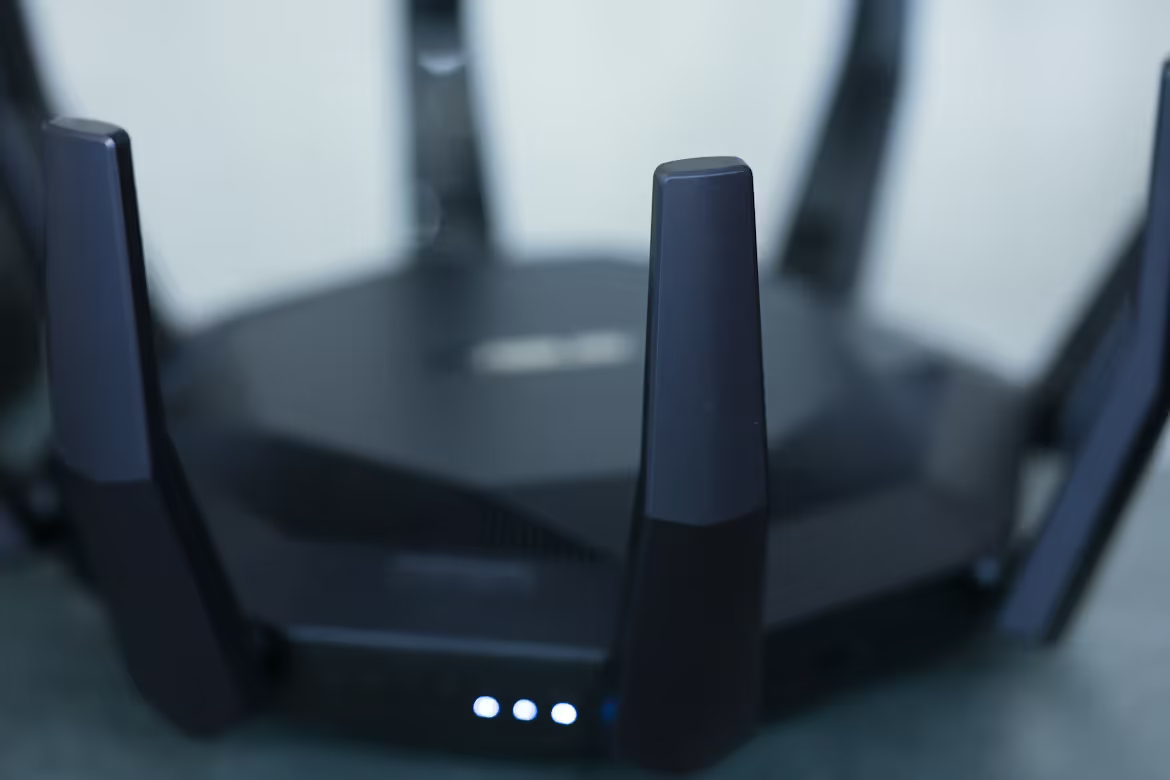
A reliable Wi-Fi network is the backbone of modern business operations, connecting everything from employee laptops to essential cloud services.
When it's time to upgrade your infrastructure, one of the fundamental choices you'll face is between a dual-band and a tri-band router. Though they sound similar, their technical differences have a direct effect on network speed and capacity.
This guide offers a straightforward comparison to help you decide which technology is the right investment for your enterprise.
What is a Dual-Band Router?
A dual-band router is a wireless device that broadcasts Wi-Fi signals on two separate frequency bands. This approach creates two distinct networks from a single piece of hardware, helping to manage traffic more effectively and reduce congestion. Devices can connect to the band that best suits their needs, which helps balance the network load.
- 2.4 GHz Band: This frequency offers a longer range, making it effective at covering larger areas and penetrating walls. However, it's more susceptible to interference from common devices like microwaves and cordless phones, which can lead to slower speeds.
- 5 GHz Band: This band provides faster data speeds and is less crowded, resulting in a more stable connection. Its primary trade-off is a shorter range, so it performs best when devices are closer to the router with fewer physical obstructions.
What is a Tri-Band Router?
A tri-band router expands on the dual-band model by broadcasting three separate wireless signals instead of two. This architecture is specifically designed to support a higher number of connected devices and manage network traffic more efficiently, which is critical in a busy office environment.
It accomplishes this by adding a second 5 GHz band to the mix:
- One 2.4 GHz Band: This band functions just like its dual-band counterpart, providing long-range coverage for less demanding devices.
- Two 5 GHz Bands: This is the main upgrade. Having two distinct 5 GHz bands allows the router to automatically sort devices to prevent congestion. For example, high-priority traffic like VoIP calls and video conferences can operate on one 5 GHz band, while other devices use the second, ensuring stable performance for all.
Dual-Band vs Tri-Band: Key Differences
The fundamental difference between these router types comes down to how they allocate their frequency bands, which directly impacts device capacity and traffic organization.
1. Available Bands and Capacity
As their names suggest, a dual-band router offers two bands (one 2.4 GHz and one 5 GHz), while a tri-band router provides three (one 2.4 GHz and two 5 GHz). This additional 5 GHz band is the main point of difference, creating more capacity for connected devices and preventing network congestion.
2. Automatic Load Balancing
A tri-band router can automatically balance devices between its two 5 GHz bands. This intelligent traffic management prevents one band from becoming overcrowded, a common issue in dense office environments. It can isolate slower devices to one band so they don’t reduce the efficiency of newer hardware on the other.
3. Dedicated Backhaul Support
For businesses using a mesh Wi-Fi system to cover a large area, a tri-band router offers a key advantage. It can dedicate one of its 5 GHz bands exclusively for communication between the main router and its satellite nodes. This "backhaul" connection doesn't compete with your devices for bandwidth, leading to a more stable overall network.
Performance and Speed Considerations
When evaluating performance, it's important to look beyond raw speed. The real difference between dual-band and tri-band routers emerges in how they maintain that speed under the strain of a busy network.
- Speed Under Load: A tri-band router doesn't necessarily offer a higher top speed for a single connected device. Its advantage is maintaining high speeds for all devices simultaneously. As more users connect, a dual-band router's single 5 GHz channel can become congested, slowing everyone down. A tri-band model avoids this by distributing the load across two 5 GHz bands.
- Latency and Jitter: For real-time applications like VoIP and video conferencing, low latency is crucial. By separating traffic, a tri-band router can dedicate bandwidth to these sensitive applications, resulting in a more stable connection with less lag and jitter, even when the network is busy.
- Device Optimization: Tri-band routers can intelligently assign faster Wi-Fi 6/6E devices to one 5 GHz band and slower legacy devices to the other. This prevents older hardware from dragging down the performance of the entire network, ensuring newer equipment can operate at its full potential.
Cost Implications for Enterprises
When it comes to budget, the price difference is straightforward. Tri-band routers carry a higher upfront cost due to their additional radio and more complex internal components. Dual-band models are the more economical option for initial hardware spending.
For a business, however, the sticker price is only one part of the equation. The total cost of ownership (TCO) includes factors like employee productivity and future upgrade needs.
A less expensive dual-band router might save money initially, but if it leads to network slowdowns and requires a replacement sooner as your device count grows, the long-term cost could be higher.
Conversely, the premium for a tri-band router can be a worthwhile investment. It provides the capacity to support a growing number of devices and demanding applications, offering greater network stability and a longer functional lifespan in a busy office.
Use Cases: When to Choose Dual-Band or Tri-Band
Choosing the right router depends less on which technology is "better" and more on what your specific business environment demands.
When a Dual-Band Router Makes Sense
A dual-band router is a practical and cost-effective solution for smaller businesses or branch offices with simpler network needs.
It is well-suited for environments with a moderate number of connected devices where the primary online activities include web browsing, email, and standard business applications. If your team doesn't heavily rely on constant, high-bandwidth tasks like simultaneous 4K video streams or large data transfers, a dual-band model is often sufficient.
When to Upgrade to a Tri-Band Router
A tri-band router is the logical choice for larger, high-density offices where network performance is directly tied to operational efficiency.
Opt for a tri-band model if your office supports a large number of employees and devices all competing for bandwidth. It is essential for businesses where stable VoIP calls, frequent video conferences, and consistent cloud application performance are critical.
Furthermore, if you are deploying a mesh Wi-Fi system to provide coverage across a large space, a tri-band router’s ability to dedicate a backhaul band is a significant advantage.
Making the Right Choice for Your Network Needs
The decision between a dual-band and a tri-band router comes down to balancing your current network demands and budget with your future growth plans. It’s less about which is superior and more about which is appropriate for your specific operational needs.
A dual-band router is a practical, cost-effective choice for smaller offices with moderate traffic. It reliably supports standard business activities like email and web browsing without over-investing in unnecessary capacity.
For larger, high-density environments, a tri-band router is a strategic investment in performance. Its ability to manage heavy traffic across many devices prevents the slowdowns that can impact productivity, especially for businesses reliant on VoIP and video conferencing.
Ultimately, a clear assessment of your device count, application requirements, and expansion plans will point you to the right hardware for a stable and efficient company network.
Need Help Managing Your Network? Lightyear Can Help
Choosing the right router is just one piece of the puzzle. Lightyear helps you manage your entire telecom infrastructure, from procurement to payment, so you can make informed decisions about all your network services.
By automating network service procurement and inventory management, Lightyear removes the complexity from managing your telecom stack. Hundreds of enterprises trust our platform to achieve over 70% time savings and 20% cost savings.
Schedule a demo or get started with our questionnaire today.
Frequently Asked Questions about Dual-Band Router vs Tri-Band Router
Will a tri-band router make my internet connection faster?
Not for a single device. A tri-band router’s main benefit is maintaining consistent speed for many devices at once by reducing network congestion. Your maximum speed is still determined by your internet plan, but more devices can achieve it simultaneously without slowdowns.
Is a tri-band router more secure than a dual-band one?
Not inherently. Security depends on the router's encryption standards, like WPA3, and proper configuration, not the number of bands. Both router types can be equally secure if they support the latest security protocols and are updated regularly.
Are all "tri-band" routers the same?
No. Most offer one 2.4 GHz and two 5 GHz bands, as discussed here. However, newer Wi-Fi 6E models are also called "tri-band" but feature one 2.4 GHz, one 5 GHz, and one 6 GHz band. Always check the specifications to ensure it meets your needs.
Let us show you the product and discuss specifics on how it might be helpful.
Schedule a Demo





Revolutionize Your Telecom Experience
Learn how you can get one step closer to optimal business efficiency for all your telecom services.