Edge Computing vs IoT: Differences for Enterprises
Edge Computing and IoT are related, but not the same. Learn their core differences and how each impacts your enterprise IT infrastructure.

The terms Internet of Things (IoT) and edge computing are often used together, sometimes even interchangeably. While they are closely related and frequently work in tandem, they refer to two distinct concepts critical for modern enterprise infrastructure.
The Internet of Things describes the vast network of physical objects—from factory sensors to smart office devices—that are equipped to connect to the internet and collect or exchange data.
Edge computing, on the other hand, is a computing model. It focuses on processing that data locally, near the physical location where it is created, rather than sending it to a centralized cloud for analysis. In short, IoT devices often create the data, and edge computing architecture processes it.
What is Edge Computing?
At its core, edge computing is a distributed IT architecture where data is processed as close to its point of origin as possible. Instead of transmitting raw data from a device—like a security camera or a factory machine—all the way to a centralized cloud or data center, the computation happens locally. This local processing can occur on the device itself or on a nearby server or gateway.
This approach is built on a few key principles:
- Data processing occurs at the network's "edge," minimizing the distance data must travel.
- It significantly reduces latency, enabling near real-time analysis and responses for applications that require immediate action.
- By processing data locally, it lessens the strain on network bandwidth, as only relevant results or summaries need to be sent to the cloud.
- It creates a decentralized structure, distributing computing power across many locations rather than concentrating it in one place.
What is the Internet of Things (IoT)?
The Internet of Things (IoT) is a system of interconnected physical devices that collect and transfer data over a network without requiring human-to-human or human-to-computer interaction. These "smart" objects are embedded with sensors, software, and other technologies that allow them to communicate with other devices and systems.
An IoT ecosystem generally operates with four main components:
- Devices and Sensors: These are the physical objects that gather data from the environment. Examples include temperature sensors in a server room, GPS trackers on a delivery fleet, or motion detectors in a secure facility.
- Connectivity: The data collected by the sensors is transmitted to a central system or the cloud. This happens over various communication networks like Wi-Fi, cellular (4G/5G), Bluetooth, or LoRaWAN.
- Data Processing: Once the data is received, software processes it. This can range from simple tasks, like checking if a value is within a predefined range, to complex analysis using machine learning algorithms.
- User Interface: The processed information is presented to the user through an application or dashboard. This allows IT managers or operations teams to monitor the system, receive alerts, and control the connected devices remotely.
Edge Computing vs IoT: Key Differences
While they work hand-in-hand, their core functions and structures are fundamentally different. Here’s a breakdown of where they diverge.
1. Function vs. Architecture
The most basic difference lies in what they are. The Internet of Things is a system of connected physical objects designed to sense and gather data from their environment.
Edge computing, conversely, is a network architecture. It defines where that data gets processed, pushing computation away from a central server and closer to the data source itself.
2. Data Processing Location
This leads to the next key distinction. In many IoT deployments, devices send raw data across a network to a centralized cloud or data center for analysis.
Edge computing fundamentally alters this data flow. It introduces a local processing layer—either on the device or on a nearby gateway—so that data is analyzed almost instantly. Only the results or important summaries are then sent to the cloud.
3. Relationship and Dependency
Finally, their relationship isn't symmetrical. An IoT network can function without edge computing by relying entirely on the cloud for its processing needs.
However, edge computing is an architectural strategy that depends on a data source. In this context, it relies on IoT devices to generate the data it needs to process. You can have IoT without edge, but an edge layer is added specifically to support devices like those in an IoT network.
Benefits of Edge Computing for Enterprises
For enterprises, adopting an edge computing architecture brings several practical advantages, especially when managing large-scale IoT deployments. By processing data locally, businesses can improve performance, lower expenses, and strengthen security.
1. Lower Latency
Because data is processed near its source, response times are measured in milliseconds. This near-instant feedback is essential for applications where delays could cause major issues, such as in factory automation, remote asset monitoring, or real-time inventory management.
2. Reduced Operational Costs
Sending raw data from thousands of devices to a central cloud consumes significant bandwidth and incurs high costs. Edge computing filters this data locally, sending only relevant insights or summaries onward. This greatly reduces data transport and cloud storage expenses.
3. Increased Reliability
Edge systems can operate autonomously if the connection to the central cloud is interrupted. For remote sites or critical infrastructure, this means operations like security surveillance or industrial process control can continue without disruption, ensuring business continuity.
4. Better Security and Privacy
Processing sensitive information on-site reduces its exposure to threats during transit over a public network. It also helps businesses comply with data sovereignty regulations like GDPR, which may require that certain data does not leave a specific geographic location.
Advantages of IoT in Business
Just as edge computing offers architectural benefits, implementing an IoT system provides its own set of powerful business advantages by connecting physical operations to digital insights.
- Greater operational efficiency. IoT sensors automate data collection and can monitor equipment health to predict maintenance needs, reducing costly downtime and manual work. This leads to more productive and reliable operations.
- Deeper business insights. With access to real-time data from across the organization—from the factory floor to the supply chain—leaders can make faster, more informed decisions based on actual conditions rather than historical reports.
- Improved asset management. Companies can track the location, status, and condition of physical assets in real time. This is invaluable for managing logistics, preventing theft, and ensuring equipment is where it needs to be.
- Creation of new business models. IoT data allows companies to offer new services. For instance, a manufacturer can provide customers with usage-based billing or sell performance analytics as a service alongside their physical products.
Challenges and Considerations for Implementation
While both IoT and edge computing offer powerful advantages, their implementation isn't a simple plug-and-play affair. Successfully deploying these systems requires careful planning to address potential hurdles in security, scale, and integration.
First, there's the matter of scale and management. Deploying and overseeing thousands of IoT sensors or hundreds of edge nodes across different locations creates a complex operational challenge. IT teams must handle device provisioning, software updates, and ongoing monitoring for a highly distributed network.
Security is also a primary concern. Each connected device is a potential entry point for cyber threats, expanding the company's attack surface significantly. Protecting data both at rest on edge devices and in transit requires a robust security strategy from the start.
Finally, integration with existing enterprise systems can be difficult, and the entire setup hinges on reliable connectivity. An unstable network connection can undermine the benefits of real-time data processing, making network infrastructure a critical component of any implementation plan.
Making the Right Choice for Your Enterprise
Ultimately, the decision isn't about choosing one technology over the other. The Internet of Things and edge computing are not competitors but partners that solve different problems. IoT systems are about gathering data from physical objects, while edge computing is an architecture for processing that data efficiently.
The real question is whether your IoT strategy would benefit from an edge layer. If your application requires immediate analysis—like in manufacturing automation or remote security monitoring—then adding edge computing is a logical step to reduce latency.
Likewise, if your goals include lowering data transport costs or keeping remote sites running during network interruptions, processing data locally is a practical solution. Understanding your specific operational needs will make it clear whether a cloud-based IoT system is enough, or if the powerful combination of IoT and edge is the right path for your business.
Need Help Managing Your Network? Lightyear Can Help
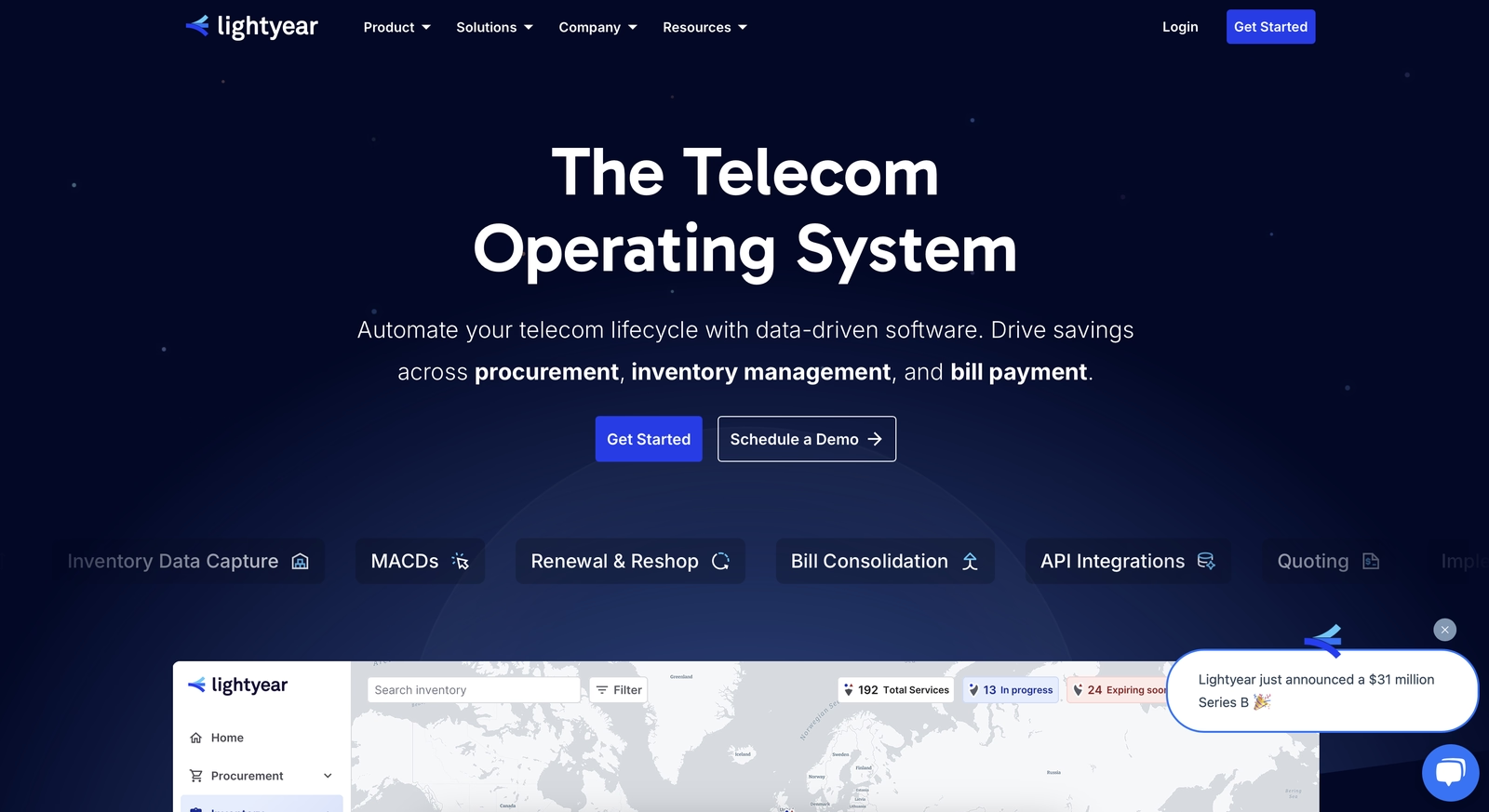
Whether you're deploying IoT devices or building an edge architecture, your success depends on the underlying network. Lightyear automates the procurement and management of your telecom services, ensuring your infrastructure can support these advanced systems.
By handling network service procurement, inventory, and bill consolidation, we help enterprises save over 70% in time and 20% in costs. This frees up your team to focus on strategic initiatives instead of chasing vendors.
Schedule a demo or get started with our questionnaire today.
Frequently Asked Questions about Edge Computing vs Internet of Things
Can you have edge computing without using IoT devices?
Yes. While often paired with IoT, edge computing can process data from any source, like employee laptops or point-of-sale systems. The key is processing data locally to reduce latency, regardless of whether the source is a "smart" IoT device or a traditional computer.
Is edge computing more expensive than a standard IoT setup?
Initially, yes. An edge architecture requires additional hardware and software for local processing, which adds to the upfront cost. However, it can lower long-term operational expenses by reducing bandwidth usage and cloud processing fees, often providing a return on investment over time.
Does edge computing replace the need for the cloud?
No, they complement each other. Edge computing handles immediate, time-sensitive processing locally. The cloud is still used for long-term data storage, complex analysis, and managing the overall system. Edge filters the data, and the cloud provides the big-picture intelligence.
Let us show you the product and discuss specifics on how it might be helpful.
Schedule a Demo




Revolutionize Your Telecom Experience
Learn how you can get one step closer to optimal business efficiency for all your telecom services.