Edge Router vs Router: Enterprise Network Differences
Confused about edge routers vs. standard routers? This guide breaks down the core differences to help you decide what your enterprise network needs.

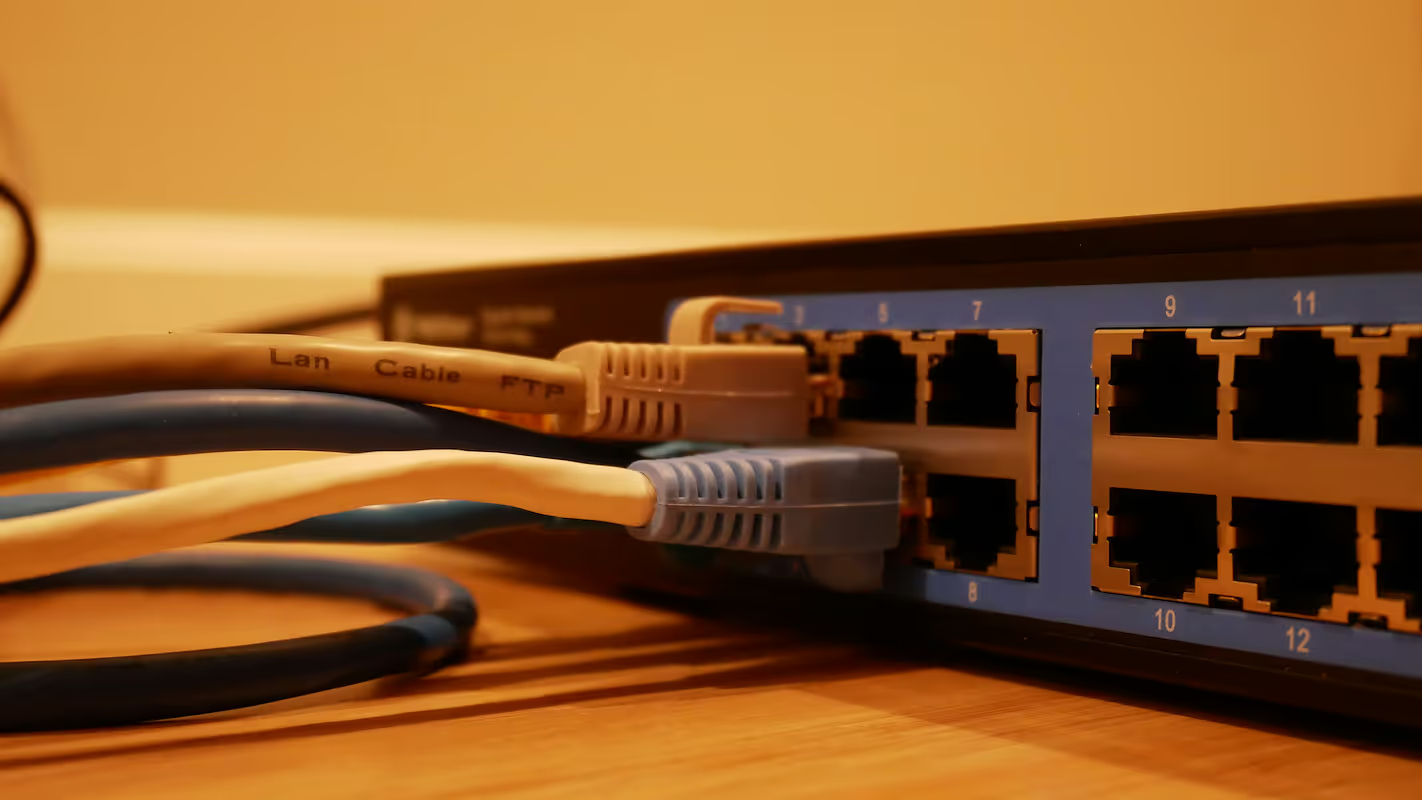
When building out an enterprise network, you'll often encounter the terms 'router' and 'edge router'. While they sound similar, these devices have distinct functions and sit in very different places within your network architecture.
Making the right choice between them is fundamental for network performance, security, and cost-efficiency. This guide will clarify the differences, explain their specific roles, and help you decide which is appropriate for your organization's needs.
What is an Edge Router?
An edge router, as its name implies, operates at the “edge” of a network. It acts as the primary gateway connecting your organization's internal local area network (LAN) to external networks, like the internet or a wide area network (WAN).
Its fundamental role is to manage all data traffic flowing in and out of your private network. Key functions include:
- Connectivity: It is the main entry and exit point for network traffic, linking your internal systems to your Internet Service Provider (ISP) and other external connections.
- Traffic Routing: It inspects and directs data packets to their proper destinations, both internally and externally, based on routing protocols.
- Security: As the first line of defense, it often includes security features like firewalls, access control lists (ACLs), and VPN termination to protect the internal network.
- Quality of Service (QoS): It can prioritize critical application traffic, such as VoIP or video conferencing, to maintain consistent performance.
What is a Router?
A standard router, often called an internal or core router, operates exclusively within your local area network (LAN). Its main job is to connect different network segments or subnets, ensuring data packets travel efficiently between devices inside your organization.
Its responsibilities typically include:
- Internal Network Segmentation: It connects different subnets, like linking the marketing team’s network with the sales team’s, allowing them to communicate while keeping their traffic separate.
- Packet Forwarding: It analyzes the destination IP address of each data packet and forwards it along the most efficient path to the correct device within the LAN.
- DHCP Server Functionality: Many internal routers handle Dynamic Host Configuration Protocol (DHCP) tasks, automatically assigning IP addresses to new devices that join the network.
Edge Router vs Router: Key Differences
While both devices route traffic, their roles diverge significantly based on where they operate, the type of traffic they handle, and their security responsibilities.
1. Network Position and Scope
An edge router is positioned at the perimeter of your network. It acts as the official gateway, managing all data flowing between your internal LAN and external networks like the internet or a private WAN.
A standard router, often called an internal or core router, operates exclusively within your LAN. Its purpose is to connect different internal network segments or subnets, such as linking the marketing team’s network to the sales team’s.
2. Primary Function and Traffic Flow
The main function of an edge router is to manage "north-south" traffic—data that is entering or exiting your private network. It is optimized for connecting to your Internet Service Provider (ISP).
A standard router, on the other hand, is designed to handle "east-west" traffic. It efficiently directs data packets between different devices and departments inside your network boundary.
3. Security Posture
Security is a fundamental responsibility of an edge router. It is your network's frontline defender, equipped with robust features like stateful firewalls, access control lists (ACLs), and VPN termination points to filter and secure incoming traffic.
An internal router has a much lighter security role. It operates on the assumption that internal traffic is already vetted and secure, relying on the edge router to block external threats before they can enter the LAN.
4. Routing Protocols and Complexity
To communicate with the wider internet, edge routers use an exterior gateway protocol, most commonly the Border Gateway Protocol (BGP). This allows them to exchange routing information with other networks and ISPs.
Internal routers use interior gateway protocols (IGPs), such as OSPF or EIGRP. These protocols are designed for faster, simpler routing decisions within a single, trusted network environment.
Benefits of Using an Edge Router
Deploying a dedicated edge router brings several strategic advantages by isolating and managing your network's connection to the outside world. It provides a clear point of control and is optimized for the unique demands of external traffic.
- Enhanced Security Control: By creating a single, controlled gateway for all external traffic, an edge router centralizes security enforcement. This simplifies firewall management, threat monitoring, and the implementation of access policies, establishing a clear and defensible network perimeter.
- Optimized Performance and Reliability: Edge routers are built to manage the complexities of internet traffic. They use exterior routing protocols (like BGP) to maintain stable connections and can apply Quality of Service (QoS) policies to prioritize business-critical applications, preventing slowdowns.
- Greater Scalability: When your business needs to add a redundant internet connection or connect to a new cloud provider, an edge router simplifies the process. It handles these external-facing configurations without disrupting the internal network architecture, making expansion more manageable.
- Improved WAN Management: These devices are specialized for interfacing with Internet Service Providers (ISPs) and managing Wide Area Network (WAN) links. This specialization leads to more stable and efficient routing of traffic to and from external networks.
Benefits of Using a Standard Router
While an edge router secures the perimeter, a standard router is the workhorse of your internal network. Using one offers distinct advantages for managing traffic and organizing your local environment.
- Improved Internal Performance: By segmenting your LAN into smaller subnets, a standard router contains broadcast traffic and reduces overall network congestion. This ensures data moves efficiently between internal devices and departments without unnecessary slowdowns.
- Simplified Network Management: A segmented network is far easier to manage and troubleshoot. When a network issue arises, it can be isolated to a specific subnet, preventing a localized problem from impacting the entire internal network and making diagnostics much faster.
- Cost-Effectiveness: Standard routers are purpose-built for internal traffic and are more economical than their edge counterparts. They don't require the expensive hardware or complex routing protocols (like BGP) needed to interface with the public internet.
- Granular Internal Access Control: These routers allow you to create logical boundaries between different business units. You can implement internal access rules to control traffic flow, for example, preventing the marketing subnet from accessing sensitive engineering servers.
Choosing the Right Device for Your Network
The decision isn't about which device is superior, but which is correct for the job at hand. In most modern business networks, the answer isn't choosing one over the other, but understanding where each fits.
1. When to Choose an Edge Router
You need an edge router if your primary goal is to connect your internal business network to an external one. This is the device you need for managing your connection to an Internet Service Provider (ISP) or linking to a private WAN.
It is essential for establishing a secure network perimeter, filtering incoming threats, and managing the flow of data in and out of your organization.
2. When to Choose a Standard Router
A standard (or internal) router is the right choice when you need to manage traffic exclusively within your local network. Its job is to create and connect different network segments.
For example, you would use a standard router to separate the finance department's network from the engineering department's network, controlling how they communicate while improving internal performance by containing traffic.
3. The Hybrid Approach: Using Both
For almost any business with more than a handful of employees, the answer is to use both. An edge router and one or more standard routers work together to create a secure and efficient network architecture.
The edge router sits at the perimeter, managing all external traffic and acting as the primary security gateway. Behind it, standard routers take over, directing traffic between different internal departments, floors, or device groups. This layered approach provides security, performance, and scalability.
Final Thoughts on Edge Routers and Routers
Ultimately, the distinction between an edge router and a standard router is about specialized roles. They are not competing devices but complementary components of a well-designed network, each critical for performance and security.
Your edge router is the gatekeeper, managing the boundary between your private network and the public internet. It is built for security and handling external connections.
Meanwhile, standard routers work inside your network, directing traffic efficiently between teams and devices to keep internal operations running smoothly. For nearly any modern enterprise, using both is the standard. This layered architecture provides the security, control, and scalability needed to support business growth and protect critical data.
Need Help Managing Your Network? Lightyear Can Help
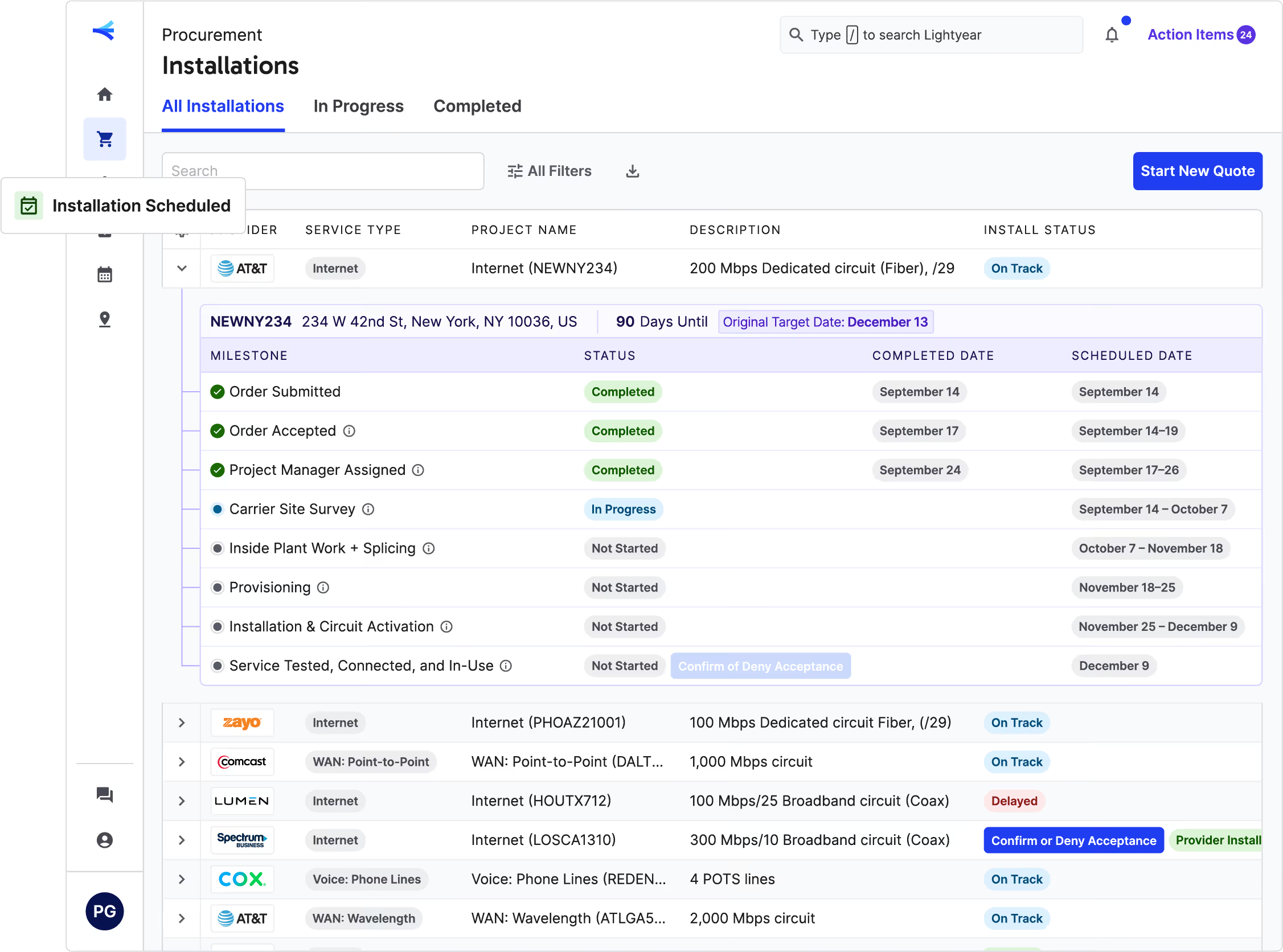
Choosing the right router is just one part of managing your enterprise network; the next is procuring and managing the services that run on it. By automating network service procurement, inventory management, and bill consolidation, Lightyear removes the complexity from telecom infrastructure management.
Enterprises that use Lightyear often achieve over 70% in time savings and 20% in cost savings on their network services. Schedule a demo or get started with our questionnaire today.
Frequently Asked Questions about Edge Router vs Router
Can one device function as both an edge and internal router?
Yes, many routers can perform both roles, especially in smaller networks. However, for security and performance, best practice in larger enterprises is to use dedicated devices for each function to create a clear, defensible network boundary.
How does SD-WAN fit in with edge routers?
SD-WAN is an evolution of edge routing. SD-WAN appliances are intelligent edge devices that manage multiple WAN connections, automatically routing traffic over the best path based on application needs, enhancing traditional edge router capabilities.
Do all edge routers need to use BGP?
Not necessarily. BGP is required only if your organization is multi-homed—connecting to multiple ISPs and managing your own public IP addresses. For a single ISP connection, a simpler static or default route is often sufficient.
Let us show you the product and discuss specifics on how it might be helpful.
Schedule a Demo





Revolutionize Your Telecom Experience
Learn how you can get one step closer to optimal business efficiency for all your telecom services.