Ethernet vs 5G: Choosing Enterprise Connectivity Solution
Ethernet or 5G for your enterprise? Compare speed, security, and cost to find the right connectivity solution for your business needs.

Selecting the right connectivity solution is a critical decision for any enterprise, impacting everything from daily operations to long-term growth.
Two prominent options at the center of this discussion are dedicated Ethernet and the newer 5G wireless technology. Ethernet is known for its stable, high-speed wired connections, while 5G offers significant flexibility and mobility.
This article compares both options to help you determine which is the better fit for your business's specific needs.
What is Ethernet?
Ethernet is a technology that connects devices within a local area network (LAN) using physical cables. Think of it as the foundational plumbing for wired internet and network access in most offices and data centers. It has been the standard for wired networking for decades due to its reliability and performance.
- Wired Connection: It uses physical cables, such as copper or fiber optic lines, to connect devices to a network. This direct link ensures a stable and dedicated path for data transmission.
- High Performance: Ethernet provides consistent, high-speed connectivity with low latency. Because the bandwidth isn't shared over the air, performance is predictable and reliable for demanding business applications.
- Security: As a closed, wired system, Ethernet offers inherent security. Accessing the network requires a physical connection, making it less vulnerable to unauthorized access compared to wireless technologies.
What is 5G?
5G is the fifth generation of cellular technology, a significant advancement over 4G LTE. It is designed to deliver much faster speeds, lower latency, and greater capacity to wireless networks, connecting everything from mobile phones to complex business systems without physical cables.
- Wireless Connectivity: 5G transmits data over radio waves, providing internet access without the constraints of physical wiring. This enables high-speed connectivity for mobile workforces and in locations where cabling is difficult.
- Improved Performance: It offers a substantial increase in speed and responsiveness compared to previous cellular generations. Its low latency is particularly valuable for applications requiring real-time data processing.
- Greater Network Capacity: The technology is built to support a much higher density of connected devices simultaneously, making it suitable for environments with numerous IoT sensors or users.
Ethernet vs 5G: Key Differences
While both technologies promise high performance, the way they deliver it creates important distinctions for business operations.
Speed and Bandwidth Consistency
Ethernet provides a dedicated, private line with symmetrical speeds, meaning your upload and download capabilities are the same. This is crucial for tasks like video conferencing or transferring large files to the cloud.
In contrast, 5G bandwidth is shared among users in a given area. Its speeds are typically asymmetrical, with much faster downloads than uploads, and performance can fluctuate based on network congestion.
Latency and Jitter
A dedicated Ethernet connection offers ultra-low and extremely consistent latency. The stability of the physical line minimizes jitter—or variations in latency—which is vital for real-time applications like VoIP and financial trading.
While 5G has very low latency for a wireless technology, it is still inherently higher and less predictable than a dedicated fiber Ethernet circuit. Factors like distance from a cell tower can introduce variability.
Reliability and Interference
As a wired medium, Ethernet is immune to the radio frequency (RF) interference that can affect wireless signals. Its performance is highly dependable and not impacted by weather or physical obstructions.
5G's wireless signal, however, can be weakened or blocked by buildings, walls, and even heavy foliage. It is also susceptible to RF interference from other electronic devices, which can impact connection stability.
Mobility and Deployment
Ethernet is a fixed solution. The connection is tied to a physical location where cabling is installed, making it ideal for static environments like offices and data centers.
5G’s primary advantage is mobility, providing high-speed connectivity for devices on the move. It can also be deployed much faster than Ethernet in areas with existing cell coverage, bypassing the need for physical cable installation.
Use Cases for Ethernet in Enterprises
Given its stability and performance, dedicated Ethernet is the go-to choice for foundational business infrastructure where reliability is paramount. Its wired nature makes it ideal for fixed locations that serve as central hubs for operations and data.
- Primary Office and Data Center Connectivity: Ethernet is used to establish the main network connection for corporate headquarters, branch offices, and data centers. It provides a dependable, high-capacity backbone for all internal and external network traffic.
- Support for Latency-Sensitive Applications: It is essential for running applications that cannot tolerate delays or jitter. This includes VoIP systems, high-definition video conferencing, and platforms for financial trading, where real-time performance is critical.
- Secure, High-Volume Data Transfers: The technology is perfect for businesses that regularly move large amounts of sensitive data. Its symmetrical speeds and secure physical line are ideal for cloud backups, disaster recovery, and transferring large project files.
- Private Network Infrastructure: Companies use Ethernet to build private and secure wide area networks (WANs), connecting multiple sites together without touching the public internet, ensuring data remains confidential and performance is predictable.
Use Cases for 5G in Enterprises
5G's wireless nature opens up a range of applications where mobility and rapid deployment are key. It excels in scenarios where traditional wired connections are impractical or impossible, offering new ways for businesses to operate and innovate.
- Mobile Workforce and Remote Operations: It provides high-speed, reliable internet for mobile workforces, such as field service teams or remote employees who need consistent connectivity outside of a central office.
- Temporary or Pop-Up Sites: 5G is ideal for setting up connectivity at temporary locations like construction sites, pop-up retail stores, or event venues. It can be deployed quickly without waiting for cable installation.
- Internet of Things (IoT): The technology supports a high density of connected devices, making it perfect for large-scale IoT deployments in smart factories, warehouses, or for agricultural sensors.
- Wireless Backup and Failover: It serves as an effective wireless backup solution. If a primary wired connection fails, network traffic can be automatically rerouted over the 5G network to maintain business continuity.
Cost Considerations: Ethernet vs 5G
When budgeting for connectivity, the cost structures for Ethernet and 5G are quite different. The total cost of ownership depends on factors like installation, hardware, and long-term data consumption.
Ethernet Costs
Ethernet can involve significant upfront capital expenditure, particularly if new fiber optic cabling needs to be run to your building. These installation and construction fees can be substantial.
Once installed, the monthly recurring costs are typically fixed and predictable. You pay a set price for a specific, guaranteed bandwidth level, which simplifies budgeting and financial forecasting for the contract term.
5G Costs
5G generally has much lower initial setup costs because it bypasses physical cable installation. The main upfront expense is for compatible hardware, such as a 5G-enabled router or modem.
Ongoing costs are usually tied to data consumption plans, which can introduce variability into your monthly expenses. While convenient, heavy and continuous data use could make 5G a more expensive option than a comparable dedicated Ethernet circuit over the long run.
Making the Right Choice for Your Business
The decision between Ethernet and 5G isn't about choosing a single winner, but rather matching the right technology to a specific business need. The two are often complementary, not mutually exclusive.
For your core infrastructure—like a headquarters or data center—the dedicated performance and reliability of Ethernet are indispensable. It provides the stable foundation required for your most critical, latency-sensitive applications.
In contrast, 5G delivers unmatched flexibility for mobile workforces, temporary sites, or as a powerful wireless failover solution. Many businesses adopt a hybrid strategy, using Ethernet for primary connectivity and 5G for agility and business continuity. By assessing each use case individually, you can build a network that is both robust and adaptable.
Need Help Managing Your Network? Lightyear Can Help
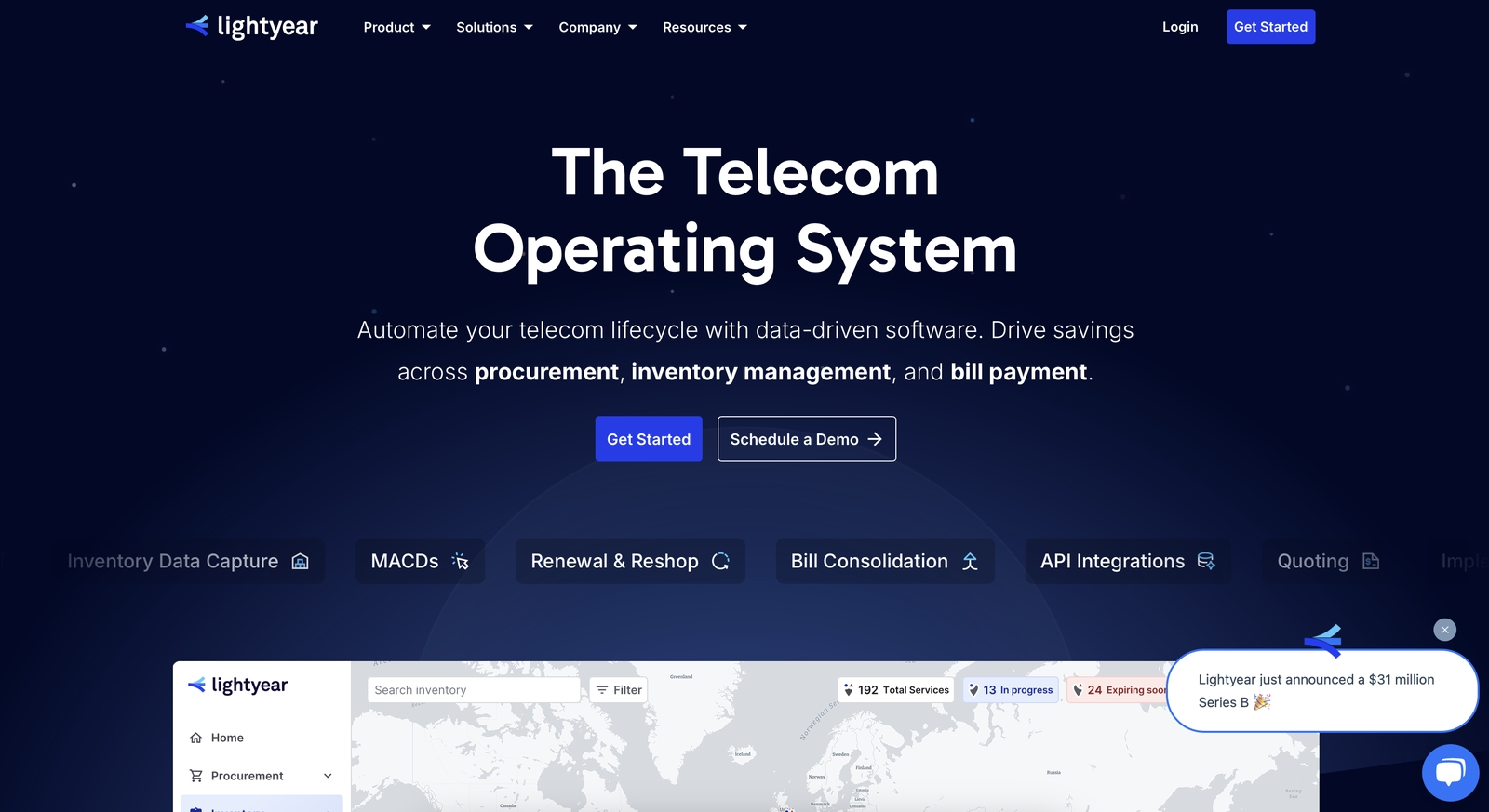
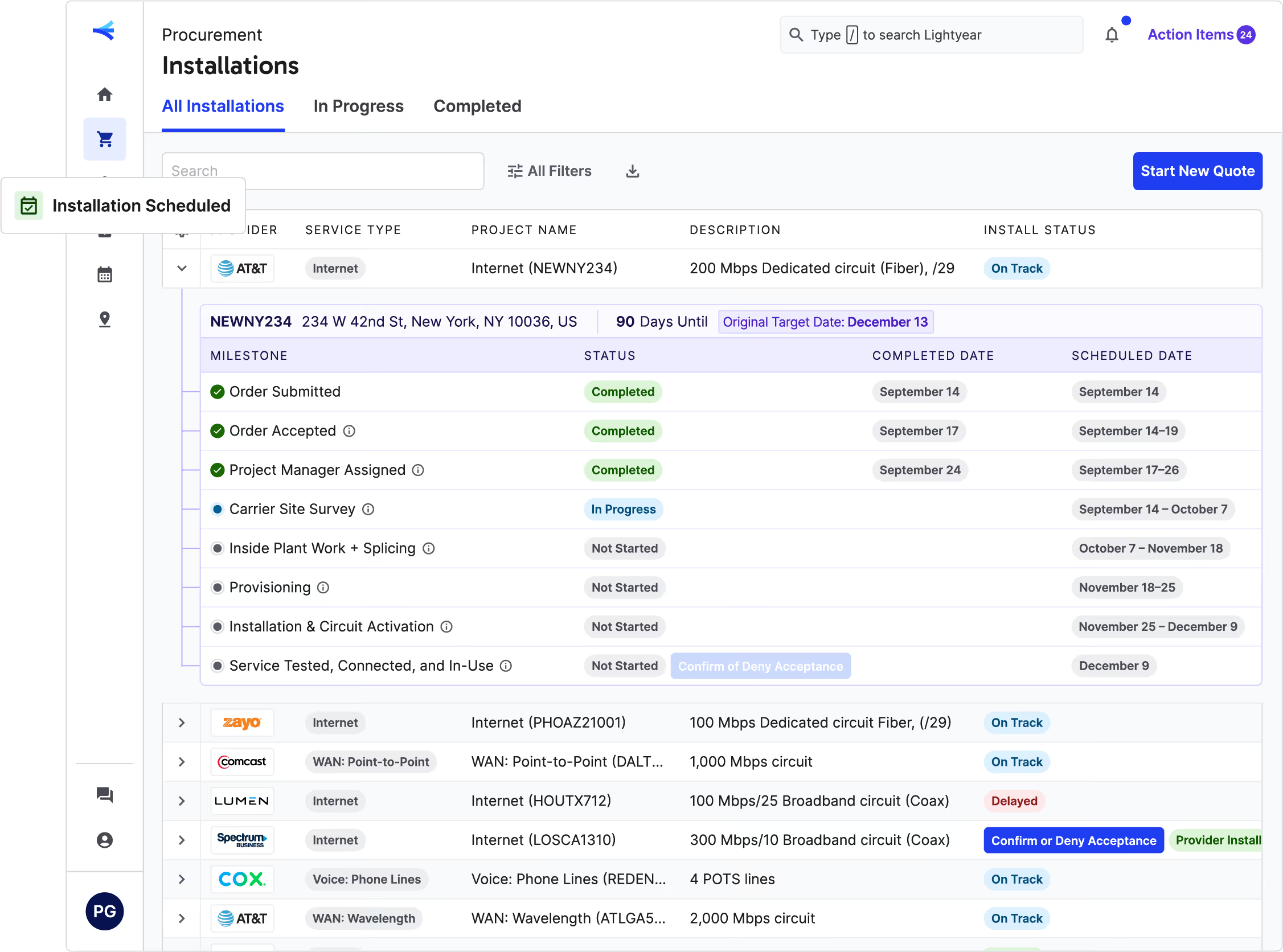
Whether you need a dedicated Ethernet circuit or a flexible 5G solution, Lightyear simplifies the entire process. By automating network service procurement, inventory management, and bill consolidation, we take the pain out of telecom infrastructure management.
The hundreds of enterprises who trust Lightyear achieve 70%+ time savings and 20%+ cost savings on their network services.
Schedule a demo or get started with our questionnaire today.
Frequently Asked Questions about Ethernet vs 5G
Can 5G completely replace my office's Ethernet connection?
While possible for some small or temporary sites, it's not recommended for primary office connectivity. Ethernet's dedicated bandwidth and reliability are still superior for supporting critical business operations and a high density of users in a fixed location.
Which technology is more secure?
Ethernet is inherently more secure due to its physical, closed-network nature, which requires a physical connection for access. 5G is a wireless technology, making it more susceptible to interception, though modern encryption standards provide strong protection.
What is a private 5G network and how does it compare?
A private 5G network is a dedicated, localized cellular network for a single enterprise. It offers more control and security than public 5G but still has the wireless characteristics of higher latency and potential interference compared to a dedicated Ethernet connection.
How do installation times differ?
5G deployment is significantly faster, often taking just days if cell coverage already exists. Ethernet installation, especially if it requires new fiber construction to your building, can take several weeks or even months to complete.
Let us show you the product and discuss specifics on how it might be helpful.
Schedule a Demo





Revolutionize Your Telecom Experience
Learn how you can get one step closer to optimal business efficiency for all your telecom services.