Ethernet vs ADSL: Enterprise Network Solutions Comparison
Ethernet vs. ADSL: Which is right for your business? Learn the key differences in speed, reliability, and cost to make an informed network decision.

When setting up or upgrading your business's internet, you'll face a critical choice in connectivity technology.
This often comes down to two primary options: dedicated Ethernet and Asymmetric Digital Subscriber Line (ADSL).
We'll compare how each one works, their performance differences, and the costs involved to help you make a more informed decision for your company.
What is Ethernet?
At its core, Ethernet is a technology that connects devices within a wired network, like a local area network (LAN). For businesses, however, a dedicated Ethernet service means much more than just plugging in a cable. It's a private, high-performance connection directly to the internet backbone.
- Dedicated Bandwidth: Unlike shared connections, an Ethernet line is exclusively for your business. This prevents slowdowns during peak hours because you aren't competing for bandwidth with other users.
- Symmetrical Speeds: It offers identical upload and download speeds. This is critical for data-heavy operations like large file transfers, cloud-based applications, and high-quality video calls.
- High Reliability: These connections are known for their stability and are typically backed by a Service Level Agreement (SLA) from the provider, guaranteeing uptime and performance standards.
What is ADSL?
ADSL, which stands for Asymmetric Digital Subscriber Line, is a type of internet service delivered over traditional copper telephone lines. It was a popular choice for bringing broadband to homes and small businesses because it could use existing infrastructure. The term 'asymmetric' is the most important aspect to understand: it means that download speeds are much faster than upload speeds. This structure was designed for users who primarily consume content, like browsing websites or streaming video, rather than uploading large amounts of data.
- Asymmetric Speeds: Download speeds are prioritized, making uploads comparatively slow. This can be a bottleneck for business activities like video conferencing or backing up data to the cloud.
- Shared Bandwidth: An ADSL connection is usually shared with other users in the same neighborhood. This can lead to inconsistent speeds, especially during peak hours.
- Distance Sensitive: Performance degrades the farther your office is from the provider's central office or exchange.
Ethernet vs ADSL: Key Differences
While the definitions give you a starting point, the practical differences are what will truly impact your business operations. Let's compare them side-by-side.
1. Speed and Performance
Ethernet provides symmetrical speeds, meaning your upload and download rates are identical. This is vital for tasks like hosting applications, running VoIP systems, or frequent cloud data transfers.
ADSL is asymmetrical, so your download speed is much higher than your upload speed. This can create bottlenecks for business operations that send a lot of data.
Furthermore, Ethernet bandwidth is dedicated. Your performance is consistent and not affected by other users, whereas ADSL is a shared service where speeds can fluctuate based on neighborhood usage.
2. Reliability and Support
Dedicated Ethernet circuits almost always include a Service Level Agreement (SLA). This is a contract that guarantees a specific level of uptime, performance, and repair time.
ADSL is typically offered as a "best effort" service. While providers aim for good service, there are no contractual guarantees on uptime or how quickly issues will be resolved.
3. Infrastructure
An Ethernet connection is a direct fiber link from your building to the provider's network, built for high performance. Installation can be more involved if new fiber needs to be run to your location.
ADSL uses existing copper telephone lines. This makes it widely available but also means its performance is tied to the quality and condition of that older infrastructure.
4. Cost
Ethernet is a premium service with a higher monthly cost. The price reflects its dedicated nature, guaranteed performance, and the included SLA.
ADSL is significantly more budget-friendly because the infrastructure and bandwidth are shared among many customers. This makes it a common choice for small businesses or locations with less demanding connectivity needs.
Pros and Cons of Ethernet
Deciding on a dedicated Ethernet connection involves weighing its significant advantages against some practical considerations. Here’s a straightforward breakdown for your evaluation.
Pros:
- Superior Performance: The dedicated, symmetrical nature of the connection supports demanding business applications without interruption. This is ideal for cloud services, large data transfers, and high-quality voice or video communications where upload speed is just as important as download speed.
- Guaranteed Uptime: Service Level Agreements (SLAs) provide a contractual promise of network availability and performance. This gives businesses confidence in their connection's stability and a clear recourse if standards are not met, which is vital for operational continuity.
Cons:
- Higher Price Point: The cost is substantially greater than shared internet options. This investment reflects the dedicated infrastructure and guaranteed service, which may not be justifiable for all locations or budgets.
- Longer Installation Times: Getting an Ethernet circuit installed can be a lengthy process, sometimes taking several months. This is especially true if fiber optic cable needs to be newly constructed to reach your facility, requiring careful project planning.
Pros and Cons of ADSL
On the other hand, ADSL presents its own set of trade-offs, primarily balancing its low cost and wide availability against significant performance limitations.
Pros:
- Low Cost: The main draw of ADSL is its affordability. Because it uses existing telephone infrastructure and shared bandwidth, it is a highly budget-friendly option for businesses with basic connectivity needs or for secondary, non-critical locations.
- Wide Availability: ADSL is accessible in most areas with telephone service, including many rural or suburban locations where fiber Ethernet may not be an option. This makes it a go-to choice when other technologies are not available.
- Quick Installation: Since the physical lines are already in place, getting an ADSL service up and running is typically much faster and simpler than the construction-intensive process required for a new Ethernet circuit.
Cons:
- Inconsistent Performance: As a shared, "best effort" service, ADSL speeds can fluctuate depending on network traffic from other users. Its performance also degrades over distance, making it less reliable for consistent business use.
- Upload Speed Limitations: The asymmetric nature of ADSL creates a major bottleneck for modern business operations. Slow upload speeds can disrupt video conferencing, cloud backups, and transferring large files.
Choosing the Right Option for Your Business
Making the right choice comes down to evaluating your specific operational needs against your budget and growth plans. Answering a few key questions about your business can point you to the correct solution.
1. What do your daily operations depend on?
If your team relies heavily on cloud-based software, VoIP phone systems, or frequent large file uploads, the symmetrical speeds of Ethernet are practically a requirement. These activities demand strong upload performance that ADSL cannot provide.
Conversely, if your internet usage is primarily web browsing, email, and occasional downloads, the cost savings of ADSL may be more attractive.
2. What is your tolerance for downtime?
For businesses where constant connectivity is critical for revenue, such as e-commerce sites or companies running live applications, an Ethernet connection with an SLA is the only viable option. The service guarantees provide a safety net against costly outages.
If the connection is for a secondary location or as a backup, the "best effort" service of ADSL might be an acceptable trade-off for its lower price.
3. What are your plans for future growth?
Think about where your company will be in the next few years. Ethernet is highly scalable, allowing you to increase bandwidth as your team or data needs grow without changing the underlying infrastructure.
ADSL offers very little room for growth. Choosing it for a primary office might save money now but could lead to a necessary and more complex upgrade later on.
Final Thoughts on Ethernet and ADSL
Choosing between Ethernet and ADSL is a straightforward decision based on your business's specific needs and budget. The core difference lies in trading guaranteed performance for lower costs.
Dedicated Ethernet is the standard for any business that depends on its internet connection for daily operations. Its symmetrical speeds and reliability, backed by an SLA, are necessary for supporting cloud applications, VoIP, and large data transfers without interruption.
ADSL is a practical, low-cost solution for locations with basic connectivity needs, like light web browsing and email. However, its asymmetrical speeds and shared bandwidth make it unsuitable for primary business sites that require consistent performance. As your company grows, the stability and scalability of an Ethernet connection will be a far more valuable asset.
Need Help Managing Your Network? Lightyear Can Help
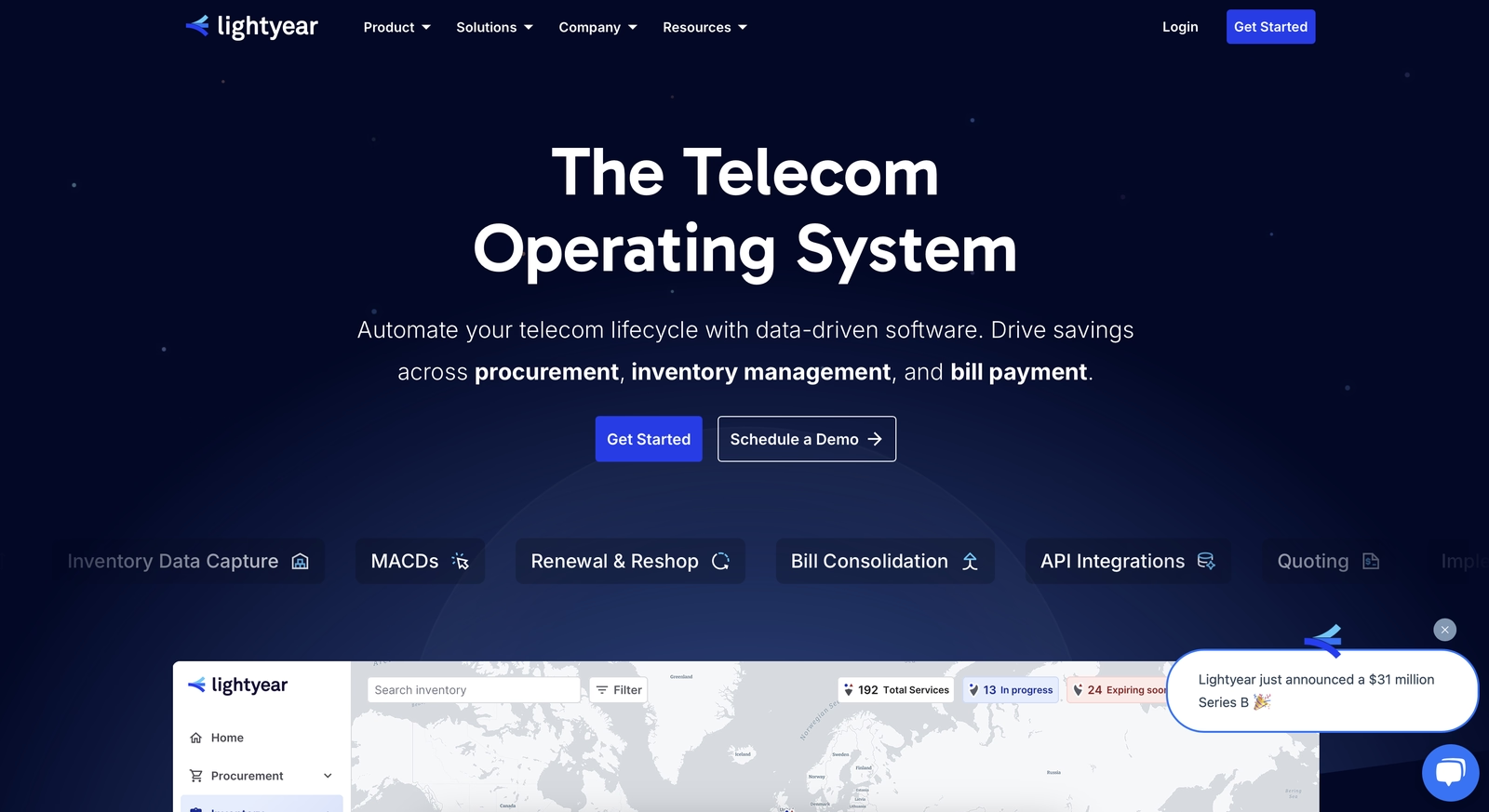
Whether you choose Ethernet or ADSL, Lightyear simplifies the entire process. By automating network service procurement, inventory management, and bill consolidation, we take the pain out of managing your telecom infrastructure.
The hundreds of enterprises who trust Lightyear achieve over 70% in time savings and 20% in cost savings on their network services. Schedule a demo or get started with our questionare today.
Frequently Asked Questions about Ethernet vs ADSL
Can I use ADSL as a backup for my main Ethernet connection?
Yes, many businesses use ADSL as a low-cost backup. While it won't support all your operations during an outage, it can provide enough connectivity for essential tasks like processing payments or sending emails, ensuring a basic level of business continuity.
Is Ethernet always delivered over fiber optic cable?
While fiber is the most common medium for dedicated Ethernet, it can sometimes be delivered over copper (EoC). However, fiber offers far superior scalability, speed, and reliability, making it the standard for modern enterprise-grade connections that Lightyear typically sources.
How does latency differ between the two?
Ethernet connections typically offer much lower and more consistent latency because the path to the internet is more direct. ADSL latency can be higher and more variable due to the nature of copper lines and shared network infrastructure, affecting real-time applications.
Let us show you the product and discuss specifics on how it might be helpful.
Schedule a Demo





Revolutionize Your Telecom Experience
Learn how you can get one step closer to optimal business efficiency for all your telecom services.