Ethernet vs Coaxial: Choosing the Right Network Cable
Ethernet vs. Coaxial: Which network cable is right for your business? Learn the key differences in speed, cost, and performance to make an informed choice.

Choosing the right network cable is a foundational decision for any business's IT infrastructure. Two of the most common options you'll encounter are Ethernet and coaxial cables.
While both can connect your business to the internet, they have distinct differences in construction, performance, and ideal use cases. This guide will break down those differences to help you make an informed choice for your specific needs.
What is Ethernet?
Think of Ethernet as the set of rules, or protocol, that governs how data is transmitted over a local area network (LAN). It defines how network devices format and send data packets so other devices on the same network can recognize and process them. It's the most widely used LAN technology in the world for a reason.
Here are its core characteristics:
- Wired Standard: Ethernet provides a physical, wired connection, which is known for its reliability and consistent performance.
- LAN Connectivity: It's primarily used to connect devices—like computers, servers, and printers—within a limited geographical area, such as an office building or a campus.
- Cable Types: The technology most often runs on twisted-pair copper cables (e.g., Cat5e, Cat6) but can also use fiber optic cables for higher speeds and longer distances.
What is Coaxial Cable?
Coaxial cable, often shortened to "coax," is a type of electrical cable designed to transmit high-frequency signals over long distances with minimal interference. You're likely familiar with it as the cable used for cable television and broadband internet services.
Its unique construction is key to its function:
- Layered Design: Coax has a central copper conductor surrounded by an insulating layer, a metallic shield (usually woven copper mesh), and an outer plastic jacket. This layered design protects the data signal from outside electromagnetic interference.
- Signal Transmission: It is primarily used to carry radio frequency (RF) signals. This makes it suitable for delivering broadband internet and cable TV from a service provider to a business location.
- Common Applications: While Ethernet is the standard for internal office networks (LANs), coaxial cable is often the infrastructure that brings the internet connection into the building from the street.
Ethernet vs Coaxial: Key Differences
While both are types of wiring, their fundamental design and purpose create several important distinctions that go beyond their basic definitions.
1. Cable Construction and Interference Shielding
Coaxial cable's layered design, with its metallic mesh shield, is built specifically to protect the signal from external electromagnetic interference (EMI) over long distances.
Ethernet cables, particularly twisted-pair types, use a different method. The internal wires are twisted together to cancel out signal interference from within the cable itself, a phenomenon known as crosstalk.
2. Network Application and Scope
Think of coaxial cable as the main highway bringing the internet signal from your provider to your building. It's designed for this long-haul delivery.
Ethernet, in contrast, functions as the local roads. It takes that signal and distributes it throughout your internal office network, connecting individual devices within your LAN.
3. Connectors and Terminations
You can often tell the cables apart just by their ends. Coaxial cables typically use round, screw-on F-type connectors, common for cable TV and modem hookups.
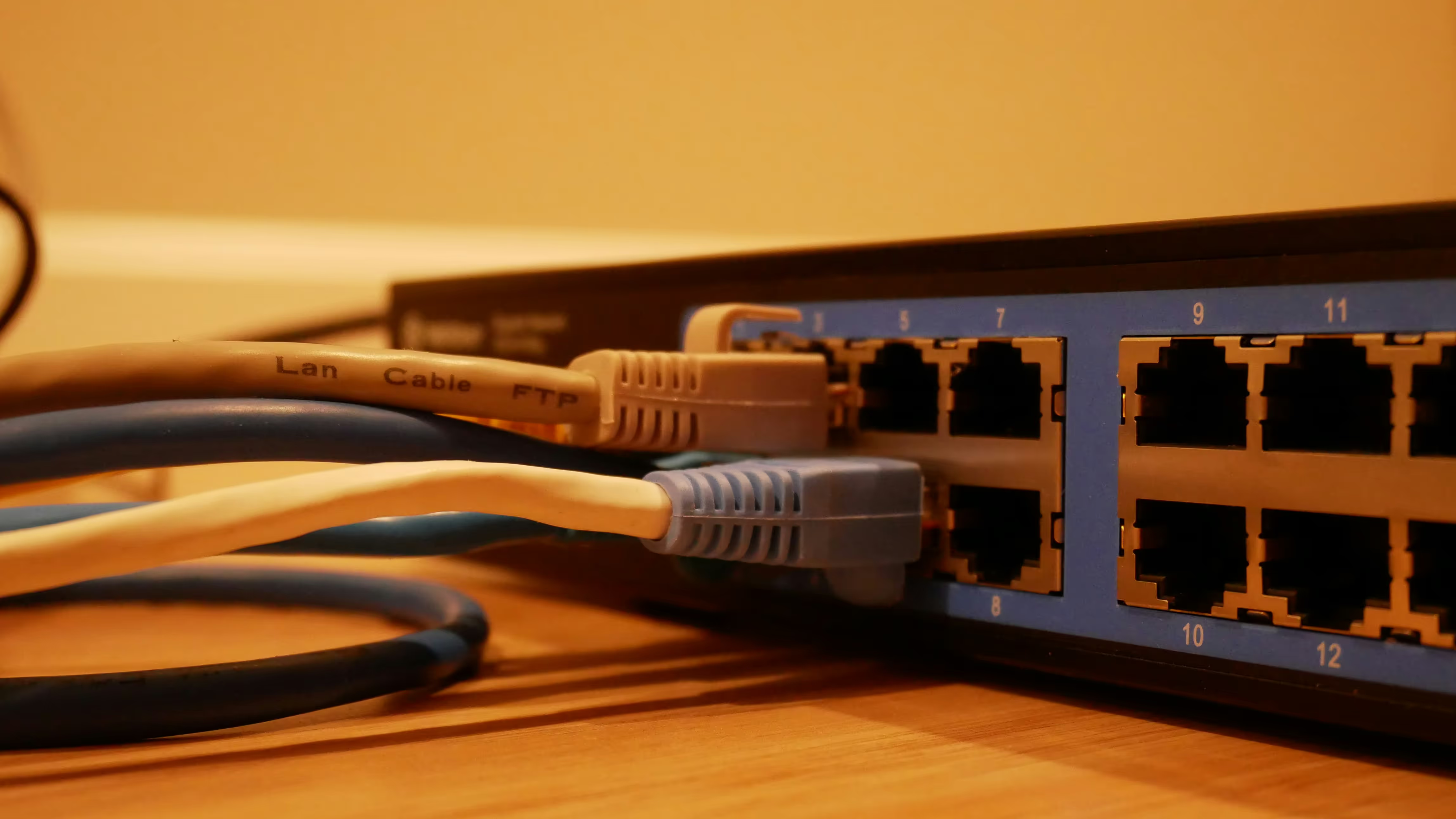
Ethernet cables use a plastic, clip-in connector known as an RJ45, which resembles a wider, more robust version of a telephone jack.
Performance and Speed Considerations
When it comes to performance, the differences between Ethernet and coaxial cables become very clear, especially in a business context. The right choice often depends on whether you are connecting your internal network or bringing in an external signal.
- Bandwidth and Speed: Ethernet cables, such as Cat6 or Cat6a, deliver dedicated speeds of 1 Gbps to 10 Gbps or more across your local network. This bandwidth is consistent for your internal devices. Coaxial cable speed is determined by your internet service provider (ISP) plan and is often shared with other subscribers in your area, which can lead to performance fluctuations during peak times.
- Latency: For internal network operations, Ethernet almost always offers lower latency. This means data packets travel faster between devices on your LAN, which is critical for applications like video conferencing, VoIP calls, and accessing local servers without delay.
- Signal Reliability: While coaxial cable is built to protect signals over the long distance from the provider to your building, Ethernet provides highly reliable signal integrity within your office. Modern shielded Ethernet cables also offer excellent protection from interference, ensuring stable connections for your critical business devices.
Cost and Installation Factors
Beyond performance, the budget and effort required for installation are practical considerations for any network deployment. The costs are shaped not just by the price of the cable, but by the labor and scope of the project.
- Material and Labor Costs: Ethernet cables (like Cat6) are typically more affordable per foot than high-grade coaxial cable. However, the total installation cost for an office LAN can be higher due to the labor involved in running individual cables from a central point to numerous endpoints.
- Installation Simplicity: Coaxial installation is often straightforward for its primary role—a single line from the street to your modem, usually handled by your ISP. Ethernet installation for a LAN is more involved, requiring careful planning of cable runs, termination, and testing for each connection.
- Tools and Expertise: Setting up a structured Ethernet network requires specific tools for crimping RJ45 connectors and testing connections. While coaxial termination also requires its own tools, the task is less frequent in a business setting as it's mainly for the initial ISP hookup.
Use Cases in Enterprise Networks
In a business environment, these technical differences mean each cable is suited for very specific jobs, ensuring your network operates efficiently.
Ethernet for Internal Network Infrastructure
Ethernet is the undisputed standard for building your internal Local Area Network (LAN). It acts as the nervous system for your office, connecting all essential devices.
Common applications include linking employee workstations to local servers, connecting VoIP phones for clear communication, and wiring wireless access points to the main network. It also connects printers and other shared peripherals.
The goal is to create a high-speed, low-latency, and stable environment for data to travel within your organization's walls.
Coaxial for Internet Service Delivery
Coaxial cable's main role in a modern enterprise is as the final link delivering the broadband internet connection from the service provider to your building's demarcation point.
It is the physical line that plugs into your cable modem, acting as the primary pipe for all incoming and outgoing internet traffic from your ISP.
While historically used for internal networking, it has been almost entirely superseded by structured Ethernet cabling for that purpose due to Ethernet's superior speed and scalability for LANs.
Making the Right Choice for Your Network
Ultimately, the choice between Ethernet and coaxial cable isn't about which is better overall, but which is right for the specific task. For most businesses, the two work together to create a complete network.
- For your internal network (LAN): Ethernet is the modern standard. Use it to connect all your office devices—computers, VoIP phones, and servers—for dedicated speed, low latency, and reliable performance.
- For your internet connection: Coaxial cable is primarily used to deliver broadband internet from a cable provider to your building. It acts as the main pipe for your external internet traffic.
- How they work together: A typical setup involves a coaxial cable connecting to your modem, which then connects to a router. From the router, Ethernet cables distribute the internet connection to all the devices across your office LAN.
Need Help Managing Your Network? Lightyear Can Help

Choosing the right cable is just the first step; managing the services that run over them is the next challenge. By automating network service procurement, inventory management, and bill consolidation, Lightyear takes the pain out of telecom infrastructure management.
The hundreds of enterprises who trust Lightyear achieve 70%+ time savings and 20%+ cost savings on their network services.
Schedule a demo or get started with our questionnaire today.
Frequently Asked Questions about Ethernet vs Coaxial
Can I use coaxial cable for my internal office network instead of Ethernet?
While technically possible with adapters, it's not recommended for modern business networks. Ethernet provides far superior speed, lower latency, and better scalability for a local area network (LAN), making it the standard for connecting internal devices reliably.
Do I need shielded Ethernet cable for my office?
It depends on the environment. Shielded Twisted Pair (STP) cable is best for areas with high electromagnetic interference (EMI), like near industrial machinery or power lines. For most standard office settings, Unshielded Twisted Pair (UTP) is sufficient and more cost-effective.
Which cable type is more secure?
Security is less about the cable and more about your network's configuration, like firewalls and encryption. Both are physically secure. However, any wired connection, like Ethernet, is inherently more secure than wireless as it requires physical access to intercept data.
Let us show you the product and discuss specifics on how it might be helpful.
Schedule a Demo





Revolutionize Your Telecom Experience
Learn how you can get one step closer to optimal business efficiency for all your telecom services.