Ethernet vs DSL Cable: Enterprise Network Comparison
Ethernet vs. DSL for your enterprise? We compare speed, reliability, and cost to help you decide on the best network connection for your business.

Choosing the right internet service for your business is a foundational decision that impacts everything from daily operations to long-term growth.
Two common options you'll encounter are dedicated Ethernet and DSL, each with distinct performance characteristics, use cases, and costs.
This guide offers a straightforward comparison to help you understand the key differences between them, so you can make an informed choice for your enterprise network.
What is Ethernet?
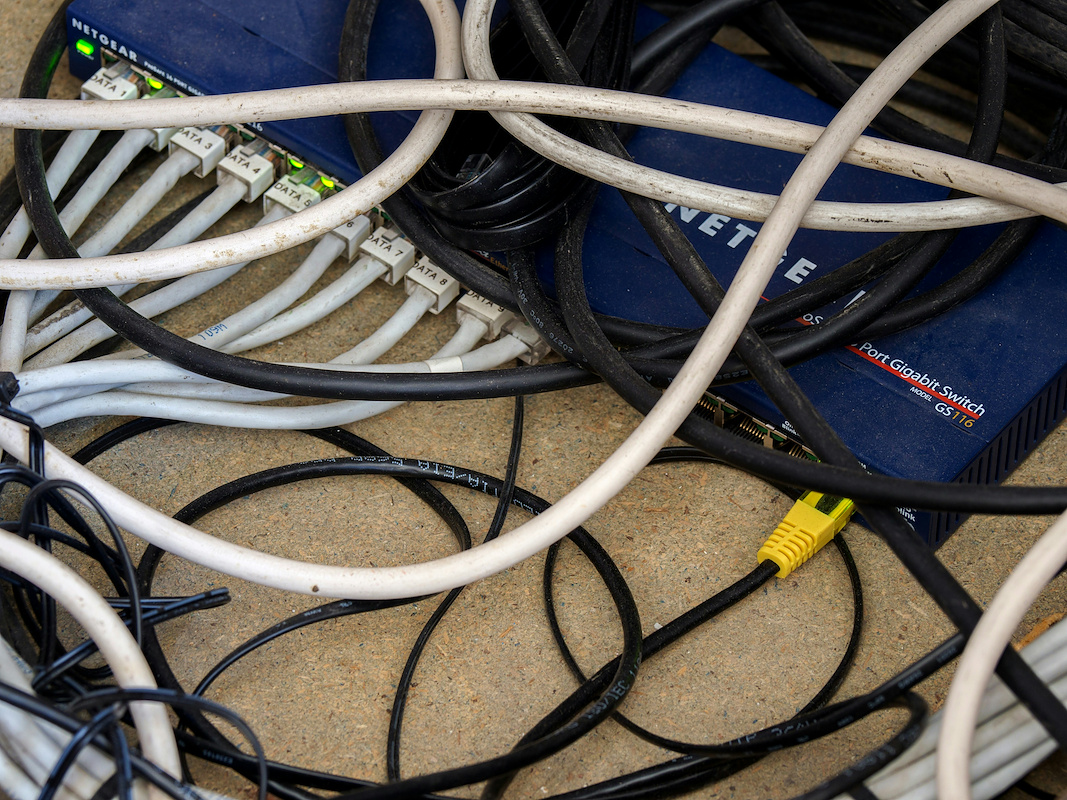
In a business context, Ethernet refers to a dedicated, private line for your company's data. Unlike consumer-grade internet that is often shared among many users, a dedicated Ethernet circuit provides a direct, uncontended connection to the internet or between your office locations. This setup is the foundation for reliable, high-performance enterprise networking.
- Dedicated Bandwidth: Your connection is exclusively yours. The speed you subscribe to is the speed you get, without performance dips caused by neighborhood traffic.
- Symmetrical Speeds: Upload and download speeds are identical, which is critical for activities like video conferencing, VoIP calls, and sending large data files to the cloud.
- Guaranteed Uptime: Services are backed by a Service Level Agreement (SLA) that contractually guarantees performance, uptime, and repair times.
- High Scalability: It is simple to increase or decrease your bandwidth as your business needs evolve, ensuring you only pay for what you need.
What is DSL Cable?
DSL, which stands for Digital Subscriber Line, is an internet service that transmits data over the existing copper telephone lines already installed in most buildings. It’s a common connectivity option, particularly for small businesses or locations where fiber infrastructure isn't available.
- Shared Bandwidth: Unlike a dedicated line, DSL is a shared service. This means your business shares bandwidth with other subscribers in the area, which can lead to slower speeds during peak usage times.
- Asymmetrical Speeds: DSL connections are asymmetrical, meaning download speeds are much faster than upload speeds. This can be a bottleneck for tasks like large file transfers or high-quality video calls.
- Best-Effort Service: It is typically offered as a "best-effort" service, meaning it doesn't come with the strict Service Level Agreements (SLAs) for uptime and performance that are standard with Ethernet.
- Wide Availability: Because it uses telephone infrastructure, DSL is one of the most widely available forms of broadband internet.
Key Differences Between Ethernet and DSL Cable
While both services connect you to the internet, they do so in fundamentally different ways. Understanding these distinctions in performance, infrastructure, and security is crucial for making the right investment for your enterprise.
1. Performance and Reliability
Ethernet offers a private, uncontended lane for your data, ensuring consistent speed and performance regardless of external traffic. This is backed by a Service Level Agreement (SLA), which contractually guarantees uptime and provides recourse if performance falters.
DSL, on the other hand, operates on a shared network. Your connection speed can fluctuate based on how many other users in your area are online, especially during peak business hours. It's a "best-effort" service without the financial guarantees of an SLA.
2. Infrastructure and Installation
Getting an Ethernet connection often involves installing new fiber optic cabling to your building, which can lead to longer lead times and potential construction requirements. This is a key consideration for project planning.
DSL leverages the copper telephone wires that are already present in most commercial buildings. This makes the setup process much quicker and less invasive, as it uses pre-existing infrastructure.
3. Security
A dedicated Ethernet circuit provides a significant security advantage. Since the line is private and not shared with any other subscribers, it creates a more secure and isolated environment for your company's data.
Because DSL traffic travels over a shared network alongside data from other customers, it presents a larger attack surface. While providers implement security measures, the shared nature makes it inherently less private than a dedicated connection.
Pros and Cons of Ethernet
While Ethernet is a powerful solution, it’s important to weigh its benefits against its potential drawbacks. Understanding both sides helps clarify if it’s the right fit for your operational needs and budget.
Pros
- Unmatched Performance: With symmetrical speeds and dedicated bandwidth, Ethernet easily handles data-heavy tasks like large file transfers, VoIP, and cloud applications without performance degradation.
- Business-Grade Reliability: Service Level Agreements (SLAs) contractually guarantee uptime and performance. If the service fails to meet these standards, your business is typically compensated.
- Future-Proof Scalability: Your bandwidth can be increased as your business grows, often without needing new hardware, making it a flexible, long-term investment.
Cons
- Higher Cost: The primary drawback is the price. Dedicated infrastructure and performance guarantees make Ethernet a significantly more expensive option than shared services like DSL.
- Long Installation Lead Times: Provisioning an Ethernet circuit can take 30-120 days, especially if fiber construction is needed to connect your building.
- Limited Availability: High-capacity fiber Ethernet is not universally available. Businesses in rural or less-developed areas may find their connectivity options are limited.
Pros and Cons of DSL Cable
DSL also comes with its own set of trade-offs. While it's often more accessible, it's important to understand its limitations in a business environment, especially when consistent performance is a priority.
Pros
- Cost-Effective and Accessible: DSL is generally one of the most affordable internet options, making it a practical choice for small businesses, retail locations, or secondary sites with basic connectivity needs.
- Rapid Deployment: Because it runs on existing phone lines, installation is typically fast and straightforward, minimizing setup complexity and getting your site online quickly.
- Broad Availability: Its reliance on telephone infrastructure means DSL is often available in areas where fiber or other high-speed options have not yet been built out, providing a reliable fallback.
Cons
- Inconsistent Performance: As a shared, "best-effort" service, speeds can slow down significantly during peak hours. The lack of an SLA means there are no guarantees for uptime or speed.
- Limited Upload Speeds: The asymmetrical nature of DSL creates a bottleneck for business-critical tasks like cloud backups, large file sharing, and stable video conferencing.
- Distance Sensitivity: Performance degrades the farther your building is from the provider's central office, which can result in much slower speeds than advertised.
Choosing the Right Option for Your Enterprise
The right choice depends less on which technology is "better" and more on what your specific business requirements are. Here’s how to break down the decision based on your operational needs, budget, and growth plans.
1. Assess Your Primary Use Case
If your daily operations depend heavily on cloud applications, VoIP, or frequent large data transfers, dedicated Ethernet is the appropriate choice. Its symmetrical speeds and guaranteed performance are built for these demanding tasks.
For locations with simpler needs—like a retail site processing transactions or a small office using basic web and email—DSL provides sufficient connectivity. It can also serve as a cost-effective backup internet circuit.
2. Evaluate Your Budget and Timeline
When budget is the primary driver and you need service quickly, DSL is often the most practical option. Its reliance on existing infrastructure makes it affordable and fast to deploy.
Conversely, view Ethernet as a long-term infrastructure investment. The higher cost and longer installation period are trade-offs for superior reliability and performance that support critical business functions.
3. Consider Location and Future Growth
Your physical location may limit your options. DSL is widely available due to its use of phone lines, making it a viable solution in areas where fiber has not yet been built.
If you anticipate business growth, adding more employees, or adopting more data-intensive tools, Ethernet's scalability is a key advantage. You can easily increase your bandwidth to meet future demand, which is not always possible with DSL.
Final Thoughts on Ethernet vs DSL Cable
Ultimately, the decision between Ethernet and DSL comes down to a simple trade-off: cost versus performance. There is no single "best" option, only the right fit for your specific business needs.
Ethernet is the clear choice for businesses where reliable, high-speed connectivity is essential for daily operations. Its dedicated bandwidth and symmetrical speeds support demanding applications, but this comes with a higher price and longer installation time.
DSL, on the other hand, offers a practical and affordable solution for locations with basic internet needs, like retail stores or small offices. It's also a popular choice for a secondary or backup internet connection.
By evaluating your company's use cases, budget, and growth plans, you can confidently select the service that provides the right balance of performance and value for your enterprise network.
Need Help Managing Your Network? Lightyear Can Help
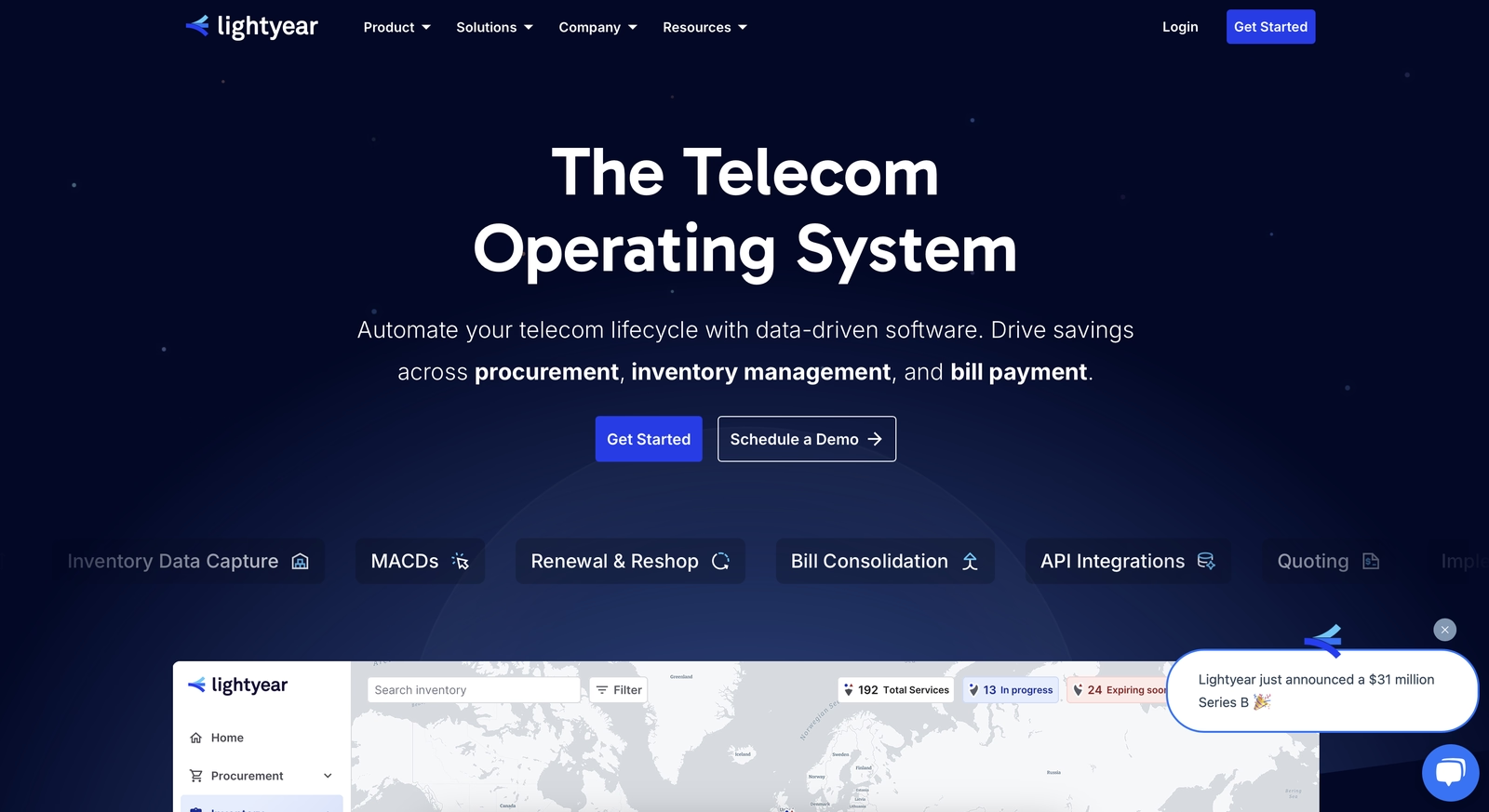
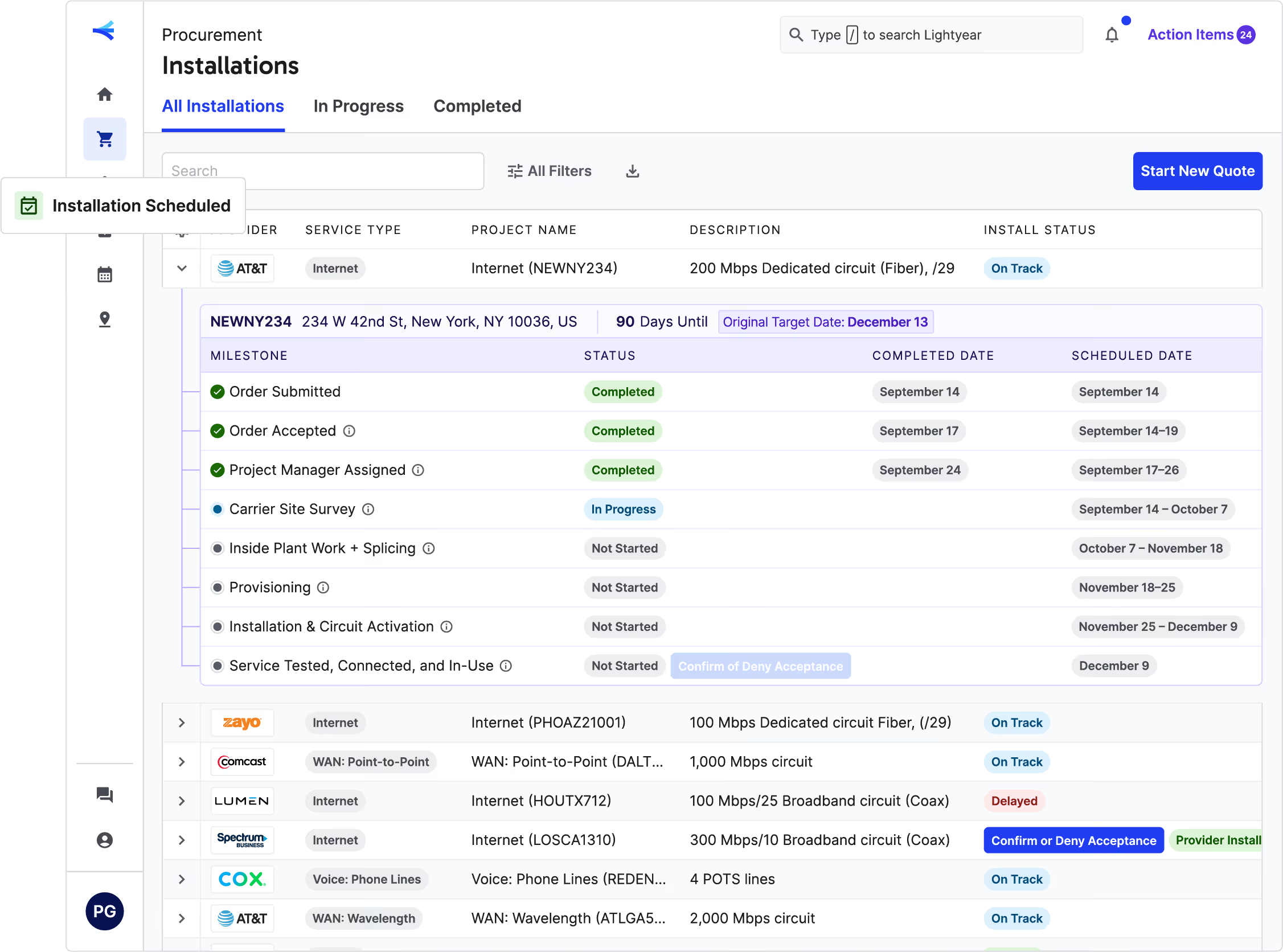
Choosing between Ethernet and DSL is just the first step. Lightyear’s platform simplifies the procurement process, helping you compare quotes and find the best option for any location.
By automating network service procurement, inventory management, and bill consolidation, we help enterprises save over 70% of their time and reduce costs by up to 20%. Schedule a demo or get started with our questionnaire today.
Frequently Asked Questions about Ethernet vs DSL Cable
Is Ethernet the same as Fiber Internet?
Not exactly. Ethernet is the technology that delivers the service, while fiber optic cable is the physical medium it often runs on. You can have Ethernet delivered over copper, but fiber is what enables its highest speeds and reliability.
Can I run VoIP or video conferencing over a DSL connection?
While possible for very light use, it's not recommended for business-critical operations. DSL's asymmetrical speeds and potential for network congestion can lead to poor call quality, dropped calls, and jittery video, creating a frustrating user experience.
How does latency compare between Ethernet and DSL?
Ethernet provides significantly lower and more consistent latency because the connection is direct and uncontended. DSL latency is higher and can fluctuate with network traffic, which can negatively impact real-time applications like video calls or remote desktop sessions.
Let us show you the product and discuss specifics on how it might be helpful.
Schedule a Demo





Revolutionize Your Telecom Experience
Learn how you can get one step closer to optimal business efficiency for all your telecom services.