Ethernet vs Fiber Optic: Enterprise Network Choices
Ethernet vs. Fiber Optic: Learn the key differences in network technology, performance, and cost to make a smarter choice for your enterprise.


When choosing a network connection for your business, the terms "Ethernet" and "fiber optic" often come up as competing options. This comparison can be misleading, as they aren't always mutually exclusive—in fact, they often work together.
To put it simply, fiber optic refers to the physical cable that carries data as light, while Ethernet is the technology protocol that dictates how that data travels. This article will break down the key differences, explain how they relate, and help you decide which networking solutions are right for your enterprise.
What is Ethernet?
Think of Ethernet as the set of traffic rules for your local network. It’s a standardized communication protocol that governs how data packets are sent and received between devices in a local area network (LAN), ensuring everything from your computer to your office printer can communicate effectively.
- Standardization: As the most widely used LAN technology, Ethernet is defined by the IEEE 802.3 standards. This ensures that networking equipment from different manufacturers can work together.
- Data Transmission: The protocol works by breaking data into smaller pieces called frames. Each frame contains source and destination addresses, the data itself, and error-checking information for reliable delivery.
- Physical Medium: While often associated with copper cables, Ethernet protocols can also run over fiber optic cables, which is common for higher-speed connections or longer distances.
What is Fiber Optic?
Fiber optic technology uses thin strands of glass or plastic, known as optical fibers, to transmit information. These cables act as a waveguide, carrying data in the form of light pulses over long distances with minimal signal loss.
- Core Composition: Each cable contains one or more of these optical fibers, each thinner than a human hair. They are bundled together and protected by an outer jacket.
- Light-Based Data: Instead of electrical signals, fiber optics transmit data using photons (light particles). This method allows for significantly higher bandwidth and faster speeds compared to traditional copper cabling.
- Signal Integrity: Because data travels as light, it is immune to electromagnetic interference (EMI) from nearby power lines or machinery, resulting in a more stable and reliable connection.
Ethernet vs Fiber Optic: Key Differences
While they often work together, the core differences between them come down to speed, distance, and the very nature of how they handle data. Understanding these distinctions is key to designing a network that meets your performance needs.
1. Speed and Bandwidth
This is often the most significant differentiator for businesses. Fiber optic connections inherently offer much higher bandwidth and faster, symmetrical speeds compared to networks running on traditional copper cabling.
While standard Gigabit Ethernet (1 Gbps) over copper is common, fiber infrastructure easily scales to support 10 Gbps, 40 Gbps, and even 100 Gbps, handling massive data loads without bottlenecks.
2. Transmission Distance
Distance limitations sharply divide the two. An Ethernet signal running over a copper cable can typically travel only up to 100 meters (about 328 feet) before the signal weakens and requires a repeater.
In contrast, a fiber optic signal can maintain its strength and integrity over dozens of kilometers, making it the superior choice for connecting buildings across a large campus, linking to a data center, or establishing a wide area network (WAN).
3. Durability and Interference
Because fiber optic cables transmit data as pulses of light, they are completely immune to electromagnetic interference (EMI) and radio frequency interference (RFI). This ensures a clean, stable signal, even in environments with heavy machinery or dense electrical wiring.
Copper cables transmit electrical signals and are susceptible to this interference, which can cause data packet loss and degrade network performance.
Cost Considerations for Ethernet and Fiber Optic
When budgeting for your network infrastructure, the financial implications of choosing between copper-based Ethernet and fiber optics are a major factor. While one may seem cheaper at first glance, it's crucial to look beyond the initial price tag and consider the total cost of ownership over the life of the network.
- Initial Hardware Costs: Generally, traditional copper Ethernet cabling and its associated hardware are less expensive to purchase upfront. Fiber optic cables, along with the necessary transceivers and compatible switches, command a higher initial investment due to the more advanced materials and technology involved.
- Long-Term Value: This is where the cost equation gets more interesting. While copper is cheaper to install today, its performance limitations may necessitate costly upgrades down the line as your data needs grow. Fiber, with its vast bandwidth capacity, is a future-proof solution that can scale with your business for years, potentially offering a lower total cost of ownership.
- Geographic and Provider Availability: The cost and availability of both services can also depend heavily on your location. In some metropolitan areas with dense fiber networks, competitive pricing for fiber-based Ethernet services might be available. In other regions, bringing new fiber to a building can be prohibitively expensive, making copper-based solutions the more practical choice.
Installation and Maintenance: Ethernet vs Fiber Optic
Beyond the initial purchase, the practicalities of getting your network up and running—and keeping it that way—also differ significantly between the two.
1. Installation Process
Installing Ethernet over copper is typically a more straightforward process. The cables are flexible and resilient, and terminating them with standard RJ45 connectors is a common skill for most IT technicians and electricians.
Fiber optic installation, on the other hand, is a more delicate operation. The glass cores are fragile and require specialized tools and trained technicians for splicing and termination. This precision work often leads to higher installation costs and longer deployment times.
2. Maintenance and Repairs
Copper cables can be more susceptible to physical wear and tear over time. However, troubleshooting and repairing them is usually simpler and can be done with widely available network testing tools.
Fiber optic cables are exceptionally durable and resistant to environmental factors once installed. But if a cable does get cut or damaged, repairs are complex. Fixing a break requires specialized equipment like a fusion splicer and a technician with the right expertise, which can be more costly and time-consuming than fixing a copper line.
Security and Reliability: Which is Better?
When it comes to keeping your network safe and dependable, the physical medium plays a critical role. While both technologies can create a stable network, their fundamental differences have important implications for security and uptime.
- Security: Fiber optic cables offer a clear security advantage. Because they transmit data as light, they don't emit electromagnetic signals that can be intercepted. Tapping a fiber line requires physically altering the cable, an invasive act that disrupts the signal and is far easier to detect. Copper cables, on the other hand, can be tapped non-invasively, creating a greater risk for data eavesdropping.
- Reliability: Fiber provides more consistent and predictable performance. Its immunity to interference and minimal signal degradation results in lower latency and less packet loss, which is crucial for real-time applications like video conferencing or VoIP. This translates to higher overall network uptime and fewer intermittent issues that are difficult to diagnose.
Making the Right Choice for Your Business
Ultimately, the decision isn't a direct competition between Ethernet and fiber. The real choice is about selecting the right physical medium—copper or fiber—for your Ethernet network.
For businesses with significant data demands, fiber optic cabling provides a superior foundation. It delivers the speed, security, and scalability needed to support growth and demanding applications over long distances.
Conversely, traditional copper-based Ethernet remains a practical and cost-effective solution for less intensive, short-distance connections within a single office. Your final decision should be based on a clear assessment of your specific requirements for bandwidth, distance, and long-term operational needs.
Need Help Managing Your Network? Lightyear Can Help
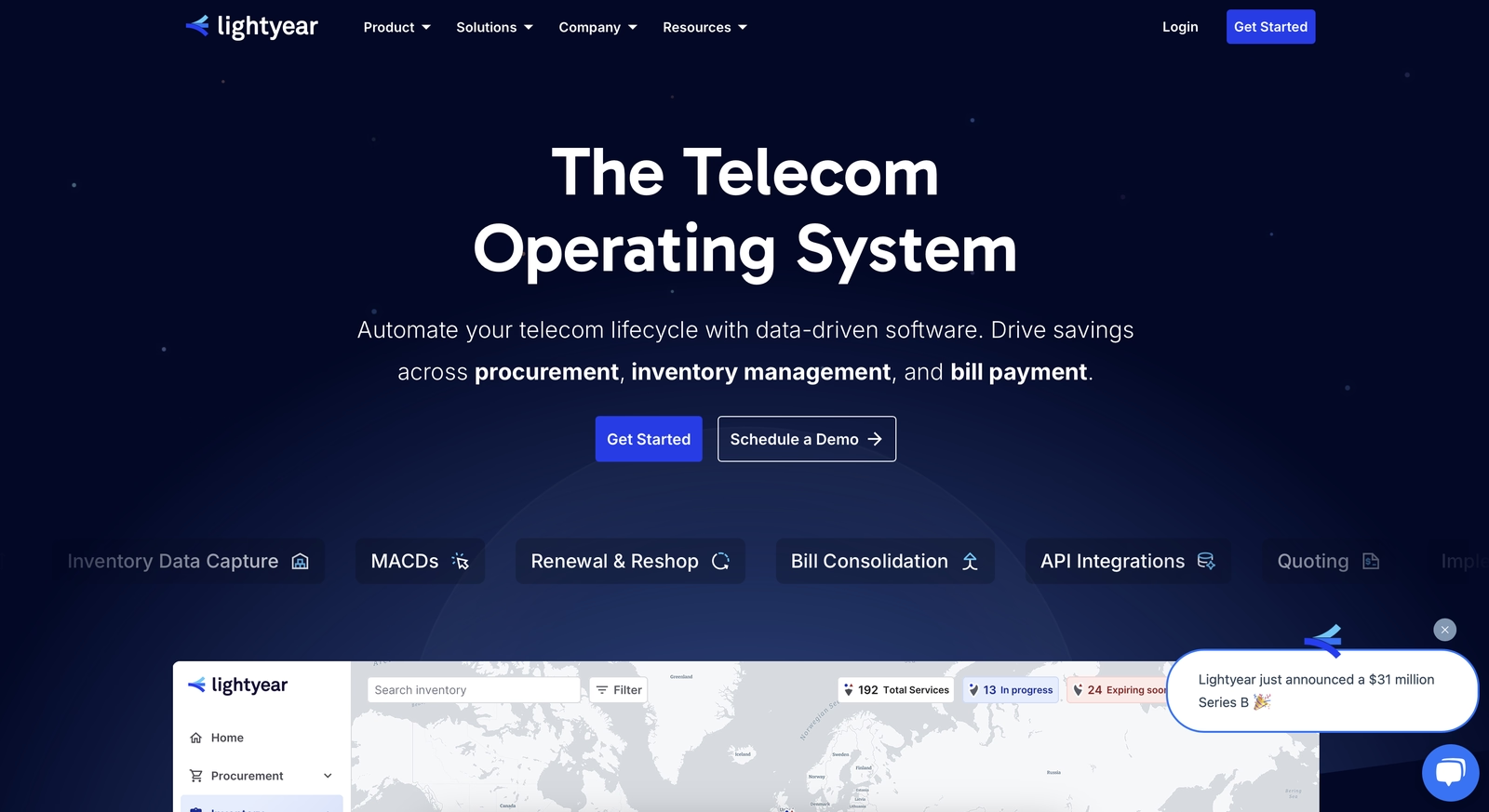
Whether you choose fiber or copper for your Ethernet network, the next step is procuring and managing that service. By automating network service procurement, inventory management, and bill consolidation, Lightyear simplifies the entire telecom lifecycle.
The hundreds of enterprises that trust Lightyear achieve over 70% in time savings and more than 20% in cost savings on their network services.
Schedule a demo or get started with our questionnaire today.
Frequently Asked Questions about Ethernet vs Fiber Optic
Can I use my existing Ethernet devices with a fiber optic connection?
Yes, but you'll likely need a media converter to translate the light signal from fiber to an electrical signal for standard Ethernet ports. Alternatively, you can use network switches with SFP ports designed to accept fiber optic modules directly.
Is "Fiber Internet" the same as Ethernet over Fiber?
They are very similar. "Fiber Internet" is a broad term for any internet service delivered via fiber cables. Ethernet over Fiber is a specific business-grade service that uses the Ethernet protocol to manage that high-speed connection from end to end.
Which is better for latency-sensitive applications like VoIP?
Fiber optic is the clear winner for applications like VoIP or video conferencing. Its low signal loss and immunity to interference provide the stable, low-latency connection needed for clear, real-time communication without jitter or dropped packets.
Does fiber optic require more power to operate?
No, fiber is more energy-efficient. Because it transmits data using light instead of electrical currents, it consumes significantly less power than copper cabling. This can result in noticeable energy savings, especially across a large network infrastructure.
Let us show you the product and discuss specifics on how it might be helpful.
Schedule a Demo





Revolutionize Your Telecom Experience
Learn how you can get one step closer to optimal business efficiency for all your telecom services.
