Ethernet vs InfiniBand: AI Networking Comparison
Choosing between Ethernet and InfiniBand for AI? This guide compares their performance, cost, and scalability to help you make the right choice.

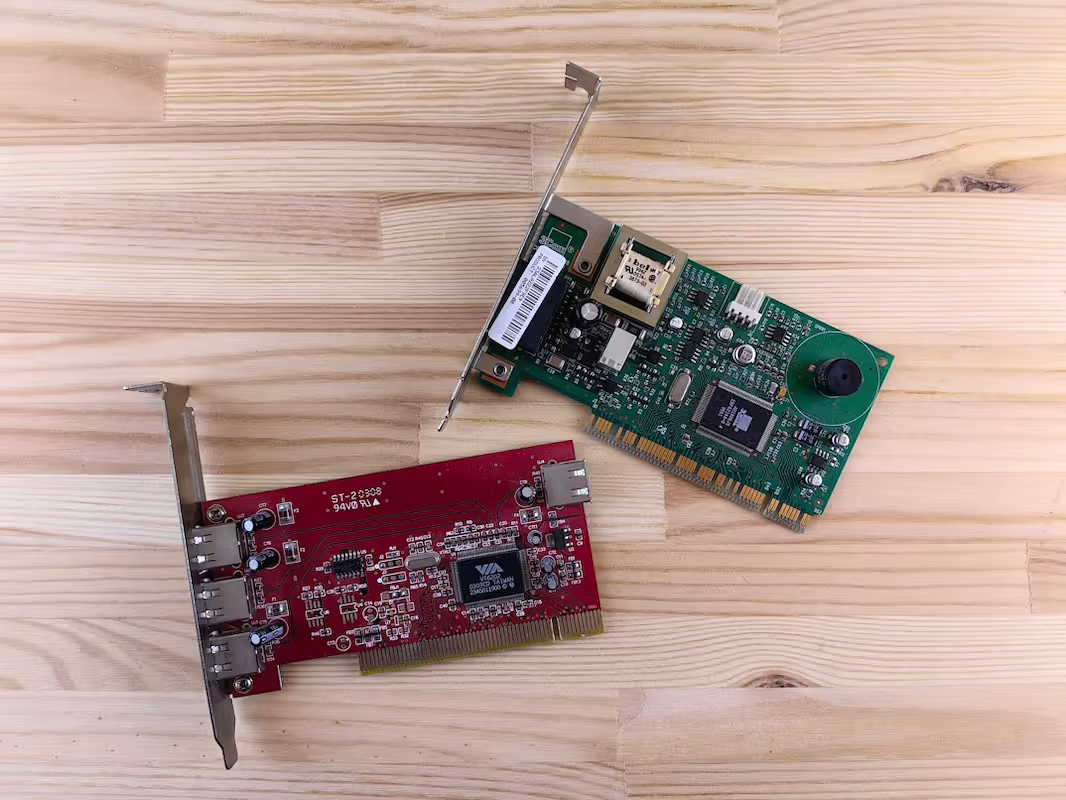
As artificial intelligence and high-performance computing workloads become more common, the network that supports them is critical. These systems require a fabric capable of moving massive amounts of data with very low latency to operate efficiently.
For building this networking infrastructure, two primary technologies are often considered: Ethernet and InfiniBand. This article compares their performance, scalability, and cost to help you decide which is the better fit for your organization's specific AI needs.
What is Ethernet Networking?
You've almost certainly encountered Ethernet before; it's the most widely used technology for local area networks (LANs). Standardized as IEEE 802.3, it defines the rules for how devices connect and transmit data over a physical, wired connection.
While it started as a way to connect computers in a single office, its capabilities have grown significantly. Today, it forms the backbone of most corporate networks, data centers, and even wide area networks (WANs). Here are its core attributes:
- Widespread Adoption: Because it's a long-standing, open standard, Ethernet hardware is produced by many vendors. This leads to lower costs and broad interoperability between devices like switches, routers, and network interface cards (NICs).
- Packet-Based Transmission: Data is broken down into smaller pieces called frames or packets. This method, typically managed by the TCP/IP protocol suite, includes error-checking to ensure reliable delivery, though it adds some processing overhead.
- Speed Evolution: Ethernet speeds have consistently increased over the decades. What began at 10 megabits per second (Mbps) has evolved to common standards of 10, 40, 100, and even 400 gigabits per second (Gbps) to meet modern data demands.
What is InfiniBand Networking?
Unlike Ethernet's broad, general-purpose roots, InfiniBand was developed specifically for high-performance computing (HPC) and data center environments. It is a high-speed interconnect technology designed to connect servers and storage systems with maximum throughput and minimal latency.
It's best understood as a specialized network for the most demanding data-intensive tasks, such as those found in AI and machine learning clusters. Its architecture is built around a few key principles:
- Switched Fabric Design: InfiniBand uses a switched fabric where devices have dedicated point-to-point connections. This architecture provides high, predictable bandwidth and avoids the data collisions that can slow down other network types.
- Ultra-Low Latency: Its signature feature is Remote Direct Memory Access (RDMA). RDMA allows one computer to access another's memory directly, bypassing the operating system and CPU to reduce processing overhead and response times significantly.
- Lossless Transmission: The network relies on a credit-based flow control system to prevent data packets from being dropped. This guarantees reliable data delivery, which is critical for the integrity of large-scale computational workloads.
Ethernet vs InfiniBand: Key Differences
While both technologies connect devices, they operate on fundamentally different principles. Here’s a closer look at what sets them apart in terms of architecture and management.
1. Network Management and Administration
Ethernet management is built on the familiar TCP/IP suite. Most IT teams already have the expertise to configure, monitor, and troubleshoot these networks using standard tools.
InfiniBand, however, operates differently. It requires a specialized Subnet Manager (SM) to initialize the network fabric and manage traffic, which often demands a distinct skill set.
2. Core Protocol and Processing
A key distinction lies in how data is handled. Ethernet relies on the operating system's TCP/IP stack to process data packets, which consumes CPU cycles.
In contrast, InfiniBand's native support for Remote Direct Memory Access (RDMA) allows one computer to access another's memory directly. This bypasses the OS and CPU, creating a more direct and efficient data path.
3. Data Transmission and Reliability
Ethernet is inherently a "lossy" network. The TCP protocol manages reliability by detecting dropped packets and retransmitting them, which can add latency.
InfiniBand is designed to be a "lossless" fabric. It uses a credit-based flow control system to prevent network congestion and packet loss, ensuring data arrives reliably without the need for retransmission.
Performance and Speed in AI Workloads
When training AI models, performance is measured in two key areas: latency (the delay in data transfer) and throughput (the amount of data transferred over time). For the parallel processing required in AI, low latency is especially important.
InfiniBand was built for this environment. Its native support for RDMA and its lossless fabric result in extremely low latency and predictable, high throughput. This allows compute nodes in an AI cluster to communicate efficiently, preventing bottlenecks and speeding up model training times.
Modern Ethernet has become a strong competitor, with speeds reaching 400 Gbps and beyond. To address the latency issue, a technology called RDMA over Converged Ethernet (RoCE) was developed. RoCE allows Ethernet networks to perform RDMA, mimicking one of InfiniBand’s key advantages.
However, standard Ethernet still relies on protocols to manage packet loss, which can introduce performance variability. While RoCE closes the gap, InfiniBand generally provides more consistent, lower latency out of the box because its entire architecture is optimized for these high-performance tasks.
Cost Considerations for Enterprises
When planning your budget, the price difference between Ethernet and InfiniBand is significant. The choice often comes down to balancing upfront hardware costs with long-term operational expenses and performance gains.
- Hardware and Licensing Costs: Ethernet is the more budget-friendly option upfront. Because it is an open standard with many manufacturers, competition keeps prices for switches, cables, and network interface cards (NICs) relatively low. InfiniBand hardware, including its Host Channel Adapters (HCAs) and switches, is more specialized and comes from fewer vendors, resulting in a higher price point.
- Operational and Staffing Costs: Most IT teams are already proficient in managing Ethernet networks, so there are typically no additional training or hiring costs. InfiniBand, with its unique architecture and Subnet Manager, often requires specialized expertise. This can translate to higher operational costs for training or hiring personnel with the necessary skills.
- Total Cost of Ownership (TCO): While InfiniBand has a higher initial cost, its superior performance can sometimes lead to a lower TCO for massive AI clusters. By accelerating model training and reducing job completion times, it can decrease the overall compute resources needed, potentially offsetting the initial hardware investment.
Scalability and Flexibility
When building out your infrastructure, how easily you can grow and adapt your network is a major factor. Both technologies are designed to scale, but they do so with different levels of flexibility.
Ethernet offers significant versatility. Since it is designed to handle all types of network traffic, it can support your AI cluster alongside your company's other IT operations, often without requiring a separate, dedicated network.
Expanding an Ethernet-based data center is a familiar process for most IT teams. Its open standard ensures a vast ecosystem of compatible hardware is available to grow your network as your demands increase.
InfiniBand is also highly scalable, but within its specific domain. It excels at growing large, dedicated AI clusters by connecting thousands of nodes in a single high-performance fabric.
This specialization, however, makes it less flexible. InfiniBand is not intended for general-purpose networking and is most effective when used exclusively for the data-intensive workloads it was designed to support.
Making the Right Choice for Your Business
Choosing between Ethernet and InfiniBand depends on your organization's priorities for its AI infrastructure. The decision involves a trade-off between cost, performance, and operational simplicity.
Ethernet is a practical choice if budget is a primary concern or if your network must also support general IT traffic. Its lower hardware costs and familiar management make it accessible. For smaller AI clusters, modern high-speed Ethernet with RoCE offers competitive performance.
InfiniBand, however, is built for dedicated, large-scale AI environments where peak performance is essential. Its low latency and lossless design accelerate model training. While the investment is higher, the performance can justify the cost for massive computational jobs.
Evaluate your specific workload demands, budget, and team expertise to select the network fabric that best supports your AI goals.
Need Help Managing Your Network? Lightyear Can Help
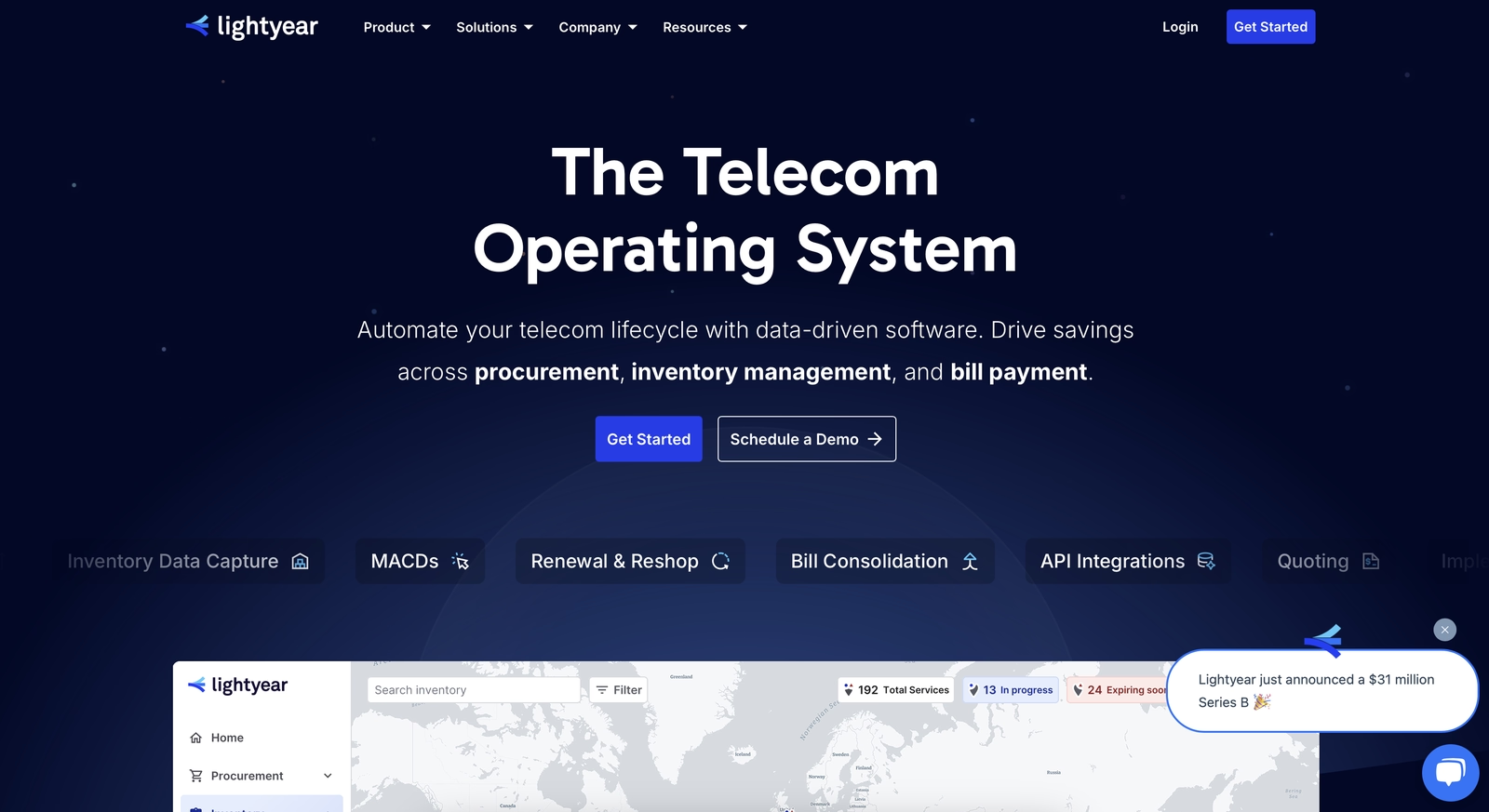
Whether you choose high-speed Ethernet or a dedicated InfiniBand fabric, the next step is procuring and managing those network services. By automating procurement, inventory management, and bill consolidation, Lightyear takes the pain out of telecom infrastructure management.
The hundreds of enterprises who trust Lightyear achieve 70%+ time savings and 20%+ cost savings on their network services.
Schedule a demo or get started with our questionare today.
Frequently Asked Questions about Ethernet vs InfiniBand AI Workload Networking
Can you use Ethernet and InfiniBand in the same data center?
Absolutely. Many data centers use Ethernet for general networking and a separate InfiniBand fabric exclusively for their high-performance computing or AI clusters. The two networks can coexist, each serving the purpose it's best suited for.
Is RoCE (RDMA over Converged Ethernet) a true replacement for InfiniBand?
While RoCE brings InfiniBand's key RDMA feature to Ethernet, it's not a perfect replacement. InfiniBand's entire architecture is built for lossless, low-latency performance, often giving it an edge in consistency for the most demanding AI workloads.
Is InfiniBand only for massive supercomputers?
Not necessarily. While it excels in large-scale environments, it can be beneficial for any AI workload where minimizing latency is critical to performance. For smaller or budget-constrained projects, however, high-speed Ethernet is often the more practical starting point.
Let us show you the product and discuss specifics on how it might be helpful.
Schedule a Demo





Revolutionize Your Telecom Experience
Learn how you can get one step closer to optimal business efficiency for all your telecom services.