Ethernet vs MODBUS: Comparing Network Protocols
Ethernet vs. MODBUS: Learn the key differences. This guide explains how Ethernet is the network infrastructure and MODBUS is the communication language.

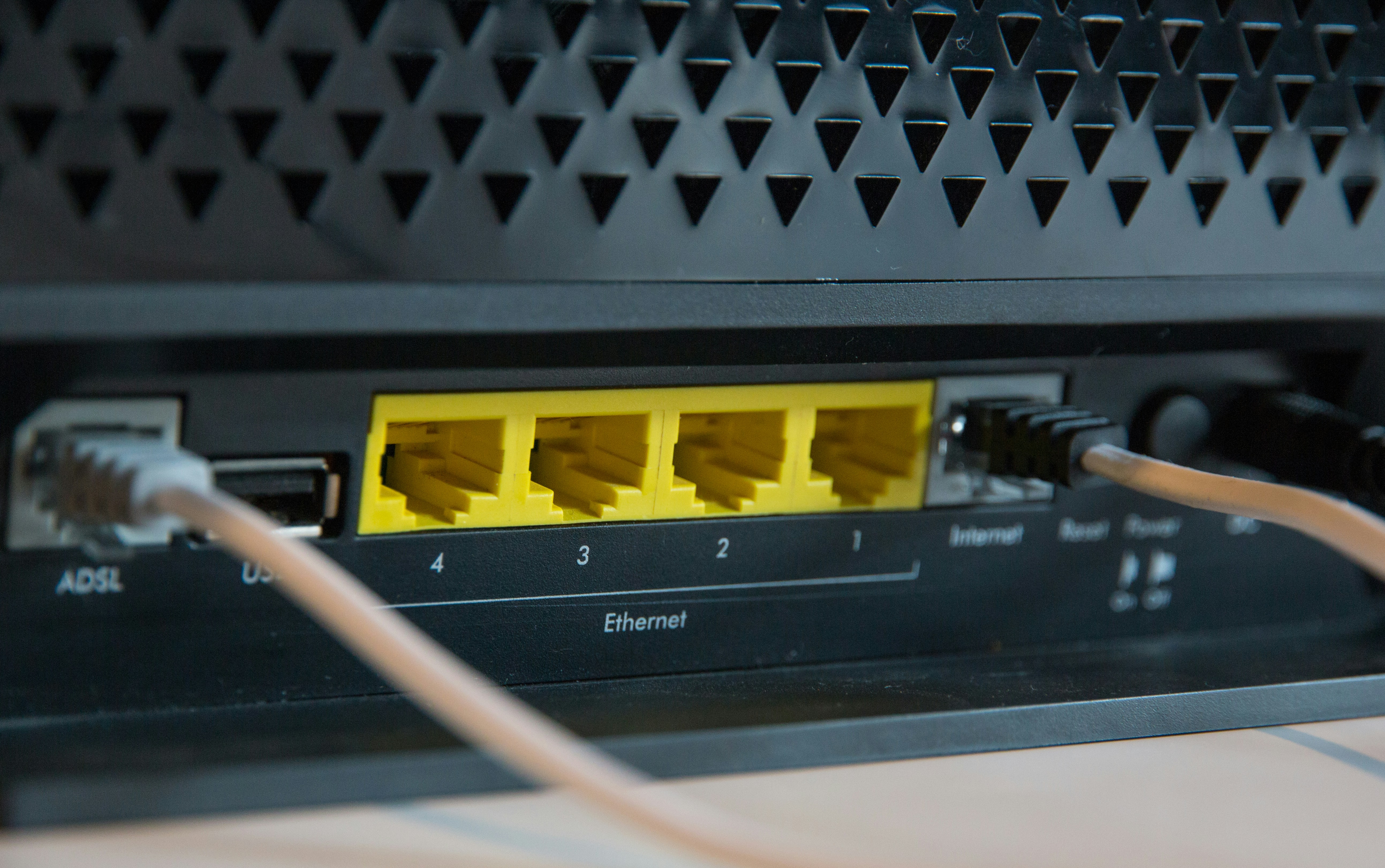
When managing enterprise networks, the terms Ethernet and MODBUS frequently appear together, but they address fundamentally different aspects of connectivity. Ethernet is a networking standard that defines the physical cables and data transmission rules for a local network.
MODBUS is a communication protocol—a language that devices use to exchange information over that network. This article will clarify the roles of each to help you make informed infrastructure decisions.
What is Ethernet?
At its core, Ethernet is the foundational technology for most wired networks. It's a set of standards that governs how devices physically connect and send data to each other within a local area network (LAN).
- Function: It operates at the physical and data link layers (Layers 1 and 2) of the OSI model, managing the physical connection and how data packets are formatted and transmitted.
- Hardware: The standards specify physical components like twisted-pair or fiber optic cables and connectors (e.g., RJ45) that form the network's backbone.
- Data Transmission: Information is sent in "frames," which are packets containing addressing information, the actual data, and error-checking codes to ensure integrity.
- Speed and Reliability: Ethernet is known for its reliability and has evolved to support speeds from 10 Mbps to over 100 Gbps, accommodating diverse network demands.
What is MODBUS?
MODBUS is a messaging protocol originally designed for industrial control systems. Think of it as a common language that allows devices like sensors, controllers, and meters to talk to each other, regardless of the manufacturer.
- Function: It operates at the application layer (Layer 7) of the OSI model, defining a simple request-response format for communication.
- Structure: It uses a client-server (historically master-slave) model where one device initiates a query and another responds with data or confirms an action.
- Simplicity: As an open protocol, it is easy to deploy and troubleshoot, which has led to its widespread adoption in industrial automation.
- Adaptability: While it started on serial lines, it has evolved to run over modern networks, including TCP/IP (MODBUS TCP), allowing it to function over Ethernet infrastructure.
Ethernet vs MODBUS: Key Differences
While both are essential for network communication, they operate in fundamentally different ways to achieve distinct goals.
1. Layer of Operation and Core Function
Ethernet provides the foundational transport mechanism. Operating at the physical and data link layers, its job is to create a reliable pathway and ensure data packets move correctly from one device to another on the network.
MODBUS, on the other hand, is an application protocol. It defines the language and commands that devices use to exchange specific information, such as a request for a sensor reading or an instruction to a motor.
2. Scope and Application
Ethernet is a universal standard for local area networking. It connects a wide array of devices, including computers, servers, and printers in office and data center environments.
MODBUS is purpose-built for industrial automation. It was designed specifically to link programmable logic controllers (PLCs), sensors, and other industrial electronics in manufacturing plants and infrastructure.
3. Data and Communication Structure
Ethernet communication is based on data frames. Each frame contains source and destination MAC addresses, which network switches use to forward it to the correct physical port.
MODBUS communication is based on a request-response message structure. A client device sends a query with a function code (e.g., "read holding registers"), and the server device responds with the requested data or a confirmation.
4. How They Work Together
Crucially, these two technologies are not mutually exclusive—they often work together. MODBUS was originally designed for serial lines but has been adapted to run over modern networks.
When MODBUS messages are sent over an Ethernet network, the protocol is called MODBUS TCP. This allows the simple, lightweight MODBUS communication to benefit from the speed and scalability of Ethernet infrastructure.
Use Cases for Ethernet
Because of its versatility and speed, Ethernet is the go-to standard for a wide range of networking applications in business environments. Its primary use cases are centered on creating reliable, high-performance local and wide area networks.
- Corporate LANs: This is the most familiar application. Ethernet connects everything in a typical office—from employee workstations and VoIP phones to printers and servers—ensuring stable access to internal resources and the internet.
- Data Center Infrastructure: In data centers, high-speed Ethernet (ranging from 10 Gbps to 100 Gbps and beyond) forms the critical backbone. It links servers, storage systems, and virtualization platforms, demanding high throughput and low latency.
- Connecting Multiple Business Sites: Carrier Ethernet services extend networking beyond a single building. Businesses use it to create private, secure connections between headquarters, branch offices, and data centers, forming a cohesive Wide Area Network (WAN).
- Powering Network Devices: With Power over Ethernet (PoE), a single Ethernet cable can provide both data connectivity and electrical power. This is ideal for deploying devices like IP security cameras, wireless access points, and VoIP phones without needing a separate power outlet.
Use Cases for MODBUS
MODBUS is purpose-built for industrial and operational environments where devices need to exchange data for monitoring and control. Its simplicity and open-standard nature have made it a fixture in several key areas.
- Industrial Automation: In manufacturing plants, MODBUS connects programmable logic controllers (PLCs) with sensors, motors, and other machinery. This allows for centralized control of production lines and real-time data collection for process optimization.
- Building Management Systems (BMS): It is widely used to integrate a building’s HVAC, lighting, and security systems. For example, a temperature sensor can use MODBUS to tell an air conditioning unit to turn on, creating an automated and efficient environment.
- Energy and Infrastructure Monitoring: Utility companies and data center operators use MODBUS to communicate with smart meters, power distribution units (PDUs), and generators. This enables precise tracking of energy consumption and management of critical infrastructure.
- Remote Equipment Control: The protocol is also used to monitor and manage remote assets, such as equipment in water treatment facilities or oil and gas pipelines, where reliable, simple communication is essential.
Choosing Between Ethernet and MODBUS
The decision isn't about choosing one technology over the other. Instead, it's about understanding which one addresses your specific need and how they can work in concert.
1. Start with Ethernet for Your Network Foundation
If your goal is to build the physical network infrastructure for an office, data center, or multiple business sites, Ethernet is the correct starting point. It provides the high-speed, reliable transport layer needed for all business communications, from email and file sharing to VoIP.
2. Implement MODBUS for Device-Level Communication
If your objective is to control or monitor industrial equipment, MODBUS is the protocol for the job. It provides the specific language for devices like sensors, actuators, and PLCs to exchange commands and data in environments like manufacturing floors or building management systems.
3. Use MODBUS TCP for Modern Industrial Networking
For most modern applications, the question is not Ethernet or MODBUS, but how to use them together. MODBUS TCP allows the simple MODBUS protocol to run over a standard Ethernet network, giving you the benefits of both.
This approach provides the speed and scalability of Ethernet infrastructure while using the industry-standard MODBUS language for your operational technology. It is the standard for integrating industrial controls into a broader corporate network.
Final Thoughts on Ethernet and MODBUS
Ultimately, the distinction between Ethernet and MODBUS comes down to function. Ethernet builds the physical network, while MODBUS provides the language for industrial devices to communicate over it.
They are not competing technologies but partners. Ethernet creates the reliable data pathway, while MODBUS defines the specific commands and responses for industrial equipment.
For modern industrial networks, this partnership is formalized as MODBUS TCP. This standard allows the simple, effective MODBUS protocol to run across fast and scalable Ethernet infrastructure.
For any IT leader managing environments where operational technology and corporate networks intersect, understanding this relationship is fundamental. It allows for the creation of a unified, efficient system that supports both business and industrial operations.
Need Help Managing Your Network? Lightyear Can Help

Whether your network relies on Ethernet for corporate LANs or MODBUS TCP for industrial controls, managing the underlying services is critical. By automating network service procurement, inventory management, and bill consolidation, Lightyear takes the pain out of telecom infrastructure management.
The hundreds of enterprises who trust Lightyear achieve 70%+ time savings and 20%+ cost savings on their network services.
Schedule a demo or get started with our questionnaire today.
Frequently Asked Questions about Ethernet vs MODBUS
Is MODBUS TCP secure?
By itself, the MODBUS protocol has no built-in security. When using MODBUS TCP, security relies entirely on the network infrastructure. It is critical to use firewalls, VPNs, and proper network segmentation to protect industrial devices from unauthorized access on the corporate network.
Can MODBUS slow down my Ethernet network?
It's highly unlikely. MODBUS messages are very small and generate minimal traffic. On any modern Ethernet network, the bandwidth used by MODBUS is negligible and will not impact the performance of other business applications like file sharing or voice calls.
Can MODBUS devices communicate without an Ethernet network?
Yes. MODBUS was originally created for serial communication lines like RS-485. This original version, often called MODBUS RTU, is still common in simpler setups or legacy systems where devices are connected directly without a larger network.
Let us show you the product and discuss specifics on how it might be helpful.
Schedule a Demo





Revolutionize Your Telecom Experience
Learn how you can get one step closer to optimal business efficiency for all your telecom services.