Ethernet vs Optical Fiber: Enterprise Network Choices
Ethernet vs. Optical Fiber? Learn the key differences in speed, cost, and performance to choose the right network solution for your business.


If you're evaluating connectivity options for your business, you've likely come across the terms Ethernet and optical fiber.
Though often discussed together, they refer to different things. Ethernet is a networking technology that defines how data travels, while optical fiber is a physical cable that carries that data.
Many modern business internet services actually use both—delivering an Ethernet connection over a fiber optic line. Let's look at how they work together and what that means for your enterprise network choices.
What is Ethernet?
At its core, Ethernet is a standardized networking protocol that defines how data travels over a local area network (LAN). It’s the technology that governs how devices like computers, printers, and servers communicate within a physical location, such as an office or data center. It works by breaking data down into smaller pieces called frames.
- Standardized Communication: As an IEEE 802.3 standard, Ethernet ensures that hardware from different manufacturers can communicate without compatibility issues.
- Data Framing: Each data frame contains not only the information being sent but also the source and destination MAC addresses, ensuring data reaches the correct device on the network.
- Evolving Speeds: The protocol has evolved to support a wide range of speeds, from 10 Mbps in its early days to 100 Gbps and beyond, meeting modern business demands.
- Media Flexibility: Ethernet is not exclusive to one type of physical medium; it can run over both copper twisted-pair cables and fiber optic lines.
What is Optical Fiber?
Optical fiber is the physical medium used to transmit data, a stark contrast to Ethernet's role as a communication protocol. Think of it as the highway on which information travels. These cables are made of incredibly thin strands of glass or plastic, known as optical fibers, bundled together in a protective casing.
- Light-Based Transmission: Instead of electrical signals, fiber optic cables transmit data as pulses of light. This allows for significantly higher bandwidth and faster speeds over longer distances.
- Minimal Signal Degradation: Light signals traveling through fiber experience very little attenuation (signal loss), which means data can travel for miles without needing a booster.
- Immunity to Interference: Since fiber optic cables carry light instead of electricity, they are completely immune to electromagnetic interference (EMI) from power lines or other electrical noise, resulting in a more stable and secure connection.
- High Scalability: A single fiber optic cable can carry a massive amount of data, making it a highly scalable solution for businesses with growing data demands.
Ethernet vs Optical Fiber: Key Differences
While they often work together, Ethernet and optical fiber are fundamentally different. Here’s a breakdown of what sets them apart.
1. Protocol vs. Physical Medium
The most significant distinction lies in their basic function. Ethernet is a communication protocol—a set of rules that governs how data is formatted into packets and transmitted between devices on a network.
Optical fiber, in contrast, is the physical medium. It is the actual cable, the infrastructure that carries the data signals from one point to another.
2. Application and Scale
Ethernet was created for Local Area Networks (LANs), connecting devices within a limited geographical area like an office building. Its standards are optimized for these shorter distances.
Fiber optics, however, are built for scale and distance. They serve as the foundation for Wide Area Networks (WANs) and metropolitan networks, carrying huge volumes of data across cities or even continents with very little signal degradation.
3. Signal Type and Interference
When Ethernet runs over traditional copper wiring, it uses electrical signals to transmit data. These signals can be susceptible to electromagnetic interference (EMI) from power lines or heavy machinery, which can disrupt the connection.
Fiber optic cables use pulses of light, making them completely immune to EMI and radio frequency interference (RFI). This results in a more stable and secure signal, especially in electrically noisy environments.
Cost Considerations for Ethernet and Optical Fiber
When budgeting for your network infrastructure, the costs associated with Ethernet and optical fiber depend on whether you're looking at the initial setup or the long-term value.
1. Upfront Investment
The initial capital expenditure for a fiber optic network is typically higher than for a traditional copper-based Ethernet network. This is driven by a few key factors.
- Cabling and Hardware: Fiber optic cables, along with the specialized switches, routers, and transceivers required to run it, generally cost more than their copper counterparts.
- Service Provider Pricing: The monthly recurring cost for an Ethernet over Fiber service is influenced by factors like your required bandwidth, location, and the service level agreement (SLA) you choose.
2. Total Cost of Ownership (TCO)
Looking beyond the initial purchase, fiber can offer a lower total cost of ownership over time, making it a financially sound long-term investment.
- Future-Proofing: Fiber's immense bandwidth capacity means the physical cabling is less likely to need replacement as your data needs grow, saving on future upgrade costs.
- Operational Efficiency: Fiber optic systems can be more energy-efficient, especially over long distances, which may lead to modest savings on electricity bills.
Installation and Maintenance: Ethernet vs Optical Fiber
The practicalities of getting your network up and running—and keeping it that way—also differ significantly between the two.
1. Installation Process
Installing a traditional copper-based Ethernet network is often a more straightforward process. The cabling is durable and flexible, and most IT technicians are familiar with the tools and termination practices using standard RJ-45 connectors.
Fiber optic installation, however, is more delicate and requires specialized skills and equipment. The glass fibers can be fragile, and technicians need tools like fusion splicers to join cables, which makes the process more complex and precise.
2. Maintenance and Durability
Copper Ethernet cables are quite resilient and can withstand more physical stress, such as bending and pulling. If an issue arises, troubleshooting is typically simpler with widely available testing tools.
Fiber optic cables are highly reliable once installed, but they are more susceptible to damage if mishandled. Repairing a broken fiber line is a specialized task that requires specific equipment to locate the fault and splice the cable, which can sometimes lead to longer resolution times.
Performance and Speed: Which is Better?
When it comes to performance, the conversation goes beyond just the numbers on a speed test. For business operations, factors like latency, consistency, and upload capacity are just as important. While Ethernet can run over different media, a fiber optic backbone almost always delivers superior performance.
- Bandwidth and Throughput: Fiber optic cables offer far greater bandwidth potential than traditional copper wiring. This allows them to handle massive, simultaneous data loads without bottlenecks, which is essential for supporting data-heavy applications and a large number of users.
- Latency: Fiber provides significantly lower latency—the delay a data packet experiences traveling from source to destination. Because data travels as light, fiber is ideal for real-time activities like VoIP, video conferencing, and accessing cloud-based software where delays are noticeable.
- Symmetric Speeds: A key advantage of fiber is its ability to deliver symmetric speeds, meaning your upload speed is as fast as your download speed. This is vital for businesses that frequently upload large files, run servers, or rely on high-quality video calls.
- Signal Reliability: Since fiber is immune to electromagnetic interference, its performance is more consistent. You are less likely to experience the signal degradation or random slowdowns that can affect copper-based Ethernet in electrically noisy environments.
Making the Right Choice for Your Business
Choosing between Ethernet and optical fiber isn't an either/or decision. The real choice is what physical medium will run your Ethernet network. For most modern businesses, an Ethernet connection delivered over a fiber optic backbone offers superior performance.
If your operations depend on high-speed data access, cloud applications, or reliable video conferencing, fiber's low latency and symmetric speeds are essential. It provides the stability and bandwidth needed to support growing data demands without bottlenecks.
While a traditional copper-based Ethernet setup may have a lower initial cost, it comes with limitations in speed and scalability. For long-term growth and operational reliability, investing in an Ethernet over Fiber solution provides a robust foundation for your enterprise network.
Need Help Managing Your Network? Lightyear Can Help
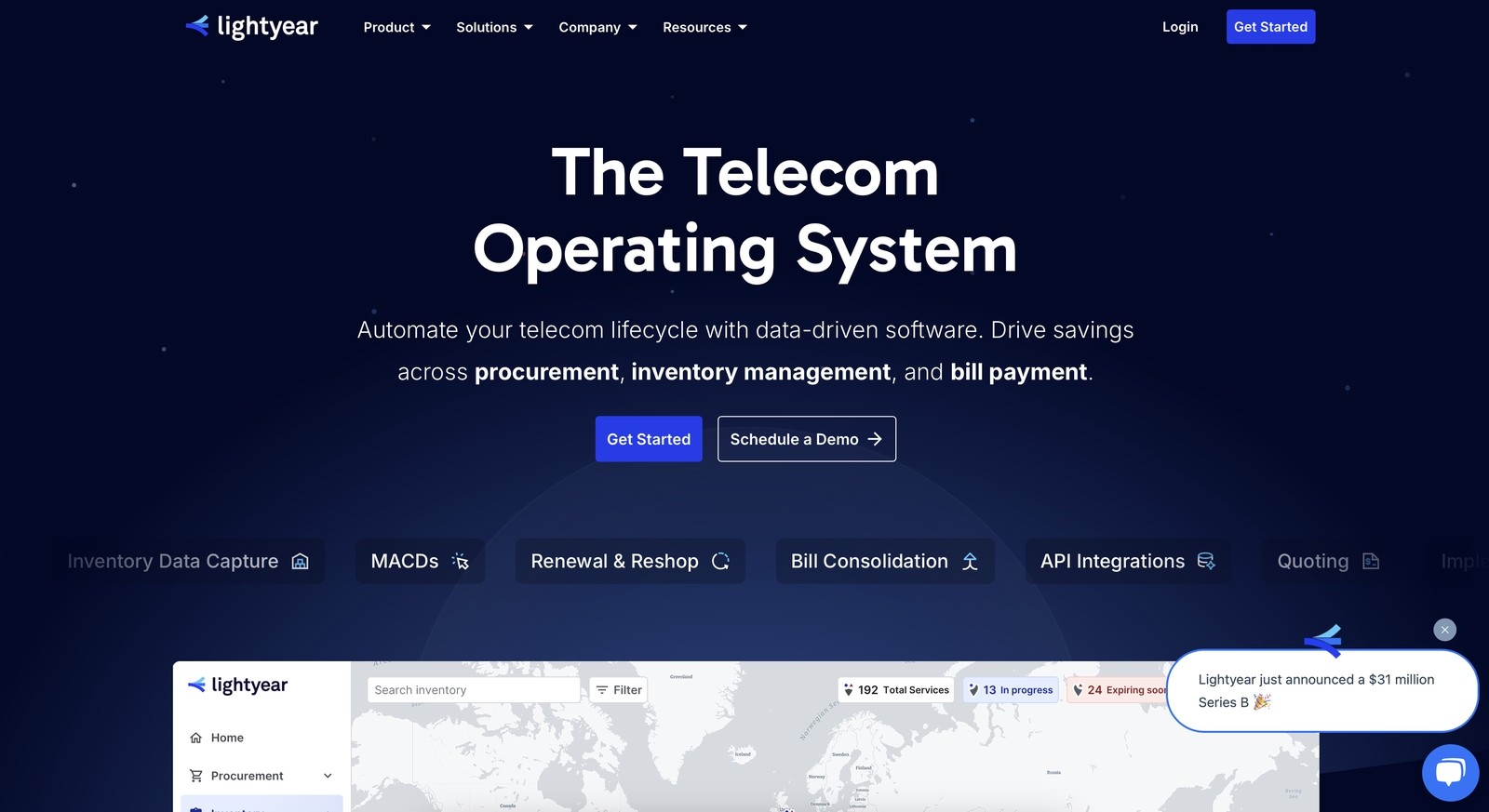
Choosing the right infrastructure, like Ethernet over Fiber, is just the first step. Lightyear helps you manage the entire lifecycle by automating network service procurement, inventory management, and bill consolidation, taking the pain out of telecom management.
The hundreds of enterprises that trust Lightyear achieve over 70% time savings and 20% cost savings on their network services. Schedule a demo or get started with our questionnaire today.
Frequently Asked Questions about Ethernet vs Optical Fiber
What is “Ethernet over Fiber”?
It's a service where Ethernet data frames are transmitted over a fiber optic cable infrastructure. This combines the familiarity of the Ethernet protocol with the high speed, low latency, and reliability of fiber optics, making it a popular choice for modern business internet and WAN connections.
Is fiber optic more secure than copper Ethernet?
Yes, significantly. Fiber optic cables transmit data using light, making them nearly impossible to tap without being detected. Copper cables, which use electrical signals, can be susceptible to eavesdropping with the right equipment, posing a greater security risk for sensitive data.
Can I use my existing Ethernet hardware with a fiber connection?
It depends. Most standard Ethernet switches and routers use copper (RJ-45) ports. To connect to a fiber line, you will typically need a media converter or a switch with dedicated SFP (Small Form-factor Pluggable) ports designed for fiber optic transceivers.
How does distance impact performance for each?
Copper-based Ethernet signals degrade significantly after about 100 meters, limiting its use to local networks. Fiber optic signals can travel many miles with minimal loss, making it the standard for connecting buildings, cities, and forming the backbone of the internet.
Let us show you the product and discuss specifics on how it might be helpful.
Schedule a Demo





Revolutionize Your Telecom Experience
Learn how you can get one step closer to optimal business efficiency for all your telecom services.