Ethernet vs Phone Cable: Differences Explained
Ethernet and phone cables look similar but have key differences in speed and function. Learn which one is right for your business network needs.

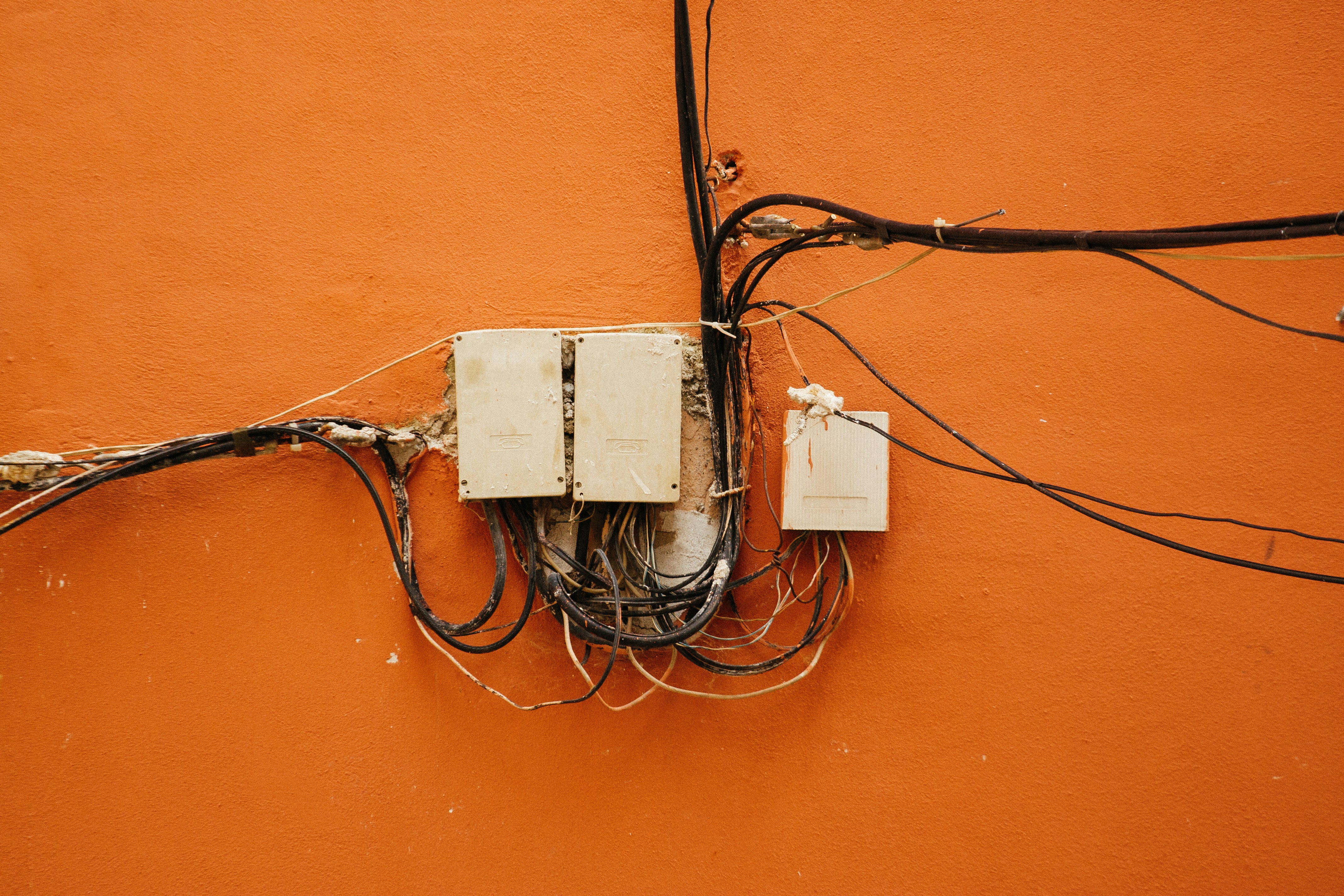
At a glance, Ethernet and phone cables can look strikingly similar. Both use a plastic connector and are often found running along walls or under desks, which can easily lead to confusion.
Despite their similar appearance, they serve fundamentally different purposes and are not interchangeable. A phone cable is designed for voice signals, while an Ethernet cable is built to carry high-speed data for your computer network.
Understanding the key distinctions—from the connectors they use to the data speeds they support—is crucial for setting up a reliable and efficient network. This guide will break down everything you need to know to make informed procurement decisions.
What is an Ethernet Cable?
An Ethernet cable is a type of network cable used to connect devices—such as computers, routers, and switches—to a local area network (LAN). It is the physical medium that allows for high-speed data transmission, forming the backbone of most wired networks in business environments.
Key characteristics of an Ethernet cable include:
- Connectors: It uses an RJ45 connector, which is wider than a phone connector and contains eight pins for its internal wires.
- Wiring: An Ethernet cable has eight wires twisted into four pairs. This design is crucial for reducing signal interference and ensuring reliable data transfer.
- Function: Its sole purpose is to transmit data packets, making it the standard for connecting devices to the internet or a local network.
- Categories: Cables are classified into different categories (e.g., Cat5e, Cat6, Cat7), which determine their data transfer speed and bandwidth capabilities.
What is a Phone Cable?
A phone cable, often called a telephone line, is designed to carry analog voice signals for traditional phone service. It connects devices like landline phones and fax machines to the public switched telephone network (PSTN).
Here are its main characteristics:
- Connectors: It uses a smaller RJ11 or RJ12 connector, which has between two and six pins.
- Wiring: A phone cable contains two to six thin copper wires. This simpler internal structure is sufficient for voice transmission but not for high-speed data.
- Function: Its core purpose is to transmit analog voice signals, though it was also used for early dial-up and DSL internet connections.
- Bandwidth: The cable's design severely limits its bandwidth, making it unsuitable for the demands of modern business networks.
Key Differences Between Ethernet and Phone Cables
While their core functions differ, the practical distinctions in speed, construction, and performance are what truly set them apart for business applications.
1. Data Transfer Speed and Bandwidth
The most significant difference lies in their capacity for data transmission. Ethernet cables are engineered for high-speed data, with modern standards like Cat6 supporting speeds of up to 10 Gbps.
Phone cables, designed for analog voice, have extremely limited bandwidth. While they could support early DSL internet, their performance is inadequate for the data-intensive operations of a modern business network.
2. Susceptibility to Interference
Ethernet cables feature a twisted-pair wire design, which is critical for canceling out electromagnetic interference (EMI) and reducing crosstalk from adjacent wires. This ensures a stable, clean signal for reliable data transfer.
Phone cables lack this sophisticated construction. Their simple, parallel wires are highly susceptible to signal noise, which is acceptable for voice calls but can lead to data corruption and packet loss in a network setting.
3. Physical Construction and Size
Beyond the connector, the cables themselves are physically different. An Ethernet cable is noticeably thicker and more rigid due to its eight internal wires and protective sheathing.
In contrast, a phone cable is much thinner and often flat, as it contains fewer wires (typically two or four). This physical distinction is a quick, reliable way to tell them apart at a glance.
Use Cases for Ethernet Cables
Given their speed and reliability, Ethernet cables are the foundation of nearly all modern business networks. Their most common application is connecting employee workstations and company servers to the local area network (LAN). This provides stable, high-speed access to critical data, shared files, and the internet.
They are also the connective tissue for the network infrastructure itself. Ethernet is used to link routers, switches, and firewalls, creating a cohesive system that manages and secures data traffic across the organization.
Furthermore, their versatility extends to other IP-enabled hardware. Ethernet powers Voice over IP (VoIP) phone systems, network-attached printers, security cameras, and wireless access points, consolidating various office functions onto a single, manageable network.
Use Cases for Phone Cables
While Ethernet cables form the backbone of modern business infrastructure, phone cables still serve a few specific, albeit shrinking, roles.
Their primary function remains supporting traditional analog voice services. Many businesses maintain landlines for direct-dial numbers or for operating legacy fax machines, which are sometimes required for legal or compliance documentation.
Phone lines are also used for other systems that require a dedicated analog connection, such as certain security alarm systems or older point-of-sale (POS) terminals.
In some remote or underserved areas, phone lines provide internet access via Digital Subscriber Line (DSL). However, due to its significant speed limitations, DSL is typically only considered a last-resort connectivity option for business use.
Choosing the Right Cable for Your Network Needs
Selecting the right cable comes down to understanding your specific operational requirements. For any modern business network, the choice is usually clear-cut. Here’s how to decide:
- Define the application. If you are connecting computers, servers, VoIP phones, or wireless access points to your network, you need an Ethernet cable. For legacy systems like analog landlines or fax machines, a phone cable is the appropriate choice.
- Assess performance requirements. Any business activity that depends on stable, high-speed data—such as using cloud software, transferring large files, or video conferencing—mandates the use of Ethernet. Phone lines simply cannot provide the necessary bandwidth.
- Inspect your physical connections. A quick look at your hardware will guide you. Ethernet ports and plugs (RJ45) are visibly wider than the smaller phone connectors (RJ11/RJ12). Using the wrong one will not work and could damage the port.
- Plan for future needs. When setting up new infrastructure, standardizing with structured Ethernet cabling is the most forward-thinking approach. It ensures your network can support future technologies and growing data demands without requiring a costly replacement.
Final Thoughts on Ethernet vs Phone Cables
While Ethernet and phone cables might look alike, their functions are worlds apart. Ethernet is the standard for high-speed data networks, connecting everything from computers to VoIP phones. Phone cables are designed for analog voice signals, serving legacy systems like landlines and fax machines.
Choosing the right one is not just a matter of preference—it's essential for your network's performance and stability. Using the wrong cable simply won't work and can even damage your equipment's ports.
For any business building or upgrading its infrastructure, the path forward is clear. Structured Ethernet cabling provides the speed, reliability, and scalability needed to support current operations and future growth. While phone lines still have niche uses, they are not a foundation for a modern business network.
Need Help Managing Your Network? Lightyear Can Help
Whether you're procuring new Ethernet services or managing existing connections, the process can be complex. By automating network service procurement, inventory management, and bill consolidation, Lightyear takes the pain out of telecom infrastructure management.
The hundreds of enterprises who trust Lightyear achieve 70%+ time savings and 20%+ cost savings on their network services.
Schedule a demo or get started with our questionnaire today.
Frequently Asked Questions about Ethernet vs Phone Cable
Can I plug a phone cable into an Ethernet port?
A phone cable's smaller connector will fit into an Ethernet port, but it won't establish a network connection. The cable lacks the required eight wires for data transmission, so your device will not be able to communicate with the network.
What happens if I plug an Ethernet cable into a phone jack?
An Ethernet connector is too wide for a phone jack and will not fit. Attempting to force it in can permanently damage the delicate pins inside the port and the cable's connector, potentially requiring a costly repair.
Why does DSL internet use a phone line if it's so slow?
DSL technology sends data over different frequencies on the copper phone line, separate from voice calls. It was a practical way to deliver broadband over existing infrastructure, but the physical limitations of the wiring cap its speed far below modern fiber or Ethernet connections.
Are there different "categories" of phone cables like Cat6 for Ethernet?
No, phone cables are not categorized for performance the way Ethernet cables are. Their construction is standardized for analog voice transmission, which has very low bandwidth requirements, so different performance grades are not needed.
Let us show you the product and discuss specifics on how it might be helpful.
Schedule a Demo



Revolutionize Your Telecom Experience
Learn how you can get one step closer to optimal business efficiency for all your telecom services.