Ethernet vs Port-Channel: Network Connection Differences
Ethernet is a core network technology. Port-Channel groups Ethernet links. Learn how they work together to improve your network's speed and reliability.

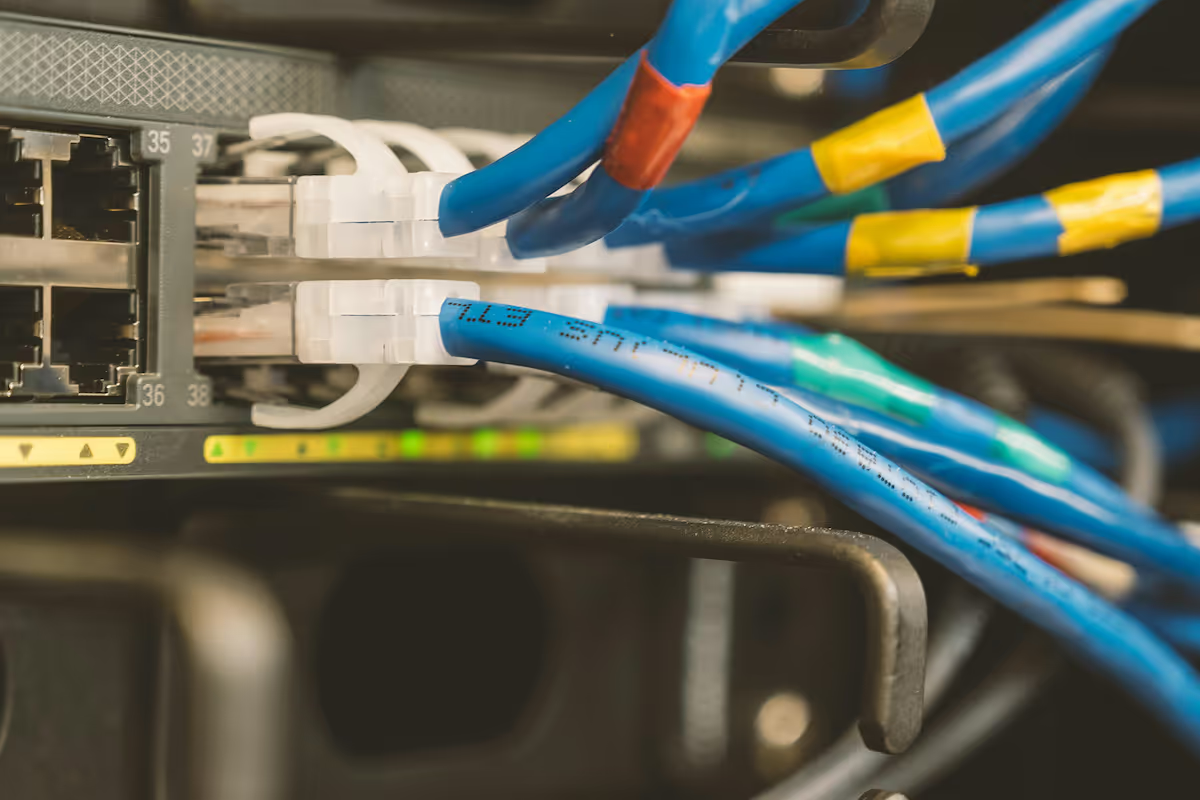
When building or managing a business network, you'll often encounter the terms Ethernet and Port-Channel.
While both are crucial for network connectivity, they serve very different functions. Ethernet is the foundational technology for how data travels over a local area network (LAN), while a Port-Channel is a technique for combining multiple physical Ethernet links into a single logical one.
Understanding this distinction is key to designing a network that is both resilient and high-performing.
What is Ethernet?
At its core, Ethernet is the technology that makes most wired networks tick. It's a set of rules, or protocols, that govern how data is sent between devices on a local network.
- The Standard for Wired LANs: Ethernet is the most widely used technology for local area networks (LANs), defining how devices connect and communicate using physical cables.
- Physical and Data Link Layers: It operates at the first two layers of the OSI model. The physical layer (Layer 1) deals with hardware like cables and ports, while the data link layer (Layer 2) manages how data is formatted into frames and sent across the network.
- Key Components: An Ethernet network relies on physical hardware, including network interface cards (NICs) in each device, switches to direct traffic, and cables (like twisted-pair copper or fiber optic) to connect everything.
- Speed and Evolution: Ethernet has evolved significantly over the years, with speeds increasing from 10 Mbps to 100 Gbps and beyond to meet the growing demands of business networks.
What is Port-Channel?
A Port-Channel is a network aggregation technique that bundles multiple physical Ethernet links into a single logical one. This method is used to increase bandwidth and provide redundancy between switches, routers, or servers.
- Increased Bandwidth: By combining links, you aggregate their capacity. For example, bundling two 1 Gbps links creates a single logical 2 Gbps connection, effectively doubling the data throughput.
- High Availability: It offers built-in redundancy. If one physical link within the channel fails, traffic is automatically rerouted over the remaining active links, preventing a network outage.
- Load Balancing: Traffic is distributed across all the physical links in the bundle. This prevents any single link from becoming a bottleneck and ensures resources are used efficiently.
- Simplified Management: The entire bundle is treated as one logical interface, which simplifies network configuration and ongoing management.
Ethernet vs Port-Channel: Key Differences
While they work together, their roles in your network are fundamentally different. Here’s a breakdown of the key distinctions to keep in mind.
1. Protocol vs. Configuration
Ethernet is a foundational networking protocol that standardizes communication. It sets the universal rules for how data packets are formatted and transmitted over a physical wire.
In contrast, Port-Channel is a configuration technique applied to Ethernet ports. It’s not a protocol but a method of bundling existing links to function as a single, higher-capacity unit.
2. Scope and Layer
Ethernet defines the standards for the physical and data link layers (Layers 1 and 2). It governs the hardware itself and the basic data transfer between adjacent network nodes.
Port-Channel operates at the data link layer (Layer 2) to manage traffic across multiple physical links between two specific devices, such as a pair of switches or a server and a switch.
3. Physical vs. Logical Interface
An Ethernet connection corresponds to a single physical port on a device. One cable connects to one port, creating a direct, one-to-one relationship.
A Port-Channel is a logical interface that abstracts multiple physical Ethernet ports. The entire bundle of links appears and is configured as one single interface, simplifying network management.
Benefits of Using Ethernet
While Ethernet is the default for most wired networks, it’s worth remembering the specific advantages it brings to the table, especially in a business environment.
- Reliability and Performance: Ethernet provides a stable, dedicated connection with consistent speeds and lower latency than wireless alternatives. This makes it ideal for business-critical applications where performance cannot be compromised.
- Enhanced Security: Since access requires a physical connection to the network, Ethernet offers a more secure environment. It is less susceptible to the unauthorized access and interference that can affect Wi-Fi networks.
- Cost-Effectiveness: Due to its widespread adoption and standardization, Ethernet components like cables, switches, and network cards are affordable and readily available, making it an economical choice for building and scaling networks.
- Scalability and Compatibility: Ethernet standards are designed to be backward compatible, which simplifies network upgrades. You can integrate newer, faster hardware without having to overhaul the entire existing infrastructure.
Advantages of Port-Channel
Implementing Port-Channel offers specific operational benefits, especially for networks that demand high capacity and uptime. It's a practical way to get more out of your existing infrastructure.
- Improved Throughput: By bundling links, you create a larger data pipe between critical network devices. This is essential for handling high-traffic loads, such as data backups or connections to core servers, without creating bottlenecks.
- Greater Network Resiliency: If one physical link in the bundle fails, traffic automatically fails over to the remaining links. This built-in redundancy keeps the network online and prevents service interruptions.
- Optimized Traffic Distribution: Port-Channel intelligently balances traffic across all active links in the bundle. This prevents any single connection from being overloaded and leads to consistent, predictable performance.
- Simplified Network Operations: Managing a single logical interface is far simpler than configuring and monitoring multiple individual links. This reduces administrative overhead and minimizes the chance of configuration errors.
Choosing Between Ethernet and Port-Channel
The decision isn't about picking one over the other, but rather knowing when to apply each. Ethernet is your foundation, while Port-Channel is a specific tool for strengthening key connections in your network.
When to Use Standard Ethernet
Standard Ethernet connections are the workhorse for most of your network. They are the default choice for connecting end-user devices like computers, printers, and IP phones to an access switch.
In these scenarios, a single link typically provides sufficient bandwidth and performance for everyday operations without the need for aggregation.
When to Implement Port-Channel
You should implement Port-Channel when a connection requires higher bandwidth and fault tolerance than a single Ethernet link can provide.
This is most common for critical infrastructure links, such as the connections between core switches or from a switch to a vital server or storage device. If a link failure would cause a major outage, Port-Channel provides the necessary resilience.
Making the Right Choice for Your Network
Ultimately, building a robust network isn't about choosing Ethernet or Port-Channel, but about using them together effectively. Your network is built on Ethernet, but Port-Channel is a technique to apply where it matters most. Here’s a final summary to guide your decisions:
- Start with Standard Ethernet: Use single Ethernet links for most network endpoints like computers and printers. This is the default for providing basic, reliable connectivity to user devices.
- Use Port-Channel for Critical Links: Implement Port-Channel for connections that require more bandwidth and high availability. This typically includes links between core switches or to important servers and storage arrays.
- Analyze Before You Aggregate: Before creating a Port-Channel, review your network traffic to confirm a bottleneck exists. This ensures you're solving a real performance or redundancy issue.
- A Combined Approach: A well-designed network uses both. Ethernet provides universal connectivity, while Port-Channel reinforces the backbone, creating a resilient and high-performing infrastructure.
Need Help Managing Your Network? Lightyear Can Help
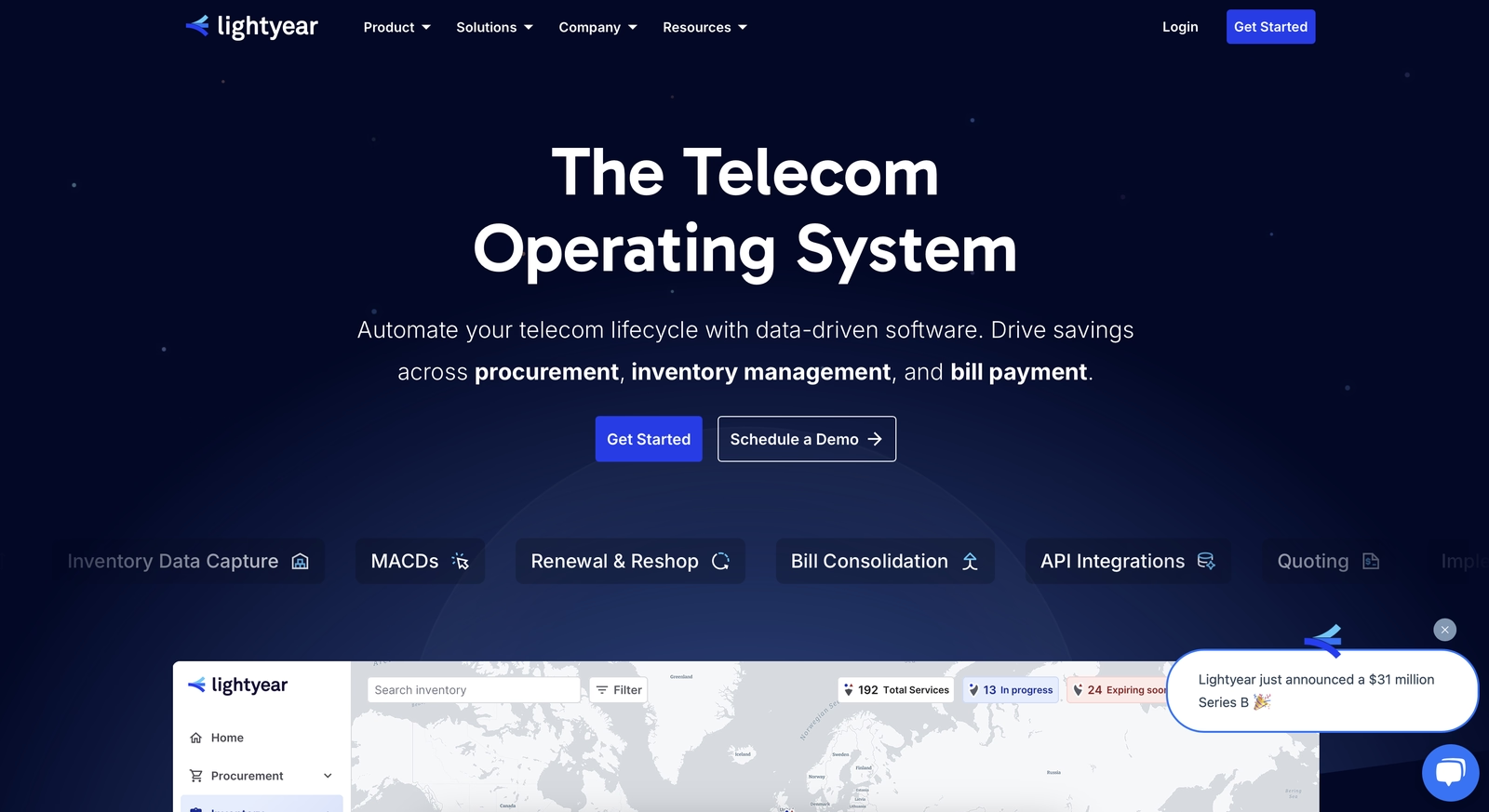
Whether you're configuring Port-Channels or managing hundreds of individual Ethernet circuits, the underlying telecom services need to be procured and tracked efficiently.
Lightyear automates network service procurement, inventory management, and bill consolidation, helping enterprises save over 70% in time and 20% in costs on these services.
Schedule a demo or get started with our questionnaire today.
Frequently Asked Questions about Ethernet vs Port-Channel
Is Port-Channel compatible between different switch vendors?
Yes, when using the industry-standard Link Aggregation Control Protocol (LACP). This protocol allows switches from different manufacturers to negotiate and form a Port-Channel, ensuring interoperability in a multi-vendor network environment.
Does a Port-Channel make a single file transfer faster?
Not always. Traffic is balanced based on flows, so a single large transfer might still use only one link. The benefit comes from distributing multiple, separate traffic flows across all links in the bundle, increasing total aggregate throughput.
Are Port-Channel, EtherChannel, and LAG the same thing?
Essentially, yes. Link Aggregation Group (LAG) is the general industry term. Port-Channel is a common implementation name, while EtherChannel is Cisco's specific terminology. They all describe bundling physical links into a single logical one.
Let us show you the product and discuss specifics on how it might be helpful.
Schedule a Demo





Revolutionize Your Telecom Experience
Learn how you can get one step closer to optimal business efficiency for all your telecom services.