Ethernet vs T1: Comparing Enterprise Network Solutions
Ethernet vs. T1: Which is right for your business? Learn the key differences in speed, cost, and reliability to make an informed network decision.

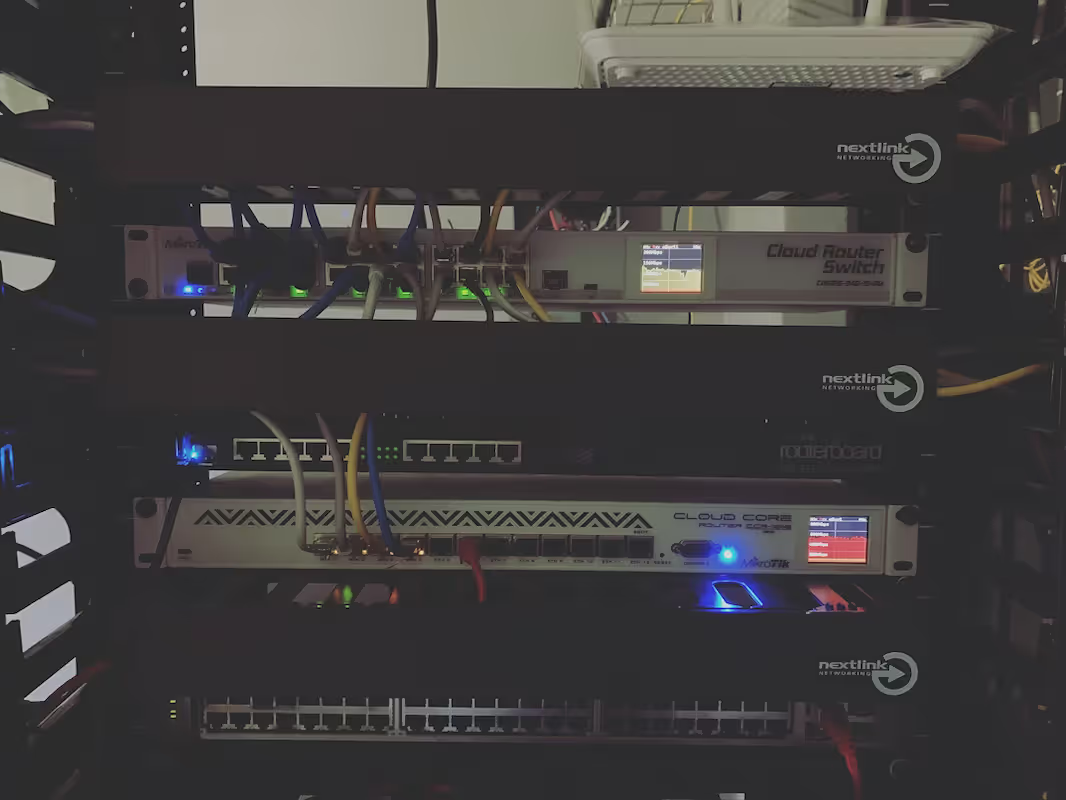
Choosing the right connectivity is a critical decision for any IT leader responsible for an enterprise network.
Two options that frequently appear in these discussions are Ethernet and T1 lines.
While both can connect your business locations, they represent very different approaches to telecommunications with significant differences in speed, scalability, and cost.
This guide will compare Ethernet and T1 to help you determine which solution is the right fit for your company's needs.
What is Ethernet?
At its core, Ethernet is a family of networking technologies used to connect devices within a local area network (LAN). It defines the rules for how data is formatted and transmitted over a wired network, acting as the common language that allows devices like computers, servers, and switches to communicate effectively.
Here are some of its key characteristics:
- High-Speed Connectivity: Ethernet supports a wide range of data transfer rates, from 10 megabits per second (Mbps) in older versions to 100 gigabits per second (Gbps) and beyond with modern fiber optic implementations.
- Standardized Technology: It is governed by the IEEE 802.3 standards, which ensures that networking equipment from different vendors can work together without compatibility issues.
- Packet-Based Transmission: Data is broken down into small units called packets. Each packet contains part of the message as well as source and destination addresses, which helps ensure data reaches the correct device efficiently.
- Flexible Mediums: While often associated with twisted-pair copper cables (like Cat5e or Cat6), Ethernet can also run over fiber optic cables for longer distances and higher speeds.
What is T1?
A T1 line is a dedicated digital transmission link, a legacy technology originally developed to carry multiple voice calls over a single copper wire connection. Unlike Ethernet, which is primarily a local area network (LAN) technology, a T1 is a classic wide area network (WAN) service designed for reliability over long distances.
It provides a fixed, private connection between two points. Here are its defining features:
- Dedicated Bandwidth: A T1 line provides a guaranteed, non-shared circuit with a symmetrical speed of 1.544 Mbps for both uploads and downloads.
- Channel-Based System: The total bandwidth is divided into 24 channels. These channels can be configured to carry voice traffic, data, or a combination of both, offering some flexibility for different business needs.
- High Reliability: T1 lines are known for their dependability and consistent performance, often backed by strong Service Level Agreements (SLAs) that guarantee uptime.
- Point-to-Point Connection: It establishes a direct, private circuit between two locations, such as connecting a branch office to a corporate headquarters or a data center.
Ethernet vs T1: Key Differences
While both technologies provide connectivity, they operate on fundamentally different principles. Here’s a breakdown of the core distinctions you should know.
Network Architecture and Purpose
The most fundamental difference lies in their intended use. Ethernet is a technology standard for local area networks (LANs), designed to connect devices within a single building or campus.
In contrast, a T1 is a telecommunications service for wide area networks (WANs). Its primary function is to connect two distant points, such as linking a branch office back to your corporate headquarters.
Scalability and Flexibility
Ethernet offers significant flexibility in bandwidth. Services can be provisioned at various speeds, such as 100 Mbps, 1 Gbps, or 10 Gbps, and can often be upgraded easily as your business needs grow.
A T1 line provides a fixed, rigid bandwidth of 1.544 Mbps. To increase capacity, you must purchase and bond additional T1 lines, which adds complexity to your network management.
Data Handling and Infrastructure
Ethernet is a packet-switched technology. It breaks data into small packets that can travel independently, making it highly efficient for the bursty, variable traffic of modern internet use.
T1, on the other hand, is a circuit-switched technology. It establishes a dedicated, constant connection, a legacy of its original design for carrying predictable voice traffic over traditional copper phone lines.
Cost Considerations for Ethernet and T1
When it comes to budget, the financial models for Ethernet and T1 are quite different. The price you pay often comes down to the cost per megabit and the nature of the service.
- Cost per Megabit: Ethernet services almost always offer a significantly lower cost per megabit. Since you can purchase bandwidth in flexible increments (e.g., 100 Mbps, 1 Gbps), you get more speed for your money, making it a more economical choice for modern data needs.
- Fixed vs. Variable Cost: A T1 line comes with a high, fixed monthly cost for its guaranteed 1.544 Mbps of bandwidth. In contrast, Ethernet pricing is directly tied to the amount of bandwidth you select, providing greater financial control.
- Installation and Hardware: Ethernet can often be delivered over existing fiber or copper lines, potentially reducing setup fees. T1 circuits frequently require specialized installation and equipment, which can increase the initial investment.
Performance and Speed: Ethernet vs T1
When you look at raw performance, the gap between these two technologies becomes incredibly clear, especially for modern business operations.
1. Bandwidth Capacity
Ethernet is the undisputed winner in speed. It offers a vast range of bandwidth options, from 100 Mbps to 10 Gbps and even higher, easily meeting the demands of today's applications.
A T1 line, by contrast, is locked at a maximum speed of 1.544 Mbps. This was sufficient decades ago but is a significant bottleneck for data-intensive operations.
2. Symmetrical Speeds
Both technologies typically offer symmetrical speeds, meaning upload and download rates are the same. A T1 line is inherently symmetrical at 1.544 Mbps.
Business Ethernet services are also provisioned symmetrically, which is critical for tasks like large file uploads, cloud backups, and two-way video conferencing.
3. Latency and Jitter
Because T1 is a dedicated circuit, it has historically been praised for its low latency and minimal jitter, providing a very stable connection for voice calls.
Modern fiber-based Ethernet, however, now delivers exceptionally low latency that often surpasses T1 performance. Dedicated Ethernet circuits provide the stability needed for real-time applications without the speed limitations of T1.
Reliability and Maintenance: Ethernet vs T1
Both Ethernet and T1 can provide dependable connections, but their reliability is rooted in different principles, which also affects how they are maintained.
- Source of Reliability: A T1 line’s dependability comes from its simple, dedicated circuit design. It’s a private line with no shared traffic, which historically made it a go-to for stability. Modern Ethernet, especially when delivered over fiber as a Dedicated Internet Access (DIA) service, achieves high reliability through resilient, newer infrastructure.
- Service Level Agreements (SLAs): T1 connections are well-known for their strong SLAs guaranteeing uptime. However, this is no longer a unique advantage. Carrier Ethernet services now come with equally comprehensive SLAs that often cover more performance metrics, including latency, packet loss, and jitter, giving you more detailed performance guarantees.
- Infrastructure and Maintenance: T1 lines rely on an aging copper telephone network, which can be more prone to physical degradation and environmental interference over time. Troubleshooting is often a manual process for technicians. Ethernet runs on more modern infrastructure, and providers use advanced monitoring tools to proactively identify and resolve network issues, often before they impact your service.
Making the Right Choice for Your Business
Ultimately, the decision between Ethernet and T1 hinges on your specific business requirements for speed, scalability, and cost. For nearly any modern enterprise, Ethernet is the superior choice.
Its high-speed capabilities are essential for supporting data-heavy applications, cloud services, and video conferencing. With flexible bandwidth options and a lower cost per megabit, it provides the performance and financial sense needed for growth.
In contrast, a T1 line is a legacy technology with a fixed, low bandwidth of 1.544 Mbps. Its use is now limited to very specific scenarios, such as providing a simple, dedicated voice circuit or basic connectivity in a remote location where no other options exist. For most businesses, Ethernet provides the foundation for a capable and future-ready network.
Need Help Managing Your Network? Lightyear Can Help
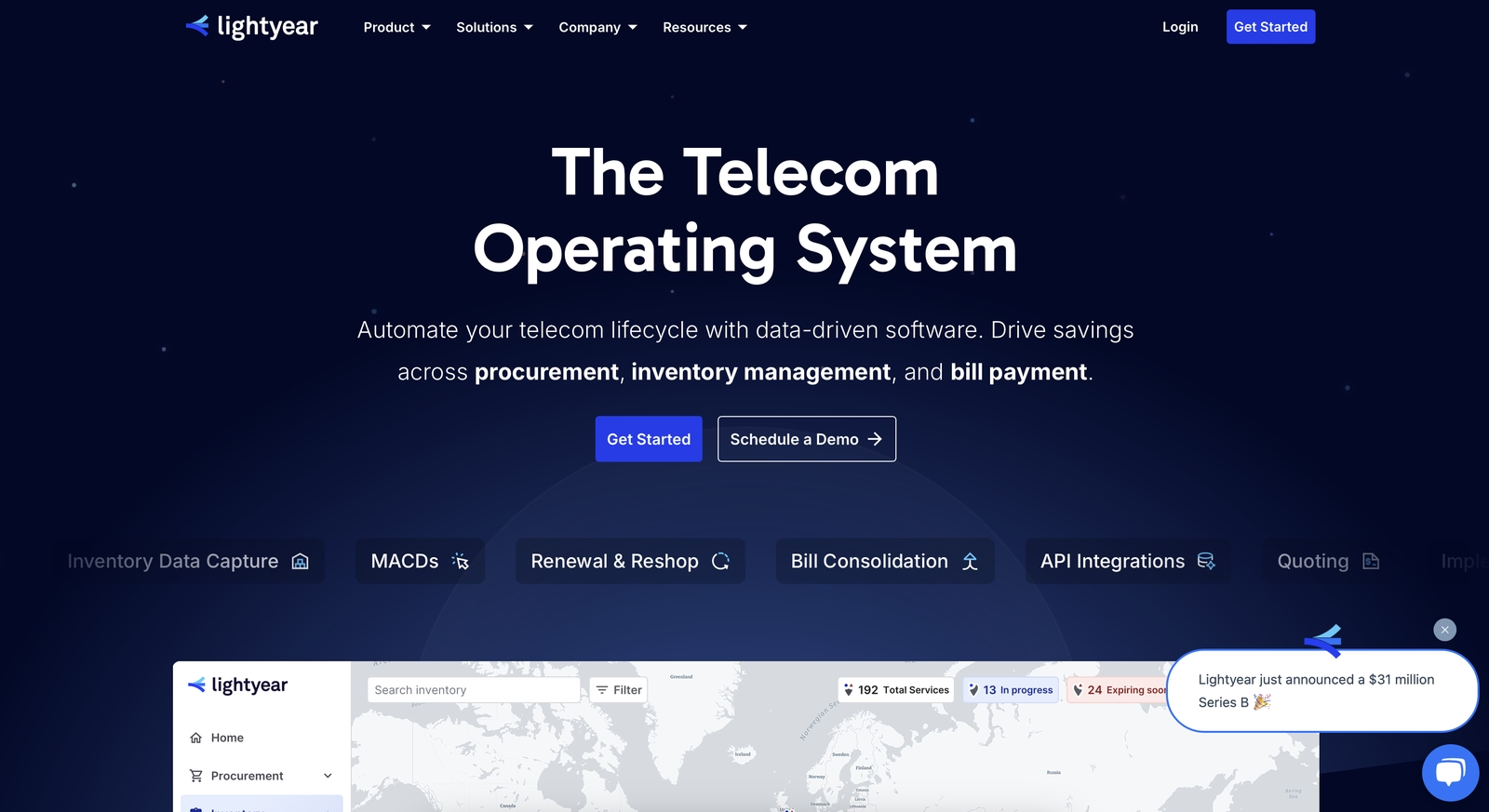
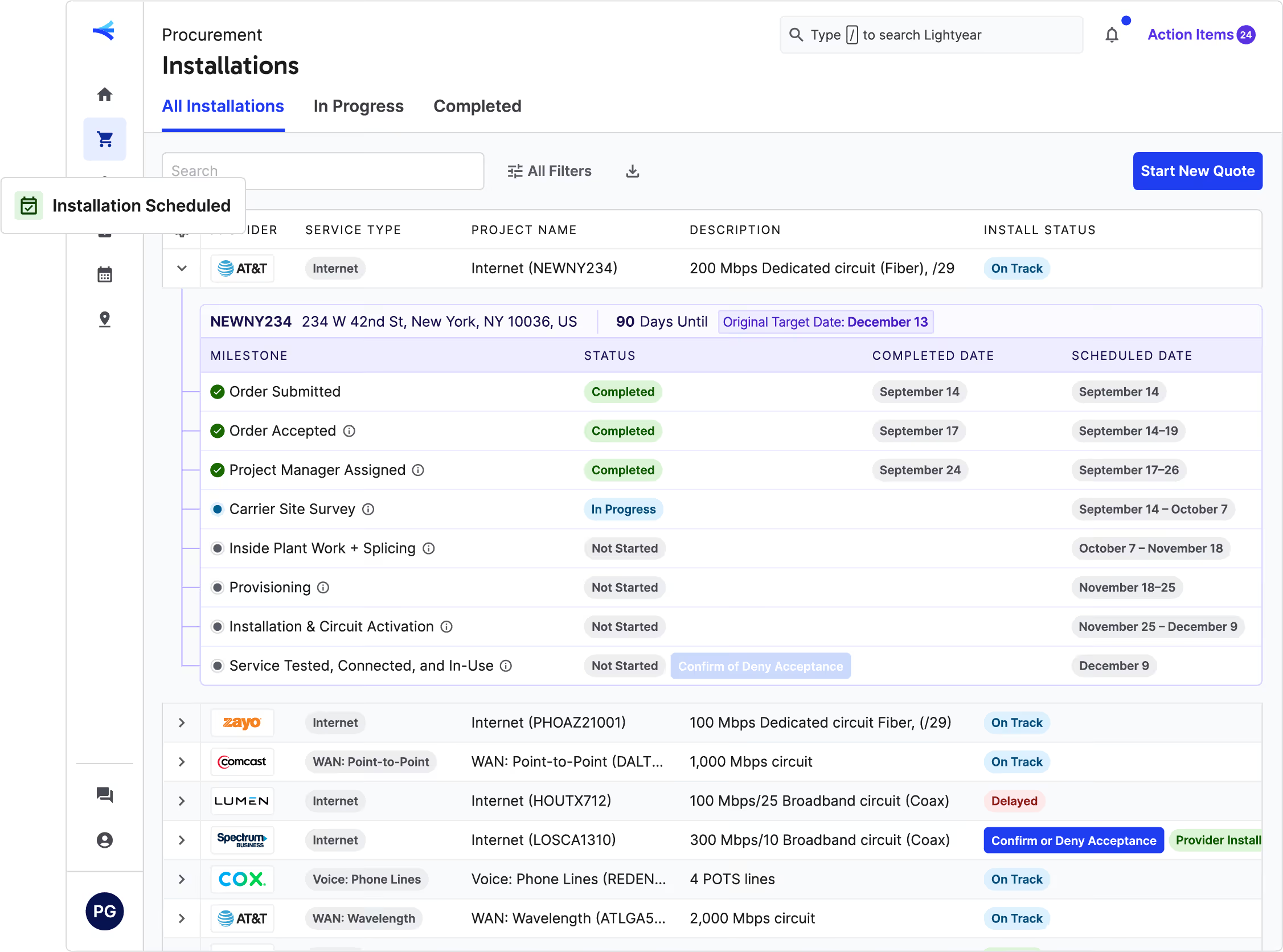
Whether you're ready to procure a new Ethernet circuit or need to manage a complex network, Lightyear's telecom operating system can help. By automating network service procurement, inventory management, and bill consolidation, we take the pain out of infrastructure management, helping enterprises achieve 70%+ time savings and 20%+ cost savings.
Schedule a demo or get started with our questionare today.
Frequently Asked Questions about Ethernet vs T1
Is one technology more secure than the other?
A T1 is inherently secure as a private, dedicated circuit. Ethernet's security varies; a private Ethernet line offers comparable security. However, shared Ethernet services require security measures like firewalls and VPNs to protect data traversing public networks.
Can I use a T1 line for general internet access?
Yes, but its low bandwidth of 1.544 Mbps makes it impractical for most modern business needs. It is generally too slow for cloud applications, video calls, or large file transfers that are common in today's workplace.
Is Ethernet always delivered over fiber optic cables?
Not necessarily. While fiber offers the highest speeds, Ethernet services can also be delivered over traditional copper wiring. The delivery medium depends on the infrastructure available at your business location and the bandwidth you require.
Are there any situations where a T1 line is still a viable option?
Yes, but they are increasingly rare. A T1 might be used for a simple, dedicated voice circuit or as a last-resort connectivity option in a remote location where modern Ethernet services are completely unavailable.
Let us show you the product and discuss specifics on how it might be helpful.
Schedule a Demo





Revolutionize Your Telecom Experience
Learn how you can get one step closer to optimal business efficiency for all your telecom services.