Ethernet vs Telephone Port: Differences Explained
Confused about Ethernet vs. telephone ports? This guide explains the differences in speed and function to help you build a better business network.

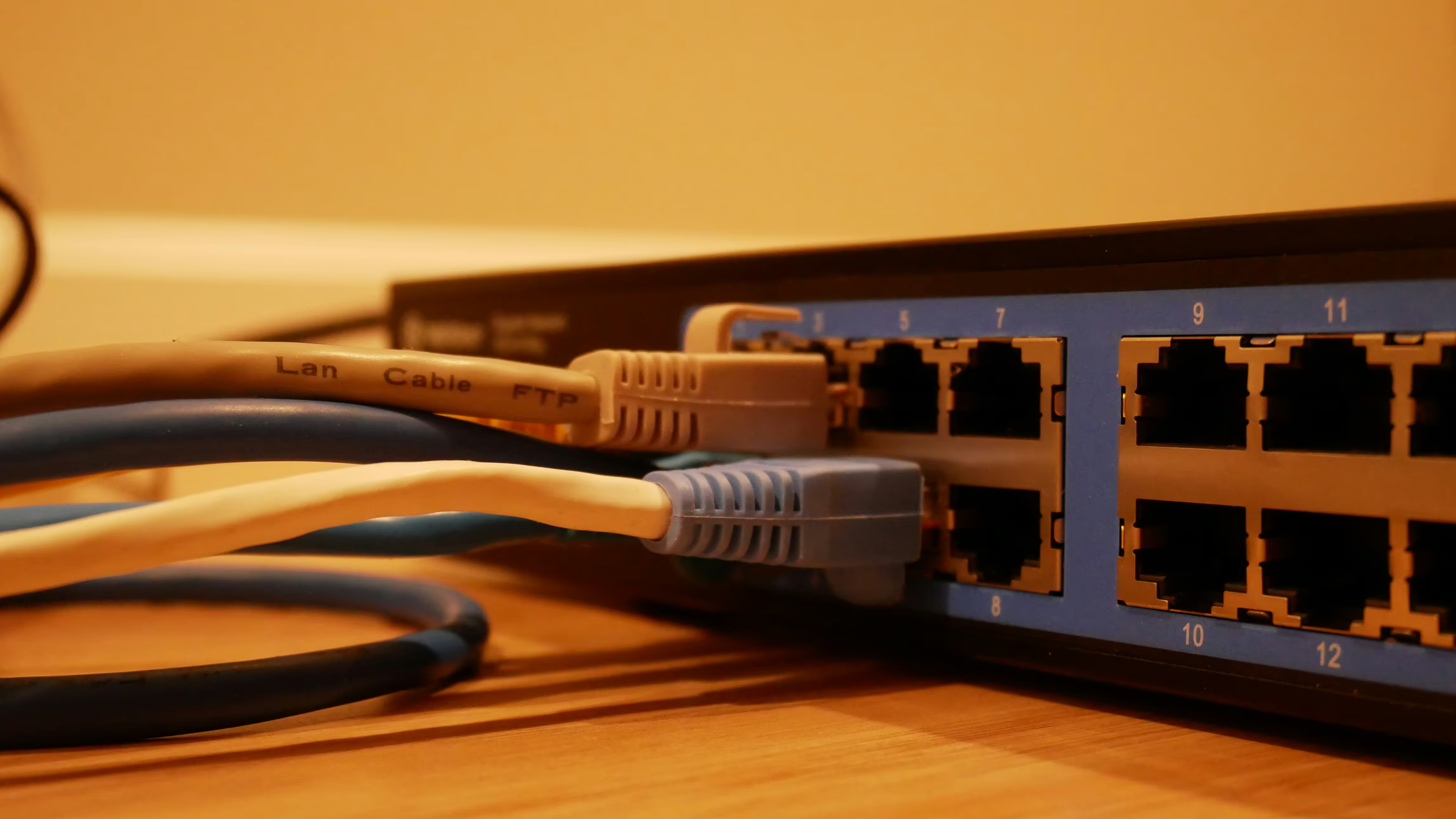
At a glance, an Ethernet port and a telephone port look strikingly similar. They both use a similar plastic connector, which can make it easy to mistake one for the other when setting up office network or phone systems.
However, despite their physical resemblance, these two ports serve fundamentally different functions and are not interchangeable. This article will explain the key differences in their purpose, design, and performance to help you make informed decisions for your business's connectivity infrastructure.
What is an Ethernet Port?
An Ethernet port is your device's gateway to a wired network. It's the physical socket, typically found on computers, routers, and switches, where you plug in an Ethernet cable to connect to a Local Area Network (LAN). This connection is what facilitates high-speed internet access and data sharing between devices on the same network.
- Connector Type: It uses an RJ45 connector, which is slightly larger than a telephone plug and contains eight pins for eight wires.
- Function: Its primary role is to transmit data in packets, enabling robust and stable connections for activities like file transfers, video streaming, and online gaming.
- Speed: Ethernet technology supports significantly higher data transfer speeds than telephone lines, ranging from 10 Mbps to over 100 Gbps depending on the standard.
What is a Telephone Port?
A telephone port, often called a phone jack, is the interface for connecting devices to a traditional telephone line. It's the standard socket found in walls and on equipment like fax machines and modems, designed to link up with the Public Switched Telephone Network (PSTN) for voice calls.
- Connector Type: It uses a smaller RJ11 or RJ12 connector, which has four to six pins to accommodate fewer wires than an Ethernet cable.
- Function: Its purpose is to transmit analog voice signals, a continuous wave of electrical current, which is fundamentally different from the digital data packets Ethernet handles.
- Speed: Data transfer rates are very low, typically up to 56 Kbps with dial-up modems, making it unsuitable for modern high-speed internet but sufficient for voice communication.
Key Differences Between Ethernet and Telephone Ports
While the basic function and speed differences are clear, several underlying technical distinctions separate these two ports. Understanding these is key to managing your network infrastructure effectively.
1. Physical Design and Wiring
An Ethernet port accommodates a larger RJ45 connector, which holds eight wires. These wires are organized into four twisted pairs, a design that cancels out electromagnetic interference and protects signal integrity for high-speed data.
A telephone port uses a smaller RJ11 connector with just four to six wires. This simpler wiring is sufficient for carrying lower-frequency analog voice signals, which are not as sensitive to the interference that can corrupt digital data.
2. Data Transmission Method
Ethernet relies on packet switching to move data. Information is broken into small packets that are sent independently across the network and reassembled at their destination, an efficient method for handling internet traffic from many users.
In contrast, traditional telephone networks use circuit switching. This method establishes a dedicated, continuous connection between two points for the duration of a call, which is reliable for voice but highly inefficient for data.
3. Bandwidth and Capability
The construction of Ethernet cables and ports provides significantly more bandwidth than telephone lines. This allows them to carry the high-frequency signals required for rapid data transfer across a network.
Telephone lines offer very narrow bandwidth, tailored specifically to the frequency range of human speech. Pushing high-speed data through a telephone port is technically impractical and would lead to extreme data loss and connection failure.
Use Cases for Ethernet Ports in Enterprises
In a modern business environment, Ethernet ports are the backbone of nearly all data-driven operations. Their stability and speed make them essential for a wide range of functions that keep a company running smoothly.
- Connecting Workstations and Servers: The most fundamental use is providing wired network access to employee computers and company servers. This ensures reliable, high-speed connectivity for accessing shared drives, cloud applications, and the internet.
- Powering VoIP Phone Systems: Voice over IP (VoIP) phones use Ethernet ports to make calls over the data network. This integrates voice communications into the IT infrastructure, a clear departure from traditional phone lines that require separate telephone ports.
- Linking Network Peripherals: Ethernet is used to connect shared devices like network printers, scanners, and storage systems to the LAN. This allows employees throughout the office to access them easily from their own computers.
- Building Wireless Networks: Wireless Access Points (WAPs), which create your company's Wi-Fi network, are connected to the core network via Ethernet cables. This provides the necessary bandwidth to support dozens or hundreds of wireless users.
- Supporting Security and IoT Devices: IP security cameras, building access control systems, and other Internet of Things (IoT) devices rely on Ethernet for a stable data connection and, often, for power through Power over Ethernet (PoE).
Use Cases for Telephone Ports in Enterprises
While Ethernet has taken over most data-related tasks, telephone ports still serve several important, often specialized, roles in many businesses. Their continued use typically centers on reliability and compatibility with older, but still essential, systems.
- Legacy Phone and PBX Systems: Many companies still operate traditional Private Branch Exchange (PBX) phone systems that connect to the Public Switched Telephone Network (PSTN). These systems require telephone ports for every desk phone and analog device.
- Fax Machines: In industries like healthcare, law, and finance, faxing remains a common method for transmitting sensitive documents securely. Fax machines connect directly to a telephone port to operate over a standard phone line.
- Critical Safety and Alarm Lines: Fire alarm panels, security systems, and elevator emergency phones often rely on dedicated analog phone lines. These connections are valued for their reliability, as they can remain operational during a power outage.
- Point-of-Sale (POS) Terminals: Some credit card terminals use a dial-up connection via a telephone port as a backup. If the primary internet connection fails, the POS system can still process transactions over the phone line.
- Out-of-Band Management: For network administrators, a telephone port connected to a modem can provide a crucial "back door" into network hardware like routers or servers. If the main network goes down, they can dial in to diagnose and fix issues remotely.
How to Choose Between Ethernet and Telephone Ports
Deciding between an Ethernet and a telephone port is straightforward once you identify the specific application. Your choice hinges on the device you're connecting and the function it needs to perform within your business operations.
1. For Data Networking and Internet Access
For any task that involves your company's data network, the Ethernet port is the correct choice. This includes connecting employee workstations, servers, and network switches.
Its design is built for the high bandwidth and speed required for reliable internet access, cloud applications, and internal file sharing. A telephone port cannot support these functions.
2. For Voice Communication Systems
The right port for voice calls depends entirely on your phone system's technology. If your business uses a modern Voice over IP (VoIP) system, phones will connect via Ethernet ports, as calls travel over your data network.
Conversely, if you maintain a traditional PBX system connected to the public telephone network, your devices will require telephone ports.
3. For Legacy and Critical Backup Systems
Telephone ports remain essential for specific legacy and critical hardware. Devices such as fax machines, fire alarm monitoring panels, and credit card terminal backups are built to use analog phone lines.
For these, you must use a telephone port to ensure they function as intended, especially during a network or power outage.
Final Thoughts on Ethernet vs Telephone Ports
While Ethernet and telephone ports may look alike, their roles in a business are worlds apart. Understanding their distinct functions is fundamental to building a reliable and efficient communications infrastructure.
Ethernet ports are the standard for all modern data networking. They provide the high-speed, stable connections required for everything from internet access and local file sharing to VoIP phone systems and network security cameras.
Telephone ports, on the other hand, serve a more specialized purpose. They connect legacy systems like traditional PBX phones, fax machines, and critical alarm lines to the analog telephone network.
Ultimately, the choice is not about which is better, but which is correct for the task. Matching the device to its proper port is the final step in making sure your IT and telecom environment operates reliably and supports your business without a hitch.
Need Help Managing Your Network? Lightyear Can Help
Managing the services that run through your Ethernet and telephone ports can be complex. Lightyear simplifies this with a platform for network inventory management, helping you track every circuit and line across all your locations.
By automating network service procurement and bill consolidation, we take the pain out of telecom infrastructure management. The hundreds of enterprises who trust Lightyear achieve 70%+ time savings and 20%+ cost savings on their network services.
Schedule a demo or get started with our questionnaire today.
Frequently Asked Questions about Ethernet vs Telephone Port
Can I plug a telephone cable into an Ethernet port?
Yes, a smaller RJ11 telephone plug can physically fit into a larger RJ45 Ethernet port. However, it will not establish a network connection and could potentially damage the port's pins due to the improper fit and wiring. Always use the correct cable for each port.
Can I use a telephone line for internet access?
A telephone line can be used for older Digital Subscriber Line (DSL) service or very slow dial-up connections. However, for the high-speed internet required by modern businesses, you need a dedicated connection that terminates at an Ethernet port, not a telephone port.
Are telephone ports becoming obsolete?
While less common for data, telephone ports remain important for specific functions. Many businesses still rely on them for legacy PBX systems, fax machines, and critical alarm or elevator lines that require a reliable connection separate from the primary data network.
Let us show you the product and discuss specifics on how it might be helpful.
Schedule a Demo



Revolutionize Your Telecom Experience
Learn how you can get one step closer to optimal business efficiency for all your telecom services.