Ethernet vs WLAN: Choosing for Enterprise Networks
Ethernet or WLAN for your enterprise network? Learn the key differences in speed, security, and cost to make the right choice for your business.

When setting up or upgrading an enterprise network, one of the fundamental decisions is how to connect your devices. This choice typically comes down to two primary technologies: wired connections, known as Ethernet, and wireless local area networks, or WLANs.
Both offer distinct advantages and are often used together to create a comprehensive network infrastructure. This guide will compare Ethernet and WLAN across key factors like speed, security, and cost to help you determine the right mix for your business.
What is Ethernet?
Ethernet is the foundational technology for building wired networks. It defines how devices like computers, servers, and printers connect and transmit data over a local area network (LAN).
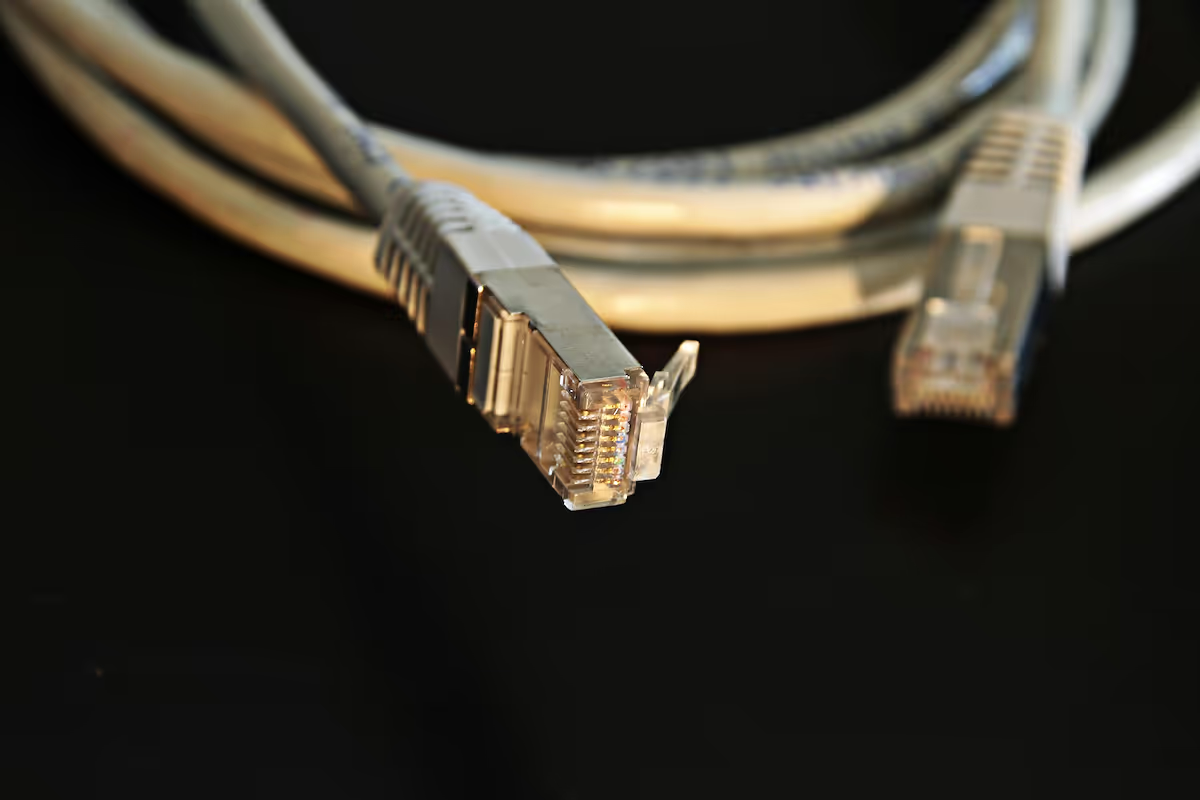
This connection is made using physical cables—most commonly twisted-pair cables like Cat5e, Cat6, or Cat7—that plug into Ethernet ports on network devices. Because the connection is physical, it creates a direct, dedicated link for data to travel.
Key aspects of Ethernet include:
- Wired by Design: It requires a physical cable to connect devices, which means data travels through a contained medium instead of wirelessly through the air.
- A Universal Standard: As an established IEEE 802.3 standard, Ethernet ensures that hardware from different vendors is compatible, making network setup and expansion straightforward.
- Consistent Performance: Wired connections are generally less prone to interference from other electronic devices, walls, or distance, resulting in stable speeds and lower latency.
- Primary Use Cases: It is the go-to choice for office workstations, data centers, and any scenario where a fast, secure, and reliable connection is a top priority.
What is WLAN?
A Wireless Local Area Network, or WLAN, provides network connectivity without the need for physical cables. Instead of plugging into a port, devices use radio waves to send and receive data, communicating with a central wireless access point (WAP) connected to the broader network. This technology is governed by the IEEE 802.11 standards, more commonly known as Wi-Fi.
Here are the core characteristics of a WLAN:
- Wireless by Nature: It transmits data through the air using radio frequencies. This design offers users freedom from physical tethers and allows for greater mobility within a defined coverage area.
- Based on Wi-Fi Standards: The universal IEEE 802.11 standard ensures that laptops, smartphones, and other wireless devices from different manufacturers can all connect to the same network.
- Flexibility and Mobility: The main advantage of a WLAN is convenience. It allows employees and guests to connect from anywhere within signal range, making it perfect for conference rooms, common areas, and supporting a mobile workforce.
- Primary Use Cases: WLAN is the standard for connecting mobile devices like laptops, tablets, and phones. It is also used in environments where installing physical cables is difficult, disruptive, or aesthetically undesirable.
Ethernet vs WLAN: Key Differences
While both technologies connect you to the network, they do so with important trade-offs in performance, reliability, and user convenience.
1. Speed and Bandwidth
Ethernet connections consistently deliver higher speeds. A wired link provides a dedicated, full-duplex connection, meaning data can be sent and received simultaneously without sharing the pipeline.
Most modern offices are equipped with Gigabit Ethernet (1 Gbps), and many are upgrading to 10 Gbps for data-intensive workstations or servers. These speeds are stable and predictable.
WLAN operates on a shared medium. The advertised speed of a Wi-Fi standard is a theoretical maximum that is divided among all connected devices. As more users join, the available bandwidth per person decreases.
2. Reliability and Interference
For connection stability, Ethernet is unmatched. The physical cable acts as a shield, protecting data transmission from most external radio frequency interference.
This results in a highly reliable connection with very low latency, which is critical for applications like VoIP calls, video conferencing, and transferring large data files. Interruptions are far less common.
WLAN signals, because they travel through the air, are vulnerable to interference from other wireless networks, Bluetooth devices, and physical barriers like concrete walls. This can cause inconsistent performance and unexpected signal drops.
3. Mobility and Convenience
The primary advantage of WLAN is its inherent mobility. The lack of physical cables gives users the freedom to connect and work from anywhere within the network's coverage area—be it a conference room, a break area, or a different desk.
This flexibility is essential for supporting a dynamic workforce that relies on laptops, tablets, and smartphones.
Ethernet, in contrast, requires a physical cable connection to a wall port. While this guarantees a stable link, it completely restricts a device to a single, fixed location.
Security Considerations in Ethernet and WLAN
From a security standpoint, Ethernet has a natural advantage. Access requires a physical connection to a network port, which creates a strong first line of defense against unauthorized users. Since data is contained within a cable, it is much harder to intercept without direct physical access to the network hardware.
In contrast, WLAN transmits data through the air. This makes the network inherently more exposed and accessible to anyone within signal range. Without proper safeguards, wireless traffic can be intercepted. To mitigate this risk, WLANs depend heavily on strong encryption protocols, such as WPA3, and robust authentication methods to protect data and control who can connect to the network.
Cost Implications of Ethernet and WLAN
When budgeting for your network, the costs for Ethernet and WLAN break down differently across initial setup and long-term management.
- Initial Investment: Ethernet's primary upfront cost lies in its physical infrastructure—the price of cabling and the labor to install it. This can be substantial, especially in large facilities. For WLAN, the main hardware cost is in wireless access points (WAPs), which may require a professional site survey for optimal placement.
- Ongoing Expenses: A wired Ethernet network typically has lower operational costs, as it requires less active management and rarely involves recurring licensing fees. In contrast, enterprise WLAN systems often come with ongoing expenses, including software licenses for management platforms and more IT overhead for monitoring security and performance.
Scalability and Flexibility in Network Solutions
When it comes to expanding your network, Ethernet and WLAN offer different paths. Scaling an Ethernet network is a structured process that involves adding more switches and running new physical cables to accommodate additional devices or locations.
While this approach is highly predictable, it can be rigid and requires planning for physical installation, which may involve construction or disruptions.
In contrast, expanding a WLAN is often more straightforward. To increase coverage or support more users, you can add more wireless access points. This makes it easier to adapt to a growing team or reconfigured office spaces without the need for extensive new wiring.
This difference directly impacts flexibility. A WLAN allows new users and devices to join the network from anywhere within range, offering great adaptability. An Ethernet setup is less flexible in this sense, as each new connection point must be physically wired and installed.
Making the Right Choice for Your Enterprise
The decision between Ethernet and WLAN isn't about choosing a single winner. Instead, the most effective network strategies use both technologies for what they do best.
For stationary devices requiring maximum speed and reliability—like servers, data centers, and desktop workstations—Ethernet remains the superior choice. Its wired connection provides stable, high-speed performance that is essential for critical operations.
In contrast, WLAN is the clear solution for supporting mobility. It provides the flexibility needed for laptops, tablets, and guest devices in conference rooms and common areas.
Ultimately, a hybrid approach that combines a wired backbone with strategically placed wireless access points creates a comprehensive and adaptable network. This balanced model supports all business needs, from high-demand tasks to a flexible, mobile workforce.
Need Help Managing Your Network? Lightyear Can Help
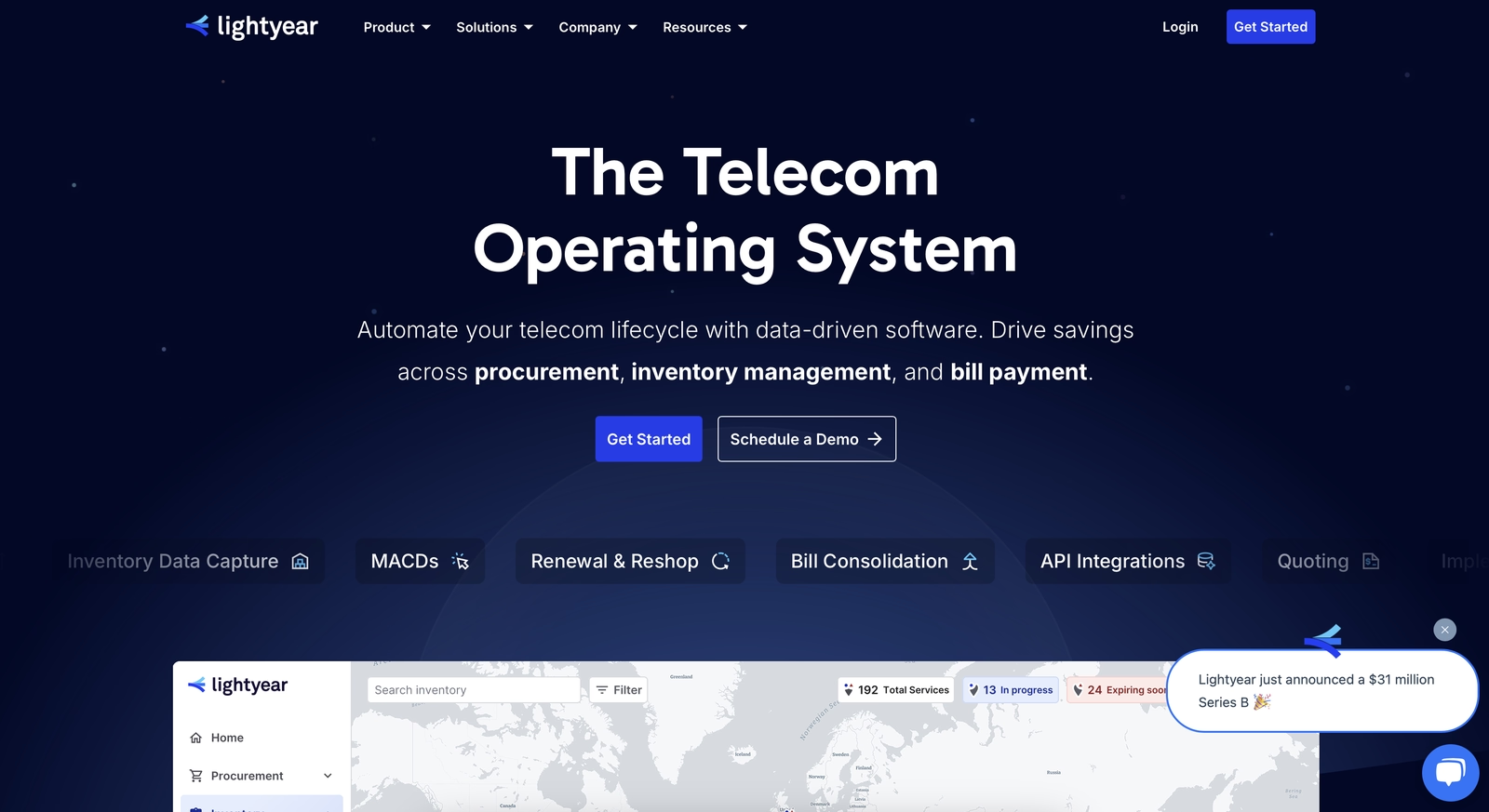
Whether you choose Ethernet, WLAN, or a hybrid approach, Lightyear helps you procure and manage your network services efficiently. Our platform automates the entire telecom lifecycle, from sourcing circuits to consolidating bills.
By handling procurement, inventory, and billing, we help businesses save over 70% in time and reduce costs by up to 20%.
Schedule a demo or get started with our questionnaire today.
Frequently Asked Questions about Ethernet vs WLAN
Which is better for latency-sensitive applications like VoIP or video conferencing?
Ethernet is the clear winner here. Its direct, wired connection provides lower and more consistent latency, which is critical for real-time applications like video calls where delays can cause significant disruptions. WLAN is more susceptible to lag and jitter.
Can you use Power over Ethernet (PoE) with WLAN?
Yes, and it's a very common and efficient practice. Power over Ethernet is frequently used to power wireless access points (WAPs). This allows you to place WAPs in optimal locations without needing a separate power outlet, greatly simplifying installation.
Is Wi-Fi eventually going to replace Ethernet completely?
It's unlikely in the near future. While Wi-Fi is improving, Ethernet's superior speed, reliability, and security for fixed devices mean it will remain essential for network backbones, servers, and critical workstations. The two technologies will continue to complement each other.
Let us show you the product and discuss specifics on how it might be helpful.
Schedule a Demo





Revolutionize Your Telecom Experience
Learn how you can get one step closer to optimal business efficiency for all your telecom services.