Fast Ethernet vs Serial Interface: A Comparison
Fast Ethernet vs. Serial Interface: Which is right for your network? Learn the key differences in speed, cost, and use cases for enterprise WAN.

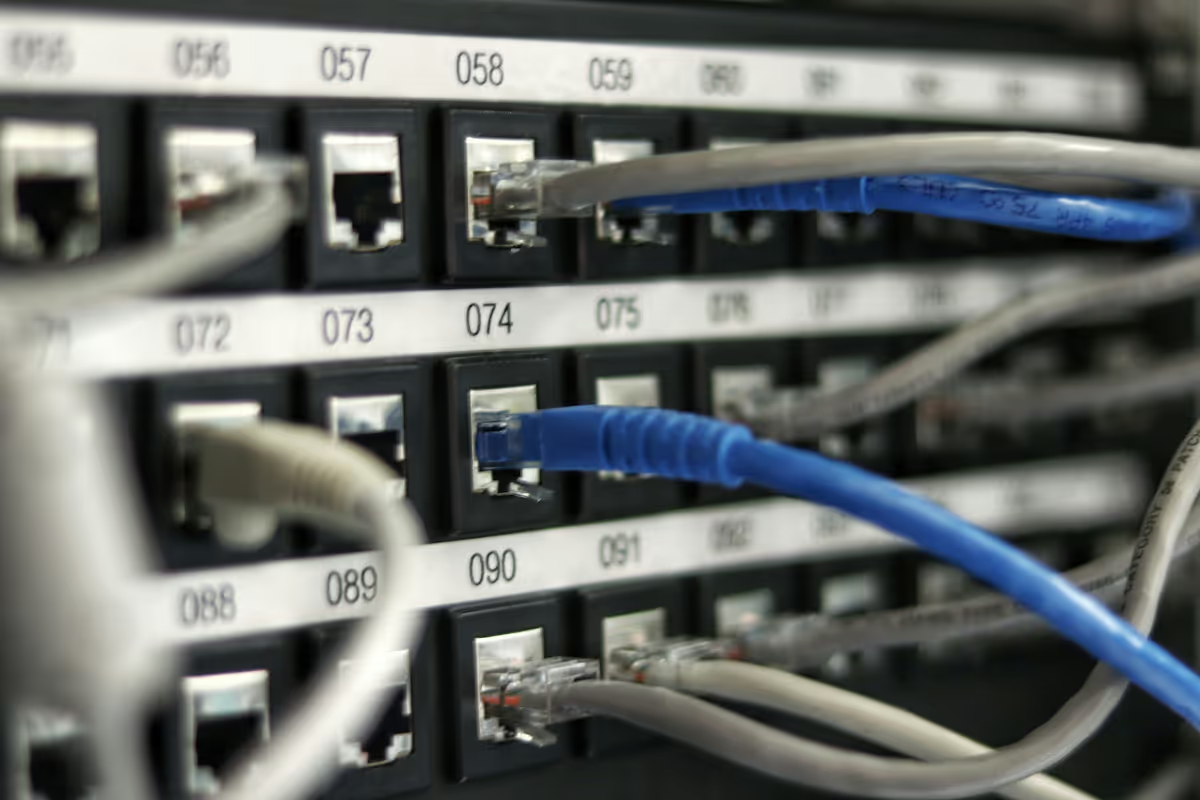
When connecting your business's networks, the type of interface you choose is a critical decision. Two terms that frequently come up in these discussions are Fast Ethernet and Serial Interfaces.
Though both are used for data transmission, they have fundamental differences in speed, application, and underlying technology. Understanding these distinctions is key to building a reliable and cost-effective network.
What is Fast Ethernet?
Fast Ethernet is a version of the Ethernet networking standard that supports a data transfer rate of 100 megabits per second (Mbps). It represented a major speed upgrade from the original 10 Mbps Ethernet and became a foundational technology for modern local area networks (LANs). It's primarily used to connect devices like computers, servers, and switches within a single physical location.
- Official Standard: It is defined by the IEEE 802.3u specification.
- Speed: Its key feature is the 100 Mbps transmission speed, which is ten times faster than standard Ethernet.
- Cabling: It most commonly operates over twisted-pair copper cables (like Cat5 or Cat5e) but also supports fiber optic connections for greater distances.
What is Serial Interface?
A serial interface is a communication port that transmits data one bit at a time in a sequential stream. This single-file method is distinct from parallel communication, where multiple bits are sent at once. While this makes serial transmission inherently slower, it is also simpler and more reliable over long distances, making it a staple for specific networking applications.
It's a foundational technology that remains relevant for tasks where high speed is less critical than stability and reach.
- Transmission Method: Data is sent sequentially, one bit after another, over a single channel.
- Speed: Speeds are typically much lower than Ethernet, often measured in kilobits per second (Kbps) or low megabits per second (Mbps), depending on the specific standard (like T1, E1, or RS-232).
- Application: Primarily used for Wide Area Network (WAN) connections and for out-of-band management access to network devices like routers and switches via a console port.
Fast Ethernet vs Serial Interface: Key Differences
While both technologies move data, the way they operate and the purposes they serve are fundamentally different. Here’s a direct comparison of their most important characteristics.
1. Speed and Throughput
The most significant difference is speed. Fast Ethernet operates at a standardized 100 Mbps, providing ample bandwidth for local network traffic.
Serial interfaces, on the other hand, have much lower data rates, typically ranging from a few kilobits per second (Kbps) to low megabits per second (e.g., 1.544 Mbps for a T1 line). Their design prioritizes reliability over raw speed.
2. Data Framing and Overhead
Fast Ethernet sends data in packets, or frames. Each frame contains not just the data itself but also source and destination MAC addresses and error-checking information, making it efficient for complex LAN environments.
Serial transmission is simpler; it sends data as a continuous stream of bits. This method has less overhead but lacks the built-in addressing and management features of Ethernet.
3. Physical Reach and Cabling
Fast Ethernet is designed for local connections, typically limited to a distance of 100 meters (328 feet) over standard copper cabling like Cat5e.
Serial interfaces are built for long-haul communication. They are the backbone of many Wide Area Networks (WANs), connecting facilities that can be miles apart using specialized circuits provided by a telecom carrier.
Use Cases for Fast Ethernet
Because of its speed and reliability for local connections, Fast Ethernet is the standard for most internal business networks. It excels at handling the data demands of a modern office environment.
Its most common applications include:
- Office Workstation Connectivity: It's the primary technology for connecting employee computers, printers, and other devices to the local network, supporting everyday tasks like file sharing and internet access.
- VoIP and IP Security: Fast Ethernet provides the stable bandwidth needed for Voice over IP (VoIP) phone systems and IP security cameras, ensuring clear, real-time communication and video feeds.
- Inter-Switch Links: Within a building or campus, it is often used to connect network switches, aggregating traffic from multiple devices before it is sent to the core network.
- Server Connections: It reliably connects servers to the LAN, allowing users to access internal applications and shared data resources quickly.
Use Cases for Serial Interface
While slower, serial interfaces are indispensable for applications where stability over long distances is the priority. They are the go-to choice for specific, critical networking tasks.
- WAN Links: Used to connect business locations in different cities or states via dedicated leased lines (like T1 or E1 circuits). This provides a stable, point-to-point connection managed by a telecom provider.
- Device Management: Serial ports provide direct, out-of-band access to network hardware like routers and firewalls. If the primary network fails, engineers can still connect a laptop directly to a device's console port to troubleshoot and restore service.
- Legacy System Integration: They are often required to interface with older or specialized industrial equipment that does not support Ethernet, allowing for the continued operation of critical infrastructure.
Choosing the Right Option for Your Business
Making the right choice comes down to understanding your specific business need. The decision isn't about which technology is "better" overall, but which is the correct tool for the job at hand.
1. For Local Area Networks (LANs)
If your goal is to connect computers, servers, and other devices within a single office or campus, Fast Ethernet is the standard choice. Its 100 Mbps speed is built to handle modern internal traffic, from data transfers to VoIP calls, ensuring a productive environment.
2. For Wide Area Networks (WANs)
When you need to link geographically separate business sites, serial interfaces are the appropriate solution. Delivered over dedicated circuits like a T1 line, they provide the stability and reach required for reliable long-distance communication between locations.
3. For Network Management and Legacy Systems
Even in a network built on Ethernet, serial interfaces are vital. They provide out-of-band access to a device’s console port, which is a crucial backup for troubleshooting when the main network is down. They are also necessary for connecting to older industrial equipment that lacks an Ethernet port.
Final Thoughts on Fast Ethernet and Serial Interface
Ultimately, Fast Ethernet and serial interfaces are not competing technologies but complementary tools for different networking jobs.
Fast Ethernet is the standard for high-speed local area networks (LANs) within an office, while serial interfaces provide reliable connectivity for wide area networks (WANs) and direct device management.
A well-architected enterprise network uses both in harmony. Understanding their distinct functions is the key to building a resilient and cost-effective infrastructure that supports your business goals.
Need Help Managing Your Network? Lightyear Can Help
Whether you're managing Fast Ethernet connections or procuring serial-based WAN circuits, the administrative work can be complex. By automating network service procurement, inventory management, and bill consolidation, Lightyear takes the pain out of managing your telecom infrastructure.
The hundreds of enterprises who trust Lightyear achieve 70%+ time savings and 20%+ cost savings on their network services.
Schedule a demo or get started with our questionare today.
Frequently Asked Questions about Fast Ethernet vs Serial Interface
Is a serial interface connection more expensive than Fast Ethernet?
Generally, yes. Serial circuits like T1 lines involve monthly recurring fees from a telecom carrier. Fast Ethernet is primarily a one-time hardware cost for equipment you own, making it significantly more cost-effective for local networks inside a single building.
With Gigabit Ethernet available, is Fast Ethernet still relevant?
Yes, it is. While faster speeds are common for servers and workstations, Fast Ethernet provides ample bandwidth for many devices like VoIP phones, printers, and sensors. It remains a practical and cost-effective choice where high performance is not the primary requirement.
How do Fast Ethernet and serial interfaces connect to each other?
A router acts as the gateway between them. Devices on your local network communicate using Fast Ethernet to the router. The router then translates and sends this data over the long-distance serial WAN link to a router at another site.
Can I use Ethernet for my WAN connection instead of a serial interface?
Yes, this is a popular modern option known as Metro Ethernet or Carrier Ethernet. It uses Ethernet standards for WAN connectivity, often providing higher speeds and easier management than traditional serial circuits. Availability and cost will vary by location.
Let us show you the product and discuss specifics on how it might be helpful.
Schedule a Demo




Revolutionize Your Telecom Experience
Learn how you can get one step closer to optimal business efficiency for all your telecom services.