Fault Management vs Configuration Management Explained
Fault Management fixes network problems while Configuration Management maintains your setup. Learn the key differences and why you need both.


For anyone managing a company's telecom and network infrastructure, understanding the difference between Fault Management and Configuration Management is essential.
While both are critical for maintaining a healthy network, they address very different aspects of network operations.
Fault Management is reactive; it focuses on detecting, isolating, and resolving network problems as they happen.
Configuration Management, on the other hand, is proactive. It involves tracking and controlling the settings of every device and system within your network to maintain consistency and prevent issues before they start.
H2: What is Fault Management?
Think of Fault Management as your network's emergency response team. Its primary job is to spring into action the moment something goes wrong, working to get things back online as quickly as possible. It's a reactive process, but a vital one for maintaining network uptime and performance.
This process typically follows a structured, five-step lifecycle:
- Fault Detection: The system first identifies that a problem exists. This could be anything from a complete outage to a minor performance dip, often flagged by network monitoring tools.
- Fault Isolation: Once a fault is detected, the next step is to pinpoint its exact location and cause. Is it a faulty router, a severed cable, or a software bug? This step is crucial for an effective fix.
- Fault Correlation: In complex networks, one issue can trigger a cascade of alerts. This step involves analyzing and grouping related alarms to identify the root cause, rather than chasing down every individual symptom.
- Fault Resolution: This is the hands-on part where technicians or automated systems work to correct the problem. It might involve rebooting a device, replacing hardware, or patching software.
- Fault Tracking and Reporting: Finally, the entire incident is documented from detection to resolution. This creates a historical record that helps teams identify recurring issues and improve future responses.
H2: Understanding Configuration Management
If Fault Management is the emergency team, then Configuration Management is the architect and city planner for your network. It’s a proactive discipline focused on establishing and maintaining consistency across your entire IT infrastructure. The goal is to create a detailed and accurate record of all network components and their settings, establishing a "golden configuration" that serves as the single source of truth.
This process ensures that every device and system is set up correctly and that any changes are carefully managed. Its core activities include:
- Configuration Identification: Cataloging every configurable item (CI) in your network, from routers and switches to software applications and their versions.
- Configuration Control: Managing all changes to the established baseline. Any modification must be formally requested, evaluated for impact, and approved to prevent unauthorized or harmful adjustments.
- Configuration Status Accounting: Continuously tracking and reporting on the state of all CIs. This provides a real-time record of your network's components and their current settings.
- Configuration Auditing: Regularly verifying that the live network configuration matches the documented baseline, ensuring compliance and preventing configuration drift over time.
H2: Fault Management vs Configuration Management: Key Differences
While both are essential for network health, they operate on different principles and timelines. Let's break down the main distinctions.
1. Proactive vs. Reactive Approach
The most significant difference lies in their timing. Fault Management is fundamentally reactive. It activates only after a network issue has been detected, focusing on a swift resolution.
In contrast, Configuration Management is proactive. It works continuously to maintain a desired state, preventing the inconsistencies that could lead to faults in the first place.
2. Core Objective
Each discipline also has a different primary goal. The objective of Fault Management is to restore service as quickly as possible, minimizing downtime and operational impact.
Configuration Management’s objective is to establish and preserve the integrity of the system. It creates a stable, documented, and consistent network environment that serves as a single source of truth.
3. Scope and Focus
Their focus areas are distinct. Fault Management is concerned with events and incidents—the specific problems that disrupt service, like an outage or performance degradation.
Configuration Management, however, is concerned with the assets themselves. It focuses on cataloging and controlling the state of every piece of hardware and software in the network.
4. Trigger for Action
Action in Fault Management is triggered by an alarm or an alert from a monitoring system, signaling that something is broken.
For Configuration Management, the trigger is typically a change request. Any planned modification to the network, like an equipment upgrade or new software installation, initiates its control processes.
H2: Benefits of Fault Management for Enterprises
For any enterprise, a robust Fault Management system delivers tangible business advantages. Its most immediate benefit is minimizing network downtime.
By rapidly detecting and resolving issues, it keeps critical business applications and communication channels online, directly protecting revenue and employee productivity.
Beyond preventing complete outages, this process also maintains consistent network performance. It addresses smaller issues that could otherwise slow down operations, ensuring a reliable and positive experience for both employees and customers.
Furthermore, the detailed tracking and reporting inherent in Fault Management creates a valuable knowledge base. Analyzing this data helps IT teams spot trends and recurring problems, allowing them to implement long-term fixes and prevent similar incidents in the future.
H2: Advantages of Configuration Management in IT and Telecom
On the proactive side, implementing strong Configuration Management brings a different set of advantages to IT and telecom operations. Its primary benefit is a significant reduction in operational risk. By maintaining a standardized and documented network environment, it prevents many of the configuration errors that lead to service disruptions in the first place.
This controlled approach also strengthens security, as any unauthorized changes or devices are more easily identified against the established baseline. Furthermore, it simplifies compliance audits by providing a clear, verifiable record of your entire infrastructure.
When problems do arise, having an accurate configuration database helps teams resolve issues faster because they have a reliable map to work from. This improves resource planning and can lower costs by preventing unnecessary spending on hardware and software.
H2: Common Tools Used in Fault and Configuration Management
To execute these distinct functions, IT and telecom teams rely on different categories of specialized software. While some platforms offer features for both, most tools are designed with either a reactive or proactive focus.
Fault Management Tools
These tools are built for real-time visibility and rapid response when issues occur.
- Network Monitoring Platforms: Tools like SolarWinds, Zabbix, or Nagios actively watch network performance, sending alerts when metrics like latency or packet loss cross a certain threshold.
- Log Management Systems: Platforms such as Splunk or the ELK Stack centralize and analyze log files from all network devices, helping teams find the root cause of a problem.
- Ticketing and Incident Management Systems: Software like ServiceNow or Jira helps organize, assign, and track the entire fault resolution process from detection to closure.
Configuration Management Tools
In contrast, these tools focus on maintaining consistency and automating policy enforcement.
- Automation and Orchestration Platforms: Tools like Ansible, Puppet, and Chef are used to define and enforce standard configurations across hundreds or thousands of devices automatically.
- Configuration Management Databases (CMDBs): A CMDB acts as the central system of record, tracking every configuration item (CI) and its relationships within the IT environment.
- Network Configuration and Change Management (NCCM) Software: These specialized tools automate backups of device configurations, track changes, and run audits to ensure compliance.
H2: Making the Right Choice for Your Business
Making the Right Choice for Your Business
When considering Fault Management versus Configuration Management, the decision isn't about choosing one over the other. A comprehensive network strategy requires both.
These two disciplines are complementary, not competitive. They work together to create a resilient and stable IT environment.
Fault Management gives you the reactive power to fix problems and minimize downtime when they inevitably occur. Configuration Management provides the proactive control to prevent many of those issues from happening in the first place by maintaining a standardized, documented infrastructure.
Ultimately, integrating both practices is fundamental for any enterprise. This combined approach ensures your network is not only quick to repair but also inherently more reliable and secure, directly supporting your business operations.
Need Help Managing Your Network? Lightyear Can Help
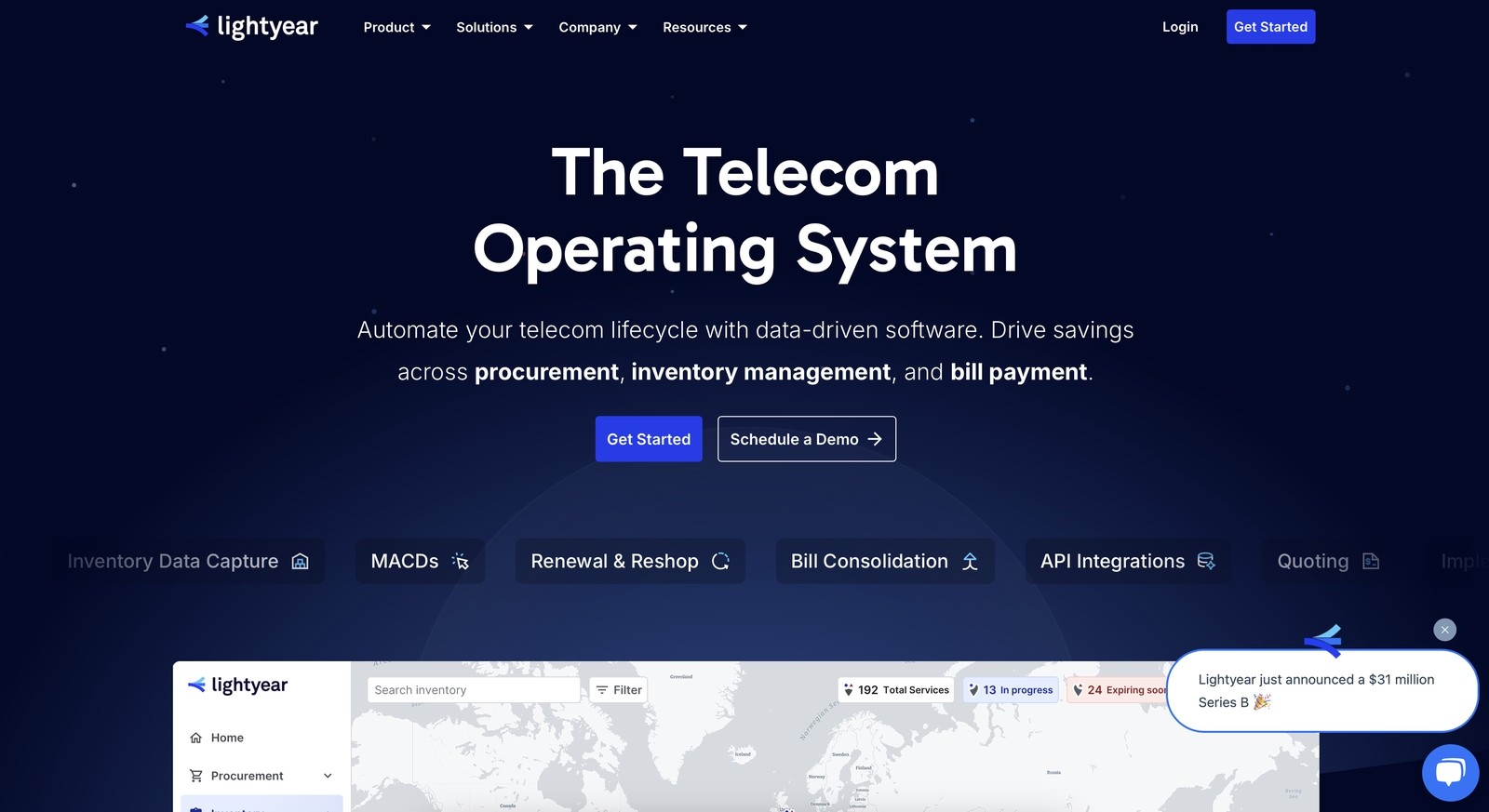
While strong Configuration Management is key to preventing issues, managing it all manually is a huge task. By automating network service procurement and inventory management, Lightyear gives you a clear, accurate system of record for your telecom infrastructure.
The hundreds of enterprises who trust Lightyear achieve 70%+ time savings and 20%+ cost savings on their network services. Schedule a demo or get started with our questionnaire today.
Frequently Asked Questions about Fault Management vs Configuration Management
Can a single tool handle both Fault and Configuration Management?
While some large platforms offer modules for both, they are often handled by different, specialized tools. Fault management systems excel at real-time monitoring and alerts, while configuration tools focus on automation, policy enforcement, and maintaining a system baseline.
Which is more critical for a small business with limited resources?
A small business might prioritize Fault Management first to maintain uptime and fix immediate problems. As the network grows, implementing Configuration Management becomes vital to prevent issues proactively and reduce the manual workload on the team.
Can good Configuration Management eliminate the need for Fault Management?
No, it cannot. While strong Configuration Management drastically reduces faults caused by human error or inconsistencies, it can't prevent all problems. Hardware failures, software bugs, and external provider outages will always require a reactive Fault Management process.
How do these two processes work together in a real-world scenario?
If a router fails (the fault), Fault Management detects it and alerts your team. They can then consult the Configuration Management database to see the device's correct settings, which speeds up the repair and helps restore it to its proper, documented state.
Let us show you the product and discuss specifics on how it might be helpful.
Schedule a Demo





Revolutionize Your Telecom Experience
Learn how you can get one step closer to optimal business efficiency for all your telecom services.