Comparing Fiber Channel and Fiber Channel Over Ethernet
Fibre Channel vs. FCoE: Which is right for your network? Learn the key differences in performance, cost, and infrastructure for your data center.

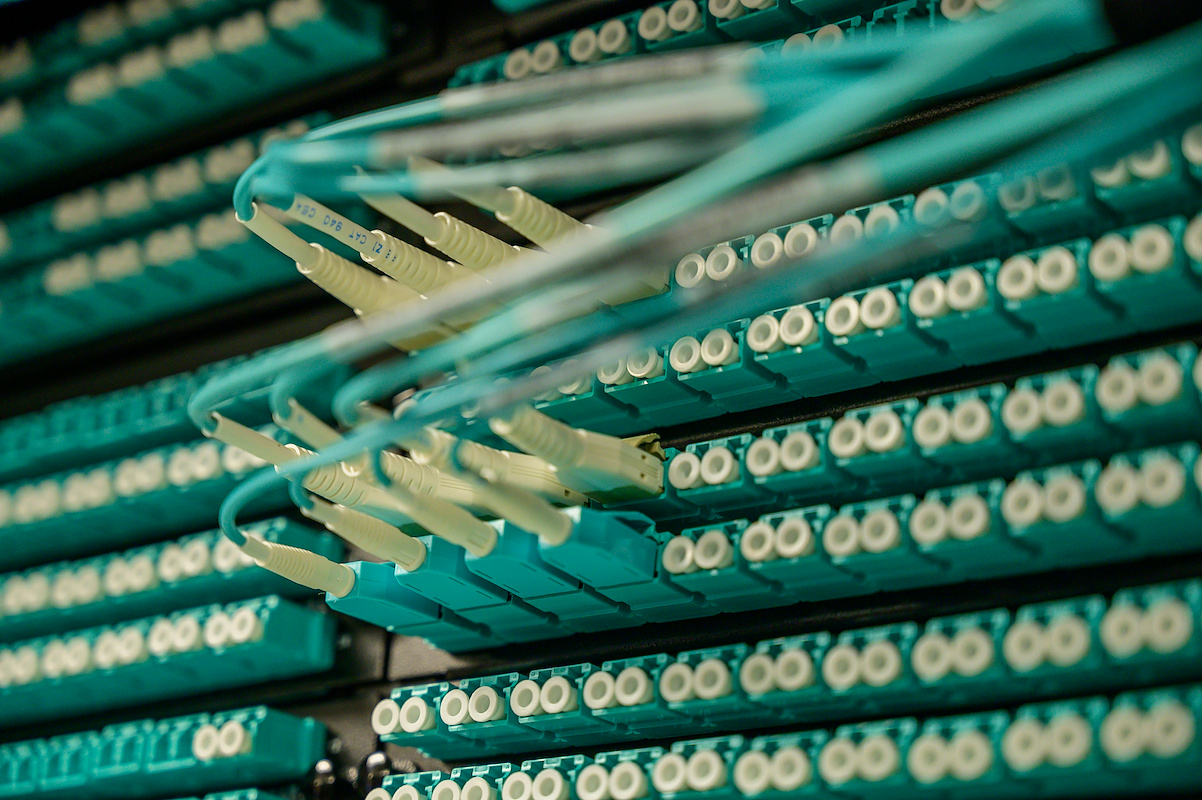
When it comes to connecting servers to storage systems, performance and reliability are critical. For decades, Fiber Channel (FC) has been the gold standard for building dedicated storage area networks (SANs) that deliver just that.
An alternative approach is Fiber Channel over Ethernet (FCoE), which was developed to carry storage traffic over the same Ethernet infrastructure used for regular network data. The main idea behind FCoE is to consolidate networks, potentially reducing complexity and hardware costs.
So, how do you choose between a dedicated FC network and a converged FCoE setup? This guide breaks down the key differences in performance, infrastructure, and cost to help you make the right call for your business.
What is Fiber Channel?
Fiber Channel (FC) is a high-speed data transfer protocol designed specifically for connecting computer data storage to servers. You can think of it as a private highway built just for your storage traffic, completely separate from your everyday office network. This separation is what makes it so robust for demanding applications, forming the backbone of most traditional Storage Area Networks (SANs).
- High Speed and Low Latency: FC is engineered for performance, offering speeds from 1 Gbit/s up to 256 Gbit/s. This ensures rapid access to stored data with minimal delay, which is crucial for databases and virtualization.
- Lossless Data Delivery: The protocol has built-in mechanisms to guarantee that data packets are delivered in order and without any loss. This reliability is a key reason it has been trusted in enterprise data centers for years.
- Dedicated Infrastructure: An FC network requires its own set of components. This includes special network cards called Host Bus Adapters (HBAs) in servers, dedicated Fiber Channel switches, and specific fiber optic or copper cabling.
- Distinct Protocol: It operates using its own set of rules, known as the Fiber Channel Protocol (FCP), which is different from the TCP/IP protocol that runs on standard Ethernet networks.
What is Fiber Channel Over Ethernet?
Fiber Channel over Ethernet (FCoE) takes a different approach by encapsulating Fiber Channel frames within Ethernet frames. This allows storage traffic to run over the same physical Ethernet network as your standard data traffic, aiming to unify your data center infrastructure. It's not just standard Ethernet, though; it requires specific enhancements to work reliably.
- Network Convergence: The primary goal of FCoE is to merge storage and IP traffic onto a single network. This can reduce the number of cables, adapters, and switches needed, simplifying the physical infrastructure.
- Encapsulation Protocol: FCoE works by taking FC data packets and wrapping them inside Ethernet packets for transport. Once they reach their destination, they are unwrapped back into their original FC format.
- Specialized Hardware: To make this work, servers use Converged Network Adapters (CNAs) instead of separate Ethernet NICs and FC HBAs. The network also requires FCoE-capable switches that can understand and route this converged traffic.
- Lossless Ethernet: Because storage traffic cannot tolerate dropped packets, FCoE relies on a set of Ethernet extensions called Data Center Bridging (DCB). DCB provides a lossless transport layer, guaranteeing the same delivery reliability as a dedicated Fiber Channel network.
Key Differences Between Fiber Channel and Fiber Channel Over Ethernet
While both technologies move storage data, they do so using fundamentally different approaches to network design, hardware, and management.
1. Infrastructure and Cabling
A key distinction lies in the physical setup. A pure Fiber Channel environment requires a completely separate network dedicated solely to storage traffic.
This means servers are equipped with specialized Host Bus Adapters (HBAs), and data flows through dedicated FC switches and cabling. FCoE is designed to eliminate this separation by using Converged Network Adapters (CNAs) in servers, which handle both storage and standard network traffic over a single, shared Ethernet infrastructure.
2. Network Management and Expertise
The separation in FC extends to administration. Managing an FC SAN typically requires a distinct skill set and separate tools from those used for your Ethernet LAN, meaning your team oversees two different network environments.
Because FCoE runs on Ethernet, it allows for unified management. Network administrators can apply their existing Ethernet knowledge and tools to manage the converged fabric, potentially simplifying operational workflows.
3. Protocol and Traffic Isolation
At its core, Fiber Channel is a native protocol built for storage, operating on its own hardware. This physical isolation is its inherent method for guaranteeing performance and security.
FCoE is not a new protocol but rather a transport method. It encapsulates FC frames within larger Ethernet frames to travel across the network. To prevent data loss, FCoE relies on a set of Ethernet extensions known as Data Center Bridging (DCB), which creates a logically separate, lossless "lane" for storage traffic on the shared physical medium.
Performance and Speed Considerations
When it comes to raw speed, both Fiber Channel and FCoE operate at high gigabit speeds. The real difference lies in performance consistency. Because a Fiber Channel network is completely dedicated to storage, its performance is highly predictable and stable. There is no other traffic competing for bandwidth, which guarantees low latency for storage I/O.
FCoE, on the other hand, runs on a shared network. While it can match FC's speed, its performance depends heavily on the proper configuration of the underlying Ethernet fabric and Data Center Bridging (DCB). Any misconfiguration or network congestion from non-storage traffic can potentially impact storage performance.
In essence, FC provides guaranteed performance through physical isolation, while FCoE offers comparable performance that is contingent on logical isolation and careful network management.
Cost Implications for Enterprises
From a financial perspective, the two technologies present different cost structures. A traditional Fiber Channel setup often involves higher upfront capital expenses due to the need for a completely separate infrastructure, including dedicated Host Bus Adapters (HBAs) and switches.
FCoE, in contrast, was designed with cost reduction in mind. By consolidating storage and data traffic onto one network, it aims to lower expenses by reducing the number of adapters, cables, and switch ports required.
However, the total cost of ownership isn't always clear-cut. FCoE-capable hardware, like Converged Network Adapters (CNAs) and specialized switches, can be more expensive than their individual counterparts. The real savings depend on the scale of your deployment.
Operationally, FCoE can lower costs by allowing a single team to manage the unified network, whereas FC often requires separate, specialized administrative expertise.
Implementation and Compatibility
When it comes to rolling out a new storage network, how it fits into your current data center is a critical piece of the puzzle. The implementation path and compatibility requirements for FC and FCoE are quite different.
- Fiber Channel: As a mature and widely adopted technology, implementing an FC SAN is a well-understood process. Because it's a separate network, you don't have to worry about it conflicting with your existing LAN. Interoperability between different vendors' FC hardware is generally strong, though you are building a parallel infrastructure from the ground up.
- Fiber Channel over Ethernet: FCoE requires a more integrated approach. Successful implementation hinges on end-to-end compatibility. Your servers, switches, and storage systems must all fully support FCoE and its underlying Data Center Bridging (DCB) standards. This need for a unified, compatible hardware chain can make deployment more complex than a standalone FC network.
- Market Adoption: The FC ecosystem is extensive and stable, with a large base of products and skilled professionals. FCoE did not achieve the widespread adoption its creators hoped for, and is often seen as a more niche or transitional technology today. This can be a factor when considering long-term vendor support and product roadmaps.
Making the Right Choice for Your Business
Choosing between Fiber Channel and FCoE comes down to your organization's priorities: proven stability or infrastructure consolidation.
Fiber Channel remains the standard for environments where performance and reliability are non-negotiable. If your business runs demanding applications that require predictable, low-latency access to storage, the dedicated nature of an FC SAN is the most dependable path.
FCoE, on the other hand, appeals to organizations aiming to simplify their physical infrastructure and unify network management. It offers a way to reduce cabling and potentially lower operational costs, but success depends on careful planning and compatible hardware.
Ultimately, your decision rests on balancing the guaranteed performance of a separate FC network against the potential efficiencies of a converged FCoE setup. Consider your team's expertise, budget, and long-term infrastructure strategy to determine the best fit.
Need Help Managing Your Network? Lightyear Can Help
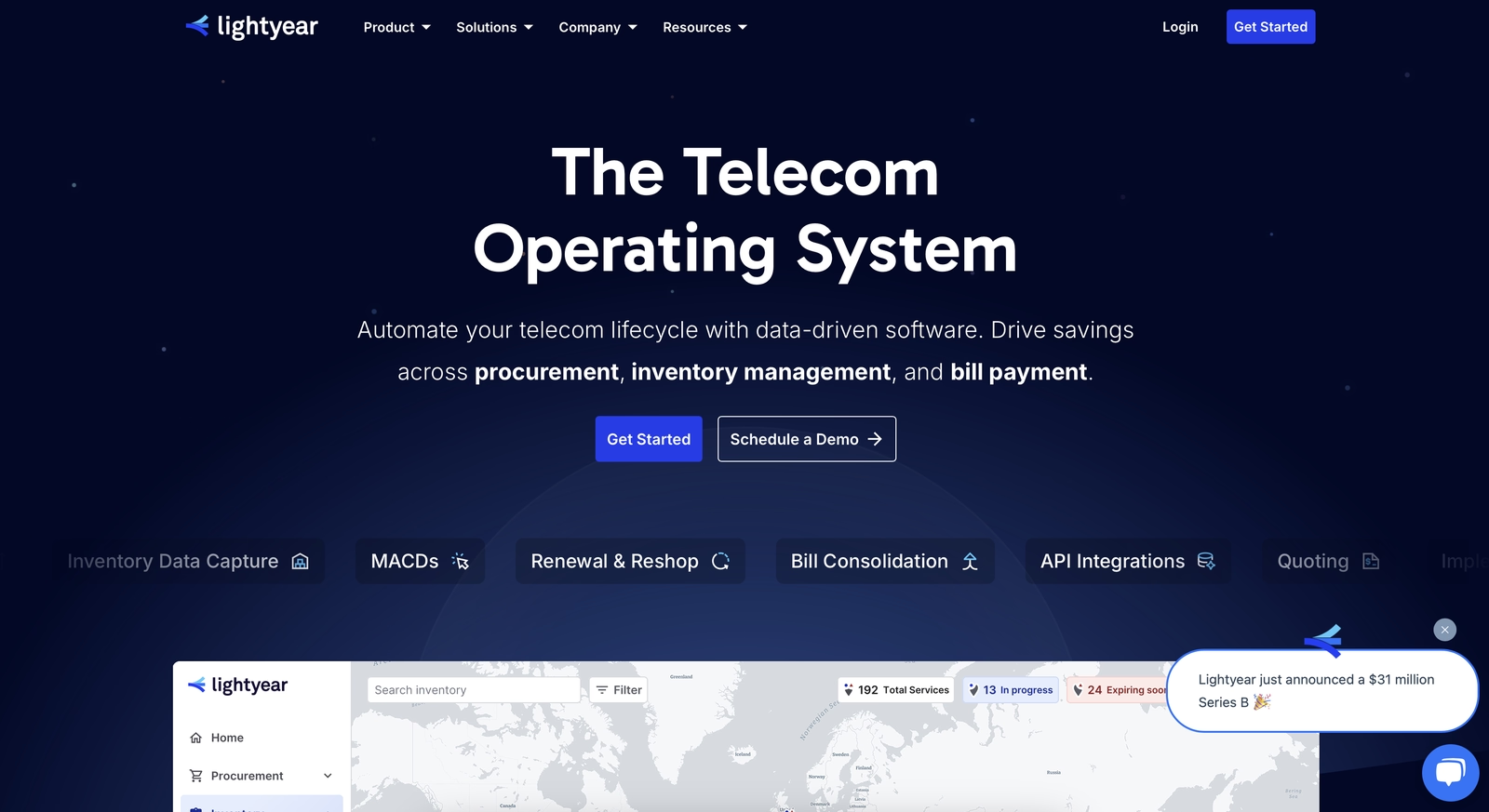
Deciding between Fiber Channel and FCoE is just one part of managing your enterprise network. Lightyear helps simplify the entire telecom lifecycle, from procurement and implementation to ongoing management.
By automating network service procurement, inventory management, and bill consolidation, Lightyear removes the complexity of infrastructure management. Enterprises using our platform see over 70% time savings and 20% cost savings on their network services.
Schedule a demo or get started with our questionnaire today.
Frequently Asked Questions about Fiber Channel Over Ethernet vs Fiber Channel
Is FCoE a dead technology?
While not as widely adopted as initially hoped, FCoE isn't entirely gone. It's considered a niche solution, often used in specific converged infrastructure stacks. However, pure Fiber Channel remains far more common in modern enterprise data centers for dedicated storage networks.
Can you connect an FCoE network to an existing Fiber Channel SAN?
Yes, this is a common use case. You can connect them using an FCoE-capable switch that has both Ethernet ports for the FCoE side and native Fiber Channel ports for the existing SAN. This allows for a gradual migration or integration between the two environments.
What specific Ethernet features does FCoE require?
FCoE depends on Data Center Bridging (DCB) standards. These provide a lossless fabric over Ethernet using features like Priority-based Flow Control (PFC) to prevent packet loss and Enhanced Transmission Selection (ETS) to guarantee bandwidth for storage traffic on the shared network.
Let us show you the product and discuss specifics on how it might be helpful.
Schedule a Demo





Revolutionize Your Telecom Experience
Learn how you can get one step closer to optimal business efficiency for all your telecom services.