Comparing Fiber Channel Over Ethernet and iSCSI
FCoE or iSCSI? Our guide compares cost, performance, and infrastructure, helping you understand the key differences and choose the right protocol.

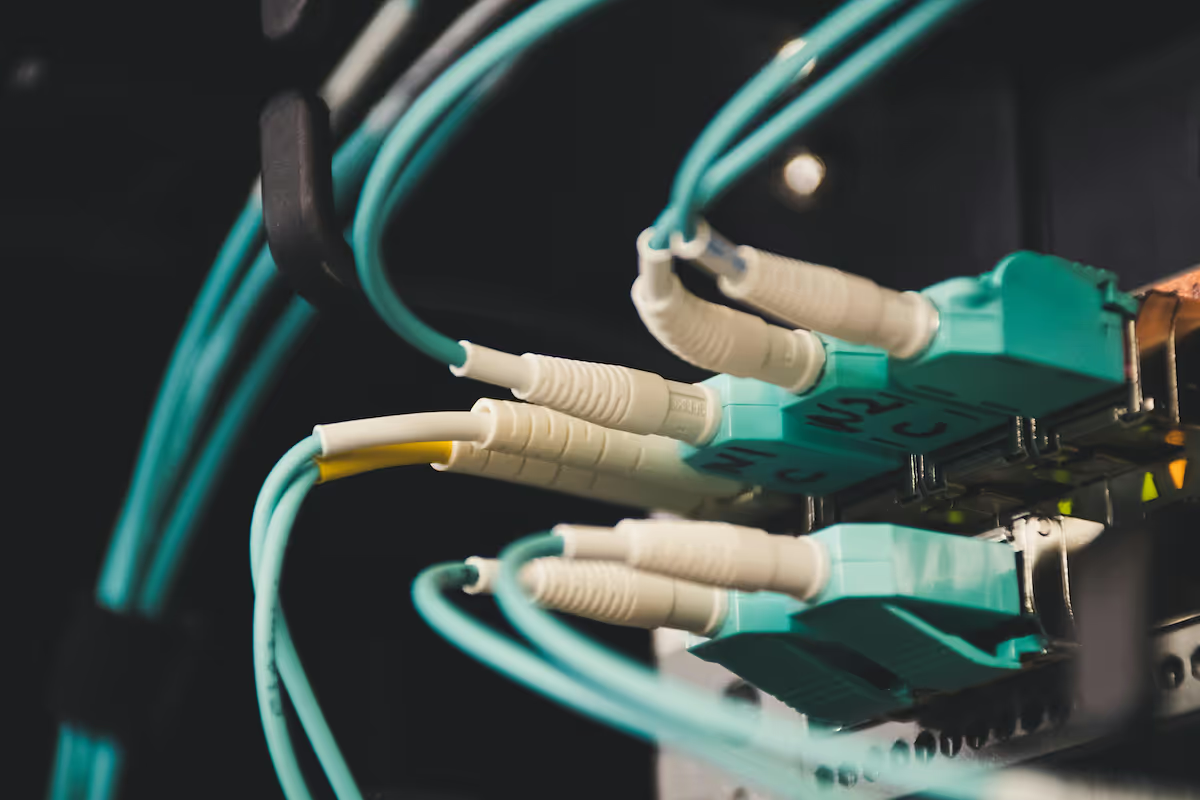
When building out your company's data storage infrastructure, you will find several ways to connect servers to storage arrays. Two prominent options for this are Fibre Channel over Ethernet (FCoE) and Internet Small Computer System Interface (iSCSI).
Both protocols are designed to transport block-level storage data over an Ethernet network, but they operate quite differently. This article will compare their architecture, performance, cost, and management requirements to help you determine which storage networking technology is the right fit for your organization.
What is Fiber Channel Over Ethernet (FCoE)?
Fibre Channel over Ethernet (FCoE) is a storage protocol that transports Fibre Channel traffic directly over an Ethernet network. Its primary goal is to consolidate storage and data networking onto a single infrastructure, eliminating the need for a separate, dedicated Fibre Channel SAN. This is achieved by encapsulating FC frames within Ethernet frames.
- Unified Fabric: FCoE allows organizations to combine their LAN and SAN traffic onto a single, converged network. This can reduce the number of required network adapters, switches, and cables, leading to lower capital and operational costs.
- Lossless Ethernet Requirement: Because storage traffic cannot tolerate dropped packets, FCoE requires a "lossless" Ethernet environment. This is made possible by a group of standards called Data Center Bridging (DCB), which prevents frame loss due to network congestion.
- Specialized Hardware: Implementing FCoE requires specific hardware components. Servers use Converged Network Adapters (CNAs) instead of separate network cards and Host Bus Adapters (HBAs). The network switches must also be FCoE-capable to properly handle the traffic.
What is iSCSI?
Internet Small Computer System Interface (iSCSI) is a storage networking standard that sends block-level storage data over TCP/IP networks. It works by encapsulating SCSI commands into IP packets, allowing servers to communicate with storage arrays using standard Ethernet infrastructure. This makes remote storage appear to the server's operating system as a locally attached disk, simplifying integration and management.
- Standard Ethernet Hardware: iSCSI runs on the same Ethernet switches and Network Interface Cards (NICs) used for regular data traffic. This removes the need for specialized hardware like the Converged Network Adapters (CNAs) and FCoE-capable switches required for a Fibre Channel environment.
- Built on TCP/IP: Because it uses the ubiquitous TCP/IP protocol, most IT teams can implement and manage an iSCSI network without needing specialized training. It leverages existing knowledge of IP networking for both setup and troubleshooting.
- Cost-Effective: By using commodity Ethernet hardware, iSCSI typically offers a lower entry cost compared to FCoE or traditional Fibre Channel, making it an attractive option for organizations with tighter budgets.
Key Differences Between FCoE and iSCSI
While both protocols achieve a similar goal, they differ fundamentally in their architecture, performance, cost, and management. Understanding these distinctions is key to choosing the right path for your infrastructure.
1. Protocol and Architecture
FCoE operates at a lower level of the network stack by encapsulating entire Fibre Channel frames into Ethernet. This means it doesn't use the IP layer for transport, instead relying on a dedicated, non-routable connection over a lossless Ethernet fabric.
Conversely, iSCSI encapsulates SCSI commands within the standard TCP/IP protocol suite. This allows it to be routed over any standard IP network, including local LANs and wide area networks (WANs), making it more flexible for remote storage access.
2. Performance and Reliability
Because FCoE requires a lossless network via Data Center Bridging (DCB), it offers highly predictable, low-latency performance similar to traditional Fibre Channel. It guarantees that storage frames are not dropped due to network congestion.
iSCSI performance is also strong but is subject to the processing overhead of the TCP/IP stack. Reliability depends on TCP's ability to retransmit lost packets, which can introduce slight delays not present in a true lossless FCoE environment.
3. Hardware and Cost
The primary cost difference comes down to hardware. FCoE requires specialized Converged Network Adapters (CNAs) and FCoE-capable switches, which carry a higher price tag than standard networking components.
iSCSI runs on the commodity Ethernet NICs and switches that your organization already uses for data traffic. This significantly lowers the initial investment and total cost of ownership, as no special-purpose hardware is needed.
4. Management and Expertise
Managing an FCoE environment requires a blend of expertise. Your team will need to understand both traditional Fibre Channel zoning concepts and advanced Ethernet features like DCB.
iSCSI management leverages the same skills used for everyday IP networking. Most IT professionals can configure and troubleshoot an iSCSI SAN without extensive specialized training, simplifying deployment and ongoing maintenance.
Benefits of Using Fiber Channel Over Ethernet
Opting for FCoE brings several distinct advantages, particularly for organizations looking to modernize their data centers while preserving aspects of their existing storage infrastructure.
- High Performance: FCoE delivers performance nearly identical to a dedicated Fibre Channel network. By avoiding the TCP/IP processing overhead, it provides very low latency and high throughput, which is ideal for demanding storage applications.
- Infrastructure Consolidation: A key benefit is the simplification of your data center hardware. Converging storage and data networks reduces the number of adapters, cables, and switch ports. This directly translates to lower power consumption, reduced cooling needs, and a smaller physical footprint.
- Investment Protection: FCoE allows you to maintain your existing Fibre Channel management tools and expertise. IT teams familiar with FC can apply their skills directly, easing the transition to a converged network without a complete operational overhaul.
Advantages of iSCSI for Enterprises
- iSCSI's reliance on standard Ethernet hardware makes it a very accessible option. This approach not only lowers initial setup costs but also simplifies ongoing management, as IT teams can apply their existing IP networking knowledge without needing specialized training.
- The protocol's use of TCP/IP allows for greater flexibility in network design. iSCSI traffic can be routed over long distances, making it well-suited for connecting to remote storage, implementing disaster recovery plans, and integrating with cloud environments.
- Scaling an iSCSI SAN is straightforward. Expanding capacity or adding new servers follows the same principles as scaling any other part of your IP network, using familiar hardware and configuration methods.
Challenges and Considerations for Both Technologies
Before committing to either technology, it's important to weigh their respective challenges. Both come with unique considerations that can impact your long-term operations, security, and scalability.
- FCoE Adoption and Vendor Support: FCoE has not been as widely adopted as iSCSI. This can limit your choice of compatible hardware vendors and may lead to higher costs or challenges in finding long-term support and skilled personnel.
- iSCSI Security Management: Since iSCSI uses standard IP networks, it is exposed to common network security threats. Protecting your storage data requires diligent security practices, such as isolating storage traffic on its own VLAN and using authentication protocols like CHAP.
- FCoE Configuration Complexity: The Data Center Bridging (DCB) standards required for a lossless FCoE network add a significant layer of configuration complexity. A misconfigured switch can cause widespread issues that are difficult to troubleshoot without deep networking expertise.
- iSCSI Performance Tuning: While iSCSI can perform well, it is sensitive to network congestion and latency. Achieving consistent performance often requires careful network design, such as implementing Quality of Service (QoS) or using dedicated NICs and switches to keep storage traffic separate from other data.
Making the Right Choice for Your Enterprise
Choosing between FCoE and iSCSI depends entirely on your organization's priorities, budget, and existing infrastructure. There is no single correct answer for every situation.
FCoE is generally the better option for enterprises already invested in Fibre Channel technology. It offers excellent performance for demanding applications and lets your team apply their FC management skills to a converged network, protecting your current investment.
In contrast, iSCSI is a highly practical choice if cost and operational simplicity are your main drivers. It runs on standard Ethernet hardware, making it more affordable and easier for teams with IP networking experience to manage.
Ultimately, the right choice comes from evaluating your performance needs, budget, and your team's current expertise. This will show which protocol best supports your long-term IT goals.
Need Help Managing Your Network? Lightyear Can Help
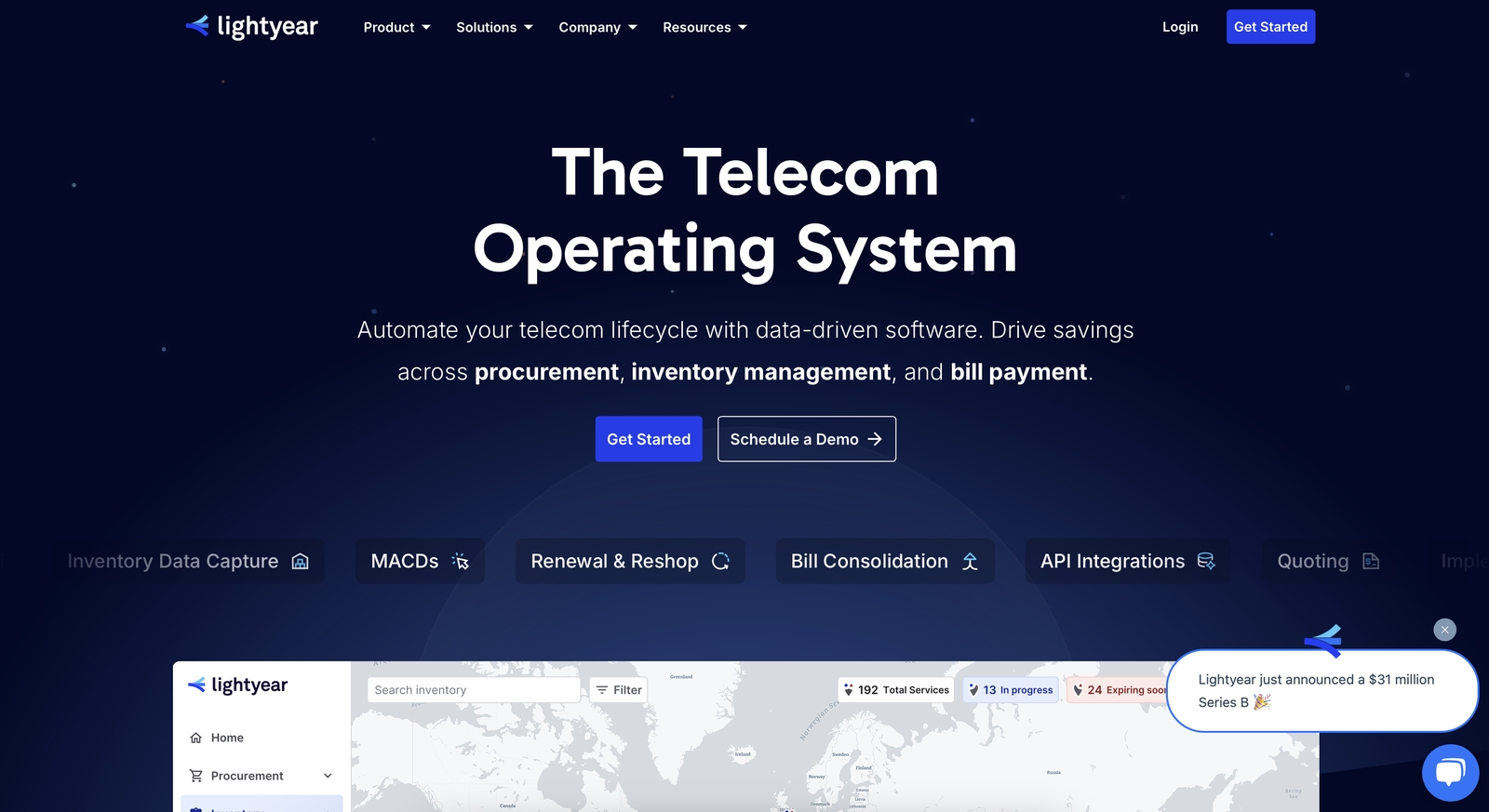
Whether you choose FCoE or iSCSI, managing the underlying network services is a separate challenge. Lightyear automates network service procurement, inventory management, and bill consolidation to simplify your telecom infrastructure.
The hundreds of enterprises who trust Lightyear achieve over 70% in time savings and 20% in cost savings on their network services.
Schedule a demo or get started with our questionnaire today.
Frequently Asked Questions about Fiber Channel Over Ethernet vs iSCSI
Is FCoE considered an obsolete technology?
While iSCSI has seen much wider adoption, FCoE is not obsolete. It remains a viable choice in data centers with significant existing Fibre Channel investments, where its performance and management consistency are valued. However, its vendor ecosystem is smaller.
Which protocol is better for virtualized environments like VMware?
Both protocols are well-supported by major hypervisors. FCoE can offer more consistent, low-latency performance, while iSCSI provides greater flexibility and lower cost. The choice often depends on the specific performance requirements and budget of your virtualization cluster.
Does iSCSI require its own dedicated network?
While not strictly required, it is a strong best practice. Isolating iSCSI traffic on a dedicated network or a separate VLAN prevents contention with regular data traffic, ensuring predictable storage performance and enhancing security for your storage data.
Can you run both FCoE and iSCSI on the same physical network?
Yes, it's technically possible since both use Ethernet. However, it adds significant management complexity. Most organizations choose one protocol for their block storage needs to maintain a simpler, more predictable, and easier-to-troubleshoot network environment.
Let us show you the product and discuss specifics on how it might be helpful.
Schedule a Demo





Revolutionize Your Telecom Experience
Learn how you can get one step closer to optimal business efficiency for all your telecom services.