Fiber Channel vs 10 Gigabit Ethernet Explained
Learn the difference between Fiber Channel and 10 Gigabit Ethernet. We compare speed, reliability, and cost to help you decide what's best for your SAN.

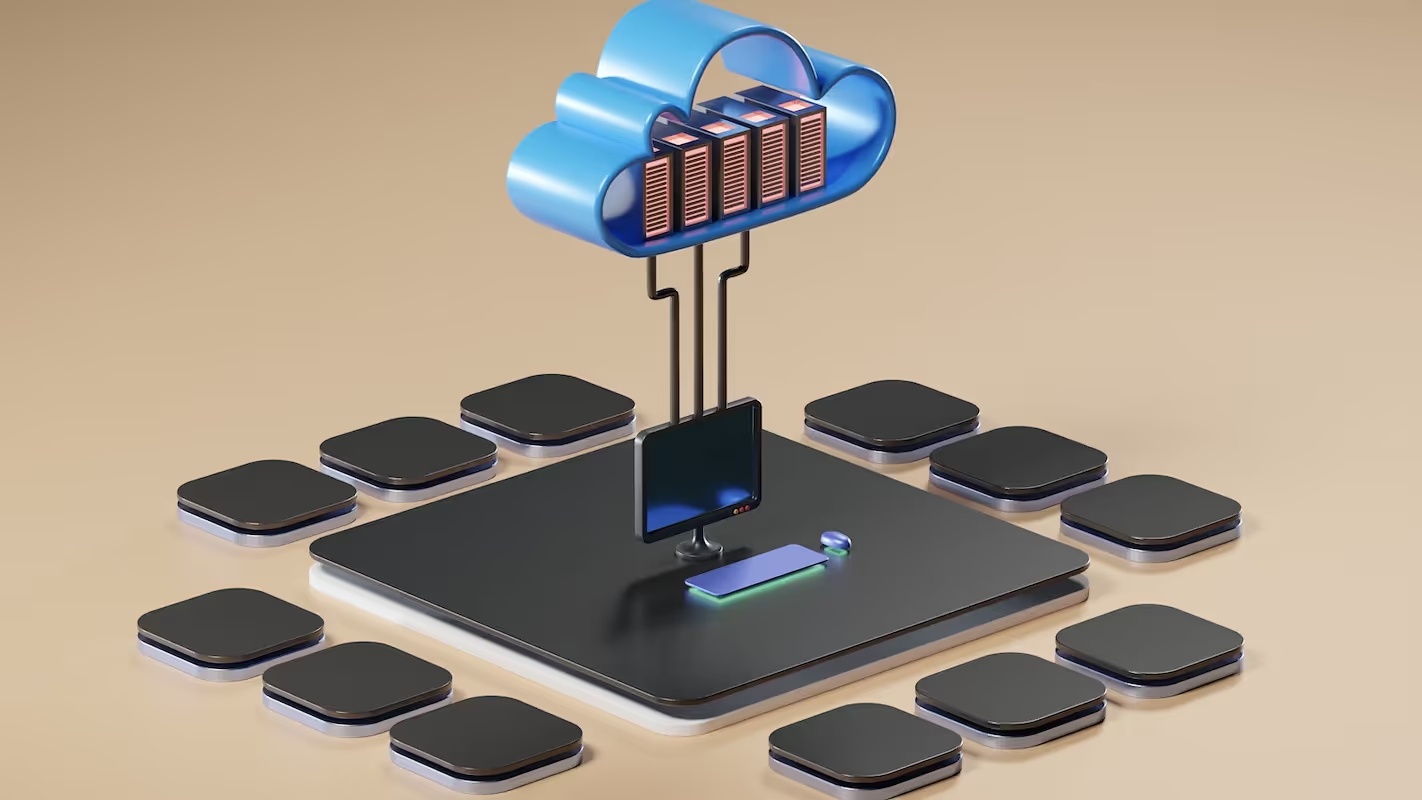
Choosing the right networking technology for your data center or enterprise is a critical decision. Two prominent options you'll often weigh are Fiber Channel (FC) and 10 Gigabit Ethernet (10GbE).
While both provide high-speed data transfer, they were designed with different primary purposes, which affects their performance, cost, and ideal use cases. This article breaks down the key differences to help you determine which solution is the right fit for your infrastructure needs.
What is Fiber Channel?
Fiber Channel is a high-speed data transfer protocol primarily used to connect servers to shared storage devices in a storage area network (SAN). It was specifically engineered to handle storage traffic, making it a highly reliable and performant choice for data-intensive operations.
Because it operates on a dedicated network, it is isolated from standard Ethernet traffic. This separation prevents general network congestion from impacting critical storage tasks. Here are its core characteristics:
- Purpose-Built for Storage: FC was created from the ground up for storage networking. This focus makes it exceptionally stable for tasks like database transactions, virtualization, and backups.
- Lossless Data Delivery: The protocol has built-in flow control to guarantee data packets are delivered without loss and in the correct sequence, which is vital for data integrity.
- Predictable Performance: It offers high throughput and low latency, ensuring consistent performance for demanding enterprise applications.
- Dedicated Hardware: An FC network requires its own infrastructure, including Host Bus Adapters (HBAs) installed in servers and specialized FC switches that form the network fabric.
What is 10 Gigabit Ethernet?
10 Gigabit Ethernet (10GbE) is a high-speed version of the familiar Ethernet networking standard, capable of transmitting data at 10 gigabits per second. Unlike the specialized nature of Fiber Channel, 10GbE is a versatile workhorse built upon the same technology that runs most office and home networks today. It was developed to handle the increasing bandwidth demands of modern applications, servers, and storage systems over a unified network.
Its primary advantage is its ability to consolidate different types of traffic onto a single infrastructure. Here’s a look at its key attributes:
- Unified Traffic: 10GbE can simultaneously manage general data traffic, storage traffic (using protocols like iSCSI or FCoE), and voice communications on one network, simplifying management.
- Standard Infrastructure: It runs on standard Ethernet switches and Network Interface Cards (NICs), which are generally more common and cost-effective than the dedicated hardware required for Fiber Channel.
- Broad Use Cases: Its flexibility makes it suitable for a wide array of needs, including high-speed server connections, data center backbones, and connecting high-performance workstations.
- Clear Upgrade Path: It offers a straightforward migration from slower 1GbE networks and provides a foundation for scaling to even faster speeds like 40GbE or 100GbE in the future.
Key Differences Between Fiber Channel and 10 Gigabit Ethernet
While both technologies move data quickly, they do so in fundamentally different ways. Here are the main distinctions you should know.
Network Architecture and Convergence
Fiber Channel operates on a completely separate network, known as a Storage Area Network (SAN). This infrastructure is dedicated solely to storage traffic and runs parallel to your primary data network (LAN).
In contrast, 10GbE promotes a converged network. It allows you to run storage, data, and other traffic over the same physical Ethernet infrastructure, which can simplify cabling and reduce the number of switches needed.
Protocol and Data Handling
Fiber Channel is a native protocol designed for block-level storage. Its commands and structure are built specifically for server-to-storage communication.
10 Gigabit Ethernet, on the other hand, is a general-purpose data link protocol. To carry block storage traffic, it must use another protocol on top, such as iSCSI (Internet Small Computer System Interface) or FCoE (Fibre Channel over Ethernet), which encapsulates storage commands within standard Ethernet frames.
Management and Required Expertise
Managing an FC SAN requires specialized skills. IT teams need expertise in FC-specific concepts like zoning, fabric services, and World Wide Names (WWNs).
Because 10GbE uses standard networking hardware, its management is often more familiar to general network administrators. However, configuring it for storage requires careful attention to Quality of Service (QoS) and VLANs to ensure storage traffic is prioritized and isolated properly.
Performance and Speed Considerations
When it comes to raw speed, both technologies can deliver high throughput. However, their underlying designs lead to different performance profiles, especially regarding latency and consistency.
- Fiber Channel: Offers extremely low latency and predictable, consistent performance. Its protocol was built for lossless data delivery, meaning it inherently avoids packet drops and ensures data arrives in order without the overhead of higher-level protocols. This makes it ideal for applications that are highly sensitive to delays, like high-transaction databases.
- 10 Gigabit Ethernet: While capable of high speeds, its performance can be more variable. Latency is typically higher than FC due to the processing overhead of the TCP/IP stack used by iSCSI. Performance is also dependent on network traffic; without proper Quality of Service (QoS) settings, a surge in general data traffic could impact storage performance on a converged network.
Cost Implications for Enterprises
The financial investment required for each technology often becomes a deciding factor for enterprises. From an upfront perspective, Fiber Channel typically carries a higher price tag.
An FC deployment requires specialized hardware, including dedicated Host Bus Adapters (HBAs) for servers and distinct FC switches. This equipment is purpose-built and generally more expensive than its Ethernet counterparts.
In contrast, 10GbE runs on standard Network Interface Cards (NICs) and Ethernet switches. Because this hardware is part of the much larger Ethernet ecosystem, it benefits from economies of scale, making it significantly more affordable.
Beyond the initial purchase, operational expenses also differ. Managing a Fiber Channel SAN demands specific skills, which can translate to higher staffing or training costs. Since most network administrators are already familiar with Ethernet, managing a 10GbE network for storage is often less resource-intensive, reducing ongoing labor expenses.
Consequently, 10 Gigabit Ethernet usually presents a lower total cost of ownership, making it a compelling option for businesses focused on budget efficiency.
Scalability and Future-Proofing
Beyond the initial investment, it's crucial to consider how each technology will scale with your organization's future needs. How each option accommodates growth can significantly impact long-term operational efficiency and budget.
Fiber Channel provides a well-defined, albeit separate, growth path. You can scale the network by adding more FC-specific hardware, and speed upgrades follow a clear progression (e.g., from 16GFC to 32GFC). This makes planning predictable for your storage environment, but it operates on an upgrade cycle that is independent of your main data network.
10 Gigabit Ethernet, on the other hand, scales as part of your overall network infrastructure. The upgrade path is integrated with standard Ethernet evolution, moving from 10GbE to 40GbE and 100GbE. This unified approach can simplify long-range planning and budgeting for your entire technology stack.
Because it is built on the ubiquitous Ethernet standard, 10GbE benefits from a vast and continuous development ecosystem. This makes it inherently more adaptable to new protocols and changing business requirements over time, offering a more flexible foundation for long-term growth.
Making the Right Choice for Your Business
Deciding between Fiber Channel and 10GbE comes down to your specific priorities for performance, cost, and infrastructure management. Your choice will shape your network's capabilities for years to come.
Opt for Fiber Channel if your organization requires the highest level of performance and reliability for its storage area network (SAN). It is the superior choice for critical applications where predictable, low-latency data access is non-negotiable, and you have the budget and specialized staff to support a dedicated network.
On the other hand, 10 Gigabit Ethernet is the more practical and cost-effective option for most businesses. It offers excellent performance over a unified, familiar infrastructure. If you value simplicity, a lower total cost of ownership, and a straightforward path for future growth, 10GbE is a very strong choice.
Need Help Managing Your Network? Lightyear Can Help
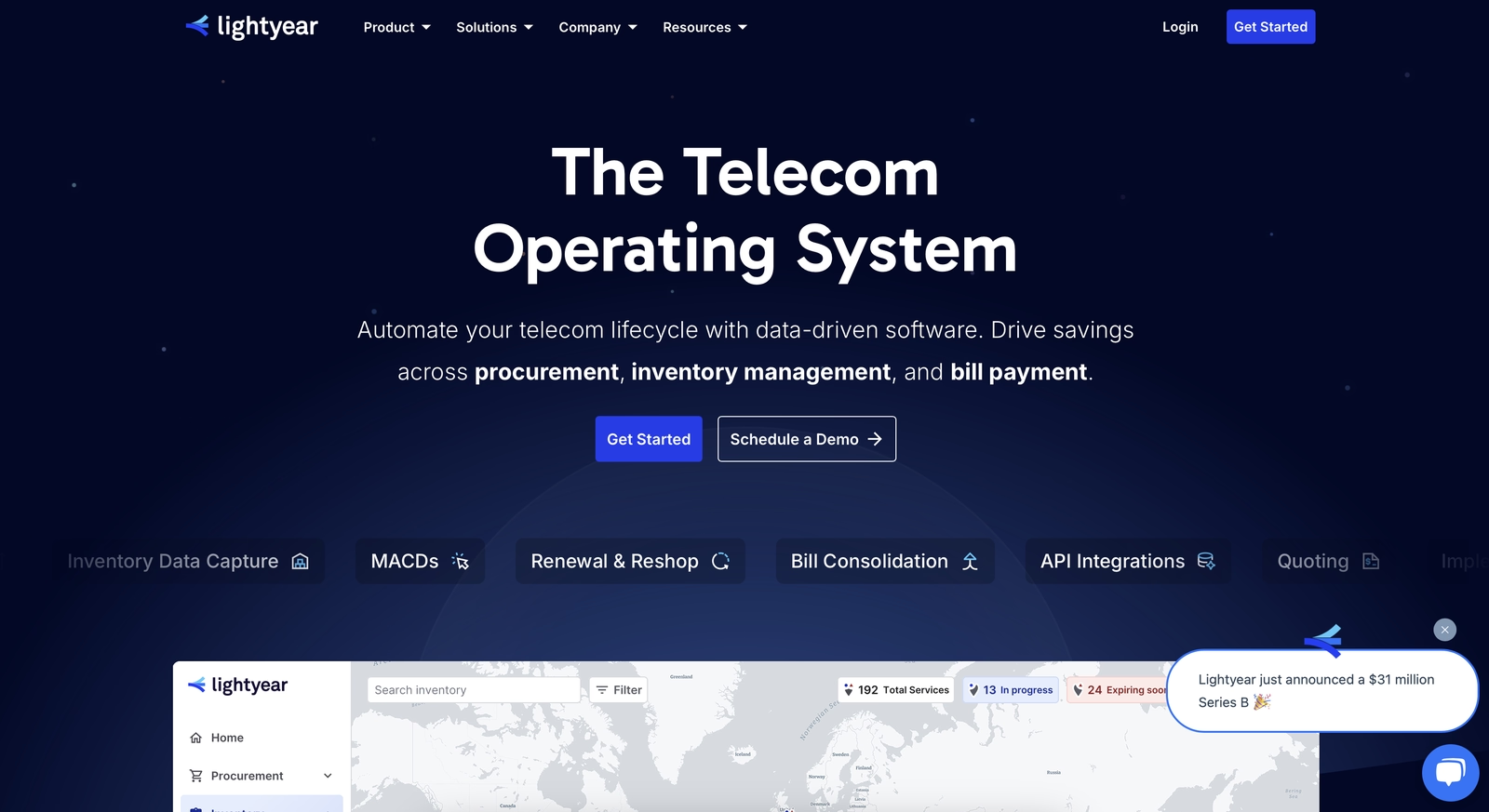
Whether you choose Fiber Channel or 10GbE, managing the procurement and lifecycle of your network services can be complex. By automating network service procurement, inventory management, and bill consolidation, Lightyear takes the pain out of telecom infrastructure management.
The hundreds of enterprises who trust Lightyear achieve 70%+ time savings and 20%+ cost savings on their network services. Schedule a demo or get started with our questionnaire today.
Frequently Asked Questions about Fiber Channel vs 10 Gigabit Ethernet
Can I use Fiber Channel for general network traffic?
No, Fiber Channel is not designed for general LAN traffic like email or web browsing. It is a specialized protocol built exclusively for connecting servers to storage devices in a SAN, using its own dedicated hardware that is separate from your standard Ethernet network.
What is FCoE and is it a good compromise?
FCoE (Fibre Channel over Ethernet) lets you run FC traffic on a 10GbE network, aiming to unify infrastructure. While it can reduce cabling, it adds complexity and doesn't match the dedicated, predictable performance of a native Fiber Channel SAN, making it a trade-off.
Is one technology more secure than the other?
Fiber Channel is often considered more secure out-of-the-box because it's an isolated network, separate from your LAN. Securing storage on 10GbE is achievable but requires careful configuration of VLANs and access controls to prevent unauthorized access from the general network.
Let us show you the product and discuss specifics on how it might be helpful.
Schedule a Demo





Revolutionize Your Telecom Experience
Learn how you can get one step closer to optimal business efficiency for all your telecom services.