Fiber Channel vs Ethernet: Enterprise Network Comparison
Choosing between Fiber Channel and Ethernet? Learn the key differences in performance, cost, and use cases to build the right enterprise network.


When building or upgrading an enterprise network, one of the most fundamental decisions involves the underlying transport technology. For decades, two primary contenders have shaped this area: Fiber Channel (FC) and Ethernet.
While both are powerful networking protocols, they were designed for different purposes and excel in different environments. This comparison will break down their core differences in performance, cost, and management to help you make an informed decision for your organization's specific needs.
What is Fiber Channel?
Fiber Channel (FC) is a high-speed networking technology created specifically for connecting computer data storage to servers. It's the go-to choice for building storage area networks (SANs), where reliable and fast access to shared storage is essential. Unlike general-purpose networking, FC was engineered from the ground up for one primary task: moving large blocks of data with minimal delay.
Here are its core characteristics:
- Lossless Protocol: FC is inherently a lossless protocol. It uses a credit-based flow control mechanism to ensure data packets are not dropped during transit, which guarantees data integrity and reduces the overhead of retransmitting information.
- High Performance: It offers high throughput and low latency, making it exceptionally well-suited for demanding applications like large databases, virtualization environments, and high-performance computing.
- Dedicated Infrastructure: An FC network runs on its own dedicated hardware, including specialized switches and host bus adapters (HBAs). This separation from standard Ethernet traffic prevents congestion and ensures predictable performance for storage operations.
What is Ethernet?
Ethernet is the most common technology for building local area networks (LANs). Originally developed for connecting computers in a small area, its role has expanded significantly. Unlike the specialized nature of Fiber Channel, Ethernet is a general-purpose protocol designed to handle a wide variety of data traffic, from web browsing and email to complex data center operations.
Its design philosophy prioritizes flexibility and cost-effectiveness. Here are its defining characteristics:
- Packet-Based Communication: Ethernet transmits data in variable-sized packets. It operates on a "best-effort" delivery model, meaning it doesn't have a built-in mechanism to guarantee lossless delivery. Instead, it relies on higher-level protocols (like TCP) to handle error correction and retransmission.
- Versatile Infrastructure: It runs on common, standardized hardware, including network interface cards (NICs), switches, and routers. It supports both copper and fiber optic cabling, allowing it to be deployed in nearly any environment.
- Broad Scalability: Ethernet speeds have scaled massively over the years, from early 10 Mbps connections to modern standards reaching 400 Gbps and beyond. This scalability makes it suitable for everything from a small office to a large enterprise data center.
Key Differences Between Fiber Channel and Ethernet
While both technologies move data, their underlying design and operational requirements are worlds apart. Let's break down the main distinctions you'll encounter when planning your infrastructure.
1. Primary Use Case and Traffic Type
The most fundamental difference lies in what each protocol was built to do. Fiber Channel was created with a single purpose: transporting block-level storage data. This is the raw data access needed for databases and virtual machines running in a Storage Area Network (SAN).
Ethernet, on the other hand, is a generalist protocol. It's designed to carry a diverse mix of IP-based traffic simultaneously, from everyday web browsing and email to more demanding voice and video applications.
2. Required Hardware and Infrastructure
The hardware for each network is completely distinct and not interchangeable. An FC network runs in parallel to your standard office network, requiring specialized Host Bus Adapters (HBAs) in servers and dedicated Fiber Channel switches to create the storage fabric.
In contrast, an Ethernet network uses standardized and widely available components. Servers connect using common Network Interface Cards (NICs), and traffic runs through the same type of Ethernet switches that likely already power your Local Area Network (LAN).
3. Network Management and Expertise
This hardware separation extends to network management. Administering an FC SAN requires a specific skill set, as engineers must understand concepts like World Wide Names (WWNs) and zoning to securely control which servers can access which storage volumes.
Ethernet administration is a far more common skill within IT departments. Because the technology is ubiquitous, the tools and troubleshooting knowledge are widespread, making it easier to manage with existing staff and resources.
Performance and Speed Considerations
When comparing raw throughput, modern Ethernet standards often appear to have the upper hand, with speeds reaching 400 Gbps and beyond, while Fiber Channel typically tops out at 64 Gbps or 128 Gbps. However, speed isn't just about bandwidth; it's also about latency and efficiency.
Fiber Channel was built for one thing: storage. Its lossless, credit-based flow control means data is delivered in order and without drops, resulting in extremely low and predictable latency. This is critical for applications like databases that are sensitive to delays in data access.
Ethernet, while fast, relies on higher-level protocols like TCP/IP to manage packet ordering and retransmission. This processing adds a small amount of overhead and potential for latency, which can become noticeable under heavy storage loads.
So, while Ethernet may offer a wider pipe, Fiber Channel provides a more direct and efficient path for storage traffic, often leading to better real-world performance for its specific job.
Cost Implications for Enterprises
From a budget perspective, the two technologies present very different financial pictures. The initial investment and ongoing operational expenses can vary significantly, largely due to the hardware and expertise each requires.
Here’s a breakdown of the main cost drivers:
- Fiber Channel Costs: FC networks generally come with a higher price tag. The primary reason is the need for specialized hardware, including dedicated Fiber Channel switches and Host Bus Adapters (HBAs) for servers, which are more expensive than their Ethernet counterparts. Furthermore, managing an FC SAN requires specific expertise, which can lead to higher staffing or training expenses.
- Ethernet Costs: Ethernet is typically the more budget-friendly option. It runs on standardized, commodity hardware like common Network Interface Cards (NICs) and switches, which are mass-produced and more affordable. Because the technology is so common, most IT departments already possess the skills to manage an Ethernet network, which helps keep operational costs down.
Security Features and Reliability
Beyond performance and cost, security and reliability are critical factors in any network design. The two technologies approach these concerns from fundamentally different angles.
Fiber Channel is often considered inherently more secure and reliable. Because it operates on a separate, isolated network, it is naturally shielded from common IP-based threats. Its lossless protocol guarantees data delivery without packet drops, and security is managed through zoning, which acts like a strict access list to ensure only authorized servers can communicate with specific storage arrays.
Ethernet security and reliability, on the other hand, depend on additional layers of configuration. Since it shares infrastructure with other traffic, it requires tools like VLANs, firewalls, and encryption to secure data. For reliability, it relies on higher-level protocols like TCP to manage packet loss and retransmission, as the underlying protocol does not guarantee delivery on its own.
Making the Right Choice for Your Business
The decision between Fiber Channel and Ethernet comes down to your specific application needs and budget. There isn't a single "better" option; each excels in its intended role.
If your organization runs performance-sensitive applications that depend on a dedicated, low-latency connection to a storage area network (SAN), Fiber Channel is the purpose-built solution. Its lossless nature and isolated infrastructure provide excellent reliability for critical storage tasks.
Conversely, if you need a flexible, scalable, and cost-effective network for general data traffic, Ethernet is the clear choice. Its widespread adoption and standardized hardware make it easier and more affordable to deploy and manage for most business operations.
Ultimately, evaluate your primary workload. For dedicated storage performance, choose Fiber Channel; for versatile, all-purpose networking, Ethernet remains the standard.
Need Help Managing Your Network? Lightyear Can Help
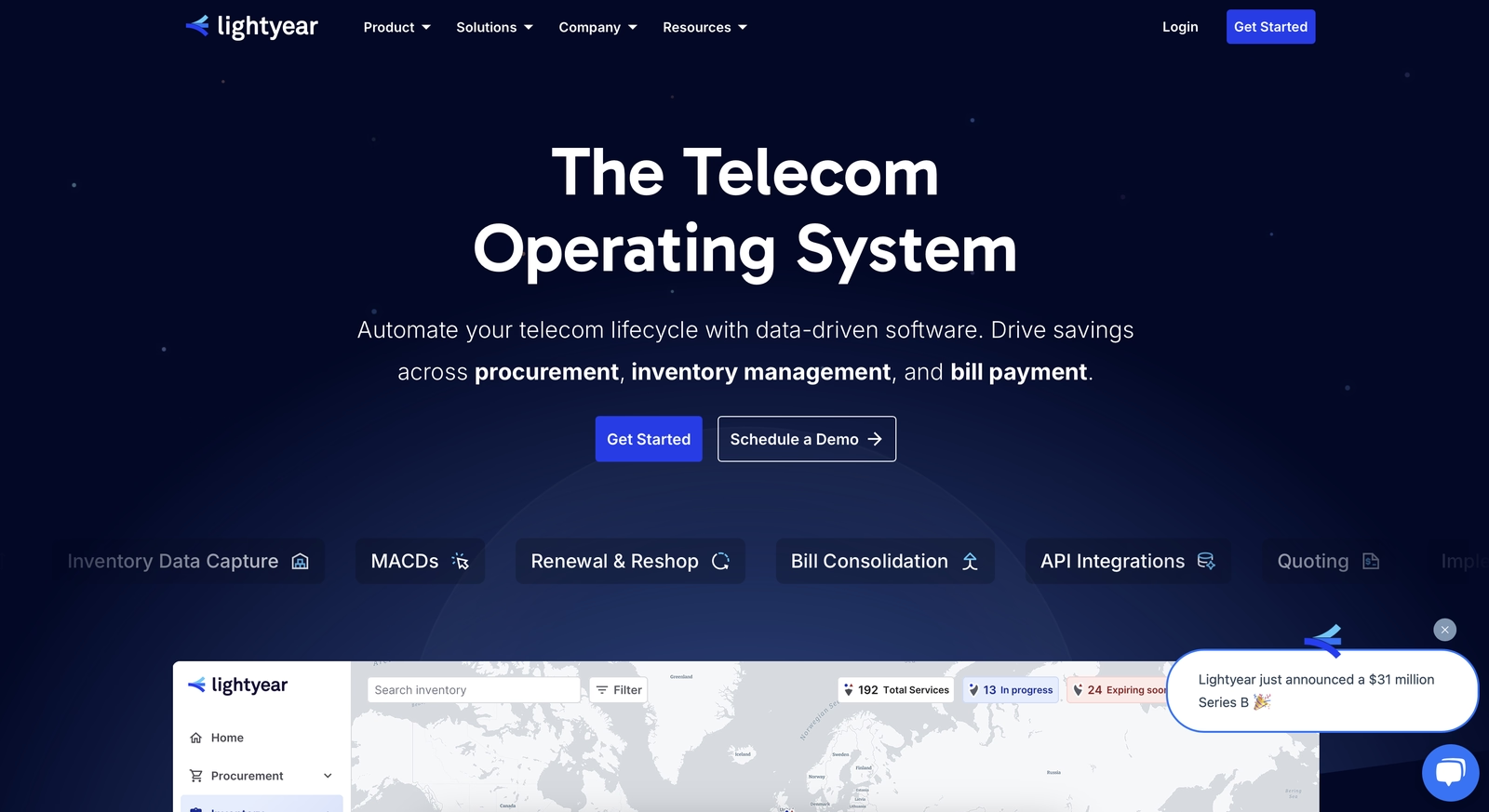
Whether you choose Fiber Channel or Ethernet, managing the procurement and lifecycle of your network services is the critical next step. Lightyear automates this process, from sourcing circuits to handling inventory and consolidating bills.
By automating network service procurement, enterprises that trust Lightyear achieve over 70% time savings and 20% cost savings. Schedule a demo or get started with our questionare today.
Frequently Asked Questions about Fiber Channel vs Ethernet
Can you run Fiber Channel traffic over an Ethernet network?
Yes, this is possible using a protocol called Fiber Channel over Ethernet (FCoE). It encapsulates FC frames within Ethernet packets, allowing storage and IP traffic to share the same physical infrastructure. This approach aims to reduce cabling and simplify management by converging networks.
Is Fiber Channel becoming obsolete?
Not at all. While Ethernet's speed and flexibility have grown, Fiber Channel remains the top choice for high-performance SANs where predictable low latency and lossless data delivery are non-negotiable. It continues to evolve with faster speeds to meet modern demands.
Which is better for a virtualized environment?
It depends on your priorities. Fiber Channel offers superior, consistent performance for demanding virtual machines. Ethernet, using protocols like iSCSI or FCoE, provides greater flexibility and lower costs, making it a strong choice for less performance-sensitive or mixed-use virtualized workloads.
Let us show you the product and discuss specifics on how it might be helpful.
Schedule a Demo





Revolutionize Your Telecom Experience
Learn how you can get one step closer to optimal business efficiency for all your telecom services.