Fiber to Curb vs Home: Enterprise Considerations
Compare Fiber to the Curb (FTTC) vs. Fiber to the Home (FTTH) for your enterprise. Understand the differences in speed, cost, and reliability.


When businesses need high-speed internet, fiber optic technology is a leading option. In your research, you'll frequently come across two deployment models: Fiber to the Home (FTTH) and Fiber to the Curb (FTTC).
While both methods use fiber for most of the network, they differ in the final delivery point. This distinction directly impacts performance, cost, and availability, making it a critical factor for any IT or network team to consider.
What is Fiber to the Curb (FTTC)?
Fiber to the Curb (FTTC) is a hybrid network architecture that brings high-speed fiber optic cables close to your business, but not all the way inside. Think of it as a middle-ground solution where the fiber connection stops short of the final destination.
- The "curb" in the name refers to a central distribution point, like a street cabinet or utility pole, that serves a group of nearby buildings.
- The fiber optic cable runs directly to this cabinet.
- From there, the connection completes its journey to your office over existing infrastructure, which is typically a copper telephone line or coaxial cable.
- This approach allows internet service providers to deliver faster speeds than older technologies without the cost of running fiber to every individual building.
What is Fiber to the Home (FTTH)?
In contrast to FTTC, Fiber to the Home (FTTH), also known as Fiber to the Premises (FTTP), represents a pure fiber optic connection. This architecture extends the fiber optic cable directly from the internet service provider's central office all the way to an individual business or residence, offering the highest standard of connectivity.
- The fiber optic line terminates inside your building, connecting directly to your network equipment.
- Unlike FTTC, there is no reliance on older copper or coaxial cables for the final leg of the connection.
- This direct fiber link eliminates the performance bottlenecks often found in hybrid networks.
- Because the entire network path is fiber, FTTH can deliver symmetrical upload and download speeds and the highest level of performance currently available.
Key Differences Between FTTC and FTTH
The core distinction between FTTC and FTTH lies in how they impact network performance, reliability, and future-readiness.
1. Speed and Bandwidth
FTTH provides symmetrical speeds, where upload and download rates are the same. This is important for activities like large file transfers, cloud backups, and high-definition video calls.
With FTTC, speeds are typically asymmetrical. The final copper or coaxial segment creates a bottleneck, resulting in significantly slower upload speeds compared to download speeds.
2. Signal Reliability
A pure fiber FTTH connection is immune to electromagnetic interference (EMI) from power lines or other electrical equipment, leading to a more stable signal.
The copper wiring in an FTTC setup is vulnerable to EMI, which can degrade the signal and cause intermittent connection issues.
3. Distance and Scalability
In an FTTC network, performance can decline as the distance from the street cabinet to your building increases. The signal weakens over the copper line.
FTTH performance is consistent regardless of distance from the provider's central office. It also provides a direct path for future bandwidth upgrades without replacing any last-mile infrastructure.
Benefits of Fiber to the Curb
While FTTH offers superior performance, FTTC brings its own set of advantages, particularly when it comes to accessibility and cost-effectiveness. For many businesses, it represents a practical and significant upgrade.
- Broader Availability: Since FTTC leverages existing copper or coaxial lines for the final connection, it is often more widely available than FTTH, especially in areas where full fiber infrastructure has not yet been built out. This makes it a viable option for businesses in a wider range of locations.
- Faster and Less Expensive Installation: The installation process for FTTC is generally quicker and more affordable. By avoiding the need to run new fiber optic cable directly into your building, providers can deploy the service with less construction and disruption.
- A Major Performance Boost: For businesses upgrading from older technologies like DSL, FTTC delivers a substantial increase in speed and reliability. It provides the bandwidth needed for many modern business applications without requiring a full fiber-to-the-premises buildout.
Advantages of Fiber to the Home
For businesses with demanding connectivity needs, FTTH offers a level of performance and reliability that hybrid networks can't match. It is the gold standard for modern enterprise connectivity.
- Unparalleled Performance: A direct fiber connection provides the highest available speeds, which is essential for cloud applications, video conferencing, and large data transfers. The symmetrical connection ensures upload-heavy tasks are just as fast as downloads, eliminating common bottlenecks.
- Superior Reliability: Since FTTH uses a continuous strand of fiber optic glass, it is not susceptible to the signal interference or degradation common with copper lines. This results in a more stable connection with greater uptime, which is critical for business continuity.
- Future-Proof Infrastructure: An FTTH connection prepares your business for future growth. As data needs increase, providers can often upgrade your bandwidth remotely without requiring new physical installation, making it a smart long-term investment.
Cost Considerations for Enterprises
When evaluating FTTC and FTTH, the budget is often a primary factor. The costs break down into initial installation expenses and long-term operational value.
1. Fiber to the Curb (FTTC) Costs
FTTC generally has a lower upfront cost. Because it uses existing copper or coaxial cables for the final connection, providers avoid the expense and labor of laying new fiber directly to your building.
This often translates to lower installation fees and a faster deployment, making it an attractive option for businesses that need a quick and budget-friendly upgrade from older services like DSL.
2. Fiber to the Home (FTTH) Costs
FTTH requires a higher initial investment. The installation involves running a new, dedicated fiber optic line all the way into your premises, which can sometimes include construction costs.
These expenses cover the materials and work needed to create a pure fiber link, which is a more significant infrastructure project than connecting to an existing line.
3. Long-Term Value and Total Cost of Ownership
While FTTH costs more to install, it can offer a lower total cost of ownership. Its high reliability can reduce expenses associated with downtime, and its scalability allows for bandwidth upgrades without needing new physical infrastructure.
An FTTC connection, while cheaper today, may need to be replaced entirely if your business’s data demands outgrow its capabilities, leading to future costs.
Making the Right Choice for Your Business
Choosing between FTTC and FTTH depends on your company's specific operational needs, budget, and long-term goals. To make an informed decision, evaluate your requirements based on the key differences discussed.
- Choose FTTC if: Your business needs a reliable, high-speed connection that is a major step up from DSL, but you are working with a limited budget or are in an area where full fiber is not yet available. It's a practical solution for general office use and moderate data needs.
- Choose FTTH if: Your operations rely on cloud-based applications, frequent large file uploads, or high-quality video conferencing. If future-proofing your network and ensuring maximum reliability are top priorities, the investment in a pure fiber connection is justified for long-term growth.
Need Help Managing Your Network? Lightyear Can Help
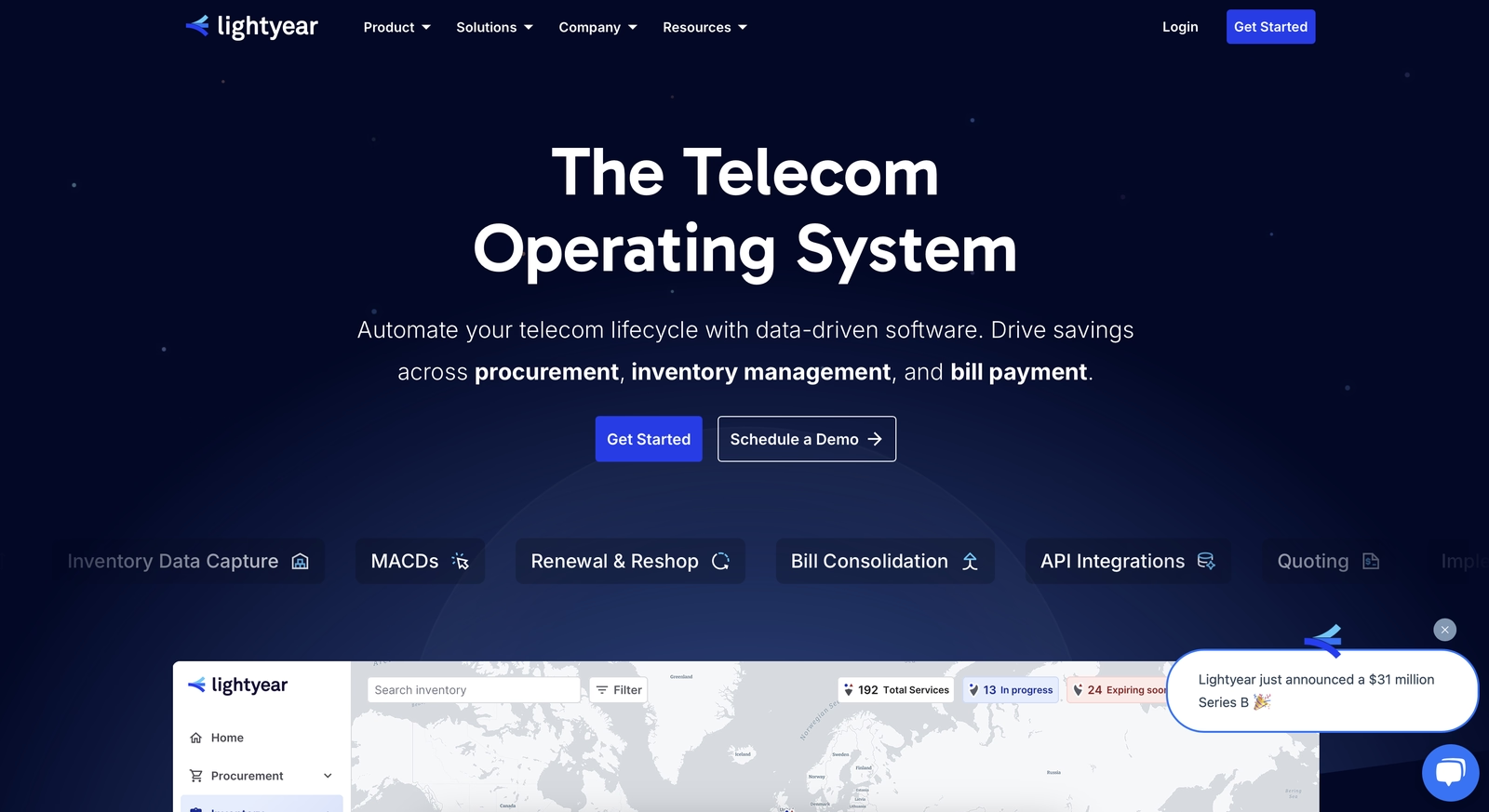
Deciding between FTTC and FTTH is just the first step. Lightyear’s platform helps you procure and manage whichever service you choose, giving you data-driven intelligence to find the best options and pricing.
By automating network service procurement, inventory management, and bill consolidation, Lightyear takes the pain out of telecom infrastructure management. The hundreds of enterprises who trust Lightyear achieve 70%+ time savings and 20%+ cost savings on their network services.
Schedule a demo or get started with our questionare today.
Frequently Asked Questions about Fiber to the Curb vs Fiber to the Home
Is FTTC the same as DSL?
No, they are different. FTTC uses fiber for most of the network, delivering much higher speeds than traditional DSL, which relies entirely on older copper telephone lines. It is a significant performance upgrade over a standard DSL connection.
Can I upgrade from FTTC to FTTH later?
Yes, an upgrade is usually possible but it requires a new installation. Moving to FTTH involves running a dedicated fiber line directly into your building, which is a separate process from your existing FTTC setup and will have its own costs.
How does weather affect FTTC vs. FTTH?
FTTH is highly resilient as the glass fiber is immune to temperature changes and moisture. The copper portion of an FTTC network can be more susceptible to weather-related signal degradation, though it is still far more reliable than older connection types.
Let us show you the product and discuss specifics on how it might be helpful.
Schedule a Demo




Revolutionize Your Telecom Experience
Learn how you can get one step closer to optimal business efficiency for all your telecom services.