Fiber to Curb vs Node: Enterprise Network Choices
Fiber to the Curb vs. Node: Which is right for your business? Learn the key differences in speed, cost, and performance to make an informed choice.


When sourcing internet connectivity for your business, you will often encounter terms like Fiber to the Curb (FTTC) and Fiber to the Node (FTTN).
These options sound similar, but they describe different network architectures that directly affect performance, reliability, and cost for your enterprise locations.
The key distinction lies in how far the high-speed fiber optic cable runs before it connects to existing copper wiring to reach your building. This article breaks down what each setup means for your network so you can make a more informed choice.
What is Fiber to the Curb (FTTC)?
Fiber to the Curb, often abbreviated as FTTC, is a hybrid network architecture that brings high-speed fiber optic cables close to your business premises, but not all the way inside. In this setup, the fiber line runs to a central cabinet or distribution point located on a nearby street—the "curb"—which typically serves several buildings within about 1,000 feet.
From that cabinet, the connection completes its journey to your office over existing copper infrastructure, such as coaxial or twisted-pair phone lines. This short distance of copper wiring is the key differentiator.
- Fiber Proximity: The high-capacity fiber optic cable extends from the provider's central office to a shared distribution cabinet near your location.
- Last-Mile Connection: The final leg of the journey, from the cabinet to your building, is completed over existing copper wiring.
- Performance Impact: Because the distance covered by the slower copper wiring is very short, FTTC delivers much higher speeds and better performance than older technologies like ADSL, though it doesn't match the full potential of a direct fiber connection.
What is Fiber to the Node (FTTN)?
Fiber to the Node (FTTN) is a similar hybrid architecture, but the fiber optic cable stops further away from your business location. In an FTTN setup, the fiber line runs to a central network cabinet—the "node"—that serves a larger neighborhood or area, potentially hundreds of buildings.
From this central node, the connection travels the rest of the way to your premises over existing copper telephone lines. The key factor here is that the length of this copper wiring is significantly longer than in an FTTC configuration, which directly influences network performance.
- Fiber Proximity: The fiber optic cable terminates at a shared neighborhood node, which can be located several thousand feet from your building.
- Last-Mile Connection: The final, longer leg of the connection relies on existing copper infrastructure, typically using VDSL technology.
- Performance Impact: The extended distance over copper means FTTN generally offers slower speeds than FTTC. Performance can also vary more depending on how far your specific location is from the node.
Key Differences Between FTTC and FTTN
While both FTTC and FTTN use a hybrid fiber-copper model, the practical differences for your business boil down to three key areas: performance, cost, and availability.
Speed and Performance
FTTC consistently delivers higher speeds and more reliable performance. The short length of the final copper connection—typically under 1,000 feet—minimizes the signal loss that slows down data transmission.
With FTTN, the copper wiring can extend for several thousand feet, which significantly reduces potential speeds. Performance can also fluctuate more depending on your building’s exact distance from the network node.
Cost
FTTN is generally a more economical option for businesses. Because it relies more heavily on existing copper infrastructure, providers face lower deployment costs, and those savings are often reflected in the service price.
FTTC requires more investment from the provider to bring fiber closer to the premises, which can make it a slightly more expensive service than FTTN.
Availability
You will likely find FTTN is more widely available. Its ability to use long stretches of the existing telephone network makes it easier for providers to offer service across a larger area without major construction.
FTTC availability is often concentrated in denser commercial areas or newer developments where the business case for laying new fiber is stronger.
Advantages of Fiber to the Curb
For businesses weighing their connectivity options, FTTC offers a compelling middle ground between cost and performance. Its architecture provides several distinct benefits over connections that rely on longer copper lines.
- Higher Performance: By bringing fiber optics much closer to your building, FTTC significantly reduces the distance data travels over copper. This results in faster download and upload speeds and lower latency, which is ideal for supporting cloud applications, VoIP, and video conferencing.
- Improved Reliability: The shorter copper segment is less prone to signal degradation and interference than the longer runs used in FTTN. This translates to a more stable and consistent internet connection with fewer service disruptions for your team.
- Clear Upgrade Path: With fiber already at the curb, the path to upgrading to a full Fiber to the Premises (FTTP) connection is shorter and often less costly. This makes FTTC a more forward-looking investment for growing businesses.
Advantages of Fiber to the Node
While it may not offer the top-tier speeds of FTTC, Fiber to the Node brings its own set of practical advantages, especially for businesses balancing budget and accessibility.
- Cost-Effective Upgrade: FTTN is one of the most affordable ways to move on from legacy copper connections like ADSL. By using the existing telephone network for the final connection, providers can deliver a noticeable performance boost without the high costs associated with laying new fiber all the way to your building.
- Broad Availability: Because it leverages existing infrastructure, FTTN is often available in areas where FTTC or full fiber have not yet been deployed. This makes it a practical choice for businesses located outside of dense urban centers or in older commercial districts.
- Quicker Installation: The reliance on existing copper lines means deployment is typically faster and less disruptive. Service can often be activated without the need for significant construction or new cable installation at your site, getting your business connected sooner.
Choosing the Right Option for Your Enterprise
Making the right choice comes down to balancing your company's operational needs with the practical realities of budget and what’s available at your sites. To decide, consider these factors.
1. Assess Your Performance Requirements
Start by evaluating your daily business activities. If your teams depend heavily on cloud applications, VoIP phone systems, or frequent video conferencing, the higher speeds and lower latency of FTTC will better support those functions.
For businesses with more basic internet needs, such as email and general web browsing, FTTN often provides a perfectly adequate connection at a lower cost.
2. Factor in Budget and Availability
FTTN is typically the more economical option and is more widely available, making it a go-to for businesses looking to manage costs or those located outside of primary commercial zones.
Ultimately, your choice may be determined by what providers offer at your specific address. The first step is always to identify which services can actually be installed at your building.
3. Plan for Future Growth
Consider your company’s long-term trajectory. Because the fiber is already run to the curb, FTTC offers a more direct upgrade path to a full Fiber to the Premises (FTTP) connection in the future.
If you expect your data demands to increase substantially over the next few years, investing in FTTC now can position your business for easier scaling later on.
Final Thoughts on FTTC vs FTTN
Ultimately, the choice between Fiber to the Curb and Fiber to the Node comes down to a simple trade-off between performance and cost.
FTTC brings fiber closer to your building, delivering higher speeds and a clearer path for future upgrades to full fiber. It's an excellent choice for businesses that rely on demanding cloud or voice applications.
In contrast, FTTN is a more budget-friendly and widely available option. It offers a significant improvement over older technologies and is a practical solution for companies with standard internet needs.
Your final decision will depend on your operational requirements and what services are offered at your specific locations. Knowing the difference helps you evaluate provider quotes accurately and find the connectivity that truly fits your business.
Need Help Managing Your Network? Lightyear Can Help
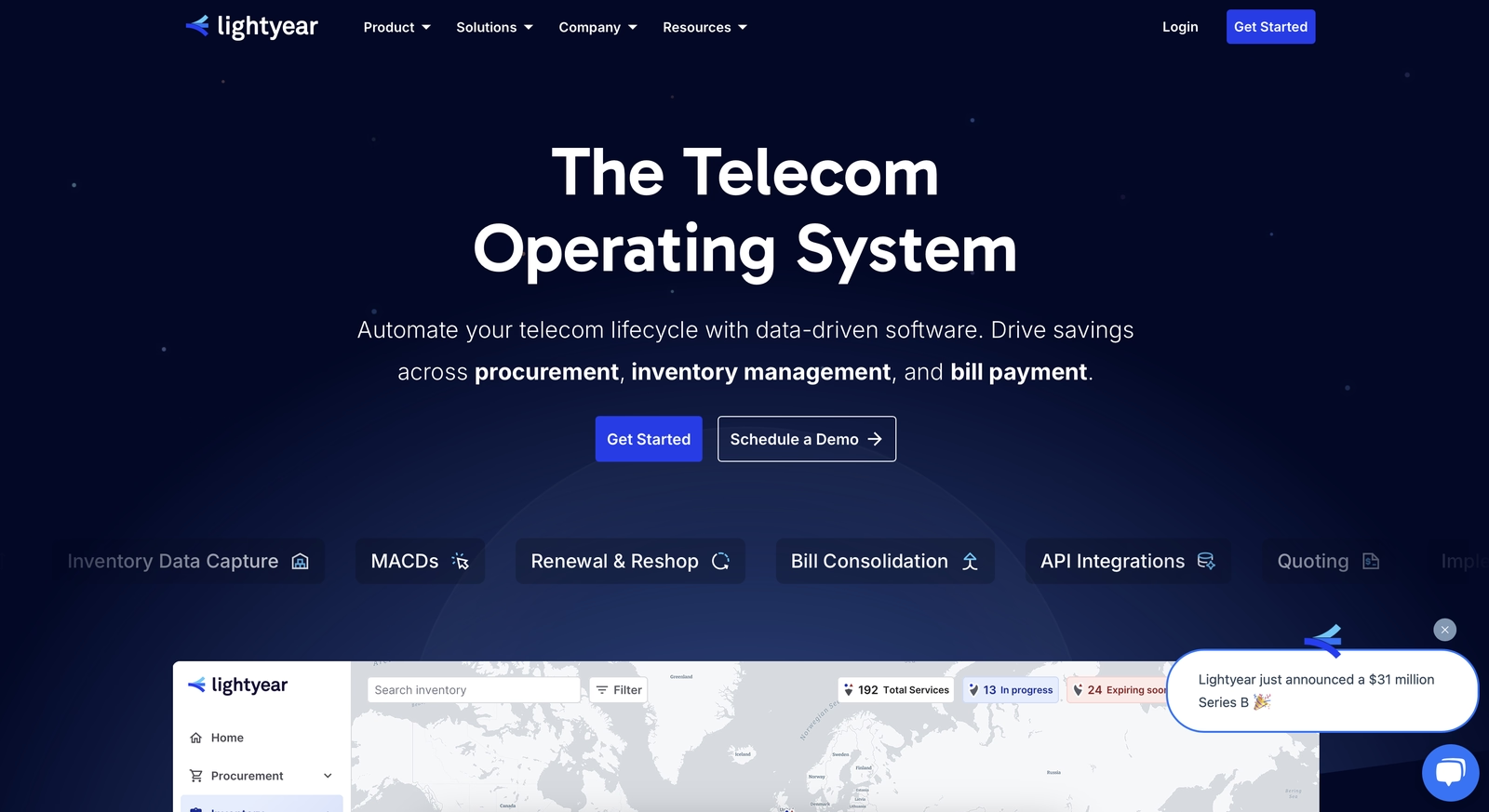
Whether you choose FTTC or FTTN, Lightyear’s platform helps you easily source quotes and manage your network services. We automate procurement, inventory, and billing, taking the manual work out of telecom infrastructure management.
Hundreds of enterprises trust Lightyear to save over 70% in time and 20% in costs on their network services. Schedule a demo or get started with our questionnaire today.
Frequently Asked Questions about Fiber to the Curb vs Fiber to the Node
Do FTTC and FTTN offer symmetrical speeds?
Generally, no. Both FTTC and FTTN typically provide asymmetrical speeds, with much faster downloads than uploads. This is due to the limitations of the copper wiring used for the final connection. Full fiber (FTTP) is required for true symmetrical performance.
How does distance from the node or curb really affect my speed?
The impact is significant. With FTTN, speeds can drop noticeably for every few hundred feet you are from the node. FTTC is less affected because the copper run is much shorter, but performance still degrades slightly with distance from the curb-side cabinet.
Can I get a Service Level Agreement (SLA) with these services?
SLAs are less common for FTTC and FTTN compared to dedicated fiber internet. While some providers may offer business-class packages with certain guarantees, these services are often sold as "best effort" connections without the stringent uptime promises of full fiber.
Are these connections more susceptible to weather than full fiber?
Yes, the copper portion of both FTTC and FTTN networks can be more vulnerable to weather-related issues like moisture and temperature changes than fiber optic cables. However, they are still generally more reliable than older, all-copper connections like DSL.
Let us show you the product and discuss specifics on how it might be helpful.
Schedule a Demo





Revolutionize Your Telecom Experience
Learn how you can get one step closer to optimal business efficiency for all your telecom services.