Fiber to Node vs Home: Enterprise Guide
FTTN vs. FTTH: A clear guide for IT buyers. Learn the key differences in speed and reliability to choose the right fiber internet for your business.


For any business, a fast and reliable internet connection is fundamental to daily operations. Fiber optic internet is often the top choice for enterprises, but it's important to know that not all fiber connections are created equal.
This guide compares two common types of fiber delivery: Fiber to the Node (FTTN) and Fiber to the Home (FTTH). Understanding the key differences in how they bring connectivity to your building is crucial for making the right procurement decision for your business.
What is Fiber to the Node (FTTN)?
Fiber to the Node, or FTTN, is a telecommunications architecture that uses a combination of fiber optic and copper cables to deliver internet service. It’s a hybrid system that brings high-speed fiber connectivity closer to your location without running it directly into the building.
- An internet service provider (ISP) lays fiber optic cable to a central cabinet, known as a node, which serves a specific area like a business park or neighborhood.
- From this node, the connection completes the "last mile" to your business premises using the existing copper telephone lines or coaxial cable infrastructure.
- Because the final leg of the connection relies on copper, the performance of an FTTN service is influenced by the distance between your building and the node. The shorter the copper run, the better the potential speed and reliability.
What is Fiber to the Home (FTTH)?
In contrast to the hybrid FTTN model, Fiber to the Home (FTTH) delivers a pure, end-to-end fiber optic connection directly to your business. Also known as Fiber to the Premises (FTTP), this architecture eliminates the use of copper or coaxial cables for the final delivery, ensuring a dedicated and uncompromised link.
- An ISP extends a fiber optic line from its main network all the way to a terminal inside your building.
- This direct connection bypasses the potential bottlenecks and signal degradation common with older copper wiring.
- Since the entire path is fiber, performance is not dependent on your distance from a central node. This results in superior speed, greater bandwidth, and symmetrical upload and download capabilities.
Key Differences Between FTTN and FTTH
While both architectures use fiber optic technology, the final delivery method to your office creates significant differences in performance, reliability, and long-term value.
Speed and Bandwidth
The most significant performance difference lies in bandwidth symmetry. FTTH delivers a pure fiber connection, enabling symmetrical speeds where upload and download rates are identical.
This is critical for business operations like hosting applications, running cloud backups, or frequent video conferencing. FTTN, on the other hand, is limited by its copper last mile, resulting in asymmetrical speeds with significantly slower uploads that can hinder productivity.
Reliability and Signal Integrity
FTTH connections are inherently more reliable. Fiber optic cables are immune to the electromagnetic interference and signal degradation over distance that can plague copper lines.
Because FTTN uses existing copper infrastructure for the final connection, it remains vulnerable to these issues, which can cause inconsistent performance.
Future-Proofing and Scalability
From a strategic standpoint, FTTH is a more future-proof investment. The massive data capacity of fiber optic cable means that future speed upgrades can often be achieved by simply swapping out the equipment at each end.
FTTN's scalability is capped by its copper component. Achieving next-generation speeds would likely require a complete and costly replacement of that last-mile wiring.
Pros and Cons of Fiber to the Node
While FTTH offers superior performance, FTTN has its own set of advantages and disadvantages that are important for any IT leader to consider, especially regarding availability and installation.
Pros of FTTN
- Wider Availability: Because FTTN uses existing copper telephone lines for the final connection, it is often available in areas where a full fiber build-out has not yet occurred. This makes it a practical option for businesses in many locations.
- Faster Installation: The installation process is typically quicker and less disruptive. Service can be activated without the need for extensive construction or trenching new cable directly to your building.
Cons of FTTN
- Inconsistent Performance: Service quality is directly tied to the length and condition of the copper wiring from the node to your office. This can lead to variable speeds and less predictable reliability compared to a pure fiber line.
- Susceptibility to Interference: The copper portion of the network is vulnerable to environmental factors like weather and electromagnetic interference from nearby power lines, which can disrupt service.
Pros and Cons of Fiber to the Home
On the other side of the coin, a pure fiber connection has its own distinct advantages and challenges to weigh.
Pros of FTTH
- Unmatched Performance: A pure fiber line easily supports a higher number of users and demanding cloud applications running at the same time without performance degradation.
- Enhanced Security: Fiber optic cables are significantly more difficult to tap into than copper lines, offering an inherent security advantage against physical data interception.
- Long-Term Durability: Fiber is more resilient to environmental factors and has a longer lifespan with lower maintenance needs compared to aging copper infrastructure.
Cons of FTTH
- Limited Availability: The main drawback is geographic reach. Since FTTH requires a new fiber build-out, it is not yet available in all commercial areas.
- Involved Installation: The installation process can be more complex and time-consuming, as it involves running a new physical cable directly into your facility.
Cost Considerations for Enterprises
When comparing FTTN and FTTH, the price tag is often a major factor. However, the costs go beyond just the monthly bill, and it's important to look at the full financial picture.
Installation and Setup Costs
FTTN installation is typically more affordable. Since it leverages existing copper lines for the final connection, it avoids the significant expense and disruption of new construction.
FTTH, in contrast, usually involves higher upfront costs. Running a new fiber optic cable directly into your building can require construction work, which is reflected in the installation fee.
Monthly Subscription Fees
On a month-to-month basis, FTTN services are often cheaper. This lower price point corresponds to its asymmetrical speeds and performance limitations.
FTTH plans generally come with a higher monthly fee. This premium pays for symmetrical gigabit speeds, greater reliability, and the capacity to handle demanding business applications without slowdowns.
Total Cost of Ownership
It's wise to consider the long-term value. While FTTH may cost more initially, its superior reliability can result in a lower total cost of ownership over time.
Fewer service disruptions mean less business downtime and lost productivity. The potential hidden costs of FTTN's inconsistent performance can sometimes outweigh its lower monthly price.
Making the Right Choice for Your Business
Choosing between FTTN and FTTH comes down to your specific business requirements, budget, and long-term goals. Your decision should be guided by a clear assessment of your operational needs.
If your business has standard internet demands and is located where pure fiber isn't available, FTTN offers a practical and cost-effective solution. It provides a significant upgrade over older technologies with faster installation.
However, for companies dependent on cloud applications, frequent large data transfers, or supporting many users, FTTH is the superior choice. The investment in a pure fiber connection provides symmetrical speeds and greater reliability that supports growth. Ultimately, weighing the immediate benefits of FTTN against the long-term performance advantages of FTTH will lead you to the right connectivity for your enterprise.
Need Help Managing Your Network? Lightyear Can Help
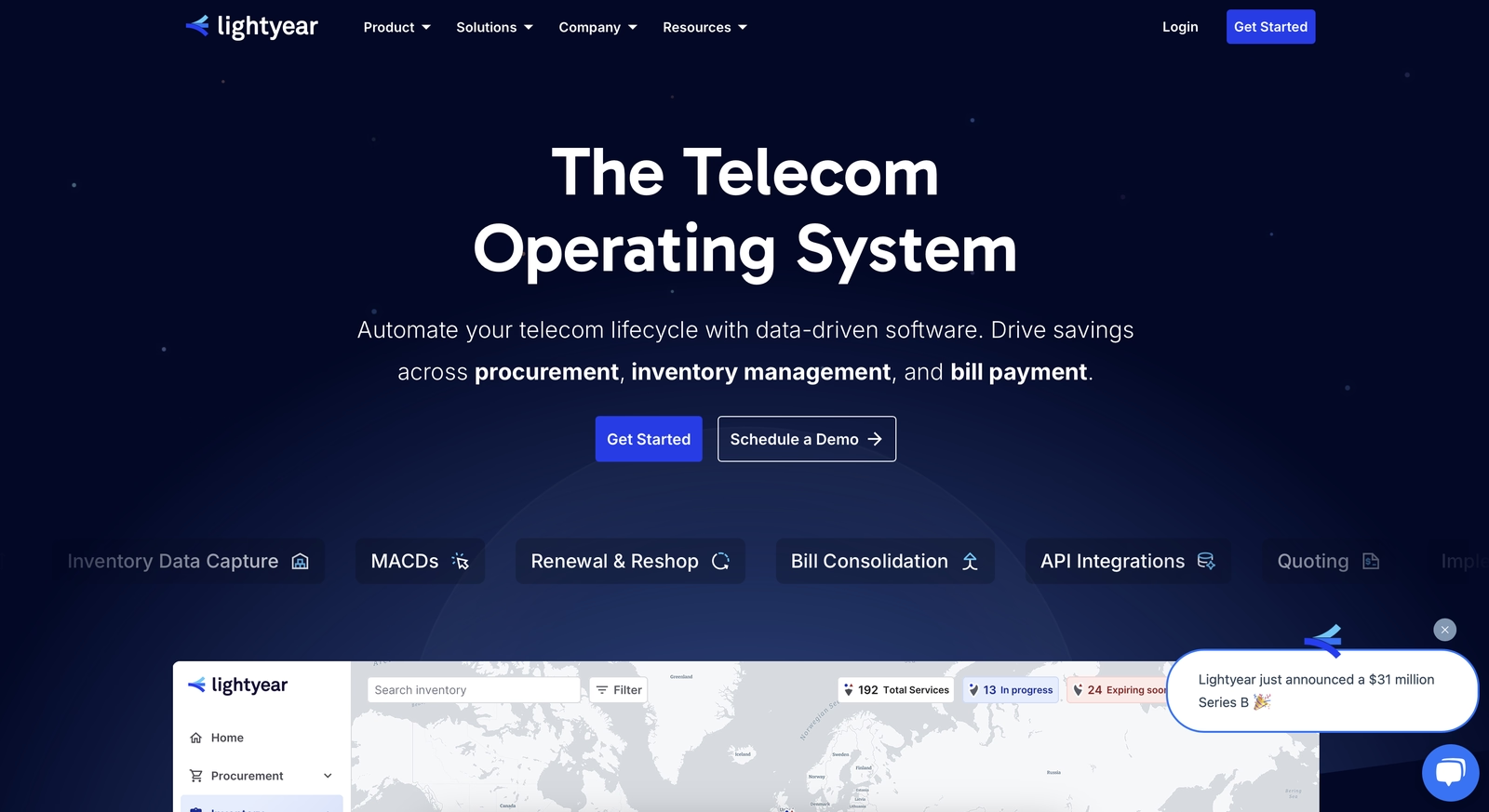
Whether you choose FTTN or FTTH, making the right procurement decision is just the first step. Lightyear can help you source the best option for any location and manage the entire service lifecycle.
By automating network service procurement, inventory management, and bill consolidation, Lightyear takes the pain out of telecom infrastructure management. Enterprises using the platform achieve 70%+ time savings and 20%+ cost savings on their network services.
Schedule a demo or get started with our questionnaire today.
Frequently Asked Questions about Fiber to the Node vs Fiber to the Home
Can I upgrade from FTTN to FTTH?
Yes, upgrading is often possible, but it depends on whether an ISP has built out a full fiber network in your area. It requires a new installation to run the fiber optic cable directly into your building, replacing the final copper connection.
Is FTTN the same as VDSL?
FTTN is the network architecture, while VDSL is the technology often used over the final copper leg. So, while they are related and frequently used together, they aren't technically the same thing. FTTN delivers the fiber connection “to the node.”
How does my building's internal wiring affect performance?
For FTTN, the quality of your building's internal copper wiring can impact performance. For FTTH, this is not a factor, as a new fiber line is run directly to your suite, bypassing any old internal wiring for the internet connection itself.
Which is better for real-time applications like VoIP?
FTTH is significantly better for real-time applications like VoIP and video conferencing. Its symmetrical upload speeds ensure your voice and video are transmitted clearly without lag, which can be a challenge on FTTN's slower upload connections.
Let us show you the product and discuss specifics on how it might be helpful.
Schedule a Demo





Revolutionize Your Telecom Experience
Learn how you can get one step closer to optimal business efficiency for all your telecom services.
