Flat vs Round Ethernet Cables: A Comparison
Flat or round Ethernet cable? We compare speed, interference protection, and installation pros and cons to help you make the right network choice.

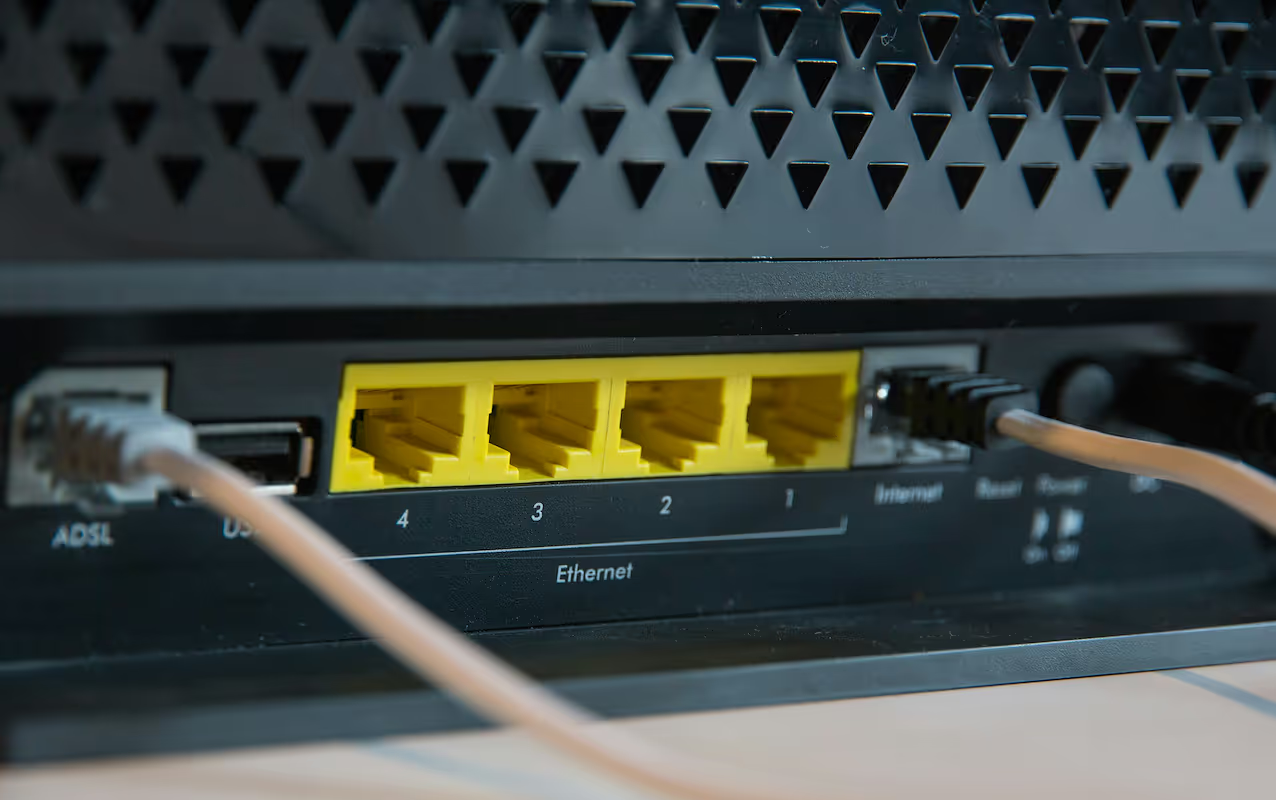
When setting up or upgrading a network, you'll encounter two main types of Ethernet cables: flat and round. While both are designed to connect your devices to a network, their physical differences have important implications for installation and performance.
This guide compares flat and round Ethernet cables, looking at their construction, ideal use cases, and potential drawbacks. Our goal is to provide the information you need to choose the right cable for your business.
What is Flat Ethernet Cable?
A flat Ethernet cable is a type of network cable designed with a low-profile, ribbon-like form factor. Its internal structure and design make it suitable for specific applications where space and aesthetics are a priority.
- Construction: The internal copper conductor wires are arranged side-by-side in parallel, rather than being twisted together. This parallel layout is what gives the cable its distinctive shape.
- Design: Its flat, flexible body allows it to be easily hidden under carpets, along baseboards, or behind furniture without creating a noticeable bulge.
- Common Uses: These cables are most often used for short-distance runs in homes or offices, especially for temporary setups or in finished spaces where running a bulkier cable is not practical.
What is Round Ethernet Cable?
Round Ethernet cables are the industry standard for most network installations, prized for their durability and signal integrity. Their structure is fundamentally different from flat cables, focusing on performance and protection.
- Construction: The internal copper wires are twisted into pairs (e.g., two wires twisted together). This design helps cancel out electromagnetic interference (EMI) and crosstalk from adjacent wires and external sources.
- Design: These twisted pairs are housed within a sturdy, circular outer jacket that provides insulation and protection against physical wear and tear.
- Common Uses: They are the go-to choice for permanent infrastructure, including data centers, office backbones, and structured cabling systems where reliability is paramount.
Flat vs Round Ethernet Cable: Key Differences
The fundamental differences in their construction affect more than just their appearance; they have a direct impact on durability, signal quality, and application suitability.
Durability and Protection
Round cables are built for longevity. Their thick, circular jacket provides superior protection against physical stress, such as being bent, pulled, or crushed.
Flat cables, with their thinner insulation, are more susceptible to damage. Sharp bends or consistent pressure can easily damage the internal conductors, leading to network failure.
Signal Integrity and Interference
A key distinction lies in how each cable handles interference. The twisted pairs inside a round cable are specifically engineered to cancel out electronic "noise" from nearby power lines or other cables.
Flat cables lack these twisted pairs. Their parallel wires can act like an antenna, making them much more vulnerable to crosstalk and electromagnetic interference (EMI), which can degrade the signal.
Power over Ethernet (PoE) Compatibility
When it comes to Power over Ethernet, round cables are the safer and more reliable option. Their construction allows for better heat dissipation, which is critical when transmitting both data and electrical power.
Flat cables can struggle to manage the heat generated by PoE. This can lead to overheating, which poses a risk to the cable and the connected devices, such as security cameras or VoIP phones.
Performance and Speed Considerations
While both cable types are available in various speed ratings like Cat6 or Cat7, their performance isn't identical, especially as the connection distance increases. The physical design directly impacts how well they handle data transmission.
- Speed Ratings vs. Real-World Performance: Theoretically, a Cat6 flat cable and a Cat6 round cable support the same maximum speeds. However, the flat cable's vulnerability to interference means it may not consistently achieve its top rated speed, particularly in electronically noisy environments.
- Distance Limitations: Round cables reliably maintain signal integrity up to the Ethernet standard of 100 meters (328 feet). Flat cables suffer from greater signal loss (attenuation) and are best for short runs, typically under 15 meters (50 feet), to avoid performance degradation.
- Crosstalk at Higher Frequencies: The parallel wires in flat cables are highly susceptible to crosstalk, especially at the higher frequencies required for 10 Gbps speeds. This interference can introduce data errors and slow the connection. The twisted-pair design in round cables is specifically engineered to cancel out this noise.
Installation and Flexibility
When it comes to installation, the physical shape of each cable dictates where and how it can be used effectively. The choice often comes down to balancing aesthetics with the practical needs of the network infrastructure.
- Concealment and Aesthetics: Flat cables are designed for stealth. Their low profile allows them to be easily hidden under carpets, along baseboards, or behind furniture, making them a great choice for finished spaces where appearance is important. Round cables are bulkier and more difficult to conceal neatly.
- Structured Cabling: Round cables are built for permanent infrastructure. Their rigid, circular design makes them easier to pull through walls, ceilings, and conduits over long distances without snagging or twisting. Flat cables are not well-suited for this type of installation.
- Bend Radius: While flat cables are flexible, their internal wires can be damaged by sharp or repeated bends. Round cables have a larger bend radius but are constructed to withstand the rigors of being routed through a building's infrastructure.
Cost and Availability
When considering your budget, the price difference between the two cable types often depends on the application. For short, pre-terminated patch cords, flat and round cables are similarly priced. For large-scale structured cabling projects requiring bulk spools, standard round cable is generally more cost-effective.
This leads directly to availability. Round Ethernet cables are the industry standard and are readily available from virtually any supplier in various specifications. Flat cables are more of a niche product, typically sold as pre-made patch cords for specific consumer or office aesthetic needs, making them harder to source in bulk.
Making the Right Choice for Your Network
Choosing between flat and round Ethernet cables comes down to balancing your network's performance needs with installation practicalities. Your decision should be guided by the specific application.
Opt for flat cables for short, visible connections where hiding the cable is a priority, like connecting a desktop in a finished office. They are ideal when aesthetics matter more than long-term durability.
For permanent, business-critical infrastructure—such as in data centers, server rooms, or runs through walls—round cables are the clear winner. Their superior durability, shielding against interference, and better heat management for PoE make them the reliable standard for any enterprise network.
Need Help Managing Your Network? Lightyear Can Help

Choosing the right cable is just one piece of the puzzle. For the bigger picture, Lightyear automates network service procurement, inventory management, and bill consolidation to take the pain out of managing your telecom infrastructure.
The hundreds of enterprises who trust Lightyear achieve over 70% in time savings and reduce their network service costs by more than 20%.
Schedule a demo or get started with our questionnaire today.
Frequently Asked Questions about Flat Ethernet vs Round
Can you mix flat and round cables in the same network?
Yes, you can. It's common to use round cables for permanent infrastructure runs and then use short, flat patch cables for the final connection from a wall plate to a device, especially when you need to conceal the cord.
Are flat cables suitable for outdoor use?
Generally, no. Most flat cables lack the durable, weather-resistant jacketing of outdoor-rated round cables. Exposure to moisture and UV light will quickly degrade the cable, leading to network failure. Always check for a specific outdoor rating.
How do you terminate a flat Ethernet cable?
Terminating flat cables requires specific RJ45 connectors designed for parallel wires and can be more difficult than terminating round cables. Because of this, most flat cables are sold as pre-terminated patch cords in fixed lengths.
Let us show you the product and discuss specifics on how it might be helpful.
Schedule a Demo





Revolutionize Your Telecom Experience
Learn how you can get one step closer to optimal business efficiency for all your telecom services.