Gartner MPLS vs WAN: Enterprise Network Solutions
Confused by Gartner MPLS vs. WAN? Learn the key differences between the WAN networking category and the specific MPLS technology Gartner evaluates.


For IT and network buyers, comparing enterprise network solutions often brings up terms like WAN and MPLS. Seeing them pitted against each other, especially in the context of Gartner reports, can be confusing.
The key thing to understand is that they aren't direct competitors. A Wide Area Network (WAN) is the overall network that connects your business's geographically separate locations.
Multiprotocol Label Switching (MPLS) is a specific technology used to create a private, high-performance WAN. This article will clarify the roles of each, so you can make better procurement decisions for your company.
What is MPLS?
Multiprotocol Label Switching, or MPLS, is a data-routing technique that directs traffic across a network using short labels instead of long network addresses. This approach creates a private, dedicated connection for your business data, separate from the public internet.
It’s a technology known for its reliability and ability to manage different types of traffic effectively. Here are its core characteristics:
- Private and Secure: Because MPLS circuits are not on the public internet, they provide a more secure connection between your sites.
- High Performance: It delivers predictable network performance with low latency and packet loss, which is essential for real-time applications like voice and video calls.
- Traffic Prioritization: MPLS supports Quality of Service (QoS), allowing you to prioritize critical data over less sensitive traffic to ensure smooth operation.
What is WAN?
As we touched on earlier, a Wide Area Network (WAN) is the digital fabric that connects your company's various sites, like branch offices, data centers, and remote workers. Think of it as the big-picture network, not a specific product you can buy off the shelf.
A WAN's primary job is to ensure seamless communication and data sharing across long distances. It can be constructed using a mix of different connectivity types. Key aspects include:
- Broad Connectivity: It links multiple Local Area Networks (LANs) together, no matter how far apart they are.
- Technology Agnostic: A WAN can be built using various technologies, including dedicated MPLS circuits, broadband internet connections, or even cellular networks like 4G/5G.
- Centralized Management: It provides a way for IT teams to manage and secure network traffic flowing between all company locations.
Key Differences Between MPLS and WAN
While MPLS and WAN are related, they serve fundamentally different purposes in your network strategy. Understanding their distinct roles is crucial for making informed infrastructure decisions.
1. Scope and Function
The most significant difference lies in their function. A WAN is the overall network architecture that connects your geographically dispersed locations. MPLS, on the other hand, is a specific transport technology—one of several options you can use to build your WAN.
2. Underlying Connection
An MPLS circuit is always a private connection provisioned by a single carrier, keeping your traffic off the public internet. A WAN is technology-agnostic; it can be built using MPLS, but also with public broadband, dedicated internet access (DIA), or wireless 4G/5G connections.
3. Performance and Reliability
Because MPLS is a private service, carriers offer Service Level Agreements (SLAs) that guarantee performance metrics like uptime, latency, and packet delivery. A WAN's reliability is not inherent; it depends entirely on the underlying technologies used to construct it.
4. Cost Structure
MPLS is a premium service and typically carries a higher cost due to its private nature and performance guarantees. The cost of a WAN is variable, depending on whether you build it with expensive MPLS circuits, more affordable broadband internet, or a hybrid approach.
Benefits of MPLS for Enterprises
Beyond its technical characteristics, MPLS offers tangible business advantages, especially for companies that depend on consistent network availability. It provides a stable foundation for operations that cannot afford downtime or poor connection quality.
- Reliable Application Delivery: With guaranteed bandwidth and Quality of Service (QoS), MPLS keeps essential business tools like VoIP, video conferencing, and cloud-based platforms running smoothly. This predictable performance is backed by carrier SLAs, giving you a dependable connection for your most important operations.
- Simplified Network Operations: Because an MPLS network is managed by a single provider, troubleshooting is more straightforward. Instead of coordinating with multiple internet service providers, your IT team has a single point of contact for support, which can significantly reduce resolution times.
- Support for Compliance: The private nature of MPLS circuits helps businesses meet strict regulatory requirements like HIPAA or PCI-DSS. By keeping sensitive data off the public internet, it provides an inherently more controlled environment, simplifying security audits.
Advantages of WAN for Businesses
Since a WAN is the overall framework for your network, its advantages are centered on flexibility and strategic design. This approach allows businesses to build a network that truly matches their operational footprint and budget.
- Technology-Agnostic Design: You aren't locked into a single carrier or technology. A WAN allows you to blend different connection types—like high-performance MPLS for headquarters and cost-effective broadband for smaller branches—to create a network that fits your specific needs.
- Greater Scalability and Reach: As your business expands, a WAN architecture makes it simpler to add new locations. You can use the most practical and available connectivity in any given area, from dedicated fiber to 5G, ensuring you can connect offices almost anywhere.
- Strategic Cost Management: The ability to use public internet connections for non-critical traffic can significantly lower your overall telecom spend. This hybrid approach lets you reserve premium, expensive circuits only for the applications and sites that truly require them.
Choosing Between MPLS and WAN
The decision isn't about choosing one over the other, but rather determining if MPLS is the right technology to build your WAN. Your choice will depend on your specific business requirements. Here’s what to consider.
1. Assess Your Application Needs
Start by looking at the applications your business relies on. If you depend heavily on real-time services like VoIP or video conferencing, the guaranteed performance and low latency of MPLS are highly beneficial.
However, if most of your traffic is less sensitive, such as email and general web browsing, a WAN built with standard internet connections may be perfectly adequate.
2. Evaluate Security and Compliance Demands
Consider your industry's regulatory landscape. For organizations in finance or healthcare that must adhere to strict standards like PCI-DSS or HIPAA, MPLS offers a significant advantage.
Its private circuits keep sensitive data off the public internet, providing a more secure and controlled environment for your traffic.
3. Factor in Budget and Future Growth
MPLS is a premium service with a higher price point. A hybrid WAN that uses MPLS for headquarters and cost-effective broadband for smaller branches can offer a good balance.
Think about your company's growth trajectory. A flexible WAN design makes it easier to scale, allowing you to add new locations using the best available connectivity in that area.
Final Thoughts on MPLS vs WAN
The conversation around MPLS versus WAN is less of a competition and more about understanding roles. A WAN is the fundamental network connecting your business locations. MPLS is simply one high-performance technology you can use to build that network.
The right approach is to design a WAN that fits your specific needs. This involves weighing factors like application performance, security requirements, and budget to decide if MPLS is the appropriate choice for some or all of your sites.
Need Help Managing Your Network? Lightyear Can Help
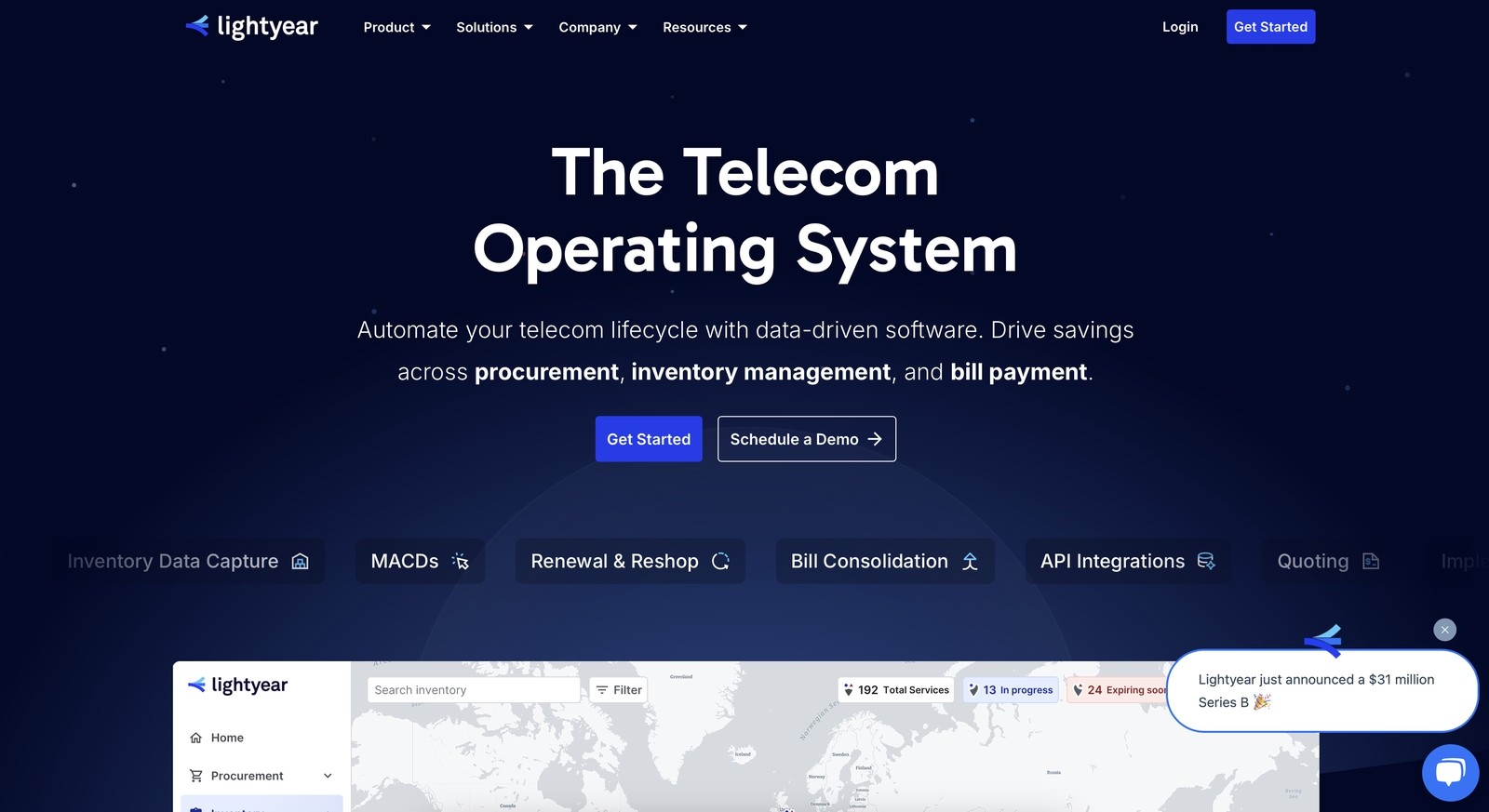
Whether you choose MPLS, broadband, or a hybrid approach for your WAN, Lightyear helps you procure and manage it all. By automating network service procurement, inventory management, and bill consolidation, our platform helps enterprises save over 70% in time and 20% in costs on their network services.
Schedule a demo or get started with our questionnaire today.
Frequently Asked Questions about Gartner MPLS vs WAN
Why does Gartner compare MPLS and WAN technologies?
Gartner analyzes networking trends to guide enterprise IT decisions. They compare MPLS to other transport options like broadband or 5G—all technologies used to build a WAN—to help leaders choose the right mix for their performance, security, and cost requirements.
Is MPLS technology becoming obsolete?
Not at all, but its role is evolving. While many businesses now favor hybrid models, MPLS remains the gold standard for applications needing guaranteed uptime and security. It is often used for critical sites, while other technologies connect smaller branches.
Can I use both MPLS and the internet for my WAN?
Yes, this is a common strategy known as a hybrid WAN. It provides a great balance of performance and cost by sending critical traffic over your private MPLS links and less sensitive data over more affordable public internet connections.
How does SD-WAN fit into the MPLS vs. WAN discussion?
SD-WAN is a modern approach to managing your WAN. It's a software overlay that intelligently directs traffic across any connection type you have—including MPLS, broadband, or 5G—to optimize application performance and simplify network management from a central point.
Let us show you the product and discuss specifics on how it might be helpful.
Schedule a Demo





Revolutionize Your Telecom Experience
Learn how you can get one step closer to optimal business efficiency for all your telecom services.