Gigabit Ethernet vs 10Gb Ethernet Comparison
Is 10Gb Ethernet worth the upgrade from Gigabit? This comparison covers speed, cost, and infrastructure requirements for IT decision-makers.

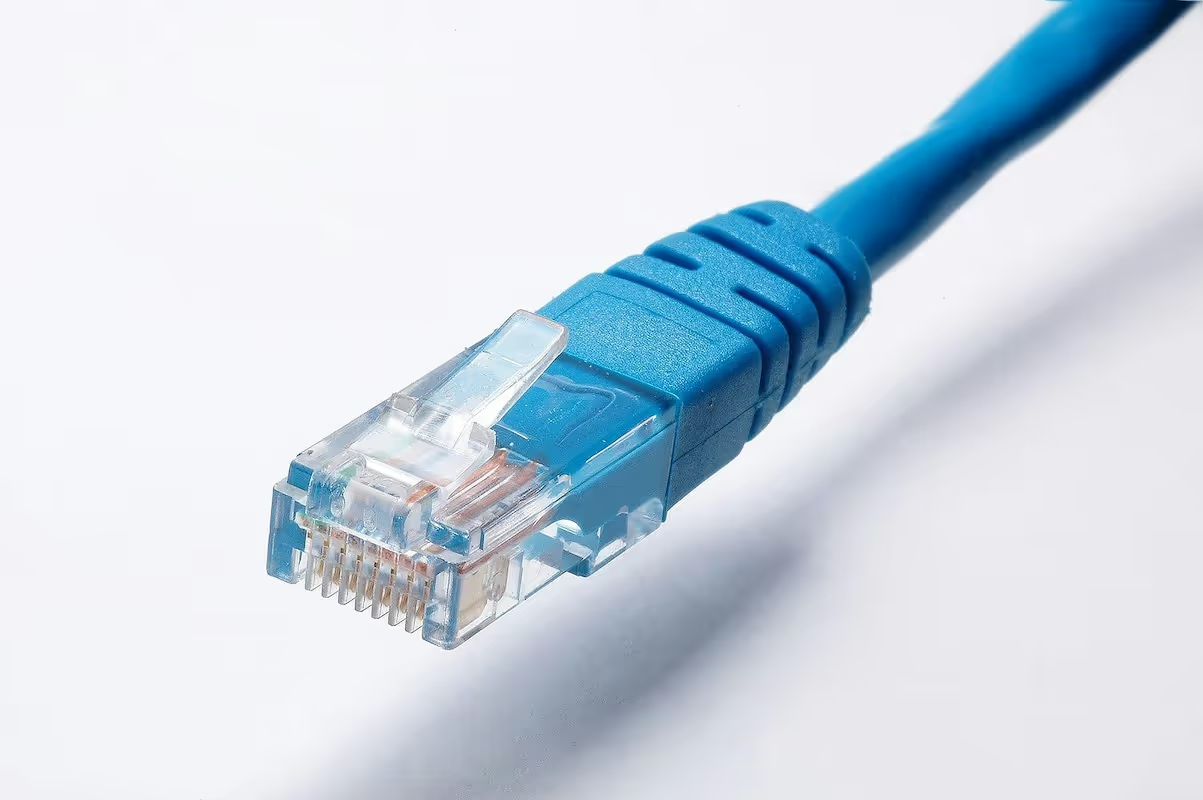
Choosing the right network infrastructure is a critical decision for any business, directly impacting productivity and operational efficiency. Two common standards you'll often encounter are Gigabit Ethernet and its much faster successor, 10Gb Ethernet.
While both provide reliable connectivity, they serve different needs and come with distinct performance capabilities and costs. This article breaks down the key differences to help you determine which solution is the right fit for your organization's network demands.
What is Gigabit Ethernet?
Often called 1 GigE, Gigabit Ethernet is a widely adopted networking standard that delivers data transfer speeds of 1 gigabit per second (Gbps). It became the successor to Fast Ethernet (100 Mbps) and has been the go-to for reliable, high-speed connectivity in business environments for years. It provides a solid foundation for most office network activities.
- Speed: Transmits data at a rate of 1,000 megabits per second (Mbps), which is ten times faster than its predecessor, Fast Ethernet.
- Standard: It is defined by the IEEE 802.3ab standard and operates over copper wiring.
- Cabling: It most commonly uses Category 5e (Cat5e) or higher-rated copper cables, which are standard in most office buildings.
- Application: It's the workhorse for many business LANs, easily supporting everyday tasks like file sharing, video conferencing, and cloud application access.
What is 10Gb Ethernet?
As its name suggests, 10Gb Ethernet is the next step up, offering a significant performance boost for more demanding network environments. It provides ten times the data rate of Gigabit Ethernet, making it a powerful solution for handling large-scale data transfers and high-bandwidth applications. It's designed for the core of a network where traffic is heaviest.
- Speed: Delivers data transfer speeds of 10 gigabits per second (Gbps), or 10,000 Mbps.
- Standard: Defined by the IEEE 802.3ae standard and can operate over both copper and fiber optic cables.
- Cabling: Requires higher-grade cabling to support its speed, such as Category 6a (Cat6a) or Category 7 (Cat7) for copper, or fiber optic cables for longer distances.
- Application: Ideal for data centers, server connections, and high-traffic network backbones that require substantial bandwidth.
Key Differences Between Gigabit Ethernet and 10Gb Ethernet
While speed is the most obvious distinction, the practical differences show up in how each standard performs under pressure and the infrastructure required to support it.
Performance and Latency
Gigabit Ethernet handles typical office workloads well, but it can become a bottleneck when multiple users access large files or run bandwidth-heavy applications simultaneously. This can lead to network congestion and slower performance.
10Gb Ethernet is designed to eliminate these bottlenecks. It offers significantly lower latency, ensuring that data packets are transferred with minimal delay. This is critical for connecting servers, storage area networks (SANs), and network backbones where high traffic flow is constant.
Hardware and Infrastructure Requirements
Nearly all modern business hardware comes equipped with Gigabit Ethernet ports, making it simple and inexpensive to deploy. A move to 10Gb Ethernet, however, requires a full infrastructure check. Your switches, routers, and server network interface cards (NICs) must all be 10GbE-capable to realize the full speed benefit.
Power Consumption and Heat
Another practical consideration is energy usage. Gigabit Ethernet hardware is highly efficient and produces minimal heat. In contrast, 10Gb Ethernet components, especially those using copper cabling, consume more power and generate more heat. This can impact cooling requirements and operational costs within your server room or data closet.
Benefits of Gigabit Ethernet for Enterprises
For many enterprise environments, Gigabit Ethernet remains the practical and efficient choice. It delivers more than enough speed to handle the vast majority of daily business activities without creating performance issues for end-users.
Standard office tasks such as high-definition video conferencing, VoIP calls, large file downloads, and running cloud-based applications all perform smoothly on a Gigabit network. It provides a reliable user experience across the board.
A key advantage is its universal compatibility. Because nearly all business-grade computers, printers, and other endpoint devices ship with Gigabit Ethernet ports, integration is simple. This avoids the need for expensive network card upgrades and allows businesses to use their existing Cat5e or Cat6 cabling infrastructure, simplifying deployment and keeping costs down.
Advantages of 10Gb Ethernet for Business Networks
While Gigabit Ethernet is sufficient for user-facing connections, 10Gb Ethernet excels in the core of the network where data traffic is heaviest. It is essential for operations that move massive amounts of data, such as large-scale backups, disaster recovery processes, and high-density virtualization environments.
By providing a high-capacity link for Storage Area Networks (SAN) or Network Attached Storage (NAS), it ensures that data access is fast and responsive, even with many users. This makes network storage feel nearly as quick as local storage.
This higher bandwidth also future-proofs your network backbone. As your company adopts more data-intensive applications and services, a 10GbE infrastructure provides the necessary capacity to handle the increased load without creating performance bottlenecks down the line.
Cost Considerations for Gigabit vs 10Gb Ethernet
When it comes to budgeting, the financial gap between the two standards is significant. While the price for 10Gb Ethernet hardware has decreased over time, it still represents a much larger investment than sticking with the gigabit standard.
- Gigabit Ethernet: This is the most cost-effective option by a wide margin. The hardware, including switches and network cards, is mass-produced and inexpensive. Most importantly, it runs on the Cat5e or Cat6 cabling already present in most commercial buildings, eliminating the need for costly wiring projects.
- 10Gb Ethernet: The total cost of ownership is considerably higher. 10GbE-capable switches and NICs carry a premium price per port. If your building isn't already wired with Cat6a or fiber optic cables, you'll face substantial expenses for new cabling installation. You also need to factor in higher long-term operational costs from increased power consumption and cooling needs.
Making the Right Choice for Your Network Needs
The decision between Gigabit and 10Gb Ethernet comes down to balancing performance needs with budget realities. The right choice depends entirely on the specific demands of your network, as each standard serves a distinct purpose within a business environment.
For most user-facing connections—like workstations, printers, and VoIP phones—Gigabit Ethernet provides ample speed and is the most cost-effective solution. It reliably handles everyday business activities without requiring expensive infrastructure upgrades.
On the other hand, 10Gb Ethernet is the clear winner for your network’s core. It is essential for connecting servers, storage systems, and switches, preventing bottlenecks where data traffic is heaviest.
Many businesses find a hybrid approach works best, using 10Gb Ethernet for the backbone and Gigabit Ethernet for endpoint devices. This strategy delivers high performance where it matters most while controlling costs. Evaluating your current data loads and future growth plans will point you to the right solution.
Need Help Managing Your Network? Lightyear Can Help
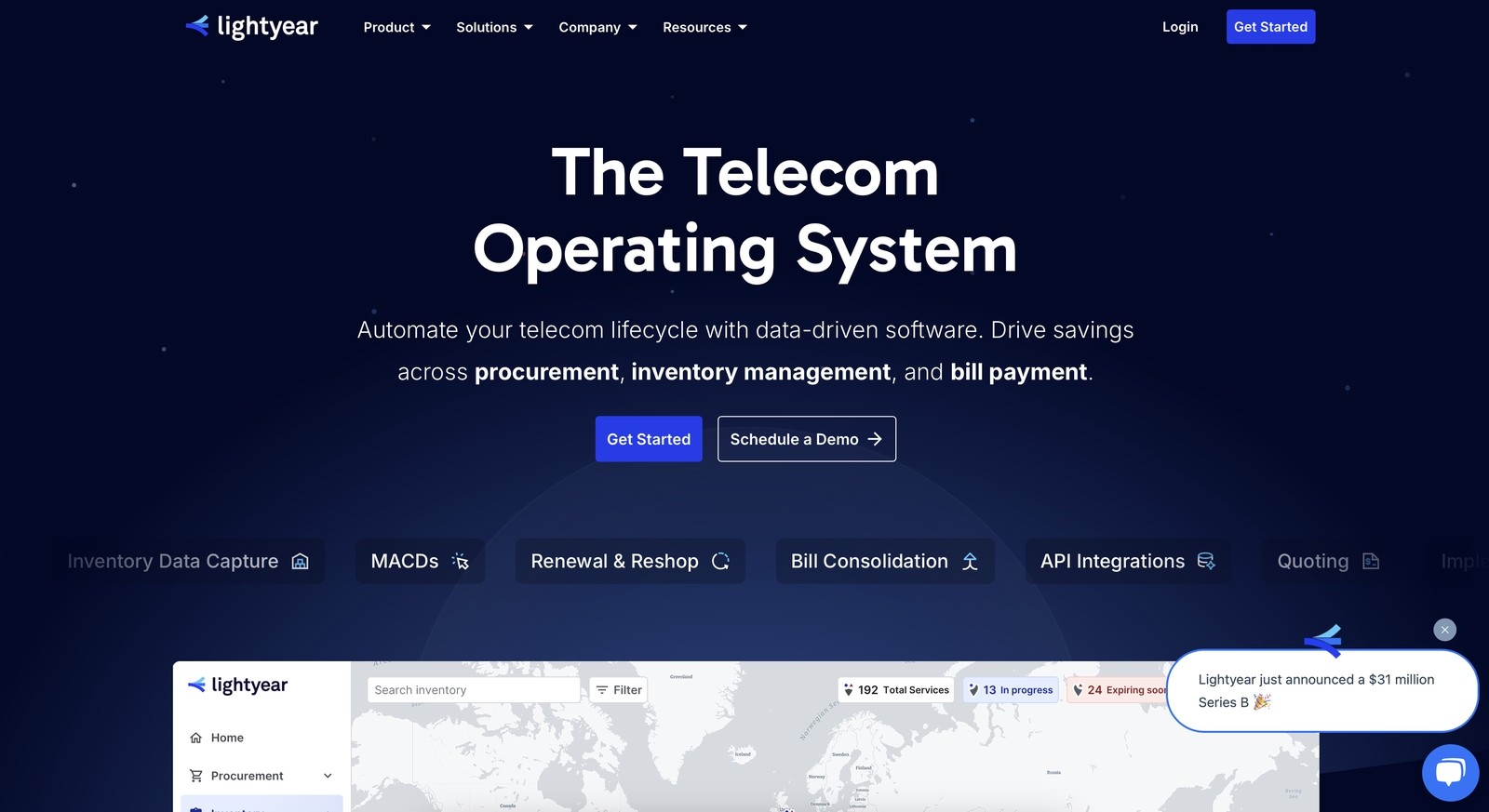
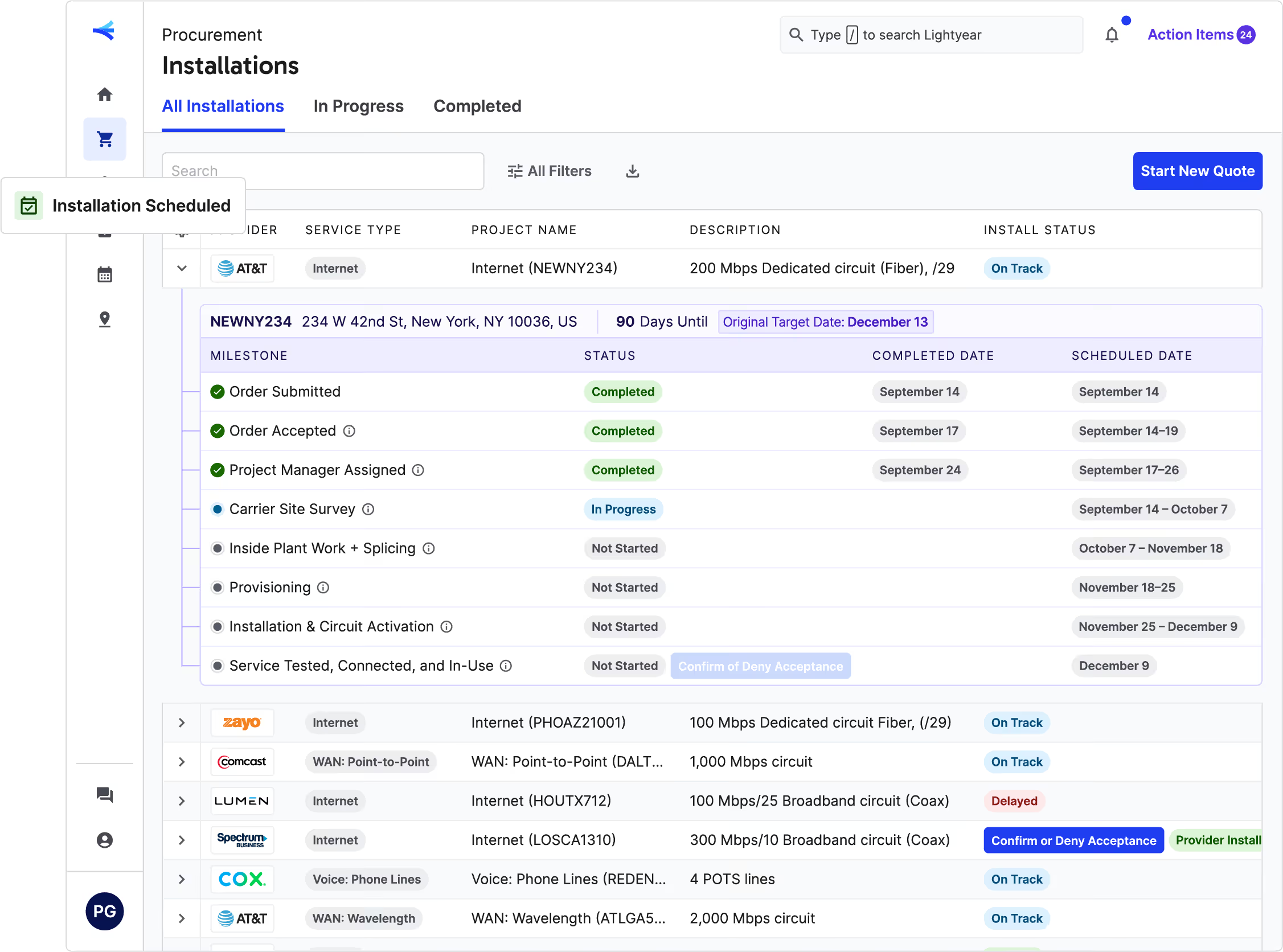
Whether you're procuring new 10Gb Ethernet circuits or managing your existing network, Lightyear's platform simplifies the entire process. Our software helps you compare carrier quotes and manage your network inventory in one central system.
By automating network service procurement and bill consolidation, Lightyear takes the pain out of telecom infrastructure management. Enterprises that use Lightyear achieve over 70% time savings and 20% cost savings on their network services.
Schedule a demo or get started with our questionare today.
Frequently Asked Questions about Gigabit Ethernet vs 10Gb Ethernet
Can I mix Gigabit and 10Gb Ethernet devices on the same network?
Yes, you can. 10Gb Ethernet ports are backward-compatible with Gigabit speeds. When a 1GbE device connects to a 10GbE switch port, the connection will simply operate at the lower 1 Gbps speed, which allows for gradual, cost-effective upgrades.
Is 10Gb Ethernet over copper as good as over fiber?
Both deliver 10 Gbps speeds, but fiber is superior for longer distances and is immune to electromagnetic interference. Copper (Cat6a/Cat7) is a practical choice for shorter runs, like within a server rack, due to its lower hardware cost.
Do I need a 10Gb Ethernet internet connection to use a 10GbE LAN?
Not necessarily. Your internal Local Area Network (LAN) speed is independent of your internet connection speed. A 10GbE LAN speeds up internal data transfers, while your internet speed is determined by the plan you purchase from your provider.
Let us show you the product and discuss specifics on how it might be helpful.
Schedule a Demo





Revolutionize Your Telecom Experience
Learn how you can get one step closer to optimal business efficiency for all your telecom services.