Gigabit Ethernet vs WiFi 6: Enterprise Network Comparison
Gigabit Ethernet vs. WiFi 6: A clear comparison of speed, reliability, and cost to help you choose the best network for your business.

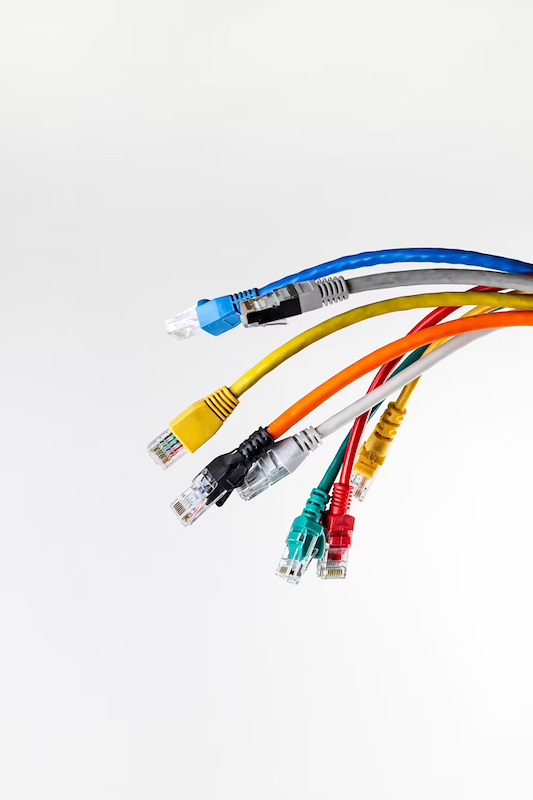
Choosing the right network infrastructure is a critical decision for any business. For many IT and operations teams, this choice often comes down to a comparison between a wired connection, like Gigabit Ethernet, and a wireless one, like WiFi 6.
While both offer high-speed internet access, they are built for different needs and environments. Understanding their distinct advantages and limitations is key to building a network that is both powerful and cost-effective.
What is Gigabit Ethernet?
Gigabit Ethernet, often called GigE, is a standard for transmitting data over a wired network at a rate of one gigabit per second (1 Gbps). As a mature and widely adopted technology, it serves as the backbone for countless business networks, providing a stable and high-speed connection through physical cables like Cat5e or Cat6.
This direct, wired approach offers several distinct characteristics that make it a reliable choice for enterprise environments. Here’s a breakdown of what defines it:
- High-Speed Performance: It delivers data speeds of 1,000 megabits per second (Mbps), which is ideal for bandwidth-intensive tasks like large file transfers, video conferencing, and accessing cloud applications without lag.
- Stable and Reliable Connection: Because it uses a physical cable, Gigabit Ethernet is not susceptible to the radio frequency interference that can disrupt wireless signals. This results in a more consistent and dependable connection.
- Low Latency: The direct physical link between a device and the network minimizes delays in data transmission. This is critical for applications where real-time communication is essential, such as VoIP phone systems.
- Enhanced Security: Wired networks are inherently more secure. Accessing the network requires a physical connection, making it much harder for unauthorized users to intercept data compared to a wireless network.
What is WiFi 6?
On the wireless side of the network equation is WiFi 6, also known by its technical name, 802.11ax. It’s the latest generation of WiFi technology, specifically engineered to perform better in crowded environments where many devices are competing for bandwidth. Unlike its predecessors, which focused primarily on boosting top speeds for single devices, WiFi 6 is designed for efficiency and capacity.
Its primary goal is to deliver a stable, consistent connection to every device on the network, even in a busy office. Here are its defining features:
- Greater Capacity and Efficiency: WiFi 6 uses technologies like OFDMA (Orthogonal Frequency Division Multiple Access) to divide wireless channels into smaller sub-channels. This allows it to communicate with multiple devices simultaneously, reducing latency and improving overall network performance.
- Higher Data Rates: While its main benefit is capacity, it does offer faster potential speeds than previous WiFi standards, supporting more demanding applications across more devices.
- Improved Performance in Congested Areas: It excels in high-density settings like open-plan offices, conference centers, and public venues, minimizing the slowdowns that typically occur when many users connect at once.
- Better Power Efficiency: A feature called Target Wake Time (TWT) allows devices to schedule check-in times with the router. This reduces power consumption and extends the battery life of mobile and IoT devices.
Gigabit Ethernet vs WiFi 6: A Direct Comparison
When you place these two technologies side-by-side, their core differences in performance and application become clear. Here’s how they stack up in key areas for a business environment.
1. Speed and Throughput
Gigabit Ethernet provides a dedicated, stable 1 Gbps pipeline to a single device. This speed is yours alone and doesn't fluctuate based on other users.
WiFi 6 has a much higher theoretical top speed, but this bandwidth is shared among all devices connected to that access point. Real-world speed per device will vary depending on network congestion and signal strength.
2. Latency and Reliability
For tasks demanding near-instantaneous response, Gigabit Ethernet is the gold standard. Its physical connection ensures ultra-low latency and rock-solid reliability, free from wireless interference.
While WiFi 6 greatly improves latency over its predecessors, it is still a wireless signal. It remains susceptible to physical obstructions and radio frequency interference, making it inherently less consistent than a wired link.
3. Mobility and Flexibility
This is the defining advantage of WiFi 6. It liberates devices from cables, enabling true mobility for laptops, tablets, and phones throughout the office.
Ethernet requires a physical connection, tethering devices like desktops and servers to a specific network port. This offers stability at the cost of flexibility.
4. Device Density
An Ethernet connection is a one-to-one relationship: one cable, one device. This is simple and effective for fixed hardware.
A single WiFi 6 access point, however, is built to manage dozens of connections simultaneously. It excels in high-density environments where many users and devices need to connect at once.
Installation and Setup Considerations
The setup process for each technology differs significantly, impacting both initial deployment and future scalability. Deploying Gigabit Ethernet is a structured, physical process that involves running cables from a central network switch to dedicated wall ports for each device. This can be a significant undertaking in buildings without existing structured cabling, often requiring professional installation.
In contrast, WiFi 6 installation focuses on the strategic placement of wireless access points (APs). While the APs themselves need a wired connection, this approach eliminates the need to run a cable to every endpoint. The main challenge shifts to conducting a thorough site survey to map out optimal AP locations, ensuring complete coverage while minimizing signal interference for reliable performance.
Security Features and Concerns
Gigabit Ethernet offers a straightforward security model. As a closed, physical network, access is controlled by who can plug a device into a network port. This physical barrier is its greatest strength, significantly reducing the risk of unauthorized external access.
WiFi 6, on the other hand, operates over the air and relies on robust encryption. It introduces the WPA3 security protocol, a major upgrade that provides stronger protection against password-guessing attempts and makes it much harder for attackers to snoop on data, even on open networks.
Even with WPA3, wireless networks require diligent management. They remain exposed to risks like rogue access points and signal interception, meaning proper configuration and monitoring are essential to maintaining a secure environment.
Cost Implications for Enterprises
When evaluating costs, the financial models for Gigabit Ethernet and WiFi 6 differ significantly. The primary investment for Gigabit Ethernet is in the physical infrastructure—the cost of cabling, switches, and professional installation. This can represent a major upfront capital expense, especially if a building lacks existing structured wiring.
Conversely, a WiFi 6 deployment shifts the cost focus to the access points (APs) and network planning. Enterprise-grade APs are a considerable expense, and a proper site survey is needed to ensure optimal performance, adding to the initial budget.
Over the long term, Ethernet hardware is exceptionally durable with low operational costs. WiFi 6 hardware often has a shorter refresh cycle to keep up with new standards, and some enterprise solutions may include recurring software licensing fees for management platforms.
Making the Right Choice for Your Business
Ultimately, the decision between Gigabit Ethernet and WiFi 6 isn't an either/or choice. A modern, high-performing business network almost always uses a hybrid approach, applying each technology where it offers the most value.
Here’s a simple guide to help you decide which to use for different parts of your infrastructure:
- Opt for Gigabit Ethernet for stationary, high-demand devices. It's the ideal choice for servers, desktop computers, and VoIP phone systems that require a stable, secure, and high-speed connection with minimal latency. If a device doesn't move, a wired connection is almost always superior.
- Deploy WiFi 6 for mobility and high-density areas. It is designed for environments where users need to connect with laptops, tablets, and smartphones. It also excels in common areas, conference rooms, and open-plan offices where many devices need simultaneous access.
By strategically combining the reliability of wired connections with the flexibility of wireless, you can build a network that supports every business function effectively.
Need Help Managing Your Network? Lightyear Can Help

Whether you're deploying new Gigabit Ethernet circuits or upgrading your WiFi access points, managing the underlying telecom services can be complex. Lightyear automates network service procurement, inventory management, and bill consolidation, taking the pain out of infrastructure management.
The hundreds of enterprises who trust Lightyear achieve 70%+ time savings and 20%+ cost savings on their network services. Schedule a demo or get started with our questionnaire today.
Frequently Asked Questions about Gigabit Ethernet vs WiFi 6
Can WiFi 6 actually be faster than Gigabit Ethernet?
While WiFi 6 has a higher theoretical top speed, that bandwidth is shared among all connected devices. Gigabit Ethernet provides a dedicated 1 Gbps connection to a single device, offering more consistent, real-world speed for stationary hardware without interference.
Do I need to upgrade my cables for Gigabit Ethernet?
Not always. Gigabit Ethernet runs well on Cat5e cabling, which is common in many buildings. However, for the best performance and to prepare for future multi-gig speeds, using Cat6 or Cat6a cables is recommended.
How does WiFi 6 work with older devices?
WiFi 6 is backward-compatible, so your older devices can still connect to the network. To benefit from the key advantages like higher speeds and better efficiency, however, your devices must also support the WiFi 6 standard.
Let us show you the product and discuss specifics on how it might be helpful.
Schedule a Demo





Revolutionize Your Telecom Experience
Learn how you can get one step closer to optimal business efficiency for all your telecom services.