Comparing ICMP and IGMP for Enterprise Networks
ICMP or IGMP? Learn the difference. ICMP is for network diagnostics like ping, while IGMP manages multicast traffic for efficient group communication.


In any enterprise network, a variety of protocols work behind the scenes to keep data flowing correctly. Two fundamental protocols that are essential for network operations are the Internet Control Message Protocol (ICMP) and the Internet Group Management Protocol (IGMP).
While both are crucial for managing IP traffic, they serve entirely different purposes. This article will explain the specific functions of ICMP and IGMP, highlighting their key differences to help you understand their distinct roles in your network infrastructure.
What is Internet Control Message Protocol (ICMP)?
The Internet Control Message Protocol (ICMP) is a network layer protocol used by network devices to send error messages and operational information. It's a fundamental part of the Internet Protocol (IP) suite, but it's not designed to carry application data. Instead, it functions as a control mechanism, helping administrators diagnose network problems and manage IP packet traffic.
Essentially, when something goes wrong during data transmission, ICMP is what sends the alert back to the source device. Its core functions fall into two main categories:
- Error Reporting: ICMP communicates issues like a destination host being unreachable, a packet taking too long to be delivered (Time Exceeded), or when a router becomes congested. These messages help the source device understand why a transmission failed.
- Network Diagnostics: The protocol is the foundation for common diagnostic tools. For example, the
pingutility uses ICMP Echo Request and Echo Reply messages to test connectivity between two devices, whiletracerouteuses ICMP to map the path data takes across the network.
What is Internet Group Management Protocol (IGMP)?
The Internet Group Management Protocol (IGMP) is a communication protocol used by hosts and adjacent routers on IPv4 networks to manage multicast group memberships. Its purpose is to enable efficient one-to-many communication, known as multicasting. This allows a single data packet from a source to be delivered to multiple destinations at once, conserving bandwidth by avoiding sending individual copies to each recipient.
IGMP operates on the local network, allowing a host to tell its router that it wants to receive traffic addressed to a specific multicast group. The protocol manages this process through a few key actions:
- Joining a Group: A host sends an IGMP "Membership Report" message to its local router to signal that it wants to receive traffic for a particular multicast group.
- Leaving a Group: When a host is finished receiving the multicast stream, it can send a "Leave Group" message to stop the flow of data.
- Maintaining Membership: Routers periodically send out "Membership Query" messages to check if any hosts on the network still want to belong to a group. If no hosts reply, the router stops forwarding that group's traffic.
Key Differences Between ICMP and IGMP
While both protocols operate at the network layer alongside IP, they have distinct jobs. Understanding these differences is key to managing your network traffic effectively.
1. Core Purpose: Control vs. Membership
Think of ICMP as the network's messenger service for operational issues. It doesn't carry user data, but instead delivers critical control and error messages, like notifying a sender that a destination is unreachable.
IGMP, however, functions more like a subscription manager. Its sole purpose is to tell a local router that a specific device wants to join or leave a multicast group to receive a particular data stream.
2. Communication Model: Point-to-Point vs. One-to-Many
ICMP communication is generally a two-way street between two devices. A ping, for instance, involves an Echo Request from a source and an Echo Reply from a destination, a direct point-to-point exchange.
IGMP is designed exclusively to support the one-to-many model of multicasting. It enables a single source to efficiently send packets to multiple recipients simultaneously, and IGMP manages the recipient list.
3. Role in the Network: Foundational vs. Application-Specific
ICMP is a foundational protocol for all IP networks. Without it, you lose the ability to perform basic diagnostics or receive feedback on packet delivery failures, making troubleshooting much more difficult.
IGMP is considered more application-specific. It's only implemented and required if your organization uses services that depend on multicasting, such as large-scale video conferencing, stock market data feeds, or IPTV.
Use Cases for ICMP in Enterprise Networks
In a business setting, ICMP is indispensable for day-to-day network management and troubleshooting. Its primary value comes from providing visibility into network health and performance. Here are some of its most common applications:
- Network Health Monitoring: Administrators regularly use ICMP-based tools like ping to confirm that critical infrastructure—such as servers, routers, and switches—is online and responsive. Automated monitoring systems often rely on these simple checks to trigger alerts.
- Troubleshooting Connectivity: When users report that an application or website is down, traceroute is used to map the packet's journey across the network. This helps IT teams quickly identify where the connection is failing, whether it's inside the local network or with an external provider.
- Optimizing Data Transmission: ICMP facilitates Path MTU Discovery (PMTUD), which helps determine the largest packet size that can be sent along a path without being fragmented. This prevents performance degradation caused by unnecessary packet fragmentation and reassembly.
Use Cases for IGMP in Enterprise Networks
IGMP becomes critical in any scenario where you need to efficiently send a single stream of data to multiple recipients at the same time. Its ability to manage multicast group membership conserves significant bandwidth. Common enterprise applications include:
- Live Video Broadcasts: For events like company-wide meetings, training sessions, or IPTV distribution in a corporate setting, IGMP allows a single video stream to be sent to numerous viewers without creating a separate data stream for each one.
- Real-Time Data Feeds: Industries that rely on instant information, such as finance, use multicasting to distribute stock tickers and market data to many terminals simultaneously. IGMP manages which workstations are part of the data group.
- Large-Scale Conferencing and Distance Learning: In educational or corporate environments, IGMP helps manage video and audio streams for large webinars or remote classes, ensuring all participants receive the content efficiently.
Choosing the Right Protocol for Your Network Needs
Deciding between these protocols isn't about picking one over the other; it's about understanding when each is required for your specific operational needs.
1. For Foundational Network Stability
ICMP is not an optional protocol. It is a core component of any IP network, essential for basic diagnostics and error reporting.
Your focus here is not on choosing it, but on ensuring it is not blocked by firewalls, as that would hinder your ability to troubleshoot connectivity issues.
2. For Application-Specific Bandwidth Efficiency
The need for IGMP is determined entirely by your business applications. You should implement and manage IGMP only if your organization uses services that rely on multicasting.
If you require live video broadcasts, real-time data feeds, or large-scale video conferencing, IGMP is necessary to conserve bandwidth. Otherwise, it serves no purpose in your network.
Final Thoughts on ICMP and IGMP
While ICMP and IGMP both operate at the network layer, they address completely separate challenges. Understanding their distinct functions is key to effective network management and making informed infrastructure decisions.
ICMP is your network's built-in diagnostic tool. It provides essential feedback for troubleshooting connectivity and performance, making it a fundamental component of any stable network.
In contrast, IGMP is a specialized protocol for bandwidth efficiency. Its purpose is to manage multicast group memberships for applications that send one data stream to many recipients, such as live video or financial data feeds.
Ultimately, every network relies on ICMP for operational health. The decision to implement IGMP, however, is driven entirely by your specific business applications and the need to conserve bandwidth for one-to-many communications.
Need Help Managing Your Network? Lightyear Can Help
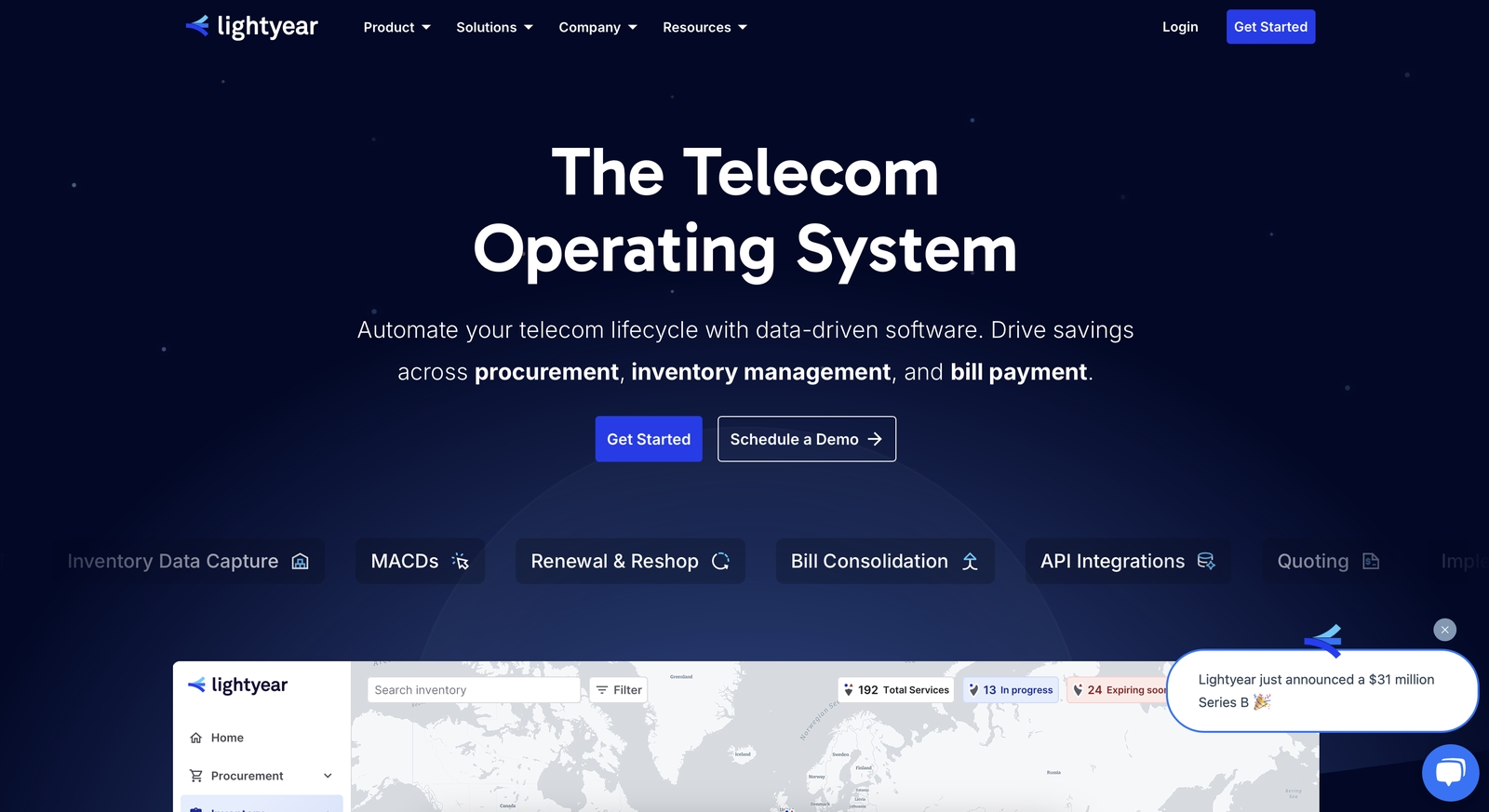
While understanding protocols like ICMP and IGMP is important, managing the underlying network services can be complex. By automating network service procurement, inventory management, and bill consolidation, Lightyear takes the pain out of telecom infrastructure management.
The hundreds of enterprises who trust Lightyear achieve 70%+ time savings and 20%+ cost savings on their network services. Schedule a demo or get started with our questionnaire today.
Frequently Asked Questions about Internet Control Message Protocol vs Internet Group Management Protocol
Are there security risks with ICMP or IGMP?
Yes, both can be exploited. ICMP can be used for denial-of-service (DoS) attacks like "ping floods." IGMP vulnerabilities could allow unauthorized hosts to join multicast groups. Proper firewall and router configurations are essential to mitigate these risks and secure your network.
Do ICMP and IGMP have equivalents in IPv6?
They do. For IPv6, ICMP is replaced by ICMPv6, which integrates additional functions like address resolution. IGMP is superseded by Multicast Listener Discovery (MLD), which performs the same role of managing multicast group membership for IPv6 networks.
Which protocol has a bigger impact on network performance?
IGMP generally has a more direct impact on bandwidth. If not configured correctly, it can flood the network with unnecessary multicast traffic. While ICMP traffic is light, blocking it can hurt performance by preventing essential functions like Path MTU Discovery.
Do ICMP and IGMP ever interact with each other?
No, they operate independently. Both function at the network layer but serve completely different purposes without direct interaction. ICMP handles error and control messaging for general IP traffic, while IGMP is exclusively for managing multicast group membership.
Let us show you the product and discuss specifics on how it might be helpful.
Schedule a Demo





Revolutionize Your Telecom Experience
Learn how you can get one step closer to optimal business efficiency for all your telecom services.