Intrusion Detection Systems vs. Wireshark Explained
Choosing between an IDS and Wireshark? Learn how an Intrusion Detection System automates threat alerts vs. how Wireshark helps you inspect network data.

When it comes to network management and security, two names frequently appear: Intrusion Detection Systems (IDS) and Wireshark. While both are centered on network traffic, they fulfill fundamentally different roles and are not interchangeable.
An Intrusion Detection System is an automated security platform that constantly monitors network activity. It identifies potential threats based on predefined rules or behavioral anomalies and then issues alerts to your team.
Wireshark, on the other hand, is a network protocol analyzer. It’s a manual tool for capturing and examining the raw data packets flowing across your network, used primarily for troubleshooting and in-depth analysis.
What is an Intrusion Detection System (IDS)?
Think of an Intrusion Detection System as a vigilant alarm system for your network. Its primary job is not to stop attacks, but to detect them as they happen and notify you immediately. It accomplishes this by continuously analyzing traffic and comparing it against established rules or normal network patterns.
An IDS typically operates in a few key ways:
- Signature-Based Detection: This method involves looking for specific, known patterns of malicious activity. It's like having a database of fingerprints for common cyberattacks. While highly effective against recognized threats, it can miss new or novel attacks.
- Anomaly-Based Detection: Instead of looking for known bads, this approach establishes a baseline of what normal network traffic looks like. It then flags any significant deviations from that baseline, which could indicate a new type of attack.
- Passive Monitoring and Alerting: An IDS is a passive tool. It watches, detects, and alerts your IT team to suspicious activity. It doesn't actively block the traffic itself; that function belongs to an Intrusion Prevention System (IPS).
What is Wireshark?
Wireshark is a powerful and widely used network protocol analyzer. It functions like a microscope for your network, capturing data packets in real time and displaying them in a detailed, human-readable format. Unlike an automated system, Wireshark is a manual tool; it requires a user to initiate captures, apply filters, and interpret the data. It provides the raw information but doesn't automatically flag issues.
- Packet Capture: It grabs live data from various network connections, including Ethernet, Wi-Fi, and Bluetooth, giving you a complete record of the traffic passing through a specific point.
- Protocol Dissection: The tool can decode hundreds of different communication protocols. This allows you to see the contents of each packet, from high-level application data down to the low-level binary information.
- Filtering and Analysis: Wireshark includes robust filtering capabilities. You can isolate traffic based on IP address, protocol type, port number, and other specific criteria to zero in on the exact information you need for troubleshooting or analysis.
Key Differences Between IDS and Wireshark
While both tools analyze network traffic, they are designed for very different jobs. Here’s a closer look at how they differ.
1. Core Purpose
An IDS is a dedicated security platform. Its primary function is to defend the network by identifying intrusions, policy violations, and other malicious activities.
Wireshark is a general-purpose network protocol analyzer. Its purpose is much broader, serving as a diagnostic tool for troubleshooting connectivity problems, analyzing latency, or simply understanding how applications communicate over the network.
2. Automation vs. Manual Interaction
An IDS is designed for autonomous operation. It runs continuously in the background, automatically analyzing all relevant traffic and requiring no direct interaction unless an alert is triggered.
In contrast, Wireshark is an interactive, hands-on tool. A user must manually initiate a packet capture, stop it, and then use filters and their own expertise to sift through the data to find relevant information.
3. Data and Alerting
The output from an IDS is focused and actionable: an alert. It tells you that something potentially harmful has been detected, often with details about the threat type and source.
Wireshark provides raw, unfiltered data. It presents every captured packet in detail but offers no judgment or automatic alerts. The responsibility for interpreting this data and identifying issues—security or otherwise—rests entirely with the analyst.
Use Cases for Intrusion Detection Systems
An IDS is primarily deployed to strengthen a network's security posture. Its automated nature makes it ideal for continuous, real-time threat detection across an organization.
A key use case is identifying malware. The system can recognize network traffic linked to known viruses or ransomware, allowing teams to respond before significant damage occurs. It is also valuable for enforcing internal security policies by flagging unauthorized access to sensitive data or the use of prohibited applications.
For businesses needing to meet regulatory standards like PCI DSS or HIPAA, an IDS provides the necessary monitoring and alerting to demonstrate compliance. It also functions as an early warning system, pointing security teams toward suspicious activity that requires further investigation.
Use Cases for Wireshark
Wireshark is the go-to diagnostic tool for network engineers and IT professionals. Its primary use case is troubleshooting network performance and connectivity issues. When users report slow application speeds or connection drops, an analyst can use Wireshark to capture traffic and inspect the packet data to find the root cause, such as high latency or packet loss.
It is also invaluable for network forensics. While an IDS will alert you to a potential threat, Wireshark is the tool used to perform a detailed investigation. Analysts can examine the specific packets involved in a security incident to understand the attack vector and assess the extent of the breach. Additionally, developers often use it to debug network applications and verify that protocols are being implemented correctly.
Choosing the Right Tool for Your Network
The decision between an IDS and Wireshark isn't about which one is better, but which one fits your immediate need. They are not competitors; they are complementary tools that serve different functions in your network management toolkit. A robust strategy often involves using both.
- For automated security monitoring: An IDS is the correct choice. It provides the 24/7 surveillance needed to detect threats in real-time without constant human oversight. If your goal is to establish a baseline security posture and receive immediate alerts, an IDS is essential.
- For targeted diagnostics and forensics: Wireshark is your tool for manual, in-depth analysis. You'll turn to it to diagnose a specific network problem, investigate the details of a security alert, or analyze protocol behavior. It is used for discrete tasks, not continuous monitoring.
- For a complete strategy: The most effective approach uses both tools together. An IDS alert often serves as the starting point for a deeper investigation, where an analyst then uses Wireshark to examine the specific packets and understand the full context of an incident.
Final Thoughts on IDS and Wireshark
Ultimately, Intrusion Detection Systems and Wireshark address fundamentally different needs within network management. They are not competing solutions but complementary tools that work best in tandem.
An IDS is a security platform you deploy for continuous, automated threat detection. It’s the system that works around the clock to alert you to potential problems.
Wireshark, in contrast, is the manual tool your technical team uses to investigate those alerts or troubleshoot other network issues. It provides the raw data needed for deep analysis on a case-by-case basis.
For IT and telecom decision-makers, a comprehensive strategy includes both: an IDS for foundational security and Wireshark as an essential diagnostic tool for your engineers.
Need Help Managing Your Network? Lightyear Can Help
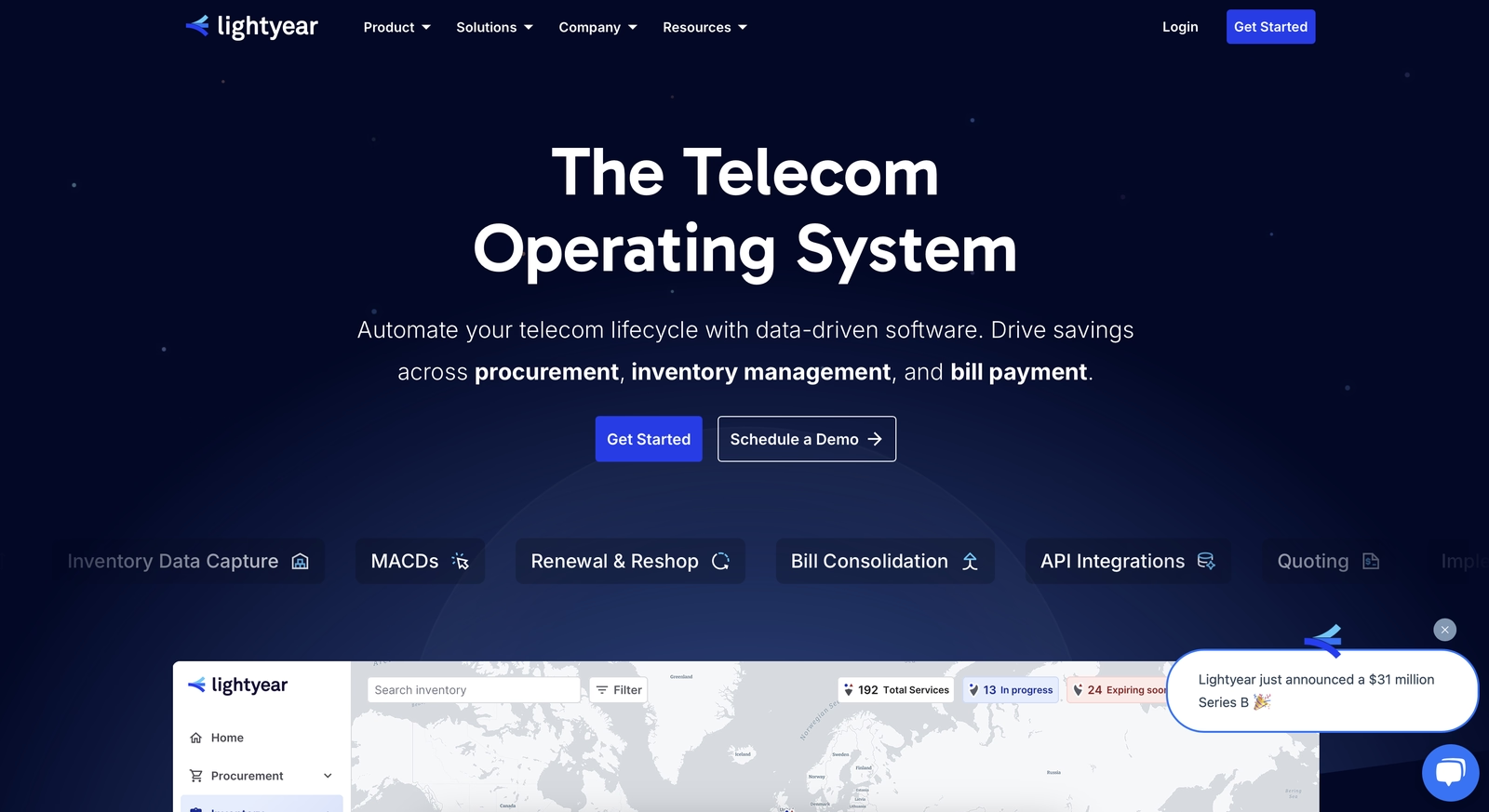
While IDS and Wireshark help you manage network traffic, Lightyear helps you manage the underlying telecom infrastructure itself. By automating network service procurement, inventory management, and bill consolidation, Lightyear takes the pain out of infrastructure management, helping you maintain a secure and efficient network.
The hundreds of enterprises who trust Lightyear achieve 70%+ time savings and 20%+ cost savings on their network services. Schedule a demo or get started with our questionnaire today.
Frequently Asked Questions about Intrusion Detection System vs Wireshark
Can Wireshark replace an IDS for security monitoring?
Not effectively. Wireshark is a manual tool for deep analysis, not for continuous, automated monitoring. An IDS is designed to run 24/7 and automatically alert you to threats, a function Wireshark cannot perform on its own.
Does an IDS log all network packets like Wireshark?
Not usually. An IDS analyzes traffic for threats and typically only logs data relevant to a detected incident. In contrast, Wireshark is built to capture every single packet within a specific timeframe for granular, manual inspection.
Which tool requires more technical expertise to use?
Wireshark generally requires more hands-on expertise. Interpreting raw packet data demands a strong understanding of network protocols. While an IDS needs proper configuration, its day-to-day operation is automated and less technically demanding for staff.
Are there cost differences between an IDS and Wireshark?
Yes, significantly. Wireshark is open-source and free to download and use. Intrusion Detection Systems are typically commercial security products that involve licensing fees, potential hardware costs, and ongoing support contracts, making them a larger investment.
Let us show you the product and discuss specifics on how it might be helpful.
Schedule a Demo





Revolutionize Your Telecom Experience
Learn how you can get one step closer to optimal business efficiency for all your telecom services.