Comparing IPFIX and SFLOW for Network Monitoring
Choosing between IPFIX and sFlow for network monitoring? This guide breaks down the core differences to help you select the right protocol.

Effective network monitoring is essential for maintaining performance and security. When it comes to collecting traffic data, two common protocols you'll encounter are IPFIX and sFlow.
Both protocols help you understand what's happening on your network, but they do so in fundamentally different ways.
This guide compares their architecture, data collection methods, and overall performance impact to help you choose the right approach for your enterprise network.
What is IPFIX?
IPFIX (IP Flow Information Export) is an IETF protocol designed to export traffic flow information from network devices like routers and switches. It functions by observing all IP packets passing through an observation point and grouping them into "flows." A flow is simply a sequence of packets that share common attributes, such as the same source and destination IP addresses and ports.
- Stateful Tracking: As a stateful protocol, IPFIX maintains a record for every active flow. It creates a flow record when a new flow is detected and updates it as more packets from that flow pass through.
- Flexible Templates: The protocol's flexibility comes from its use of templates, which define the structure of the exported flow data. This allows vendors to include custom, proprietary information alongside standard data fields.
- Complete Visibility: By tracking every single flow, IPFIX provides a complete and highly accurate picture of all traffic traversing the monitoring point.
What is sFlow?
sFlow, or sampled Flow, is a multi-vendor standard for monitoring traffic in high-speed networks. It takes a statistical approach by sampling packets at a predefined rate instead of tracking every individual flow. This method provides a real-time view of network traffic with minimal performance impact on network devices like routers and switches.
- Stateless Operation: As a stateless protocol, sFlow does not maintain a table of active flows. It simply samples individual packets as they pass through an interface and forwards the data to a collector.
- Packet Sampling: sFlow captures one out of every 'N' packets, where 'N' is a configurable sampling rate. This makes it highly scalable for monitoring high-volume traffic without overwhelming the device.
- Combined Data Export: The exported data includes sampled packet headers along with interface counters, offering a broad overview of traffic patterns and volumes across the network.
Key Differences Between IPFIX and sFlow
While both protocols aim to provide traffic visibility, their core mechanics create important distinctions in how they perform and what data they deliver.
1. Data Collection Method
IPFIX operates by creating a flow cache directly on the network device. It actively monitors all packets, groups them into flows, and exports a summary record once a flow ends.
In contrast, sFlow is much simpler. It randomly samples individual packets and exports them immediately, without tracking conversations or maintaining a state table on the device.
2. Accuracy and Granularity
Because IPFIX records every single flow, it offers 100% accounting accuracy for all traffic passing through the monitoring point. This provides highly granular data perfect for detailed analysis.
sFlow provides a statistical approximation of traffic. While excellent for understanding general trends and top talkers in real-time, it may not capture every short-lived or low-volume flow due to its sampling nature.
3. Resource Impact on Network Devices
Maintaining a flow cache makes IPFIX more demanding on a device's CPU and memory. The resource usage can fluctuate depending on the number of active flows.
sFlow has a very low and predictable performance overhead. Since it only samples packets, its impact on the network device is minimal, even on very high-speed interfaces.
Benefits of Using IPFIX
The stateful and detailed approach of IPFIX provides several key advantages, particularly in scenarios where complete accuracy is non-negotiable.
- Comprehensive Security Analysis: Because it records every flow, IPFIX creates a complete audit trail of network conversations. This is invaluable for security forensics, allowing teams to trace the exact path of an attack or data breach without any gaps in visibility.
- Accurate Billing and Accounting: For organizations that rely on usage-based billing or need to allocate IT costs across departments, IPFIX’s 100% accuracy ensures that every bit of data is accounted for, leading to fair and precise reporting.
- In-Depth Troubleshooting: The granular data helps engineers pinpoint the root cause of network issues, from identifying specific applications causing congestion to diagnosing poor user experience with unmatched detail.
Advantages of sFlow
sFlow's statistical sampling approach offers its own set of compelling benefits, especially in environments where speed and scalability are top priorities.
- High Scalability: sFlow is built for speed. Its lightweight, stateless nature makes it ideal for monitoring high-volume traffic on 10G, 40G, and even 100G networks without degrading device performance.
- Immediate Traffic Insights: Since sampled packets are exported right away, sFlow provides a near real-time view of network activity. This is perfect for quickly identifying broad traffic trends and sudden anomalies like DDoS attacks.
- Broad Vendor Compatibility: As a widely supported industry standard, sFlow works across hardware from numerous vendors. This simplifies monitoring in a mixed-vendor network, ensuring consistent data collection.
- Low, Predictable Overhead: The impact on device CPU and memory is minimal and consistent, regardless of traffic volume. You can enable it across the entire network without worrying about performance hits.
Choosing the Right Protocol for Your Network
Deciding between IPFIX and sFlow isn't about which one is universally better, but which is right for a specific job. Your choice will depend on your primary monitoring goals and network architecture.
1. When to Prioritize IPFIX
If your main goal is deep security analysis or precise usage-based accounting, IPFIX is the stronger choice. Its ability to capture every single flow provides the complete, granular data needed for forensic investigations and accurate billing, where no detail can be missed.
2. When to Opt for sFlow
For monitoring traffic on high-speed backbone links (10G and above) or getting a quick pulse on network-wide trends, sFlow excels. Its low performance impact ensures your routers and switches aren't bogged down, making it ideal for broad visibility without sacrificing device health.
3. A Hybrid Strategy
Many organizations find that the best approach is to use both. You might deploy IPFIX on your internet edge gateways for security monitoring while using sFlow on internal distribution switches for capacity planning. This model gives you deep visibility where it counts and scalable performance everywhere else.
Final Thoughts on IPFIX vs sFlow
Both IPFIX and sFlow are powerful tools for network visibility, but they serve different primary purposes. Your decision should hinge on a simple trade-off: accuracy versus scalability.
IPFIX offers complete, granular data ideal for security forensics and precise accounting. In contrast, sFlow provides real-time, scalable insights for monitoring high-volume traffic with minimal overhead.
By aligning the right protocol with your monitoring goals, you can build a more effective and manageable network.
Need Help Managing Your Network? Lightyear Can Help
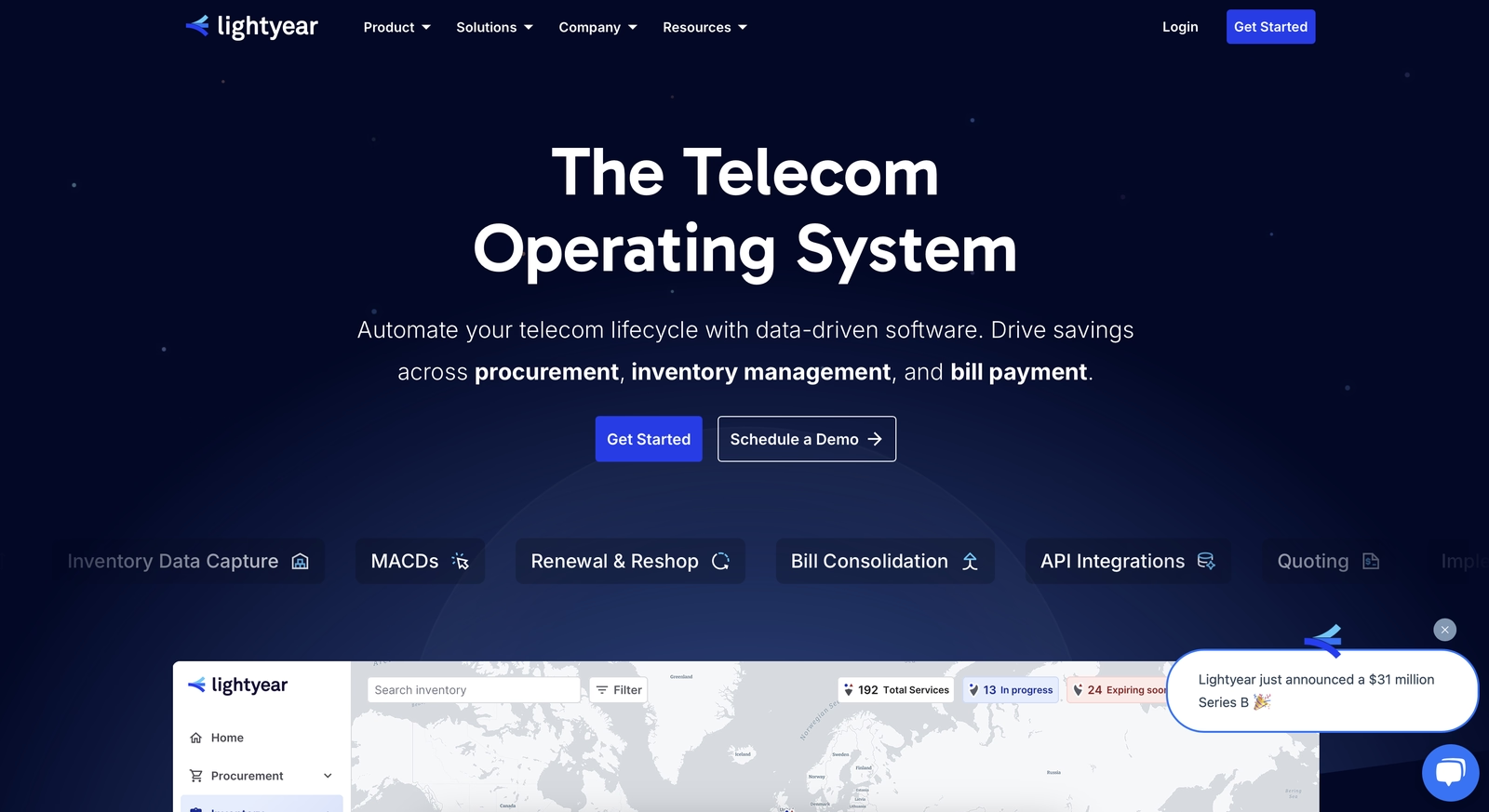
While IPFIX and sFlow help you monitor network traffic, Lightyear provides a central system-of-record for the infrastructure itself. By automating network service procurement, inventory management, and bill consolidation, we take the pain out of telecom infrastructure management.
Hundreds of enterprises trust Lightyear to achieve over 70% time savings and 20% cost savings on their network services.
Schedule a demo or get started with our questionnaire today.
Frequently Asked Questions about IPFIX vs SFLOW
Can I use both IPFIX and sFlow on the same network?
Absolutely. A hybrid approach is common. You can use IPFIX on security-sensitive edge devices for deep analysis and deploy sFlow on high-speed internal switches for general performance monitoring and capacity planning, getting the best of both worlds.
Which protocol is better for cloud environments?
It depends on the provider and your goals. Many cloud platforms have their own flow logging tools. For virtual routers you manage, sFlow's low overhead is often preferred to minimize performance impact on the virtualized infrastructure.
How do I know if my network hardware supports these protocols?
Check your device's documentation or the vendor's technical specifications. Most modern enterprise-grade switches and routers support at least one. sFlow is widely adopted across many vendors, while IPFIX is an IETF standard with some vendor-specific extensions.
Let us show you the product and discuss specifics on how it might be helpful.
Schedule a Demo





Revolutionize Your Telecom Experience
Learn how you can get one step closer to optimal business efficiency for all your telecom services.