Comparing ISO OSI and TCP/IP Models
Comparing the OSI and TCP/IP models? Learn the key differences between these foundational networking frameworks to make informed IT decisions.

When it comes to understanding how computer networks function, two models are foundational: the Open Systems Interconnection (OSI) model and the Transmission Control Protocol/Internet Protocol (TCP/IP) model. Both serve as conceptual frameworks that standardize the functions of a telecommunication or computing system.
While the OSI model is a more comprehensive, seven-layer theoretical framework, the TCP/IP model is a more practical, four-layer model that forms the basis of the modern internet. Understanding their differences is crucial for anyone involved in managing or procuring network services.
Understanding the OSI Model
Developed by the International Organization for Standardization (ISO), the OSI model provides a universal language for computer networking. It logically divides the complex process of network communication into seven distinct, manageable layers. Each layer performs a specific job and then passes the data along to the next layer, either up or down the stack.
Think of it as a step-by-step guide for how data travels across a network. Here’s a breakdown of the seven layers, from top to bottom:
- Application (Layer 7): The layer closest to the end-user. It interacts directly with software applications to provide network services like email, file transfers, and web browsing.
- Presentation (Layer 6): This layer acts as a translator. It formats, encrypts, and compresses data, ensuring it's in a usable format for the application layer on the receiving end.
- Session (Layer 5): Responsible for opening and closing communication channels—or sessions—between two devices. It ensures the session stays open long enough to transfer all necessary data.
- Transport (Layer 4): This layer manages the end-to-end transfer of data. It handles flow control, breaks data into smaller segments, and performs error checking for reliable delivery.
- Network (Layer 3): The network layer’s main job is to move data packets from a source to a destination across different networks. This is where routing and IP addressing happen.
- Data Link (Layer 2): This layer establishes and terminates a connection between two physically-connected nodes. It handles error checking from the physical layer and manages node-to-node data transfer.
- Physical (Layer 1): This is the hardware of the network, including cables, switches, and network interface cards. It is responsible for transmitting the raw bit stream over a physical medium.
Understanding the TCP/IP Model
The TCP/IP model is a more condensed framework that directly corresponds to the protocols that power the internet. Unlike the theoretical OSI model, TCP/IP was developed practically, alongside the internet itself. It combines several of the OSI layers into four broader categories, focusing on the essential functions needed for network communication.
Here is how its four layers are structured:
- Application Layer: This top layer combines the functions of the OSI model's Application, Presentation, and Session layers. It includes protocols that applications use to communicate, such as HTTP for web browsing and SMTP for email.
- Transport Layer: Similar to its OSI counterpart, this layer is responsible for reliable, end-to-end data delivery. It uses protocols like TCP for connection-oriented communication and UDP for faster, connectionless communication.
- Internet Layer: This layer is equivalent to the OSI model's Network layer. It is responsible for addressing, routing, and packaging data into IP packets to be sent across networks. This is where the Internet Protocol (IP) operates.
- Network Access Layer: This bottom layer combines the OSI model's Data Link and Physical layers. It deals with the physical transmission of data over the network medium, including hardware like Ethernet cables and network interface cards.
Key Differences Between OSI and TCP/IP Models
While both models map out network functions, they differ in some fundamental ways that are important for IT leaders to understand.
1. Conceptual Approach and Origin
The primary difference lies in their origins and intent. The OSI model is a theoretical, prescriptive framework developed by the ISO as a universal standard for network design.
Conversely, the TCP/IP model is practical and descriptive. It was developed by the U.S. Department of Defense alongside the internet and simply documents the protocols already in use.
2. Layer Structure
As noted earlier, the OSI model features seven distinct layers, while the TCP/IP model has a more condensed four-layer structure.
TCP/IP combines the functions of OSI’s top three layers (Application, Presentation, Session) into a single Application layer. It also merges the bottom two OSI layers (Data Link, Physical) into its Network Access layer.
3. Protocol Dependence
The OSI model is fundamentally protocol-independent. It serves as a generic guide that can be used to understand any network communication, regardless of the specific protocols involved.
The TCP/IP model, however, is built specifically around the TCP and IP protocols. It is not a generic framework but rather a model that directly corresponds to the internet's core protocol suite.
4. Communication Handling
The models also differ in how they handle communication types. The OSI model's Transport layer exclusively supports connection-oriented communication for reliable data transfer.
The TCP/IP model’s Transport layer is more flexible, supporting both connection-oriented (TCP) and connectionless (UDP) communication. This allows for a choice between reliability and speed, depending on the application's needs.
Advantages of the OSI Model
Despite its theoretical nature, the OSI model offers distinct benefits, particularly for network management and troubleshooting. Its primary strength is its detailed, seven-layer structure, which functions as a clear roadmap for diagnosing network problems.
When an issue occurs, IT teams can use the model to systematically isolate the problem to a specific layer. This granular approach makes it easier to determine if a fault is with a physical cable (Layer 1), a routing configuration (Layer 3), or a software application (Layer 7), which helps in resolving issues more efficiently.
Additionally, the model’s protocol-independent design makes it an excellent educational and developmental tool. It provides a universal standard that helps professionals learn networking concepts and gives manufacturers a clear blueprint for creating interoperable hardware and software.
Advantages of the TCP/IP Model
The TCP/IP model’s main strength is its direct connection to the real world. As the foundational framework of the internet, it is a practical and proven model, not just a theoretical one.
Its architecture is considered highly scalable, having successfully supported the internet's expansion into the global network it is today. This makes it a reliable choice for building and managing large-scale networks.
Furthermore, because the model is built around the core internet protocol suite, it has become the universal standard for network development. This widespread adoption ensures high compatibility and interoperability between different hardware and software, a critical factor for any enterprise IT environment.
Real-World Applications of OSI and TCP/IP Models
So, how do these models apply in day-to-day operations? While they both describe network functions, their practical uses are quite different, and IT teams typically use them for distinct purposes.
- The OSI Model: This model is primarily a reference and troubleshooting guide. When a network outage occurs, engineers use its seven-layer structure to systematically diagnose the problem. For example, they can check for issues layer by layer—from a faulty cable at the Physical Layer to an incorrect IP address at the Network Layer. It provides a logical framework for isolating faults efficiently and is the standard for teaching networking concepts.
- The TCP/IP Model: This is the blueprint for the modern internet, and its protocols are actively used in every network communication. When your team configures a firewall, sets up a VoIP phone system, or browses a website, they are using applications and protocols (like HTTP, TCP, and IP) defined by the TCP/IP model. It is the practical standard for building and managing networks, directly governing how data is sent and received across your enterprise.
Making the Right Choice for Your Enterprise
For enterprise IT leaders, the discussion isn't about choosing one model to the exclusion of the other. Instead, it's about understanding their complementary roles in managing a modern network.
The TCP/IP model is the de facto standard for the internet and private networks. Your enterprise infrastructure already operates on its protocols, making it the practical foundation for all network-related procurement and implementation.
The OSI model, on the other hand, serves as an invaluable diagnostic and educational framework. Its detailed, seven-layer structure provides a universal language for troubleshooting, helping your team pinpoint issues with precision, from physical connections to application behavior.
Ultimately, a well-rounded understanding of both is essential for effective network management. Your team builds and operates with the TCP/IP model, but they diagnose and communicate more effectively using the concepts from the OSI model. This dual knowledge is fundamental to maintaining a reliable and efficient enterprise network.
Need Help Managing Your Network? Lightyear Can Help
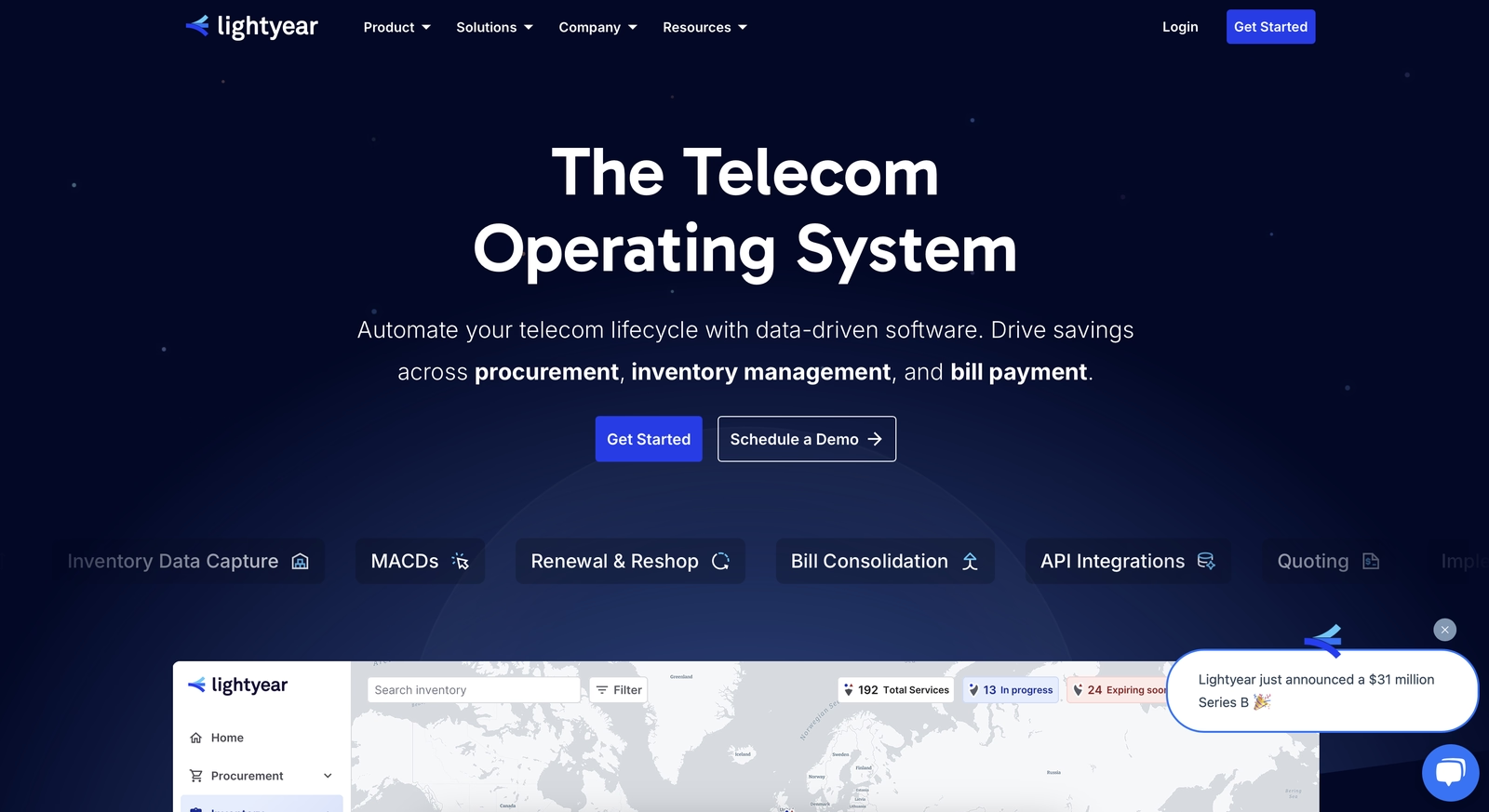
While the OSI and TCP/IP models provide the framework, managing the actual network services that operate across these layers can be complex. By automating network service procurement, inventory management, and bill consolidation, Lightyear takes the pain out of telecom infrastructure management.
The hundreds of enterprises who trust Lightyear achieve over 70% time savings and 20% cost savings on their network services.
Schedule a demo or get started with our questionare today.
Frequently Asked Questions about ISO OSI Model vs TCP/IP Model
Is one model better than the other?
Neither is inherently "better" as they serve different purposes. The TCP/IP model is the practical foundation of the internet, while the OSI model is a comprehensive theoretical framework ideal for teaching networking concepts and troubleshooting issues systematically.
Why do we still learn the OSI model?
The OSI model's detailed, seven-layer structure provides a universal, protocol-independent language for networking. It remains an invaluable educational tool and a logical guide for diagnosing problems, helping professionals pinpoint issues at specific functional layers.
Which model is more secure?
Neither model is inherently more secure. Security is implemented via protocols within the layers, not by the models themselves. For example, security protocols like TLS operate within the TCP/IP Application layer to encrypt data and ensure secure communication.
Let us show you the product and discuss specifics on how it might be helpful.
Schedule a Demo





Revolutionize Your Telecom Experience
Learn how you can get one step closer to optimal business efficiency for all your telecom services.