ISR vs ASR Routers: Enterprise Network Differences
ISR vs. ASR routers explained. Compare performance, features, and costs to find the right fit for your enterprise branch or network edge.

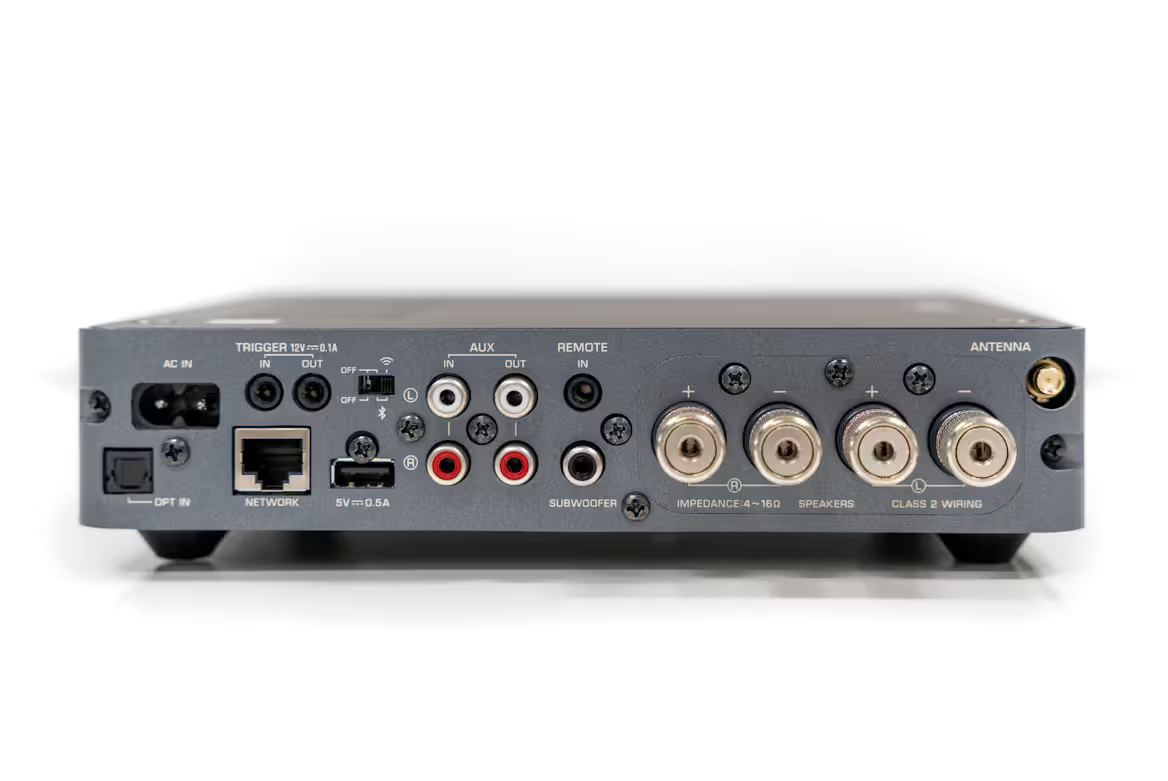
Choosing the right router for your enterprise network can be a complex decision, especially when looking at Cisco's extensive product line. Two common options you'll encounter are Integrated Services Routers (ISR) and Aggregation Services Routers (ASR).
While their names are similar, these routers are designed for very different roles within a network. This guide will break down the key distinctions between ISR and ASR routers, helping you determine which is the appropriate fit for your specific business needs.
What is an ISR Router?
An Integrated Services Router (ISR) is a networking device that combines routing with other essential network services into a single platform. It's designed as an all-in-one solution for enterprise branch offices or small-to-medium-sized businesses, aiming to simplify network infrastructure by reducing the number of separate devices needed at a location.
These "integrated services" often include:
- Routing: Directing traffic between different networks.
- Switching: Connecting local devices like computers and printers.
- Security: Providing firewall, intrusion prevention, and VPN capabilities.
- Voice and Video: Supporting VoIP and video conferencing traffic.
- WAN Optimization: Improving application performance over the wide area network.
By consolidating these functions, an ISR helps streamline network management and lower hardware costs for locations that don't require the high-performance capacity of a larger, more specialized router.
What is an ASR Router?
An Aggregation Services Router (ASR) is a high-performance router designed for the edge of service provider networks or large enterprise data centers. Think of it as a specialist built for speed and scale, handling massive volumes of traffic from many different sources.
Where an ISR consolidates multiple functions for a branch office, an ASR focuses on delivering raw power and reliability for core network functions. Its architecture is built to manage demanding edge routing tasks efficiently.
Key characteristics of an ASR include:
- High Throughput: Capable of processing millions of packets per second to support high-bandwidth applications.
- Scalability: Designed to grow with network demands, supporting more users and services without performance degradation.
- High Availability: Features redundant power supplies and processors to ensure continuous operation.
- Advanced Services: Supports complex services like Carrier-Grade NAT (CGNAT), large-scale VPNs, and deep packet inspection.
Key Differences Between ISR and ASR Routers
The core differences between these two router families come down to their intended purpose, which shapes their performance, features, and physical design.
1. Performance and Throughput
ASR routers are built for the carrier-grade environment, prioritizing raw packet-processing power. They are designed to handle massive traffic loads at the network edge, often measured in millions of packets per second.
ISRs, on the other hand, are sized for branch office traffic. Their performance is more than adequate for a local site but is not intended to manage the aggregated traffic of a large enterprise or service provider network.
2. Scope of Functionality
An ISR’s main value is its consolidation of services. It combines routing, basic switching, security, and voice capabilities into a single device to simplify branch infrastructure.
An ASR focuses on a more specialized set of high-level services. It excels at tasks like large-scale VPN aggregation, Carrier-Grade NAT (CGNAT), and other edge-specific functions that demand significant processing power.
3. Hardware and Redundancy
Reflecting their role in critical parts of the network, ASRs are designed for high availability. They typically feature redundant power supplies and processors to prevent downtime.
ISRs are generally single-component devices. While reliable for their intended use, they lack the built-in hardware redundancy found in their ASR counterparts.
Use Cases for ISR Routers
Thanks to their versatile, all-in-one design, ISRs are typically deployed at the network edge in branch offices or smaller business settings. Their value comes from consolidating multiple functions into a single, manageable device. Common applications include:
- Branch Office Connectivity: Serving as the primary gateway to connect a local office to the corporate WAN, while managing internal traffic and providing secure internet access.
- Retail and Remote Sites: Securely connecting point-of-sale (POS) systems, guest Wi-Fi, and VoIP phones, simplifying management for locations with limited IT staff.
- SD-WAN Edge: Acting as the on-premise hardware in an SD-WAN deployment, steering traffic across different WAN connections to improve application performance and reliability.
- Integrated Voice Services: Functioning as a voice gateway for VoIP systems, using Quality of Service (QoS) to prioritize voice traffic and ensure clear call quality.
Use Cases for ASR Routers
Given their focus on high performance and scalability, ASRs are deployed in the core of large-scale networks where traffic from many sources converges. They are built to handle demanding aggregation tasks.
- Service Provider Edge: Acting as the main entry and exit point for an internet service provider's (ISP) network, managing traffic between customers and the broader internet.
- Large Enterprise WAN Aggregation: Sitting in a central data center to terminate connections from hundreds of remote sites, aggregating all branch traffic for routing to internal resources or the internet.
- Data Center Interconnect (DCI): Providing high-bandwidth, reliable links between geographically separate data centers for tasks like disaster recovery and load balancing.
- Managed Service Delivery: Enabling providers to offer managed services like large-scale VPNs, Quality of Service (QoS), and security to multiple enterprise customers from a single, powerful platform.
Cost Considerations for ISR vs ASR Routers
The price points for these two router types differ significantly, directly reflecting their intended roles. ASR routers represent a substantial capital investment, driven by their high-performance hardware, built-in redundancy, and the advanced software licenses required for large-scale operations.
Their cost is aligned with their function in core network environments where reliability and high throughput are paramount.
Conversely, ISR routers are designed to be much more budget-friendly. They provide a cost-effective, consolidated solution for branch offices, resulting in a lower initial hardware expense.
When evaluating cost, it's helpful to consider the total value. An ISR reduces expenses at a branch by combining multiple functions, while an ASR's higher price is justified by the stability and performance it brings to the entire network.
Making the Right Choice for Your Network
Ultimately, the choice between an ISR and an ASR router comes down to the specific role it will play in your network. It’s not about which router is better, but which is the right tool for the job.
If you need a versatile, all-in-one device for a branch office, remote site, or small business, an ISR is the practical and cost-effective choice. It consolidates routing, security, and other services into a single platform, simplifying management at the network edge.
On the other hand, if you are building out a data center, a service provider edge, or a large enterprise WAN aggregation point, an ASR is necessary. Its design prioritizes high throughput, scalability, and reliability to handle massive traffic loads from many sources.
By evaluating whether your need is for branch-level integration or core-level aggregation, you can confidently select the right router for your infrastructure.
Need Help Managing Your Network? Lightyear Can Help
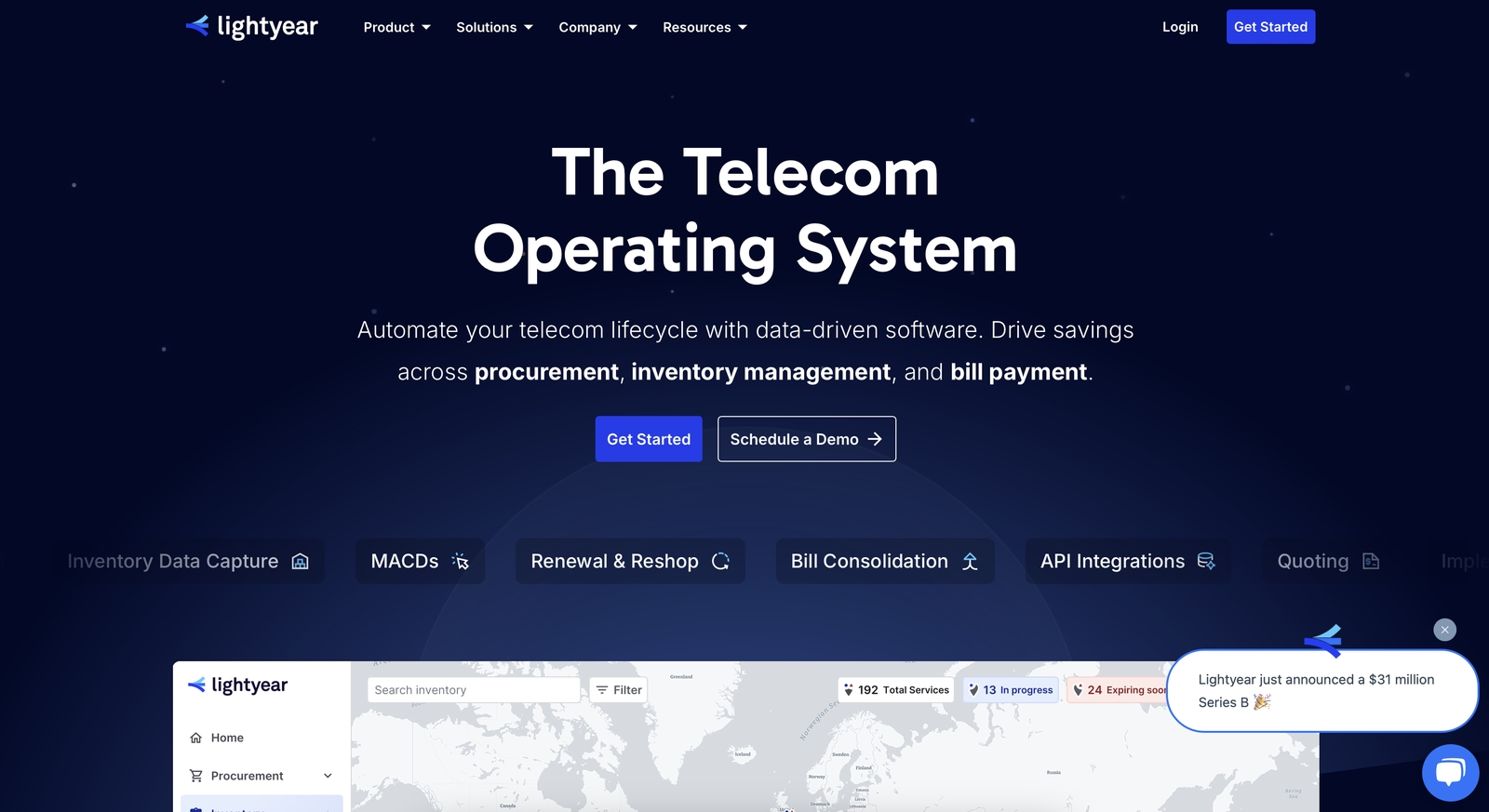
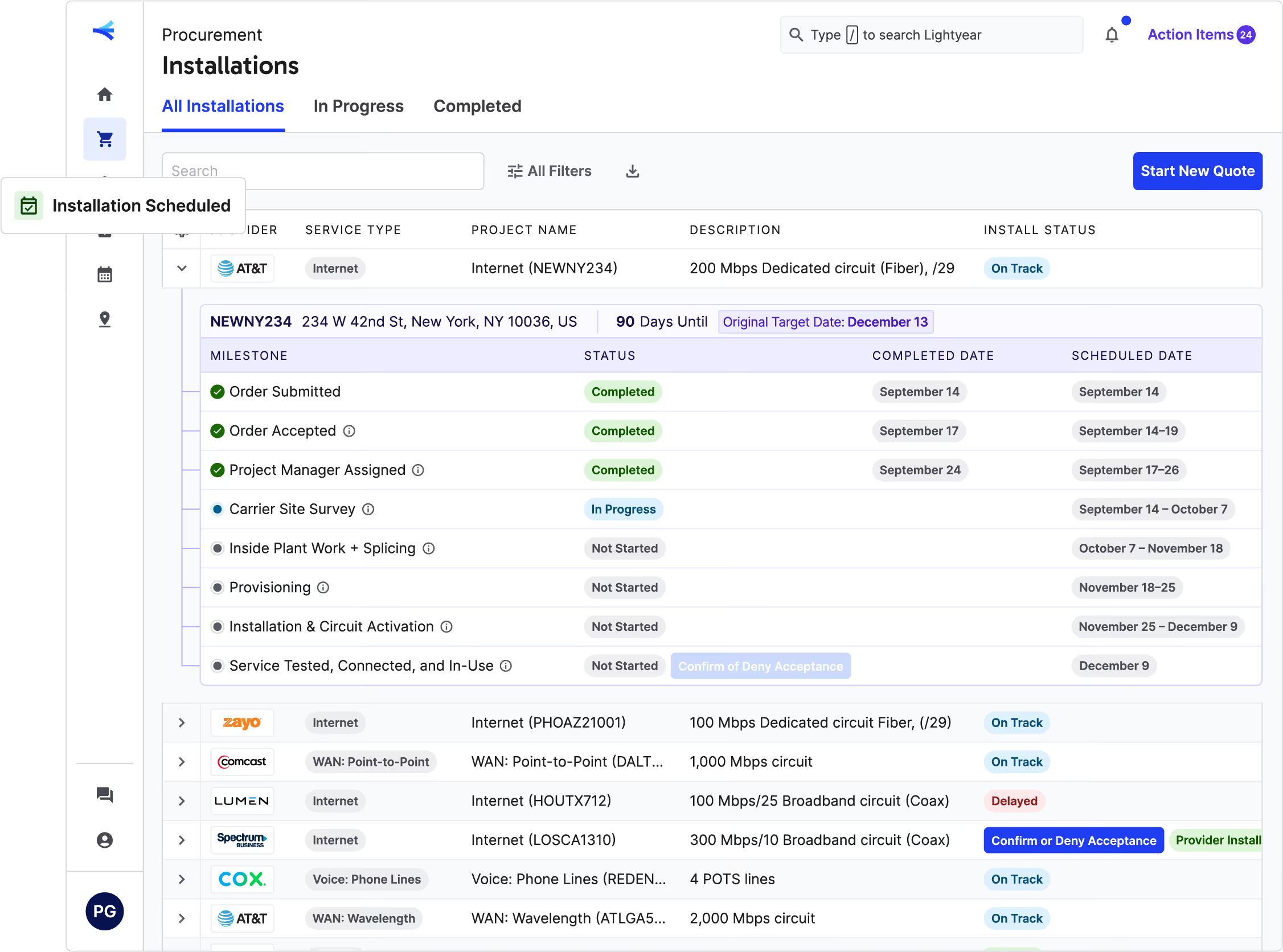
Once you've selected the right routers, the next challenge is managing the services that run on them. By automating network service procurement, inventory management, and bill consolidation, Lightyear removes the complexity of telecom infrastructure management. Enterprises using Lightyear achieve over 70% in time savings and 20% in cost savings on their network services.
Schedule a demo or get started with our questionnaire today.
Frequently Asked Questions about ISR Router vs ASR Router
Can I use an ASR router in a small branch office?
While technically possible, using an ASR in a branch office is generally not practical. It would be significant overkill in both cost and capability, making a versatile and more affordable ISR the appropriate choice for that environment.
Can ISR and ASR routers work together in the same network?
Yes, absolutely. A common and effective network design uses ISRs at various branch locations, which then connect back to a central ASR at a data center or headquarters. They are designed to be complementary parts of a larger infrastructure.
Do ISR and ASR routers run the same operating system?
Often, yes. Many modern Cisco ISR and ASR models run on the IOS-XE operating system, which helps unify feature sets and management. However, it's always important to check the specific software for the model you are considering.
Is one technology replacing the other?
No, they serve different, distinct roles and are not replacements for one another. ISRs continue to evolve for integrated branch services, while ASRs advance to handle higher throughput and core aggregation tasks. Both have separate development roadmaps.
Let us show you the product and discuss specifics on how it might be helpful.
Schedule a Demo





Revolutionize Your Telecom Experience
Learn how you can get one step closer to optimal business efficiency for all your telecom services.