IT Asset vs Inventory Management Explained
IT asset management tracks an asset's full lifecycle and financial value. IT inventory just counts what you have. Learn which approach is right for you.


It's common to hear the terms 'IT asset management' and 'inventory management' used interchangeably. While the two are closely related, they are distinct processes with different strategic goals.
Understanding this difference is critical for IT, operations, and finance teams looking to gain full visibility over their technology stack. It directly affects budget planning, operational efficiency, and the total cost of ownership for your hardware and software.
This article will clarify the key distinctions between IT asset management and inventory management, helping you build a more effective strategy for your organization's technology resources.
What is IT Asset Management?
IT Asset Management (ITAM) is a strategic business practice for managing the complete lifecycle of your technology assets. It’s a big-picture approach focused on maximizing value and minimizing risk, from the moment you acquire an asset until it’s no longer in use. The goal is to have a full financial and operational view of your entire technology estate.
An effective ITAM strategy tracks assets through every stage, including:
- Procurement: Making informed purchasing decisions based on business needs and existing inventory.
- Deployment: Installing and integrating new hardware or software into the live environment.
- Maintenance: Handling updates, repairs, and contract management to ensure optimal performance.
- Retirement: Securely decommissioning assets, wiping data, and managing disposal or resale.
This lifecycle approach connects each asset to its financial data, contracts, and compliance requirements, giving you total control.
What is Inventory Management?
Inventory management, on the other hand, is more operational and focuses on the here and now. Think of it as a detailed accounting of all the technology components your organization currently owns. Its primary goal is to maintain an accurate, real-time record of what assets you have, where they are located, and their current status. While ITAM looks at the entire lifecycle, inventory management is concerned with the quantitative details of your tech stack at any given moment.
At its core, inventory management involves:
- Counting and cataloging: Physically counting items like servers, routers, laptops, and phones to create a comprehensive list.
- Tracking location: Documenting where each asset is, whether it’s in a data center, at a specific office, or assigned to an employee.
- Monitoring status: Noting if an asset is active, in storage, undergoing repair, or awaiting disposal.
- Software tracking: Keeping a tally of software licenses to ensure compliance and avoid overspending on unused seats.
Key Differences Between IT Asset Management and Inventory Management
While both practices involve tracking your technology, they operate on different levels and answer different questions. Here are the primary ways they diverge.
1. Strategic Lifecycle vs. Operational Snapshot
IT Asset Management is strategic. It looks at the entire journey of an asset—from procurement to retirement—to maximize its value and minimize risk over its complete lifecycle.
Inventory management is operational. It gives you a precise, real-time count of what you own and where it is at this very moment, serving as a detailed log of current assets.
2. Financial Value vs. Physical Count
ITAM is deeply concerned with the financial side of your technology. It tracks contracts, licenses, maintenance costs, and depreciation to calculate an asset's total cost of ownership.
Inventory management, in contrast, focuses on the physical details. Its main job is to maintain an accurate record of quantities, locations, and an asset's current operational status.
3. Proactive Planning vs. Daily Operations
Because ITAM covers the full lifecycle, it helps you proactively plan for future needs, such as budgeting for hardware replacements or preparing for contract renewals.
Inventory management is more focused on supporting daily tasks. It provides the data needed to fulfill an employee's equipment request or conduct a physical audit of your hardware.
Benefits of IT Asset Management for Enterprises
Adopting a formal ITAM strategy provides clear financial and operational advantages. By tracking assets from procurement to retirement, you gain a complete picture of your technology spending, which helps eliminate redundant purchases and optimize software license usage to lower costs.
This lifecycle view also improves security. It ensures that every asset is accounted for, properly maintained, and securely decommissioned, reducing the risk of data breaches from unmanaged or forgotten devices.
Finally, ITAM simplifies regulatory and contractual compliance. With detailed records of all hardware and software, your organization can confidently navigate audits and avoid penalties associated with license misuse.
Advantages of Inventory Management in IT and Telecom
While IT asset management delivers strategic financial oversight, strong inventory management provides immediate, on-the-ground advantages. It gives your teams a reliable, real-time count of all physical hardware—from routers and switches to servers and phones.
This detailed record is essential for operational efficiency. When a new site needs equipment or a technician has to replace a faulty device, an accurate inventory shows exactly what you have and where it is.
This prevents unnecessary delays and stops teams from purchasing hardware you already own but couldn't find. It ensures the right equipment is available at the right time to keep business running smoothly.
Challenges in Implementing IT Asset and Inventory Management
While both disciplines are valuable, putting them into practice comes with significant hurdles. Organizations often face similar obstacles whether they are trying to build a simple inventory list or a comprehensive asset management program.
- Manual Data Entry: Relying on spreadsheets or disconnected documents is a common starting point, but this approach is prone to human error and quickly becomes outdated. It makes maintaining an accurate count for inventory or tracking financial data for asset management difficult.
- Data Silos: Information is often scattered across different departments. When procurement, IT, and finance systems don’t communicate, creating a single, reliable view of your technology estate is a major challenge.
- Complexity at Scale: As a company grows, the number of assets across various sites can become overwhelming. Manually tracking hundreds or thousands of devices, contracts, and licenses simply doesn’t scale effectively.
- Resource Commitment: Implementing and maintaining these systems requires dedicated time and personnel. This can be a significant burden for IT and operations teams who are often already managing multiple priorities.
Making the Right Choice for Your Business Needs
So, which approach is right for you? The reality is that it’s not a choice between one or the other. Effective IT asset management and inventory management work together.
Think of inventory management as the essential first step. It provides the detailed, real-time count of your physical assets—the "what" and "where."
IT asset management builds on this foundation. It adds the financial and strategic context, tracking an asset's entire lifecycle to manage costs and risks.
For complete control over your technology, you need both. A strong inventory system provides the data needed for a successful, comprehensive ITAM strategy.
Need Help Managing Your Network? Lightyear Can Help
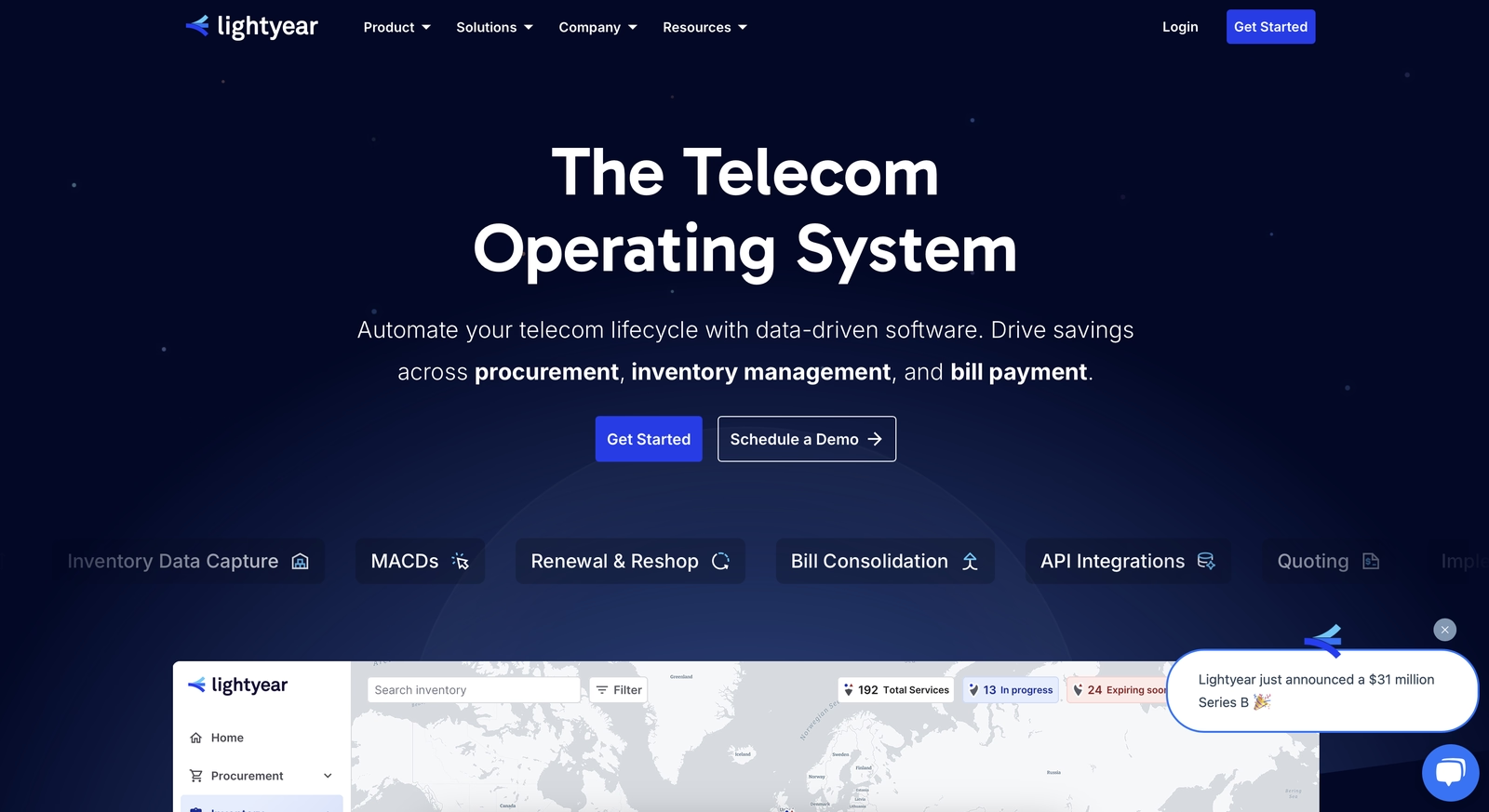
Lightyear addresses the core challenges of inventory management by automating network service procurement, inventory tracking, and bill consolidation. This approach gives you a clear, digital system of record for your telecom services, helping enterprises save over 70% in time and 20% in costs.
Schedule a demo or get started with our questionnaire today.
Frequently Asked Questions about IT Asset Management vs Inventory Management
Do I need both ITAM and inventory management?
Yes, for complete control. Inventory management gives you the raw data on what you own and where it is. ITAM uses that data to make strategic financial and lifecycle decisions. The two work together to provide a full picture of your technology.
What kind of tools are used for each?
Inventory management often relies on barcode scanners and basic tracking software. ITAM requires more comprehensive platforms that integrate with procurement and finance systems to manage an asset's total cost, contracts, and lifecycle.
Does ITAM also cover software and cloud services?
Absolutely. A modern ITAM strategy includes all technology assets, from physical hardware to software licenses and cloud subscriptions. This provides a complete view of your entire technology spend and associated risks.
How often should our IT inventory be updated?
Your IT inventory should be a living document, updated in real-time as assets are moved, added, or retired. For physical audits, many organizations conduct them quarterly or annually, depending on their scale and needs.
Let us show you the product and discuss specifics on how it might be helpful.
Schedule a Demo





Revolutionize Your Telecom Experience
Learn how you can get one step closer to optimal business efficiency for all your telecom services.
