KNX IP Router vs Interface: Key Differences
KNX IP Router vs. Interface: What's the difference? Learn which device connects KNX lines and which is for programming to make the right choice.


For IT and network professionals managing building automation, the KNX system uses specific components to connect to your IP network. Two fundamental pieces of hardware you'll frequently work with are the KNX IP Router and the KNX IP Interface.
While their names are similar and they both serve as gateways, they have distinct roles in how a KNX installation communicates. This guide will break down their specific functions, helping you choose the right device for a reliable and efficient building automation network.
What is a KNX IP Router?
A KNX IP Router connects a KNX bus line to an IP network, like your building's local area network (LAN). Its main job is to act as a line or area coupler, linking different segments of your KNX system using the IP network as a high-speed backbone. This is especially useful for large-scale installations that span multiple floors or buildings.
The "router" function is key. It intelligently filters KNX data packets, known as telegrams, and only forwards them between the KNX line and the IP network if necessary. This filtering prevents the network from being flooded with unnecessary traffic, which improves the overall performance and reliability of your building automation system.
100-150 words
What Are the Advantages of a KNX IP Interface?
While a router is built for connecting system segments, a KNX IP Interface excels in providing direct, targeted access to the bus. Its primary benefits are focused on system programming, monitoring, and diagnostics.
- Direct Programming and Monitoring: An interface acts as a dedicated gateway for a computer running configuration software (like ETS). This allows IT teams to directly program devices, diagnose issues, and monitor bus traffic in real-time.
- Cost-Effectiveness: If your goal is simply to provide an access point for system management rather than linking entire KNX lines, an interface is the more budget-friendly option.
- Simultaneous Connections: Many modern interfaces allow for multiple parallel connections. This is a key feature for busy environments where a programmer, a visualization system, and a logging tool might all need to access the bus at once.
bullet pointsWhat is a KNX IP Interface?
A KNX IP Interface serves a different purpose than a router. It acts as a dedicated gateway, providing a direct communication link between a computer and the KNX bus line. Think of it as a specialized adapter for system management tasks.
Its primary role is to connect a PC running Engineering Tool Software (ETS) to the KNX installation. This allows technicians to directly program devices, commission the system, and perform diagnostics without needing to route traffic across a larger network backbone. The interface essentially translates IP communication from the computer into KNX telegrams for the bus.
Unlike a router, an interface does not filter traffic or connect separate KNX lines. It is designed for focused access at a single point on the network.
100-150 words
Choosing the Right Solution for Your Enterprise
For large installations that span multiple floors, buildings, or require connecting separate KNX bus lines, a KNX IP Router is the necessary choice. It uses your IP network as a backbone to ensure reliable communication across the entire system.
If your primary need is to program, commission, or troubleshoot the KNX system from a computer, a KNX IP Interface is the more direct and cost-effective tool. It provides a dedicated access point for management software like ETS.
It's important to note that most KNX IP Routers can also function as an interface, offering a versatile solution for both routing and direct programming. However, a KNX IP Interface cannot perform the routing and filtering functions of a router.
bullet pointsKNX IP Router vs Interface: Key Differences
When comparing the two devices, the fundamental differences lie in their core function and how they handle data traffic on your network.
A KNX IP Router is designed to intelligently filter data. It inspects KNX telegrams and only forwards them between the bus and the IP network if they are needed, which prevents unnecessary traffic and keeps the system efficient.
An IP Interface, on the other hand, does not filter traffic. It provides a direct, raw data stream between a connected computer and the KNX bus, making it ideal for precise monitoring and programming tasks.
This functional difference extends to how they communicate. Routers use IP multicast to send telegrams across the network, allowing them to act as a backbone for the entire system. Interfaces typically use a direct unicast connection to a single PC.
Finally, most routers require their own auxiliary power supply to operate, whereas many interfaces can be powered directly from the KNX bus itself, simplifying their use for temporary connections.
150-200 words
Final Thoughts on KNX IP Router and Interface
Ultimately, the decision between a KNX IP Router and an Interface comes down to your specific operational needs. It's less about which device is superior and more about which one is the right tool for the job at hand.
Think of the router as a permanent piece of your network infrastructure, essential for connecting different parts of your building automation system. The interface, in contrast, is a specialized access tool for management and diagnostics.
In many enterprise-level installations, these two devices are not mutually exclusive. It is common for a system to use IP routers to form the communication backbone while also having IP interfaces available for technicians to perform programming and maintenance tasks.
From a network planning perspective, this distinction is important. A router must be integrated into your permanent network design and security policies. An interface, which may be used for temporary connections, requires clear access control protocols for commissioning and support.
Understanding these roles helps you build a KNX system that is not only functional but also scalable and easy to manage over the long term.
H3sBenefits of Using a KNX IP Router
Benefits of Using a KNX IP Router
A KNX IP Router is fundamental for large-scale building automation. Its primary benefit is creating a fast and reliable communication backbone over your existing IP network.
By connecting separate KNX lines, it allows your system to scale across multiple floors or even different buildings. The router also intelligently filters data, which prevents network congestion and ensures your automation system runs efficiently without slowing down other critical IT services.
Need Help Managing Your Network? Lightyear Can Help
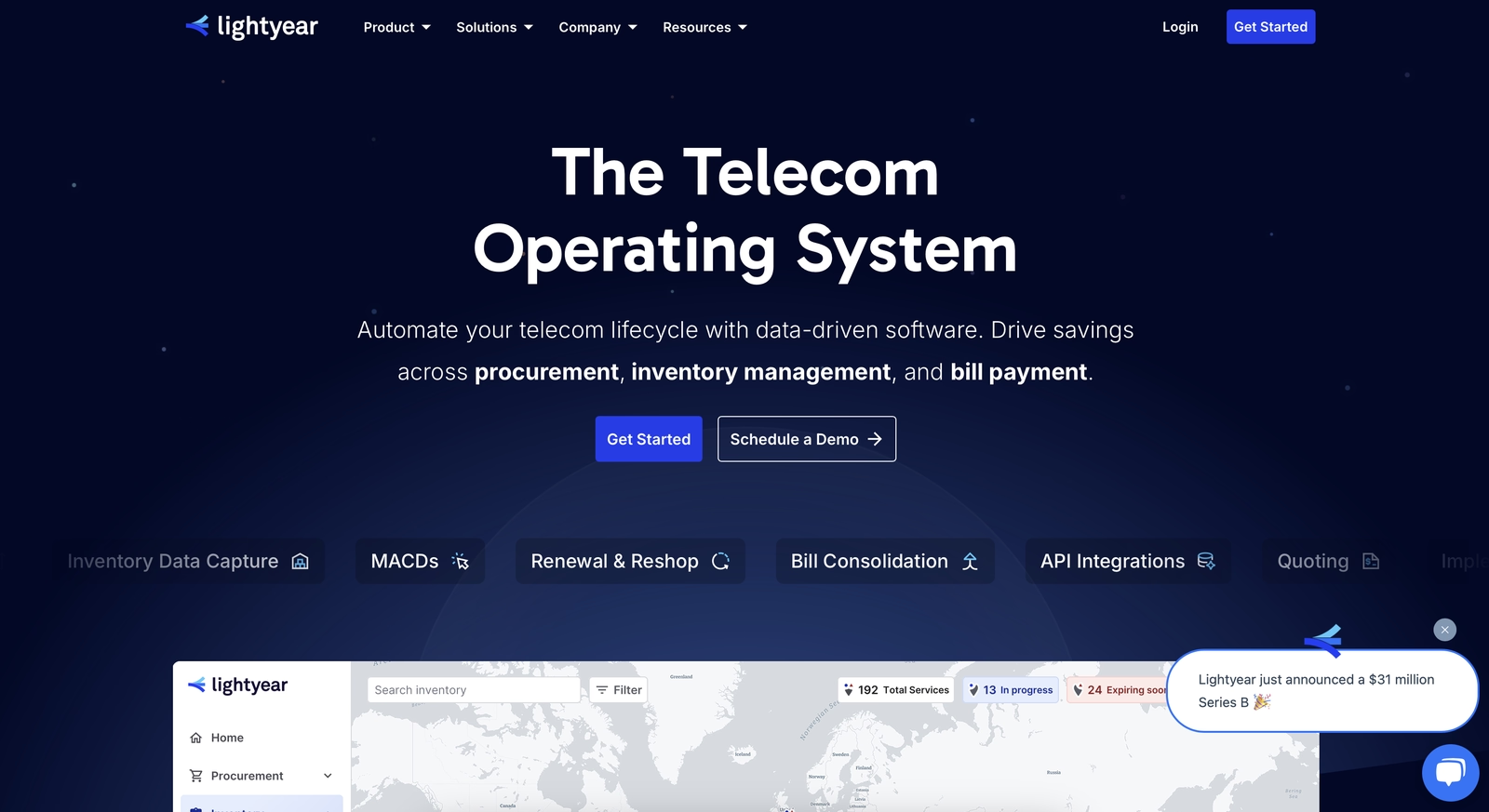
Just as choosing the right KNX hardware is vital for your building's network, managing your enterprise's telecom services is equally important. By automating network service procurement, inventory management, and bill consolidation, Lightyear removes the complexity from telecom infrastructure management.
The hundreds of enterprises who trust Lightyear achieve over 70% time savings and 20% cost savings on their network services.
Schedule a demo or get started with our questionnaire today.
Frequently Asked Questions about KNX IP Router vs Interface
Can I use an IP Router and an IP Interface in the same KNX system?
Yes, this is a very common and practical setup. The router connects different system segments, while the interface provides a dedicated access point for technicians to program or monitor the bus without disrupting overall traffic flow.
Do I need an auxiliary power supply for both devices?
A KNX IP Router almost always needs its own power supply to function. However, many IP Interfaces are designed to draw power directly from the KNX bus, making them more convenient for temporary diagnostic connections.
Can a KNX IP Interface connect two separate KNX bus lines?
No, an interface cannot connect separate bus lines. Its function is to provide a direct communication link between a computer and a single point on the bus. For linking lines, a KNX IP Router is the required device.
Is one device more secure than the other?
Security depends on your network's configuration. A router is a permanent network device that should be secured with firewalls. An interface provides direct bus access, so its security relies on strong access controls for the computers using it.
Let us show you the product and discuss specifics on how it might be helpful.
Schedule a Demo





Revolutionize Your Telecom Experience
Learn how you can get one step closer to optimal business efficiency for all your telecom services.